In-group and out-groupWhy the brain favors us over them
An in-group is any social circle, team, or category you feel you belong to, while an out-group is everyone else. Once your brain sorts people into these two piles, you automatically favor your own side and judge outsiders more harshly. Remarkably, this tribal divide can happen in minutes over completely meaningless differences.
By the edgi team We find the most surprising true thing about an idea and build a 60-second lesson around it.
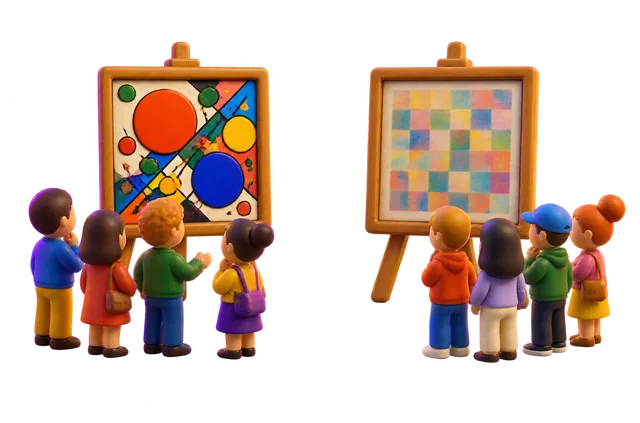
In 1970, psychologist Henri Tajfel ran a famous experiment. He sorted strangers into groups based on whether they preferred a painting by Paul Klee or Wassily Kandinsky.
Black and white portrait of social psychologist Henri Tajfel, smiling and looking slightly to the right. European Association of Social Psychologie, CC BY 3.0, via Wikimedia Commons
There was no history, no money, and no real connection between them. Yet, the moment they were labeled a group, the participants immediately began hoarding rewards for their own side and penalizing the others.
The psychology
This is the core of Social identity theory. Your brain links your personal self-esteem to the status of your group.
To feel good about yourself, you need your group to be better than the out-group. It turns even meaningless differences into walls of Tribalism.
The cost
This instinct creates Group polarization. Members often adopt more extreme views simply to prove their loyalty to the pack.
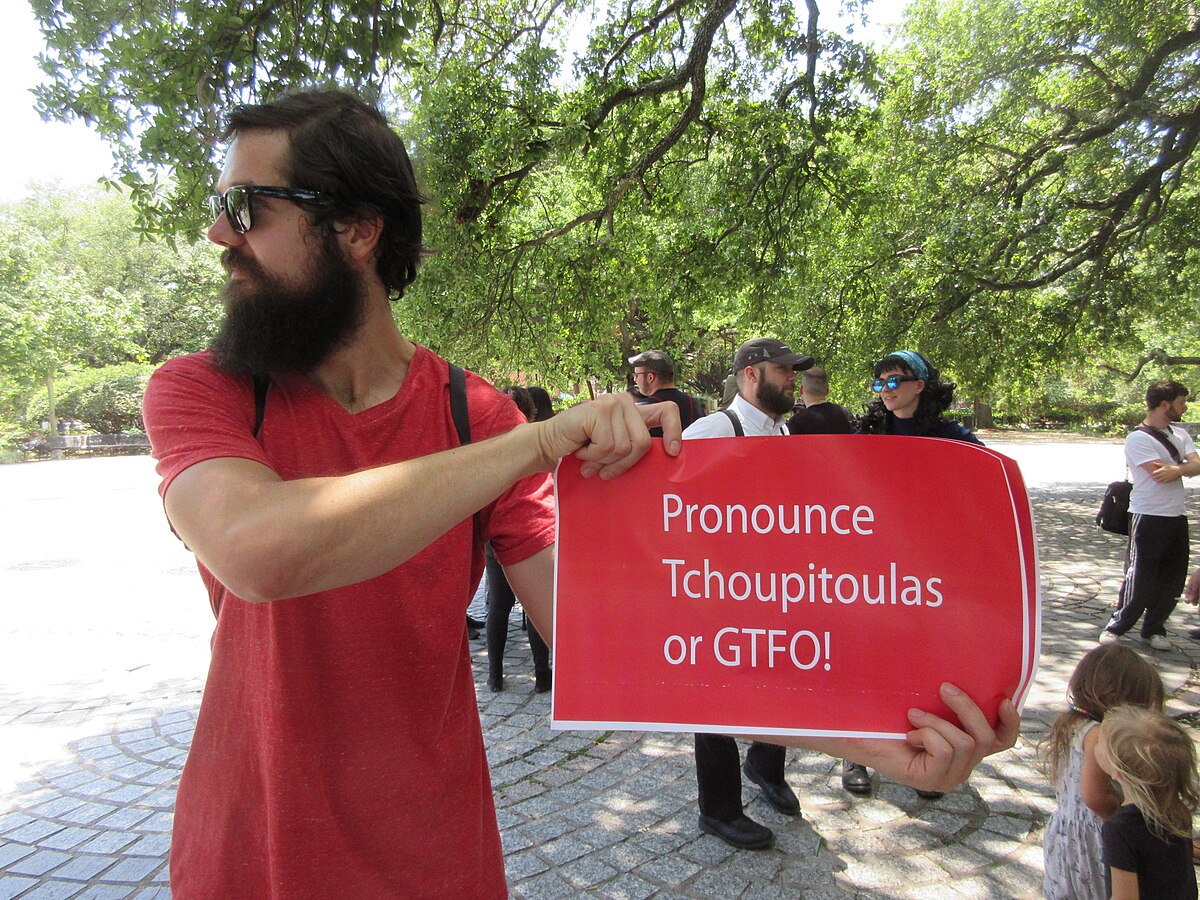
We even use a shibboleth, a specific word or custom, to weed out pretenders. We are wired to build us by defining who the them is.
A man with a beard and sunglasses holds a red sign that reads "Pronounce Tchoupitoulas or GTFO!". Infrogmation of New Orleans, CC BY-SA 4.0, via Wikimedia Commons
How does in-group favoritism warp perception?
Dividing people into groups changes how you see basic physical actions. In a 2013 experiment by Molenberghs and colleagues, participants were split into arbitrary teams and asked to rate the speed of hand movements shown on video. Even though every video moved at the exact same speed, people judged their own teammates as faster.
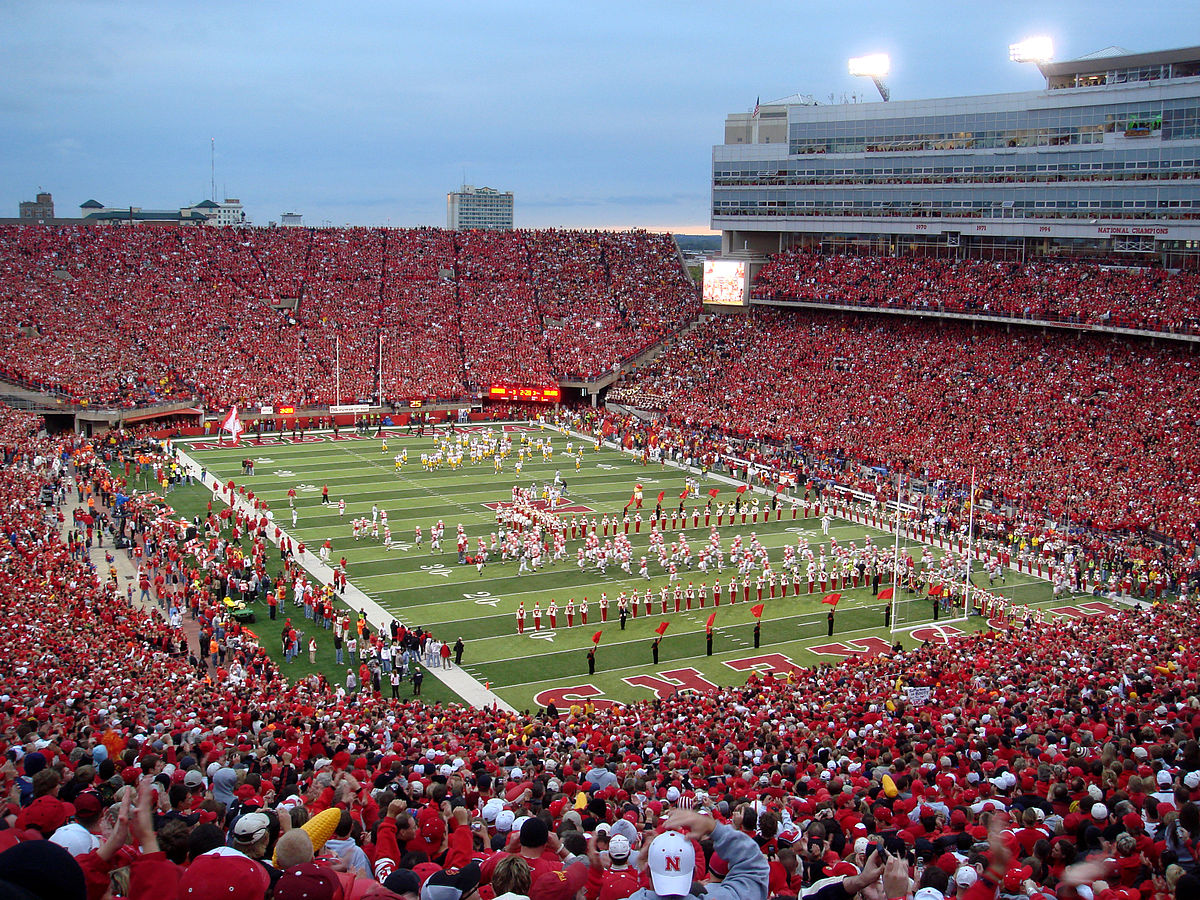
Fans at a stadium form distinct in-groups and out-groups based on team loyalty, filtering their perception of the game through those identities. Bobak Ha'Eri, CC BY 3.0, via Wikimedia Commons
This perceptual distortion shows up in high-stakes environments too. In 1954, researchers Albert Hastorf and Hadley Cantril showed students from Princeton and Dartmouth footage of a rough football game between their schools. Despite watching the exact same film, both sides reported completely different versions of the game, each claiming the other side committed far more infractions.
What happens in the brain when viewing out-groups?
In-group bias starts at the neurological level within fractions of a second. Brain imaging shows higher activity in the fusiform face area, a region in the inferior temporal cortex linked to facial recognition, when people look at in-group faces compared to out-group faces.
Lower activity in this brain region means you fail to process outsiders as distinct individuals, viewing them only as a broad category. This failure in early visual processing can cause people to see out-group members as uniform, driving both the out-group homogeneity effect and the devaluation of outsiders.
What is the out-group homogeneity effect?
Categorizing people creates the out-group homogeneity effect: the belief that all outsiders look, think, and act alike, while your own group is full of diverse individuals. This generalization is especially strong when assigning negative characteristics to outsiders.
Because these group boundaries are socially contingent, they can range from harmless rivalries to total dehumanization. When propaganda exploits this wiring, it can lead to pseudospeciation, where outsiders are treated as if they belong to an entirely different species.
Test yourself
With in-group and out-group, what might happen after coworkers are randomly split into teams?
They may favor their own team over the other. Simply identifying with a team can prompt people to favor it; a meaningful history or advantage is not required.
With in-group and out-group, can an arbitrary group label trigger favoritism?
Yes, identification alone can be enough. People can favor a group they identify with even when the division is arbitrary and members have no shared history.
With in-group and out-group, can an arbitrary group label trigger favoritism?
Yes, identification alone can be enough. People can favor a group they identify with even when the division is arbitrary and members have no shared history.
Play the lesson in edgi and the card is yours. It lands on your Map next to the ideas it connects to, and turns from matte to foil to gold as you learn more around it.
It is a research method developed by Henri Tajfel showing that people form biased in-groups within minutes over arbitrary criteria. Participants prefer their own group even when assigned by a coin flip or painting preferences.
Can members of an in-group ever be seen as homogenous?
Yes. While people usually view their own group as diverse, in-group homogeneity occurs when members perceive their group as sharing the same positive traits.