Milgram ExperimentOrdinary people and lethal obedience
The Milgram experiment was a famous psychology study designed to see if regular people would follow orders from an authority figure even when it meant hurting someone else. Participants believed they were delivering real, increasingly dangerous electric shocks to an innocent person in another room. In the original test, 65 percent of subjects obeyed orders all the way to the maximum 450-volt shock.
By the edgi team We find the most surprising true thing about an idea and build a 60-second lesson around it.
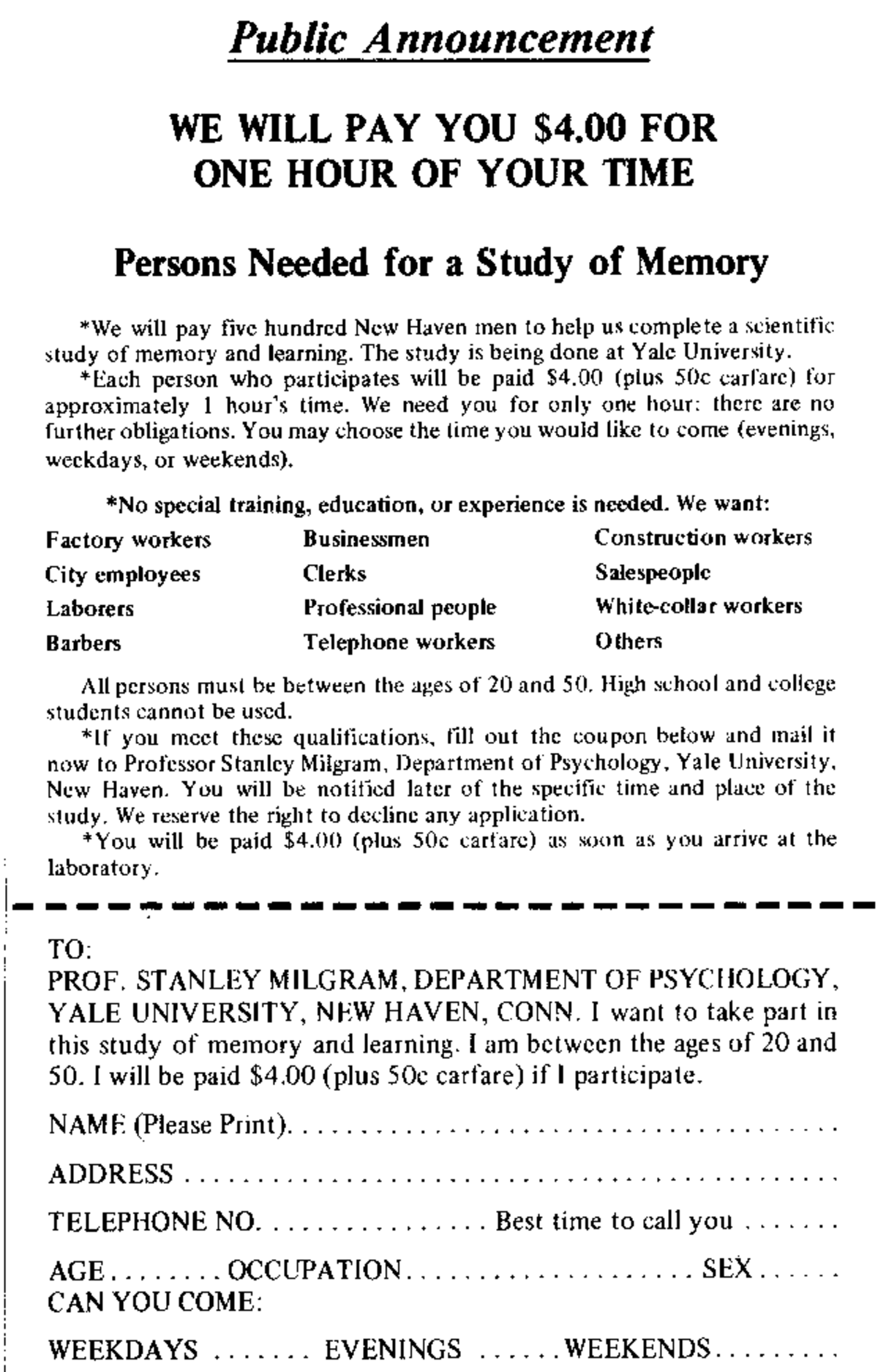
In 1961, Yale psychologist Stanley Milgram recruited ordinary people for what they thought was a study on memory and learning. Participants were instructed to deliver escalating electric shocks to a learner in the next room whenever he answered a question incorrectly.
An advertisement for the Milgram experiment from 1961, titled "Public Announcement," seeks persons for a study of memory at Yale University, offering $4.00 for one hour of time. The original uploader was Poolisfun at Wikipedia., Public domain, via Wikimedia Commons
The learner was an actor, and the shocks were entirely fake, but the participants believed they were real.
Following orders
As the learner screamed and eventually fell silent, participants showed extreme stress, trembling and sweating. Yet when the experimenter in a gray lab coat calmly stated that the experiment required them to continue, most obeyed.
A man with dark, curly hair and a beard holds his head in his hands, with his eyes closed and a pained expression, indicating a headache or stress. Phee, CC0, via Wikimedia Commons
A startling 65 percent of participants flipped the final 450-volt switch.
The real question
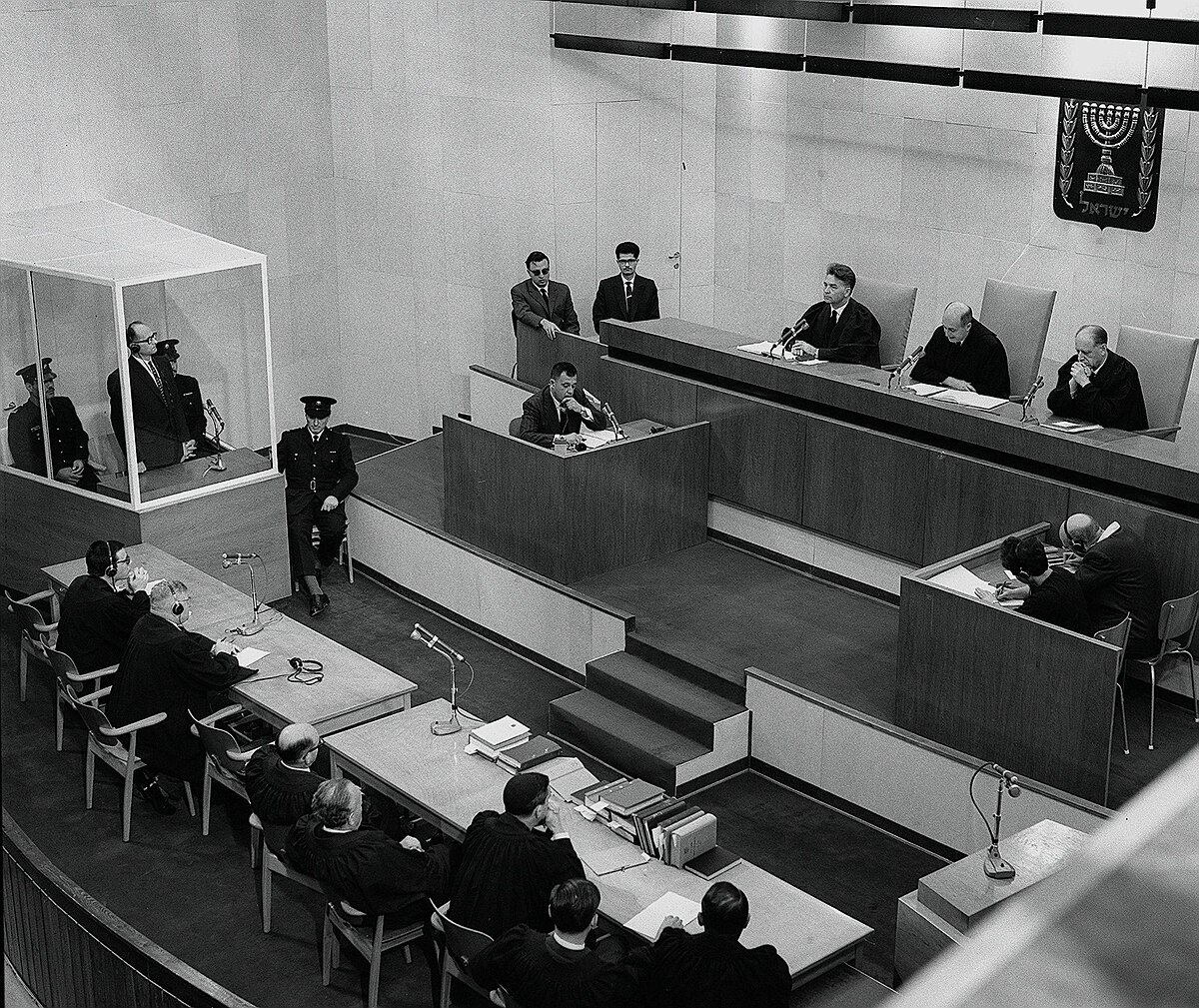
Milgram launched the study just months after the trial of Adolf Eichmann, who defended his Nazi war crimes by claiming he was merely following orders. Milgram initially wanted to see if German citizens possessed a unique cultural obedience.
Adolf Eichmann is shown in a glass booth during his sentencing at the conclusion of the Eichmann Trial. Israeli GPO photographer, Public domain, via Wikimedia Commons
Instead, he found the exact same chilling results in New Haven, Connecticut, exposing a profound authority bias in human nature.
How the test worked
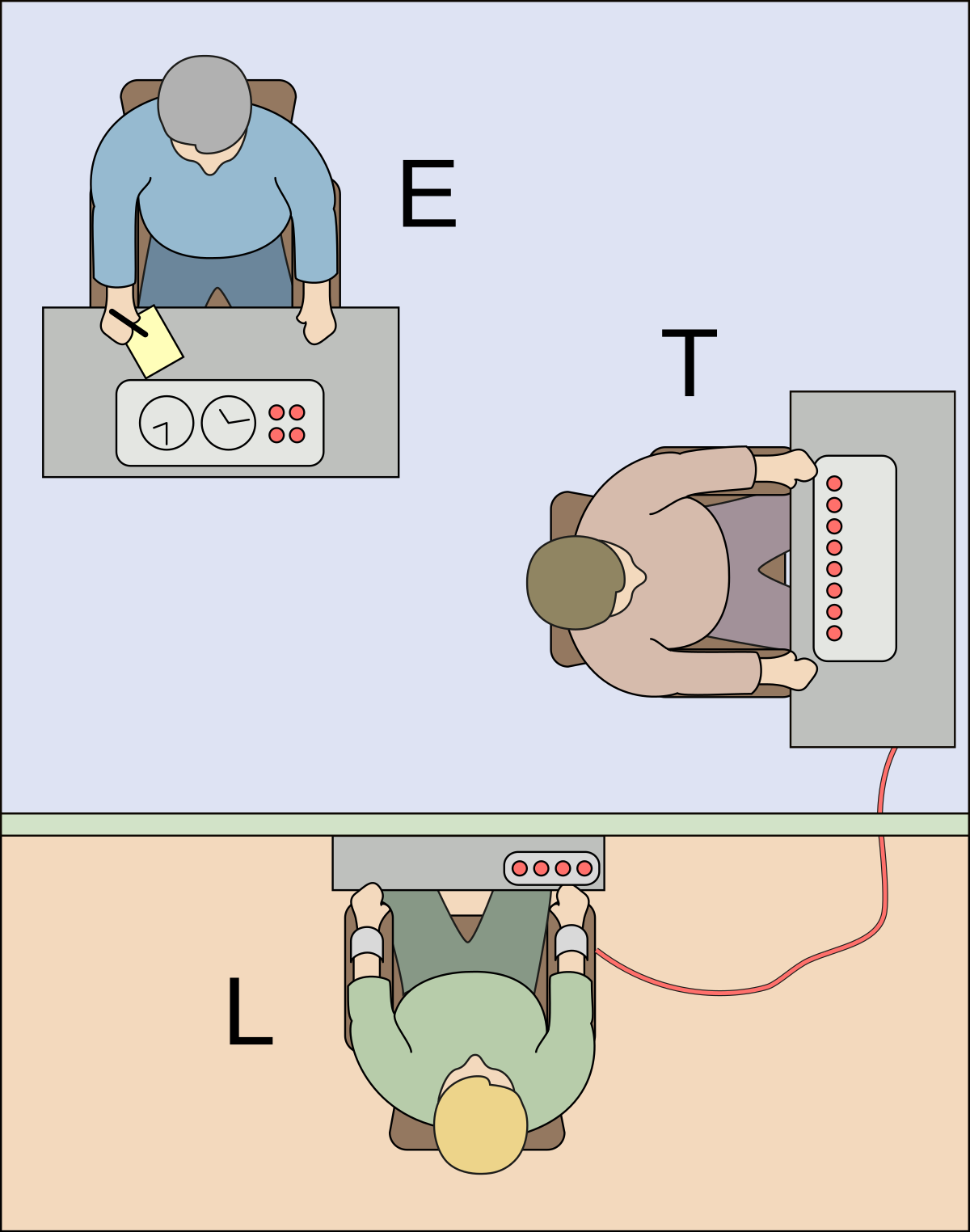
Volunteers arrived thinking they were participating in a study about memory and punishment. Through a rigged draw where both slips said teacher, the volunteer always became the person administering shocks, while an actor took the role of the learner strapped into an electric chair.
This diagram shows the three roles: the experimenter directing orders, the subject acting as teacher, and the actor in another room posing as the learner. Fred the Oyster, CC BY-SA 4.0, via Wikimedia Commons
The subject read word pairs and flipped switches on a fake generator that rose in 15-volt increments, from 15 to 450 volts, whenever the learner made a mistake. Before starting, the volunteer received a real sample shock to convince them the machine was functional. Recorded screams, wall banging, and eventually complete silence played from the next room as the voltage climbed.
Whenever a participant hesitated or asked to quit, the experimenter in a lab coat gave four standardized verbal prods in strict sequence, starting with 'Please continue' and ending with 'You have no other choice; you must go on.' The test ended only if the subject refused after all four prods or delivered the maximum 450-volt shock three times.
What experts predicted versus the results
Before running the study, Milgram polled fourteen Yale psychology seniors and surveyed his colleagues to estimate how many people would go to the end. They predicted that almost nobody would obey, estimating an average of only 1.2 percent of participants.
The actual results shocked researchers. Every single participant continued shocking up to 300 volts, the point where the actor began banging on the wall. Nearly two-thirds went on to deliver the lethal 450-volt maximum.
Milgram designed the study in August 1961, three months after the trial of Nazi war criminal Adolf Eichmann began in Jerusalem. Milgram wanted to see if Holocaust perpetrators had a unique cultural obedience or if ordinary people anywhere would inflict harm simply because an authority told them to do so.
Test yourself
Which setup would most likely increase resistance to an authority figure's order?
Two authority figures openly disagreeing. In Milgram's variations, conflicting commands from two researchers caused 100 percent of participants to stop immediately.
What caused participants in the Milgram experiment to refuse orders most often?
Seeing other participants refuse first. When two confederates refused to continue shocking the learner, 90 percent of participants joined them in defying the researcher.
In the Milgram experiment, what best explains many participants' continued shocks?
Pressure to obey an authority figure. Many participants continued when the experimenter urged them to, suggesting authority can drive harmful actions even in ordinary people.
Play the lesson in edgi and the card is yours. It lands on your Map next to the ideas it connects to, and turns from matte to foil to gold as you learn more around it.
Was anyone actually injured during the experiment?
No, the learner was an actor who received no shocks at all. The only real shock delivered was a low-voltage sample given to the teacher beforehand to make the setup feel real.
What happened if the volunteer asked about the learner's safety?
The experimenter used pre-written scripts to push them forward. If the volunteer asked about permanent physical harm, the experimenter replied that while the shocks were painful, they caused no permanent tissue damage.