Notre Dame Cathedral is a medieval Catholic cathedral and basilica located on the Île de la Cité in Paris, France. Dedicated to the Virgin Mary, it is celebrated as one of the finest early examples of French Gothic architecture. Although neglected and nearly demolished in the 19th century, Victor Hugo's famous novel sparked a public movement that financed its extensive restoration.
By the edgi team We find the most surprising true thing about an idea and build a 60-second lesson around it.
By 1831, Notre Dame was in a shameful state of disrepair after decades of neglect and revolutionary damage. Its stained glass had been swapped for plain clear panes, statues were headless, and city officials seriously considered tearing it down.
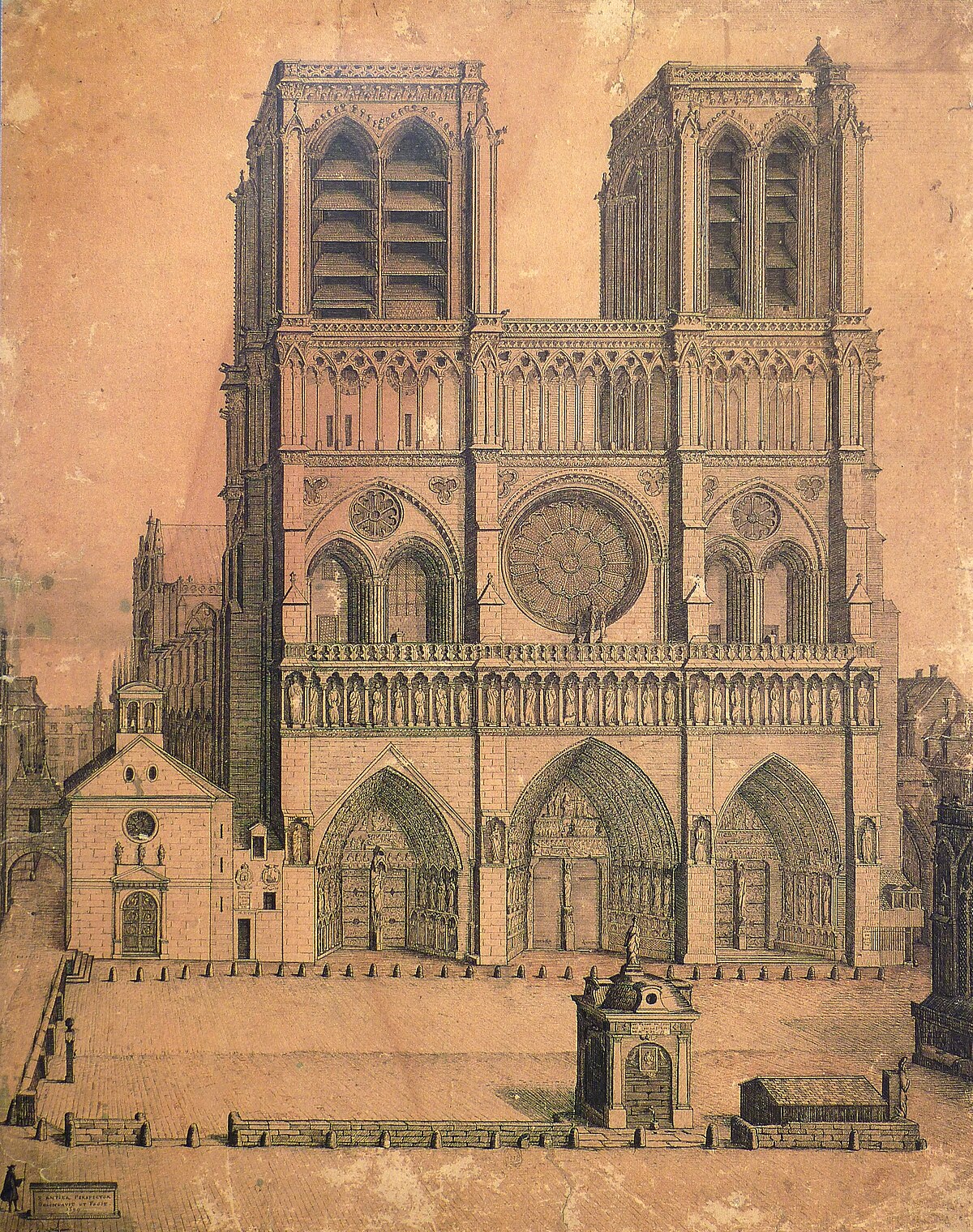
Drawing of the facade of Notre-Dame de Paris in 1699, depicting the cathedral's two towers, rose window, and intricate Gothic architectural details. Antier, Public domain, via Wikimedia Commons
Parisians viewed the medieval landmark not as a sacred monument, but as a decaying, outdated eyesore.
Saved by a novel
Victor Hugo published a sweeping romance featuring the cathedral as its actual protagonist to shame the public into caring. The book included lengthy, poetic chapters praising the genius of French Gothic architecture and mourning the loss of the city's heritage.
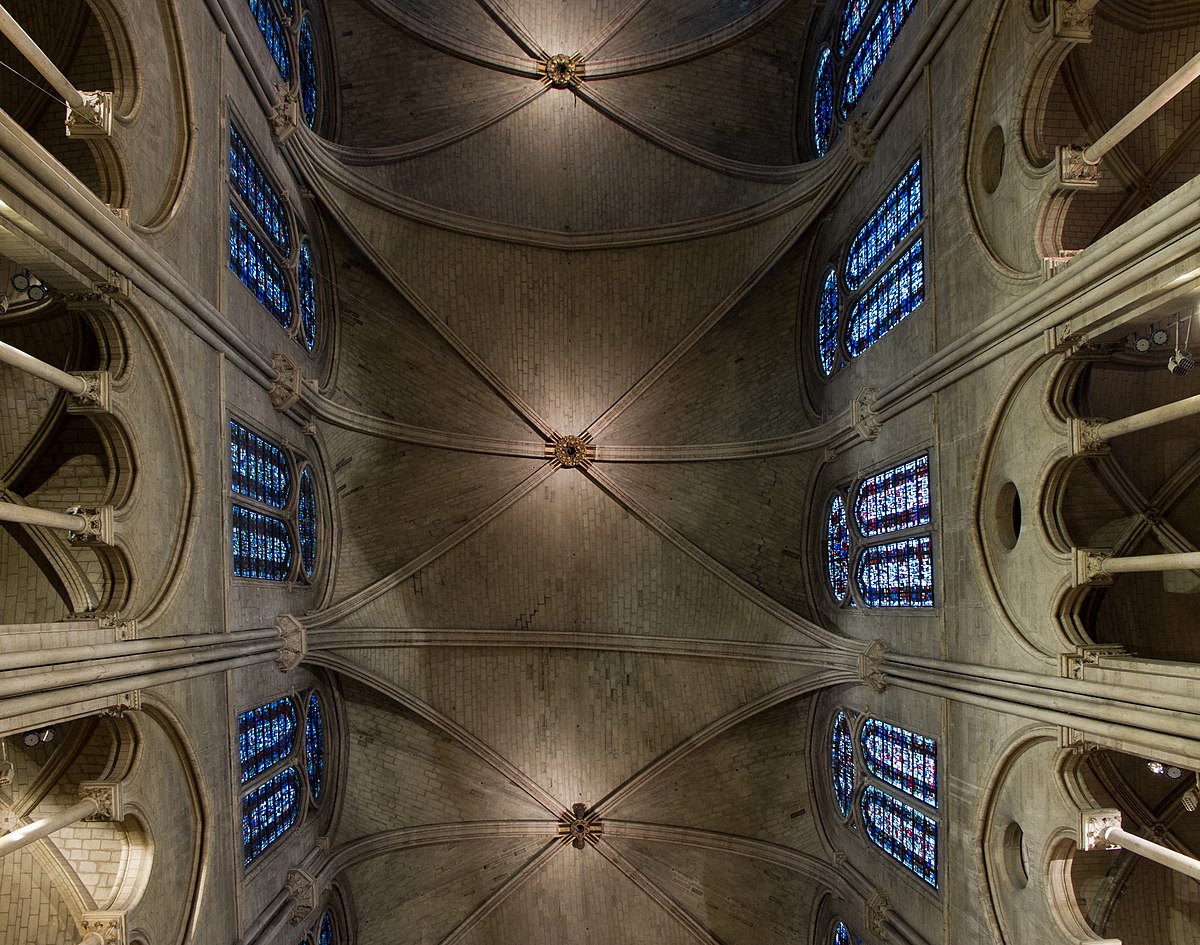
Interior view looking up at the vaulted ceiling of Notre-Dame de Paris, showing the intricate rib vaulting and stained-glass windows. Carlos Delgado, CC BY-SA 3.0, via Wikimedia Commons
The novel was a massive sensation, sparking an outcry that forced the government to approve a massive restoration project.
The rebuild
Architect Eugène Viollet-le-Duc took charge, spending decades rebuilding the ruined structure and adding its famous gargoyles. Even the iconic spire that collapsed during the devastating Notre-Dame de Paris fire in 2019 was actually a creation of that 19th-century rebuild.
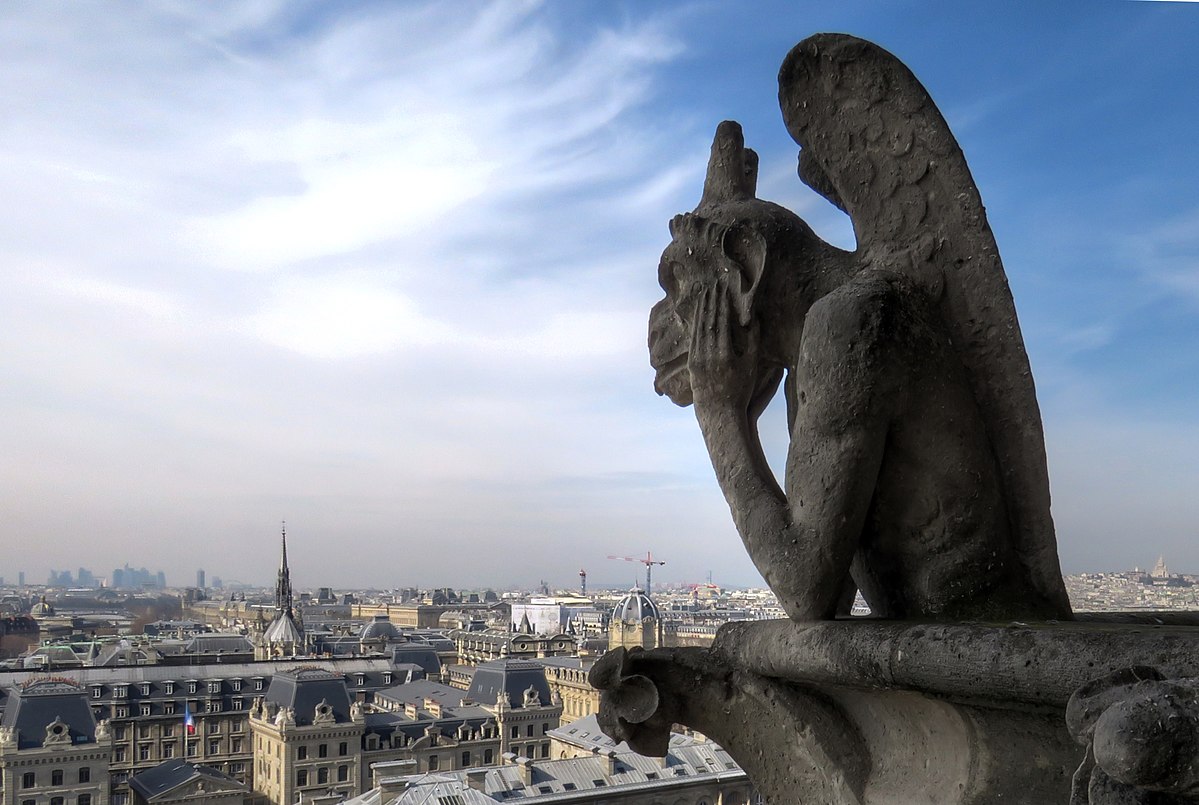
A gargoyle on Notre Dame Cathedral in Paris, overlooking the city skyline under a partly cloudy sky. Prosthetic Head, CC BY-SA 4.0, via Wikimedia Commons
The cathedral stands today on the Île de la Cité as a masterpiece willed back into existence by a single book.
How Gothic engineering supported Notre Dame
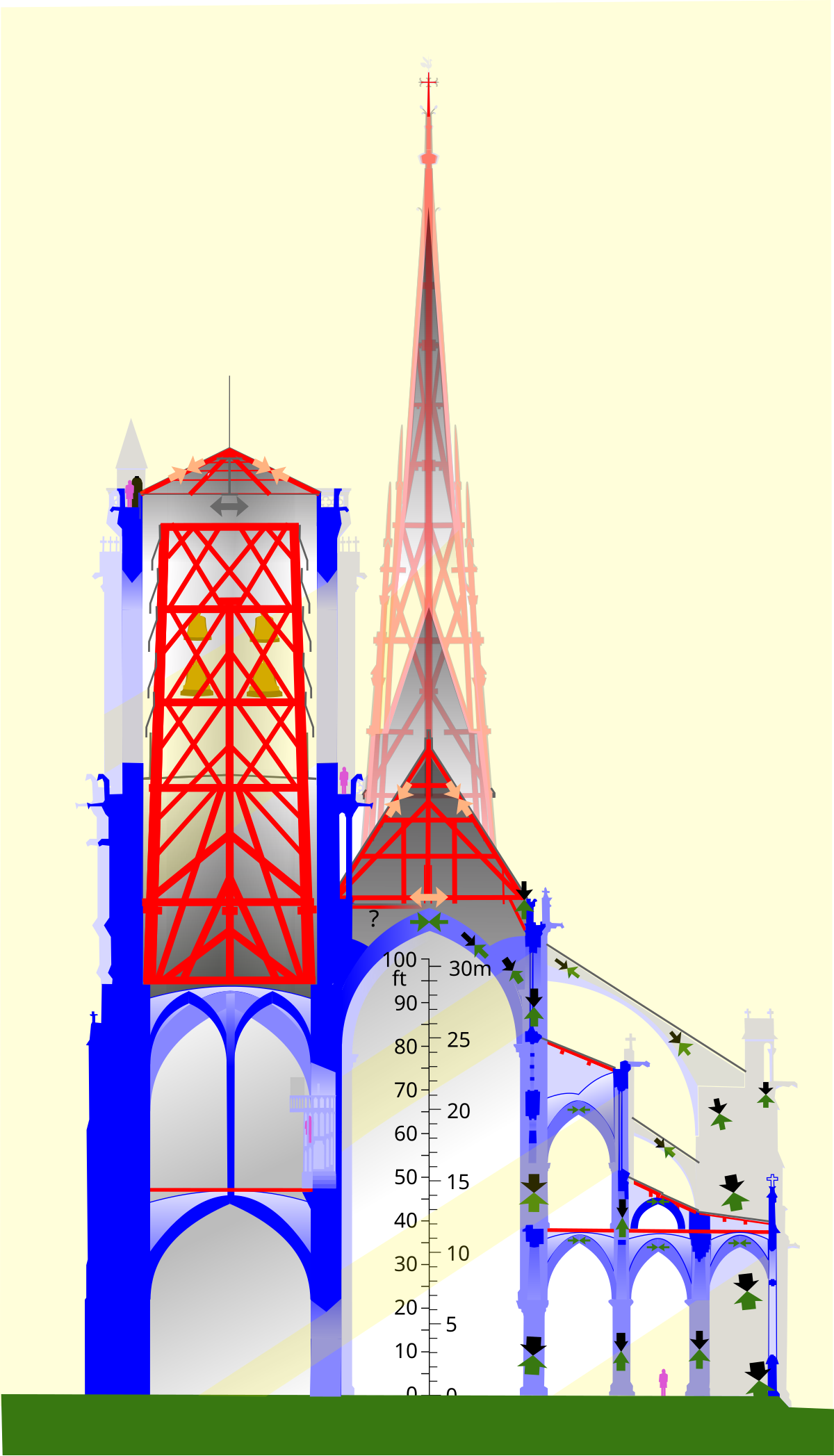
Notre Dame pioneered architectural techniques that broke away from the earlier, heavy Romanesque style. Builders used rib vaults and external flying buttresses to distribute the immense downward and outward weight of high stone ceilings, allowing walls to be constructed higher and thinner.
This diagram illustrates how external flying buttresses channel physical forces away from the high interior rib vaults. Own work, traced from public domain File:Notre Dame 531 transverse crop rot.jpg and heavily altered, mostly using the pu, CC BY-SA 4.0, via Wikimedia Commons
Because these structural supports carried the building's load externally, the cathedral's walls could accommodate massive, colorful stained glass rose windows and tall pointed clerestory windows, filling the interior with natural light.
Historic transformations and revolutions
Construction began in 1163 under Bishop Maurice de Sully on the site of an earlier 4th-century church, Saint Étienne, and an ancient Roman temple dedicated to Jupiter. The main structure was largely complete by 1260, but political upheavals repeatedly reshaped its identity.
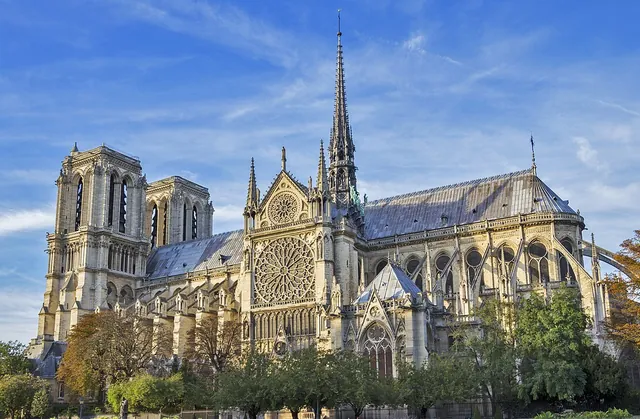
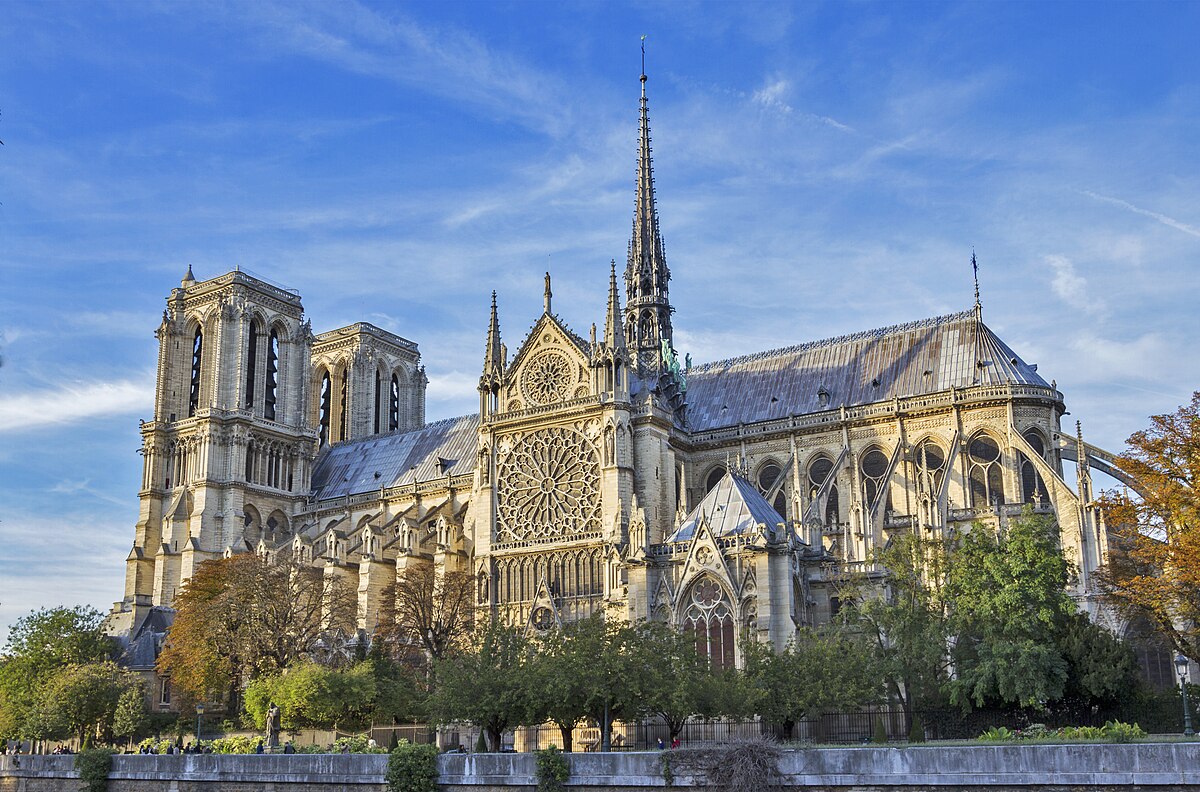
This exterior view displays the cathedral's prominent rose windows, flying buttresses, and the 19th-century spire. Ali Sabbagh, CC0, via Wikimedia Commons
During the French Revolution in the 1790s, the cathedral was heavily desecrated: bronze, lead, and precious metals were seized to be melted down, and it was temporarily converted into a Temple of Reason and Temple of the Supreme Being. Decades later, it served as the setting for the 1804 coronation of Napoleon as Emperor.
Ownership and sacred relics
Since 1905, the French government has owned Notre Dame and maintained responsibility for its upkeep, while the Roman Catholic Church holds exclusive rights of use. It functions as the cathedral church of the Roman Catholic Archdiocese of Paris.
The cathedral preserves some of the most famous relics in Christendom, including the Crown of Thorns, along with a sliver and a nail from the True Cross. Following major repairs after the 2019 fire, the Crown of Thorns relic was returned to the cathedral in December 2024.
Play the lesson in edgi and the card is yours. It lands on your Map next to the ideas it connects to, and turns from matte to foil to gold as you learn more around it.
The French government has owned the cathedral since 1905 and pays for its maintenance. The Roman Catholic Church retains exclusive rights to use the building for worship.
When was Notre Dame reopened after the 2019 fire?
Notre Dame reopened with official ceremonies on December 7 and 8, 2024, following three years of reconstruction. Its Crown of Thorns relic was returned to the cathedral on December 13, 2024.
What existed on the site before Notre Dame was built?
Before Notre Dame, the site held the 4th- or 5th-century Cathedral of Saint Étienne and the 5th-century baptistery of Saint-John-le-Rond. Artifacts like the Pillar of the Boatmen suggest a Gallo-Roman temple dedicated to Jupiter stood there even earlier.