Stained glass is coloured glass cut into shapes and joined into panels, traditionally using grooved lead strips called cames. Rather than letting people look outside, its architectural purpose is to control incoming light and project images or patterns across a space. Because medieval churchgoers were largely unable to read, these illuminated windows served as narrative picture books.
By the edgi team We find the most surprising true thing about an idea and build a 60-second lesson around it.
Medieval stained glass wasn't just decoration for cathedrals. It functioned as a visual Bible for a population that couldn't read.
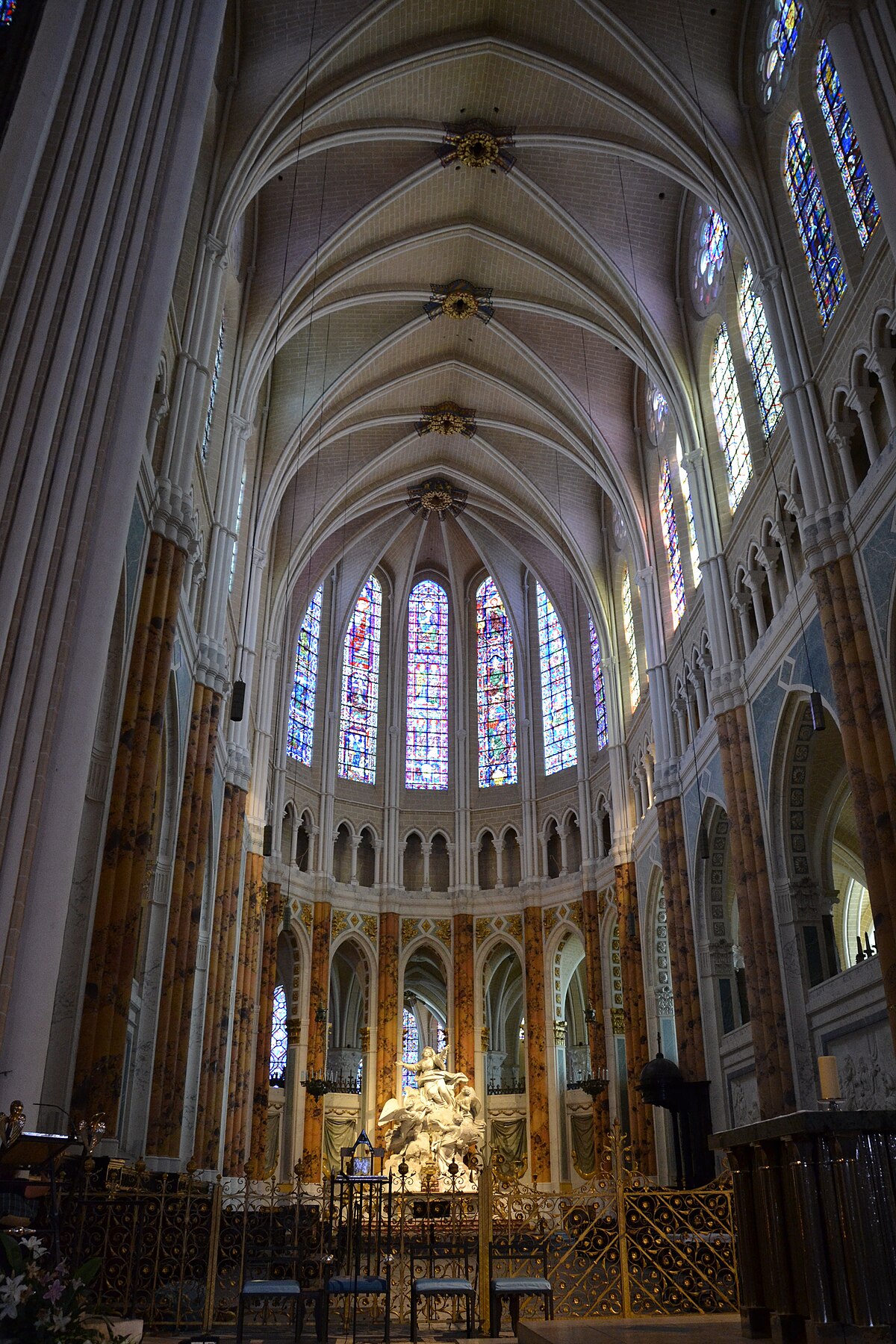
Interior view of Chartres Cathedral, highlighting its soaring vaulted ceilings, tall columns, and numerous stained-glass windows that fill the space with colorful light. Marianne Casamance, CC BY-SA 3.0, via Wikimedia Commons
Craftsmen suspended metallic salts in molten glass to turn sunlight into a narrative experience.
The jewel box
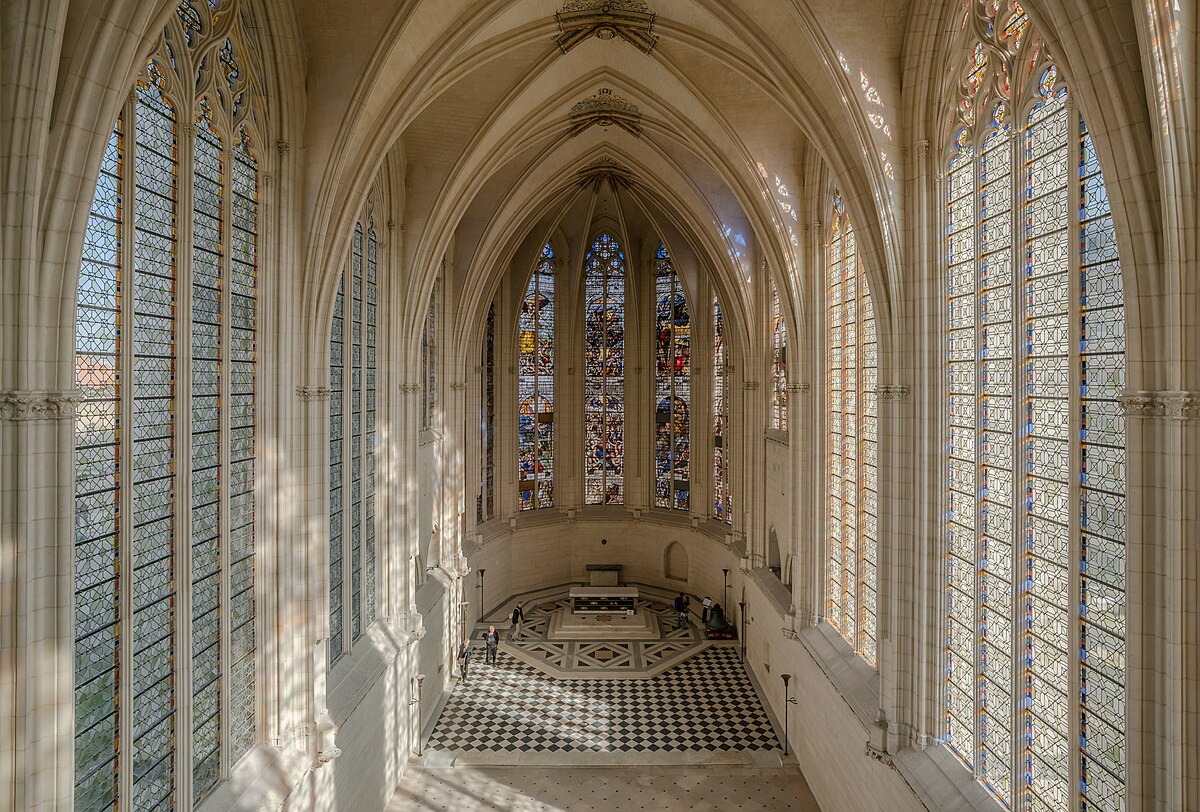
In the 1240s, King Louis IX commissioned Sainte-Chapelle in Paris. He replaced entire stone walls with thousands of square feet of vibrant glass.
An aerial view of the interior of Sainte-Chapelle in Vincennes, showing the high vaulted ceilings and numerous tall stained glass windows. DXR, CC BY-SA 3.0, via Wikimedia Commons
Thin lead strips called came held the glowing panels together. Worshippers stood inside a kaleidoscope of pure color where stone seemed to vanish.
Into the home
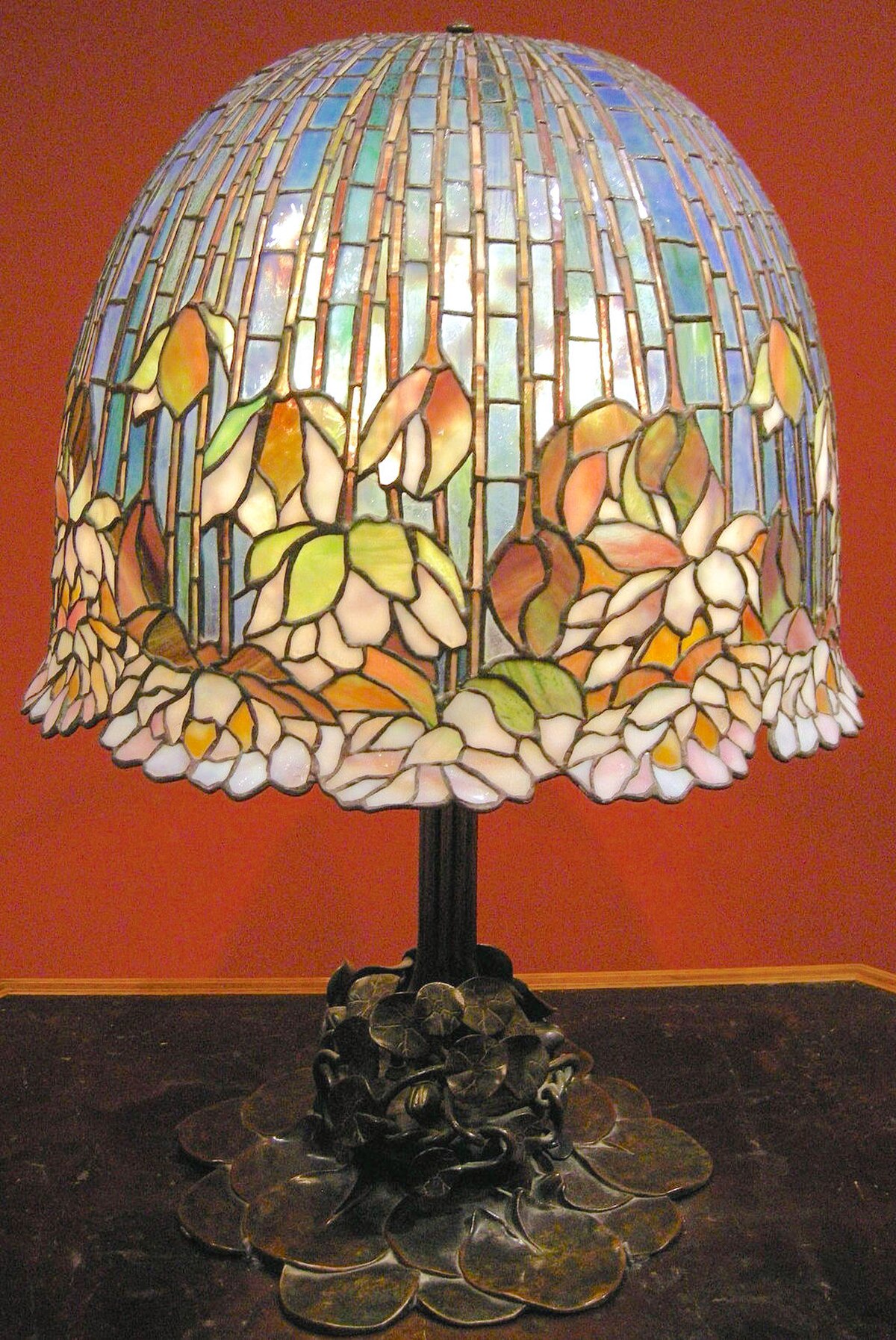
Gothic architecture used these massive windows to reach toward the divine. Centuries later, Louis Comfort Tiffany brought the medium into domestic spaces.
A Louis Comfort Tiffany table lamp, Pomb Lily model, from approximately 1900-1910, featuring a domed stained-glass shade with a pattern of water lilies in various colors. sailko, CC BY-SA 3.0, via Wikimedia Commons
He developed Tiffany glass to mimic the opalescent textures of ancient Roman ruins.
How glass gets its color
Glassmakers create colour by mixing powdered metallic oxides directly into molten silica. Cobalt yields deep blues, copper oxides produce green or blue green, and gold produces wine red and violet. Because gold was costly, artisans also used copper to produce a bright vermilion red.
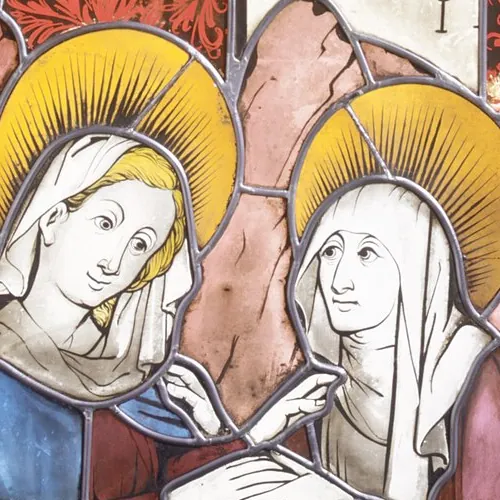
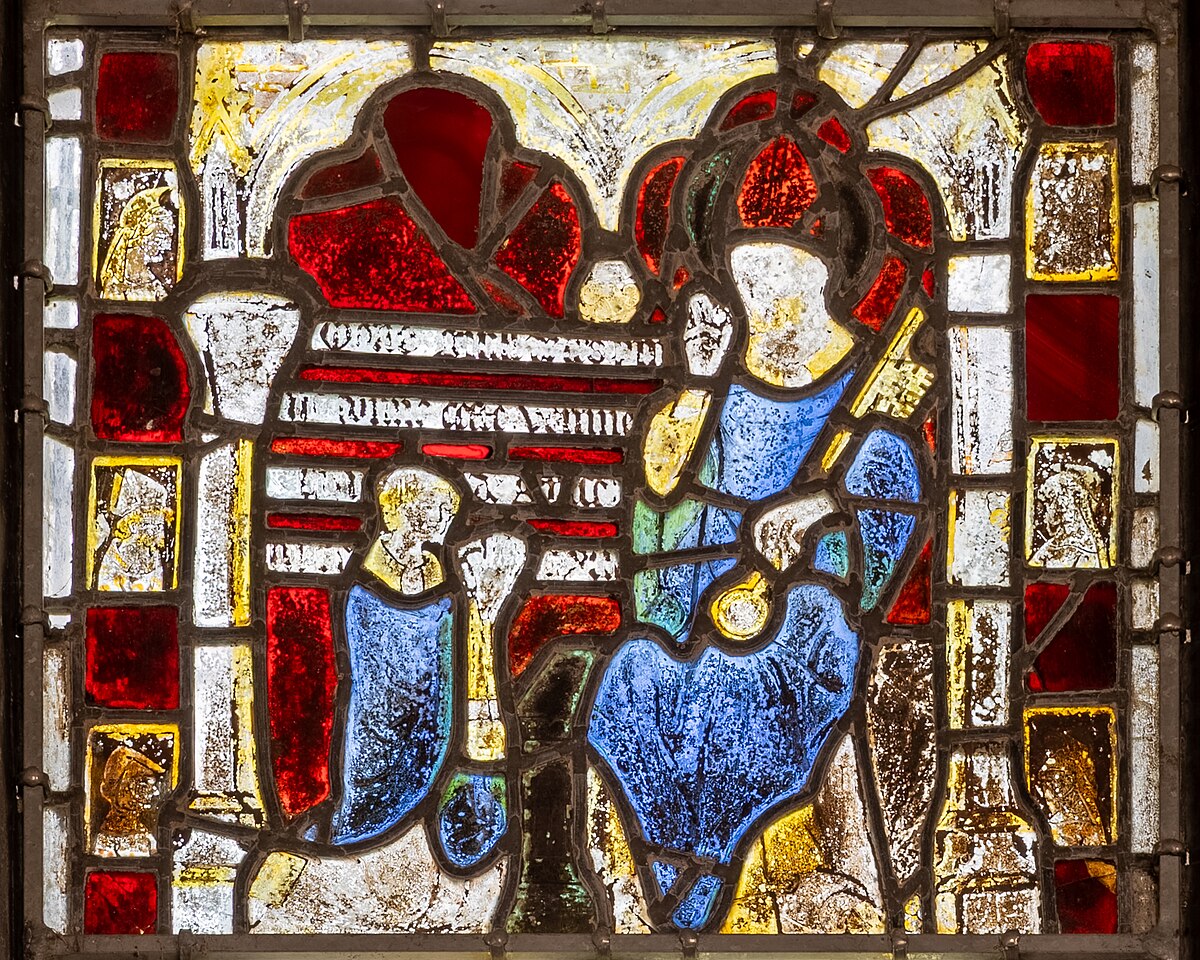
This 1313 church panel shows early use of yellow silver stain, painted and fired directly onto the glass surface. Andreas F. Borchert, CC BY-SA 4.0, via Wikimedia Commons
Glass coloured in the furnace pot is called pot metal glass. When deep colours like red turn out too dark to transmit light at standard window thickness, makers use flashed glass, fusing a thin layer of coloured glass onto a thicker, transparent base sheet.
Blowing, spinning, and rolling flat sheets
Medieval artisans turned molten bubbles into flat window panes using two main hand-blown techniques. In the cylinder method, glassblowers blew and swung a molten gather into a long tube, cut off the ends, slit the side, and flattened it in an oven. Crown glass involved spinning a blown bubble rapidly on a pontil rod until centrifugal force flattened it into a round disc, leaving a thick bull's-eye lump in the center.
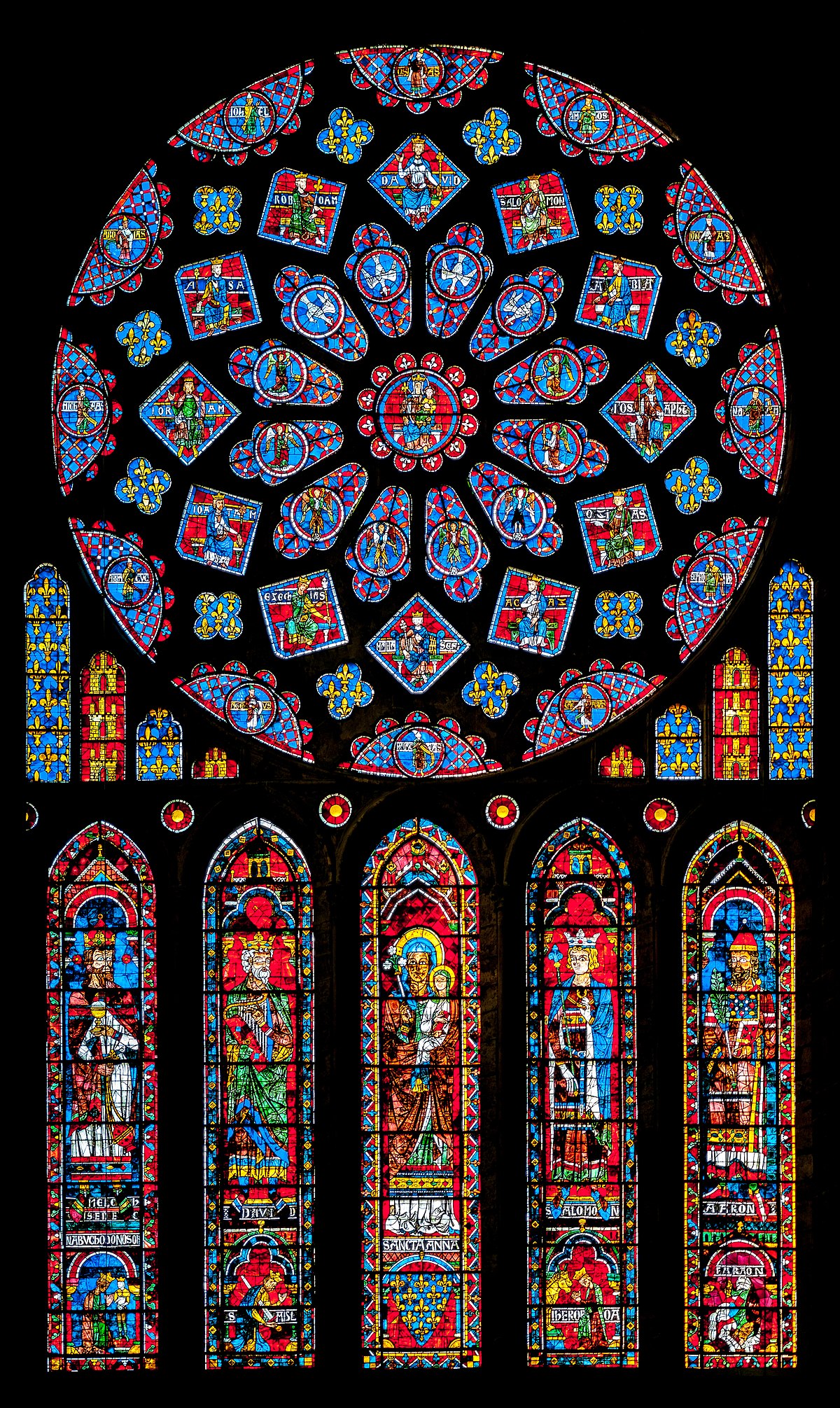
The north rose window of Chartres Cathedral uses hand-blown colored glass set into complex stone tracery and lead cames. PtrQs, CC BY-SA 4.0, via Wikimedia Commons
In the 1830s, commercial makers introduced rolled glass by pouring molten batches onto metal tables and flattening them with heavy cylinders. Modern stained glass artists use both hand-blown and machine-rolled sheets, assembling them into windows, sculpture, and domestic lamps like those designed by Louis Comfort Tiffany.
Play the lesson in edgi and the card is yours. It lands on your Map next to the ideas it connects to, and turns from matte to foil to gold as you learn more around it.
Pieces of cut glass are joined using thin, flexible lead strips known as cames or calms. The assembled panel is then mounted within a rigid frame capable of withstanding wind pressure and the structural weight of the window.
Why is some rolled glass called cathedral glass?
Cathedral glass is a commercial trade name for machine-rolled glass produced from the mid-nineteenth century onward. It was never used in actual medieval cathedrals, which relied entirely on mouth-blown cylinder and crown glass.