Rose windowHow stone circles hold up cathedral walls
A rose window is a large circular window divided into segments by stone tracery, most famously built into Gothic cathedrals. Its round shape distributes the heavy weight of stone walls evenly, letting medieval masons install vast expanses of stained glass without structural collapse. Because most medieval churchgoers could not read, these colorful windows served as visual storytelling tools illuminated by shifting sunlight.
By the edgi team We find the most surprising true thing about an idea and build a 60-second lesson around it.
A rose window is a massive circular window found in Gothic cathedrals, divided into segments by stone tracery. Unlike a tall lancet window, the circular shape distributes the weight of the stone wall evenly.
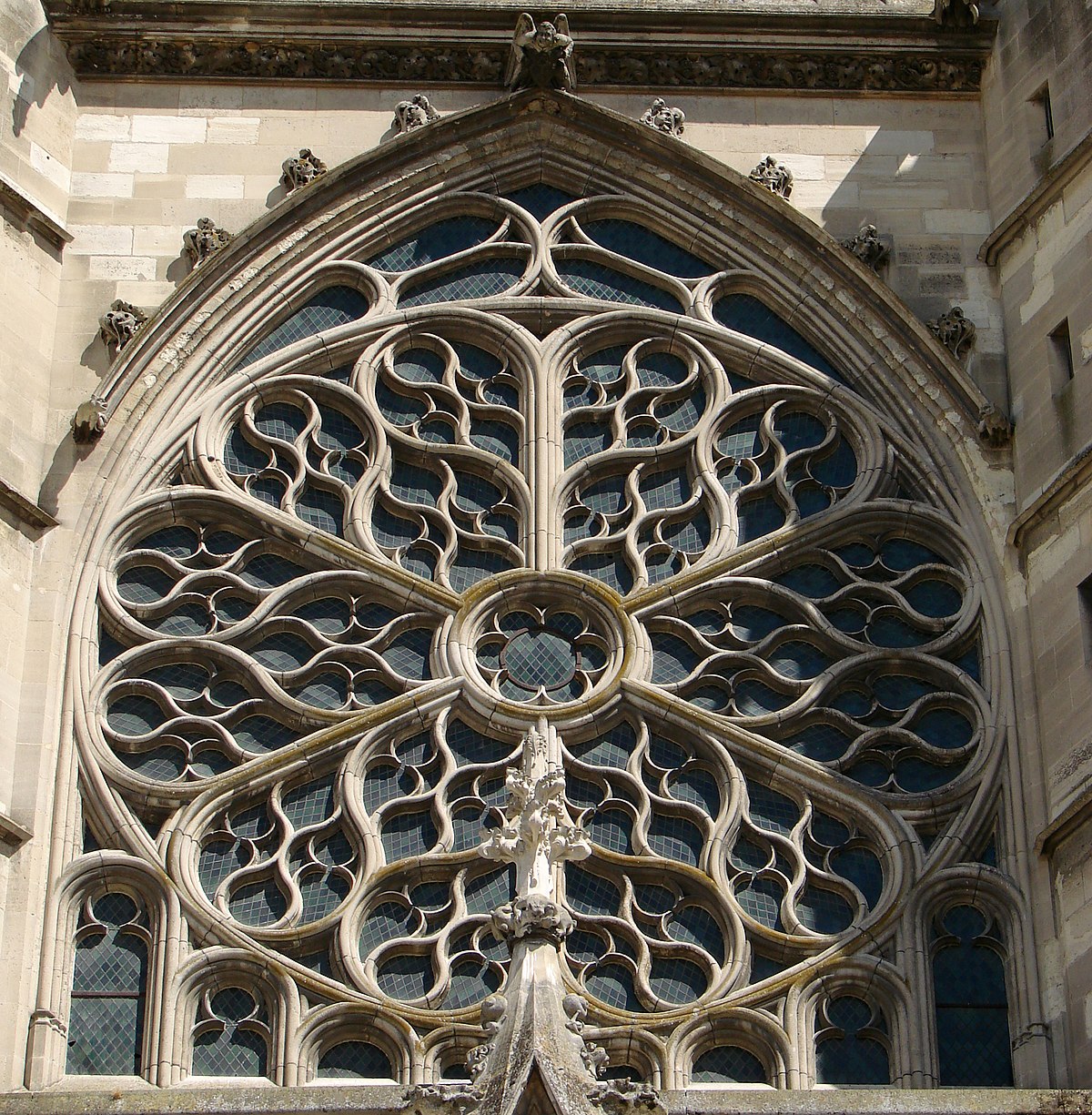
A grand rose window with elaborate stone tracery adorns the facade of the Cathédrale de Meaux. Vassil, CC BY 3.0, via Wikimedia Commons
This structural trick allowed builders to punch enormous holes in heavy walls without the building collapsing.
The bible in color
In medieval Europe, most people could not read, so cathedrals relied on visual storytelling. Stained glass windows acted as a Bible for the illiterate, using sunlight to project biblical scenes across the interior.
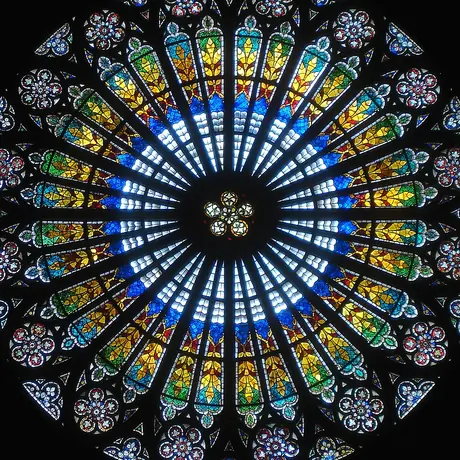
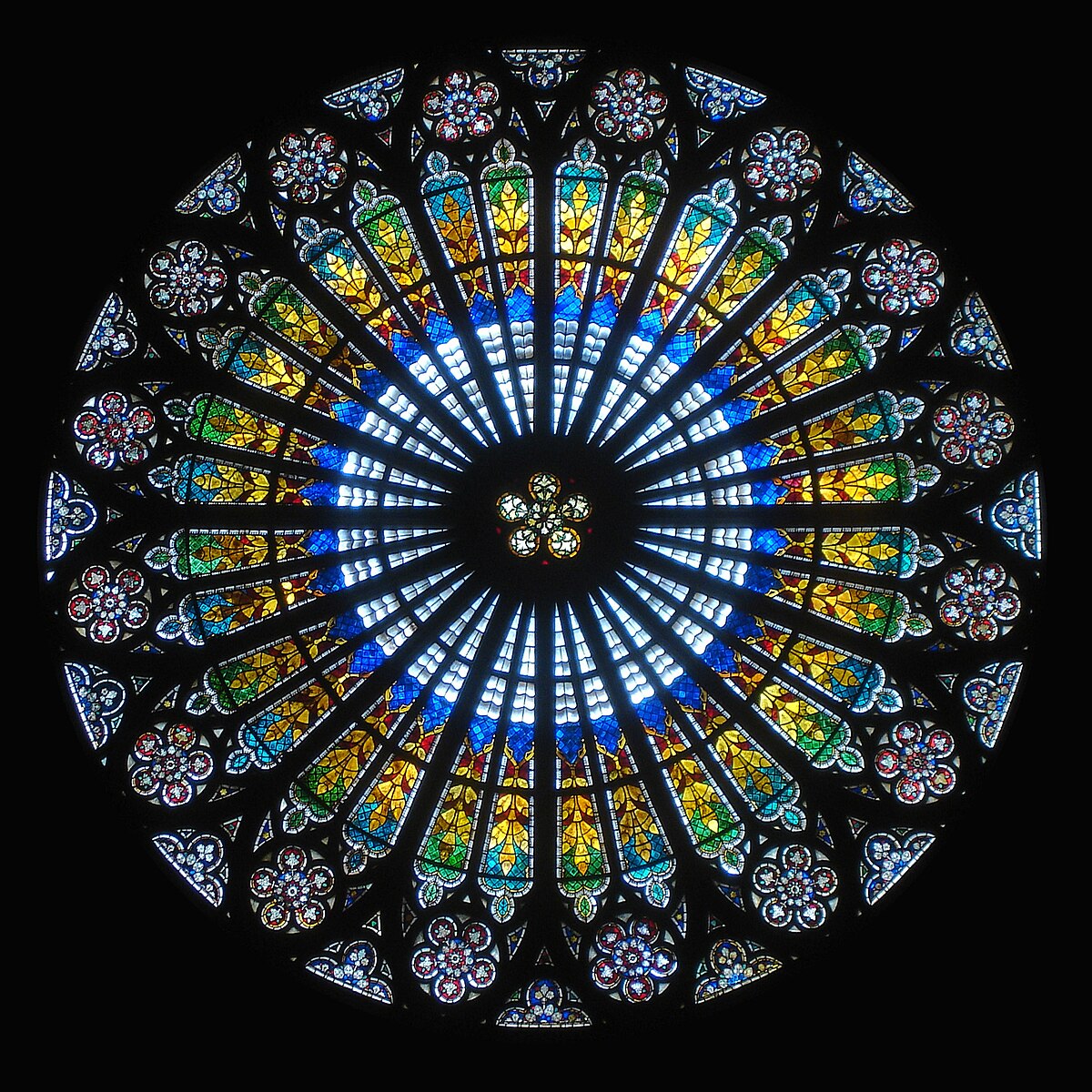
The interior view of the rose window at Strasbourg Cathedral displays vibrant stained glass in a radial pattern. Clostridium, Public domain, via Wikimedia Commons
At Notre Dame in Paris, glass tinted with silver and cobalt created a deep violet glow that shifted as the sun moved.
The skeleton
Medieval masons achieved this by perfecting stone tracery, a delicate skeleton that looks like lace but acts like a ribcage. A central mullion branched out into complex geometric patterns that mirrored the mathematical perfection of the heavens.
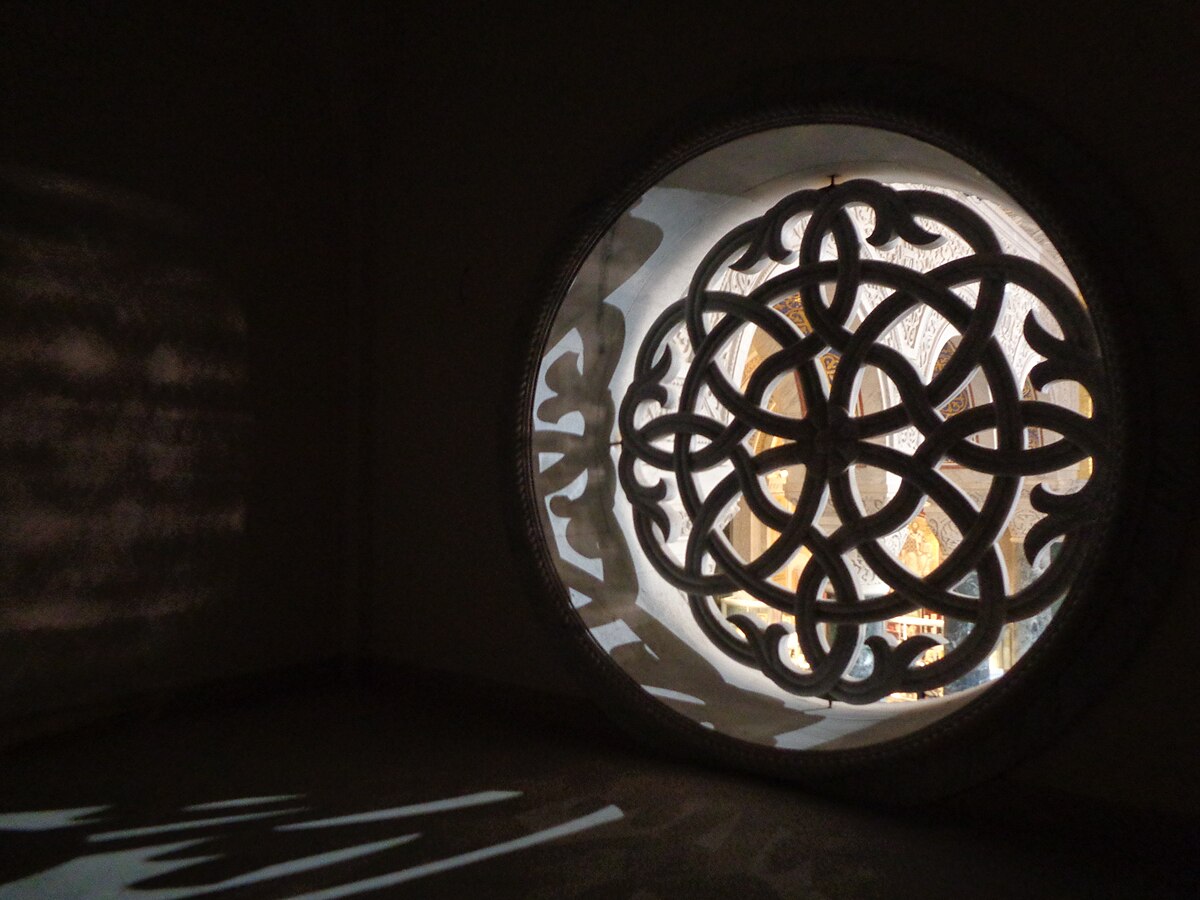
A rose window with an intricate geometric pattern is seen in shadow, casting light patterns on the surrounding wall inside the Church of Saint Sava in Belgrade. Andrija12345678, CC BY-SA 4.0, via Wikimedia Commons
While a gargoyle guarded the roofline, the rose window pulled the viewer's gaze toward a single, luminous center.
How stone tracery creates a structural skeleton
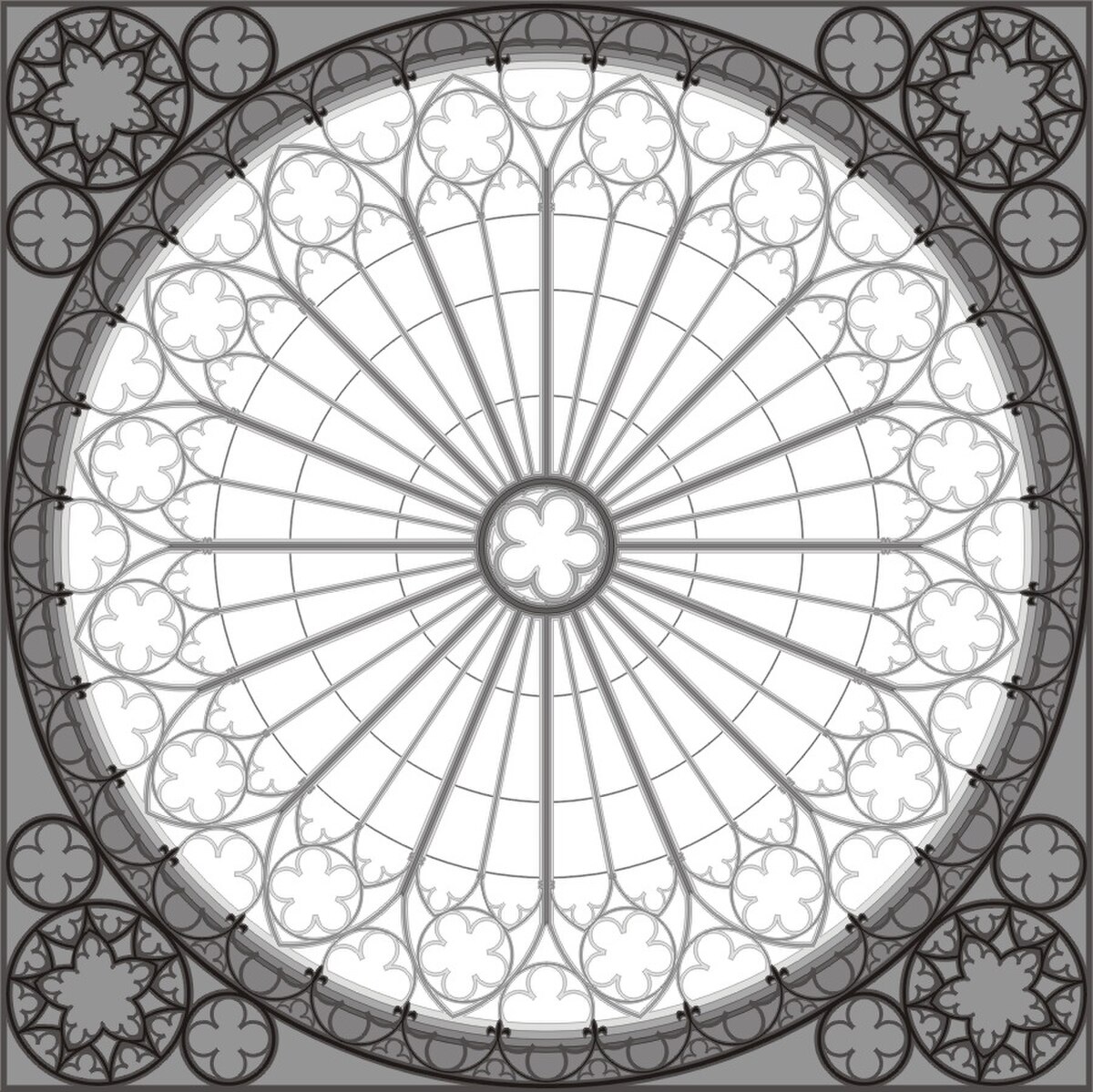
A rose window acts like a stone ribcage. Stone mullions and tracery branch outward from a central boss or mullion into geometric patterns, supporting the surrounding masonry while framing individual panes of glass.
This architectural drawing reveals the geometric stone ribs that distribute structural weight outward across the circle. CC BY-SA 2.0 de, via Wikimedia Commons
Earlier circular openings began as simple oculi or pierced stone known as plate tracery, seen in transitions like the Dean's Eye at Lincoln Cathedral. As masonry evolved, masons perfected finer stone ribs, allowing larger openings in cathedrals across Northern France and beyond.
Styles from wheel windows to Flamboyant Gothic
The simplest variations are wheel windows, which use straight stone spokes radiating like a wagon wheel. These were common during the Romanesque period and in Italian Gothic buildings. Later Rayonnant Gothic designs, such as those at St Denis and the north transept of Westminster Abbey, added mullions terminating in pointed arches and quatrefoils.
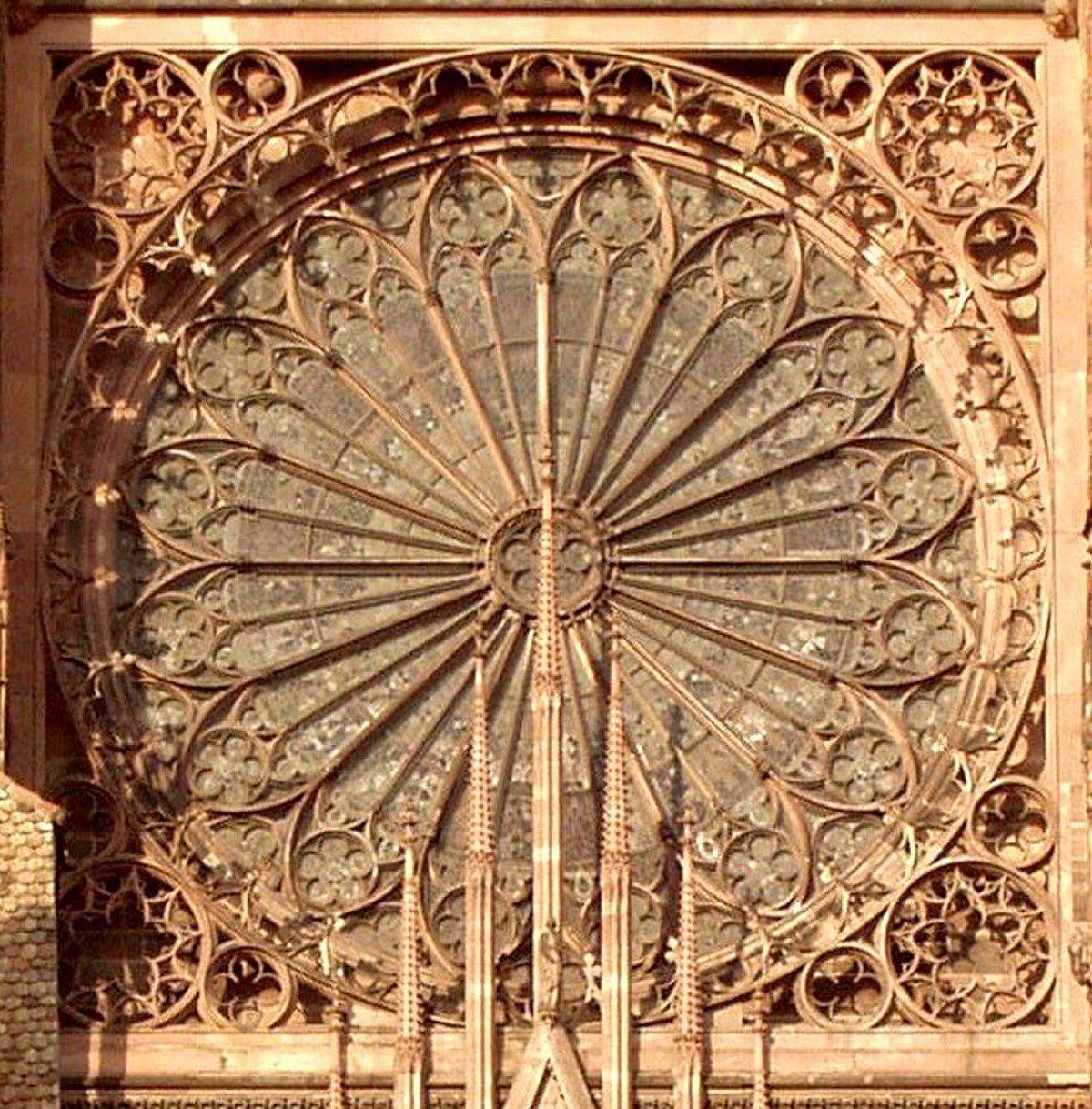
The exterior facade shows the dense, radiating tracery typical of high medieval Gothic church design. User:Magadan, modified TTaylor, CC BY-SA 3.0, via Wikimedia Commons
Late Gothic architects developed Flamboyant styling, where S-shaped stone curves resemble flickering flames. At Lincoln Cathedral, the Bishop's Eye window abandons standard symmetry to depict two ears of wheat in stone, while cathedrals like Sainte-Chapelle and Beauvais used similar fluid lines.
Where the design originated
The structural root of the circular window comes from the Roman oculus, an unglazed round opening like the one at the top of the Pantheon dome. Geometric rosette patterns also decorated Roman mosaics, early Christian churches, and Visigothic architecture.
The specific term rose window only appeared in the 17th century, derived from the English flower name. Circular designs are also known as Catherine windows, referring to Saint Catherine of Alexandria and the spiked wheel of her execution.
Play the lesson in edgi and the card is yours. It lands on your Map next to the ideas it connects to, and turns from matte to foil to gold as you learn more around it.
What is the difference between an oculus and a rose window?
An oculus is a simple circular opening without stone tracery, which can be open to the air, glazed, or filled with alabaster. A rose window specifically uses stone mullions and tracery to divide the circle into complex patterns.
Why are some rose windows called Catherine windows?
They are named after Saint Catherine of Alexandria. Christian tradition holds that she was sentenced to execution on a spiked breaking wheel, which shares the round, spoked shape of early wheel windows.
How did Renaissance and Baroque architects use circular windows?
Renaissance builders moved away from Gothic tracery, returning to plain circular oculi in pediments or domes. Baroque architects frequently used oval openings with simple framing, using them to subtly light church interiors rather than dominate the facade.