Piperine is a plant compound known as an alkaloid that gives black and long pepper their pungent bite. Rather than having a real taste, it triggers the mouth's heat sensors so your brain registers burning heat. It also slows down liver enzymes, helping medications and nutrients linger in your bloodstream.
By the edgi team We find the most surprising true thing about an idea and build a 60-second lesson around it.
Piperine is the chemical alkaloid that gives black pepper its signature bite. It does not actually have a flavor. Instead, it activates the TRPV1 receptor in your mouth.
These receptors are designed to detect real heat and acid burns. Your brain receives a false signal that your mouth is literally on fire.
The physicist's discovery
In 1819, Hans Christian Ørsted, the famous physicist who discovered electromagnetism, isolated piperine from peppercorns for the first time. He proved it was a distinct chemical from capsaicin, the heat source in chili peppers.
A chemical structure diagram of capsaicin, showing its molecular arrangement with a benzene ring, a methoxy group, a hydroxyl group, an amide linkage, and an unsaturated alkyl chain. Pyrovalerone, CC0, via Wikimedia Commons
While capsaicin is oily and lingers, piperine is more volatile, giving it that sharp, immediate sneezing kick we associate with fresh pepper.
The chemical bodyguard
Piperine's most useful trick happens long after the spice hits your tongue. It inhibits liver enzymes that normally flush out medicine, allowing drugs and nutrients to stay in your bloodstream much longer.
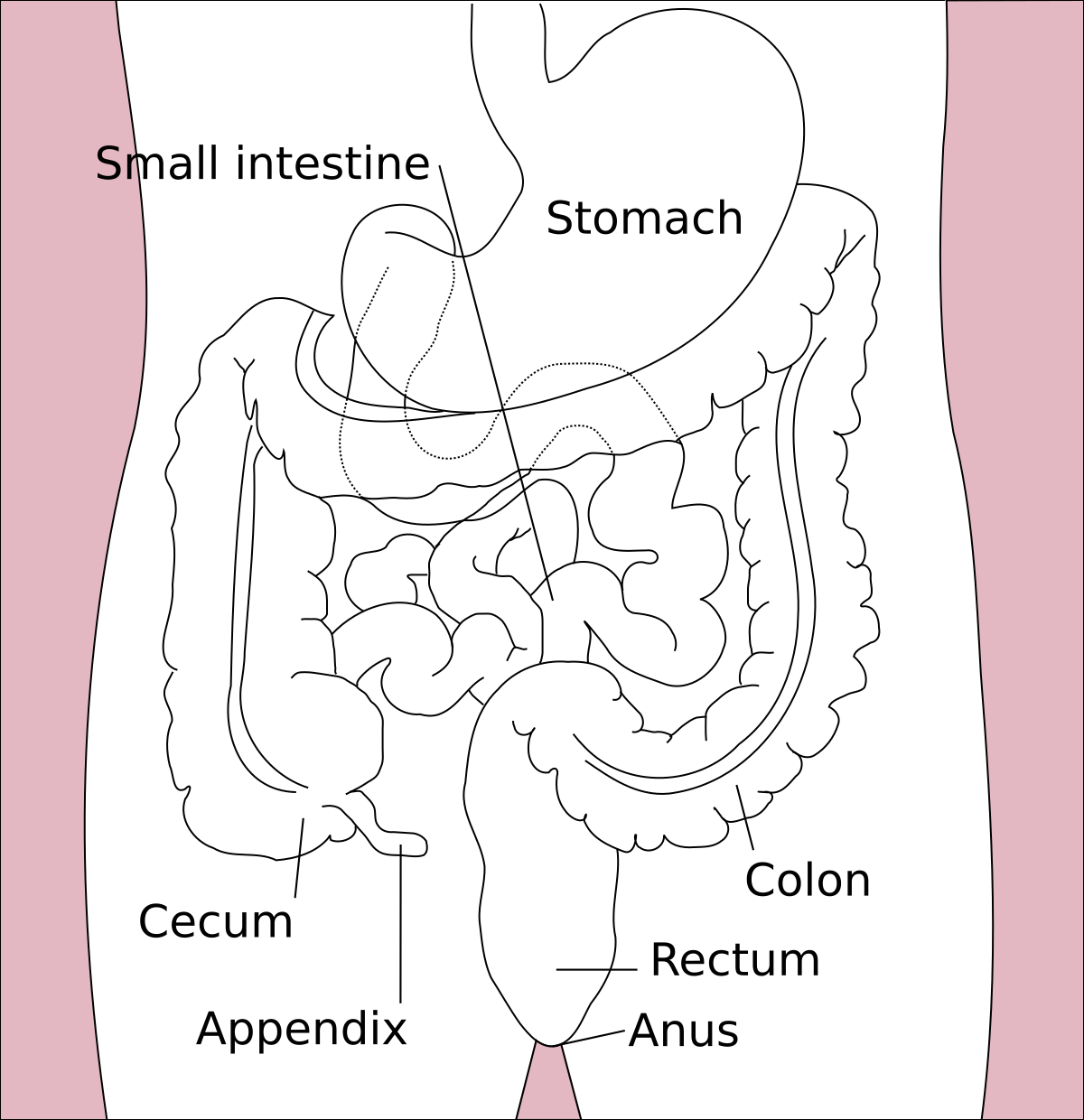
Diagram illustrating the human digestive system, focusing on the stomach, small intestine, and large intestine within the torso. Indolences created it on the English Wikipedia. This SVG image was created by Medium69. Cette image SVG a été créée par , Public domain, via Wikimedia Commons
This makes it a powerful bioavailability enhancer, acting like a chemical bodyguard that escorts medicine past your body's natural filters.
How piperine creates the sensation of heat
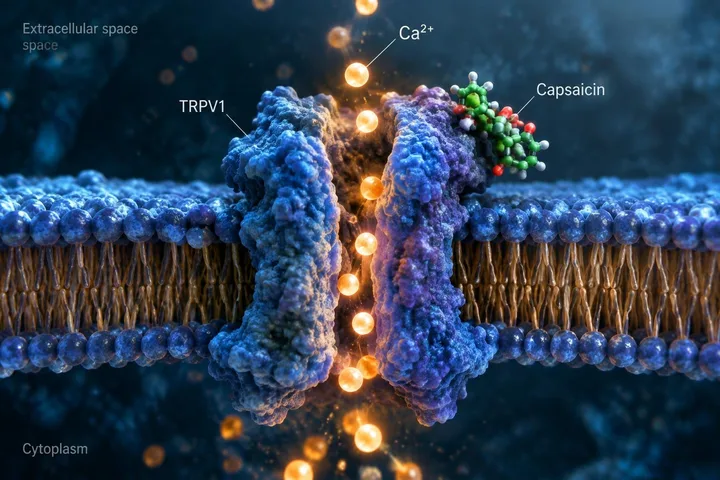
Piperine creates its sharp heat by latching onto the TRPV1 receptor in the mouth, which normally detects extreme physical heat and acid burns. Because it triggers this sensor, the nervous system registers a false alarm of fire.
This chemical structure diagram shows piperine's backbone, which binds to heat receptors in the mouth. AlyInWikiWonderland, Public domain, via Wikimedia Commons
Hans Christian Ørsted first isolated the chemical from peppercorns in 1819, showing it was distinct from capsaicin, the burning agent in chili peppers. Unlike capsaicin, piperine is more volatile, creating that sharp and immediate kick that can provoke sneezing.
When exposed to light, particularly ultraviolet light, piperine breaks down into tasteless isomers like chavicine, isochavicine, and isopiperine.
Extraction and chemical properties
Commercial black and white peppers contain 5 to 10 percent piperine, while long pepper species hold 1 to 2 percent. Piperine does not dissolve well in water, so extractors pull it from peppercorns using organic solvents such as ethanol or dichloromethane.
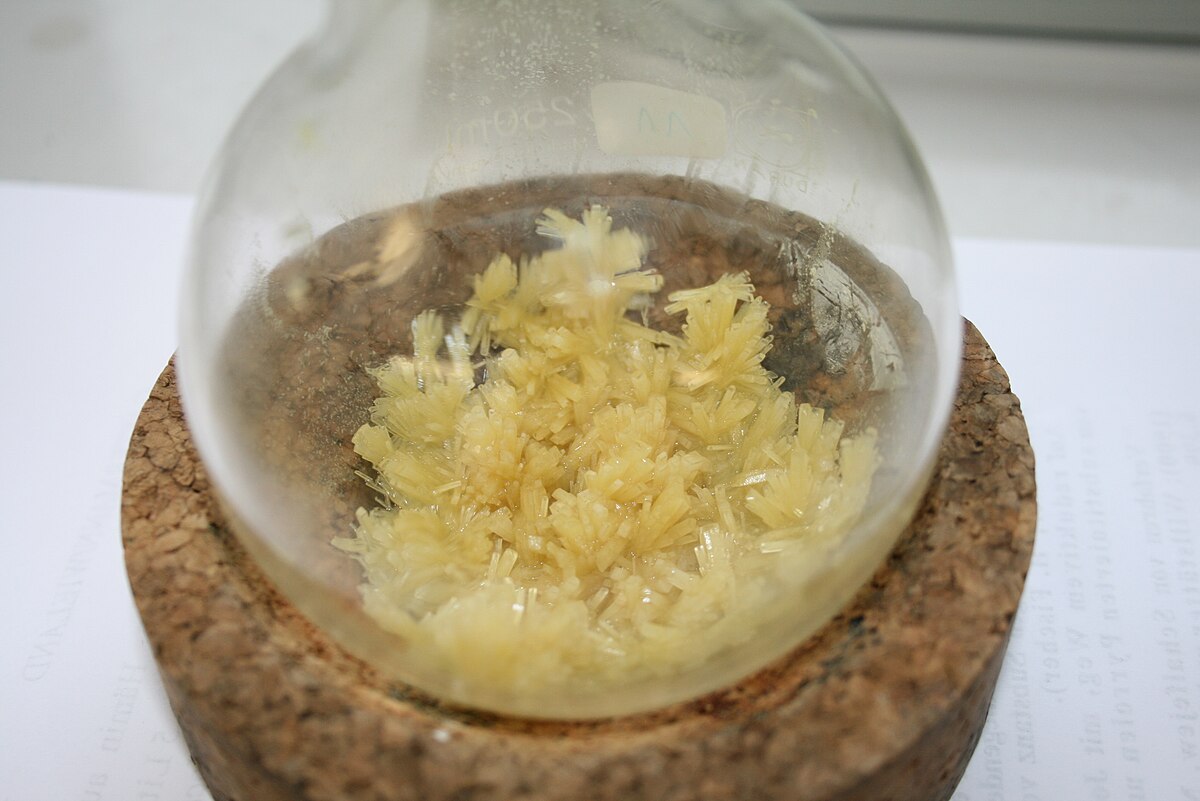
Needle-like yellow piperine crystals form after extracting the alkaloid from pepper using organic solvents. The author is impz, CC BY 3.0, via Wikimedia Commons
Synthetically, chemists produce piperine through the reaction of piperonoyl chloride with piperidine. When treated with alkalis, the molecule breaks down into piperic acid and piperidine.
Everyday uses and medicinal effects
In the body, piperine inhibits enzymes such as CYP2J2 in the liver. By slowing down the natural systems that filter and clear foreign substances, it allows medications and nutrients to remain in the bloodstream longer.
Outside of cooking and medicine, piperine serves as an ingredient in fragrances, an insecticide, and an animal pest repellent. At extreme doses above 300 milligrams per kilogram of body weight, the substance becomes acutely toxic if swallowed.
Test yourself
How does piperine create the sensation of heat in black pepper?
By activating sensory receptors for physical heat. Piperine does not cause actual thermal or chemical damage. It tricks the nervous system by directly stimulating the TRPV1 receptors responsible for detecting real heat and acid burns.
Does piperine generate heat by chemically burning tissue or by hijacking sensors?
Hijacking heat sensors. Piperine does not cause physical thermal damage; it mimics heat by activating the body's TRPV1 receptors, which are normally reserved for detecting actual burns.
Play the lesson in edgi and the card is yours. It lands on your Map next to the ideas it connects to, and turns from matte to foil to gold as you learn more around it.
Piperine comes from Piper nigrum, the plant source of black and white pepper. It also occurs naturally in long pepper species, including Piper longum and Piper officinarum.
What happens if piperine is exposed to strong acids?
Piperine forms salts only when combined with strong acids. For instance, reacting it with platinic chloride creates orange-red needle crystals.