Scoville ScaleWhy chili heat was tested on tongues
The Scoville scale is a measurement system that rates the heat of chili peppers in units called Scoville Heat Units (SHU). It tracks the concentration of capsaicinoids, which are the chemical compounds that trigger heat receptors in your mouth. A score represents how much an extract had to be diluted with sugar water before human tasters could no longer feel the burn.
By the edgi team We find the most surprising true thing about an idea and build a 60-second lesson around it.
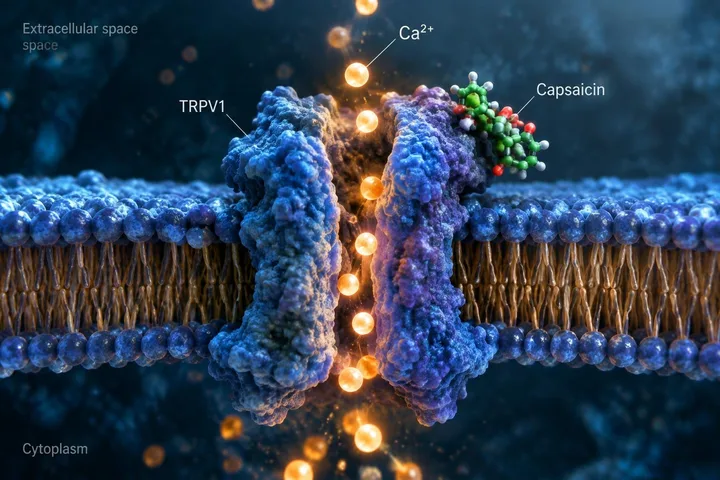
Spiciness isn't a flavor; it's a pain response. A chemical called capsaicin tricks your nerves into feeling actual heat. The Scoville scale measures this by determining how much sugar water is needed to dilute a pepper's oil until the burn vanishes.
A flowchart illustrating various diagnostic tests for halitosis, titled "HALITOSIS MEASUREMENT". Aydinmur, CC BY-SA 4.0, via Wikimedia Commons
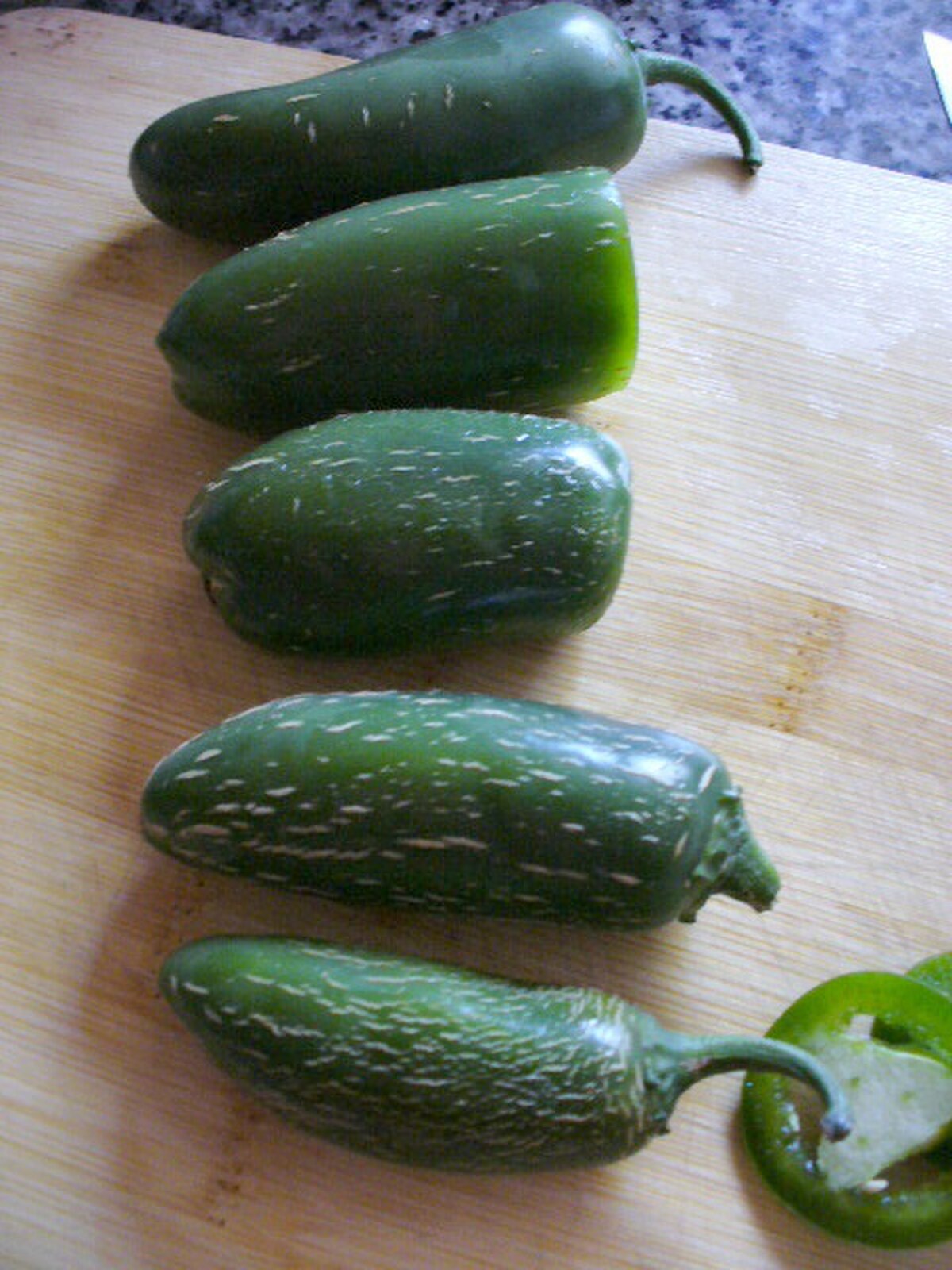
A jalapeño sits at 5,000 units, meaning its extract must be diluted 5,000 times before it stops stinging.
The endurance test
In 1912, pharmacist Wilbur Scoville wasn't looking for a kitchen tool. He was trying to standardize a muscle-soothing cream. His organoleptic test relied on a panel of five humans who sipped increasingly diluted samples.
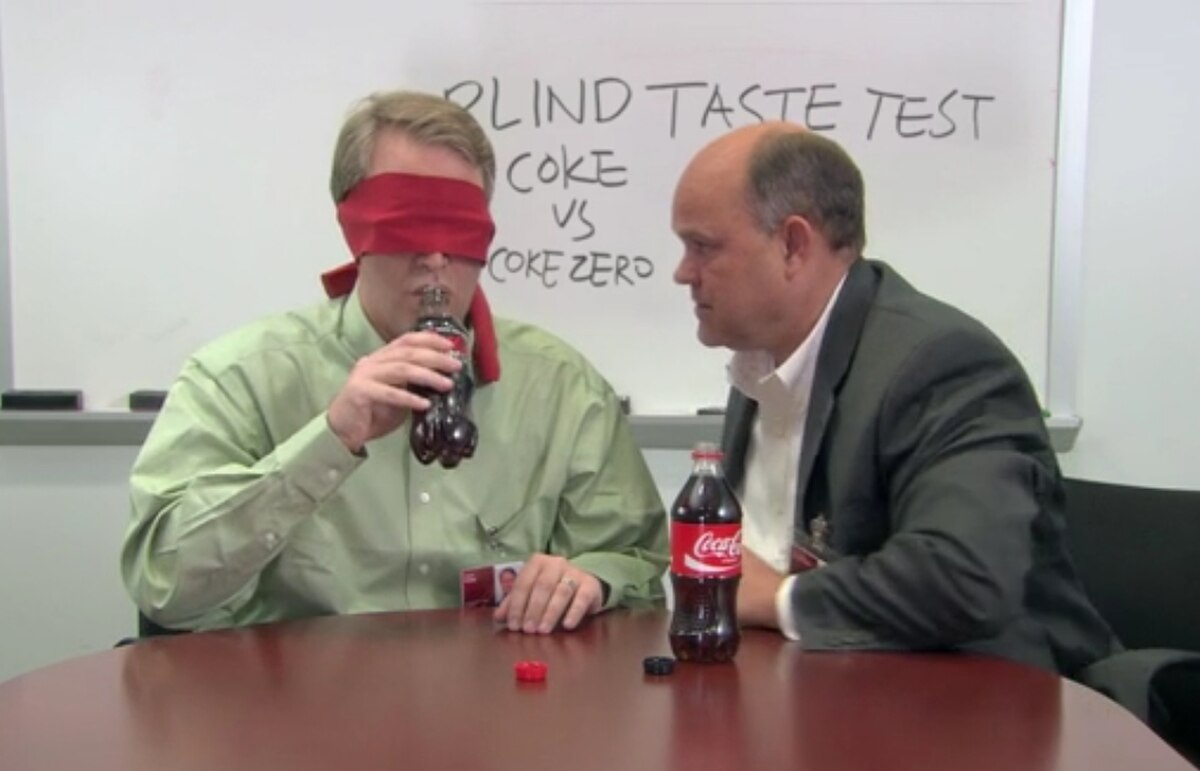
A single-blind taste test in progress, with a blindfolded man tasting a cola while another man observes. Crispin Porter + Bogusky, CC BY 3.0, via Wikimedia Commons
If three out of five tasters still felt the burn, the dilution continued. The first heat ratings were literally a test of how much pain the researchers could endure.
Modern measurements
Today, we use high-tech chemistry, liquid chromatography, to find the exact concentration of capsaicinoids in a pepper. We no longer need the human tasters, but we still honor the scale by reporting the results in Scoville Heat Units.
While a bell pepper sits at zero, the Carolina Reaper hits 2.2 million. Humans are the only species that seeks out this chemical defense mechanism for fun.
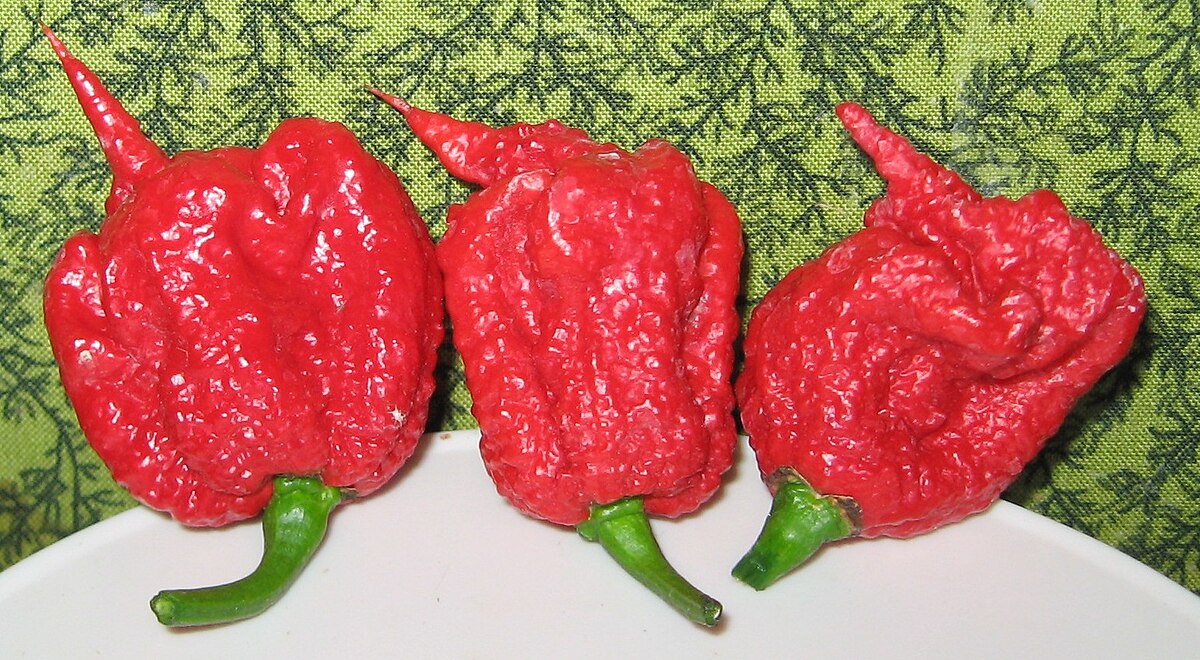
Three red Carolina Reaper pepper pods are displayed on a white surface against a green patterned background. Dale Thurber, CC BY-SA 3.0, via Wikimedia Commons
How the original Scoville test worked
In 1912, American pharmacist Wilbur Scoville devised the Scoville organoleptic test. An exact weight of dried pepper was dissolved in alcohol to extract its capsaicinoids, then mixed into sugar water. A panel of five trained tasters sampled the mixture at higher and higher dilutions until at least three could no longer detect any heat. The rating was reported in multiples of 100 SHU.
The method suffered from human limitations. A taster's sensitivity depended on their individual mouth heat receptors, and tasting several samples in a short time caused sensory fatigue. Because individual palates desensitize quickly, test results between different laboratories varied by up to 50%.
How modern laboratories measure heat
Since the 1980s, laboratories have replaced taste panels with high-performance liquid chromatography (HPLC). This process separates and measures the exact concentration of heat-producing capsaicinoids in dried pepper samples dissolved in acetonitrile. Capsaicin is the primary compound measured, alongside dihydrocapsaicin.
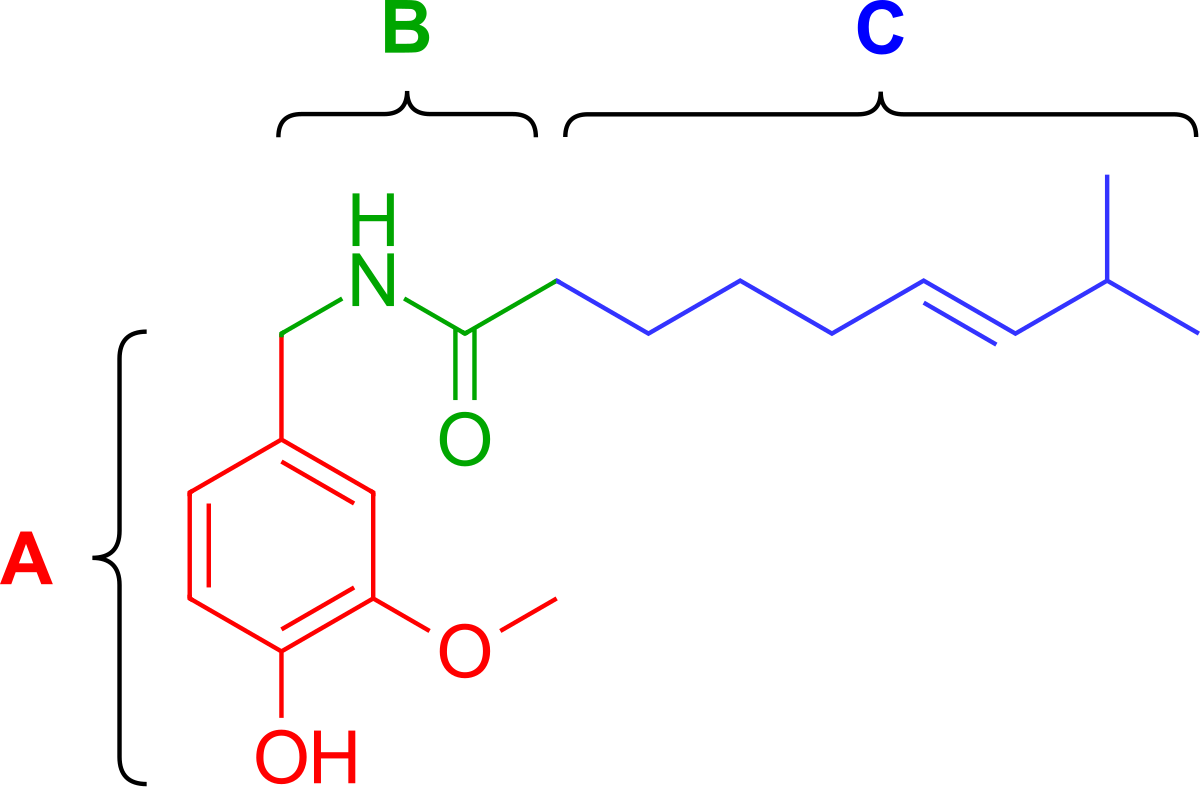
The molecular structure of capsaicin, the primary capsaicinoid that triggers heat sensations in humans. Vaccinationist, Public domain, via Wikimedia Commons
HPLC results are recorded as parts per million of heat (ppmH), defined as parts of capsaicin equivalent per million parts of dried pepper mass. Scientists convert these chemical concentrations back into standard Scoville Heat Units by multiplying the ppmH value by 15 or 16. This approach eliminates human error while keeping the historical scale intact.
Why Scoville numbers vary so widely
A single pepper species can vary in pungency by a factor of 10 or more. Seed lineage, climate, humidity, soil nutrients, and the ripeness of the fruit all change how much capsaicinoid a plant produces. Pepper ratings range from 0 SHU for a sweet bell pepper to over 2.6 million SHU for Pepper X.
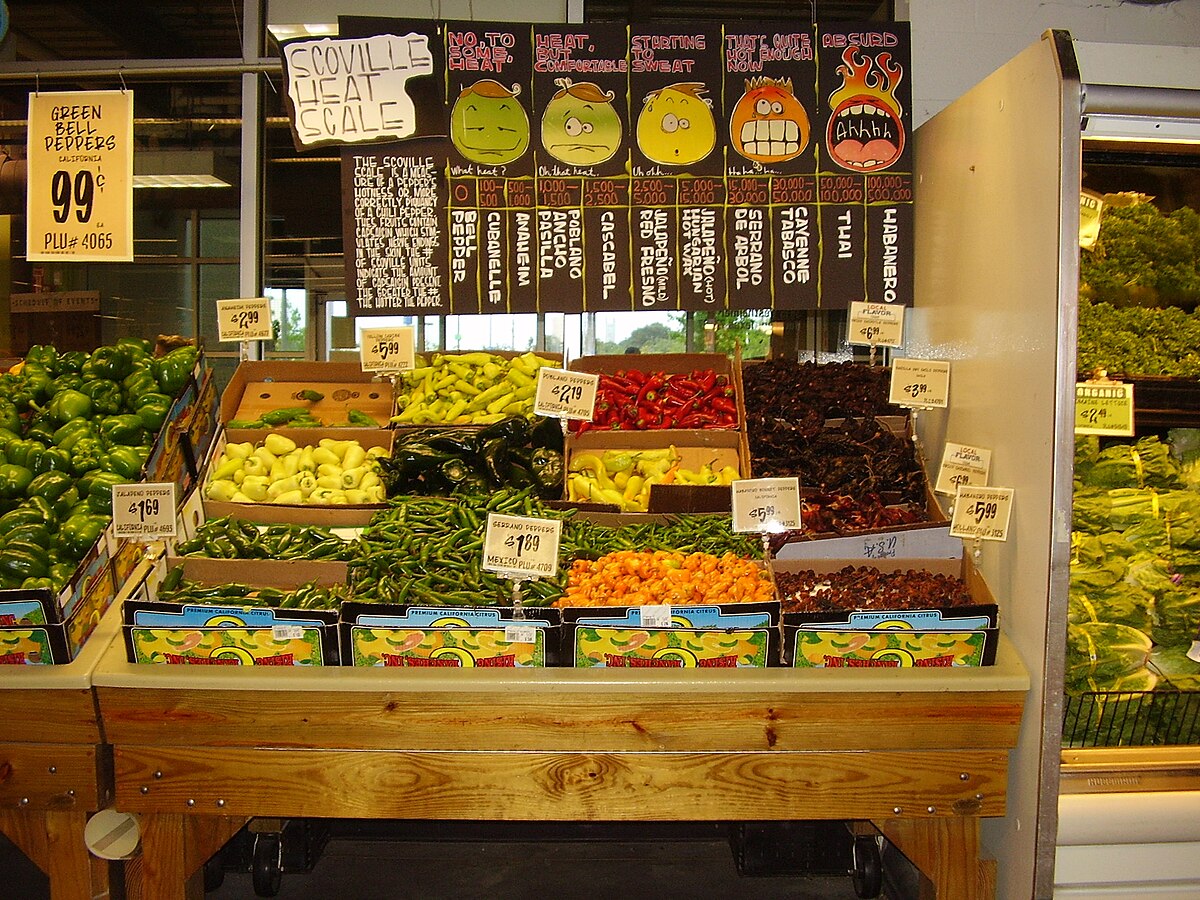
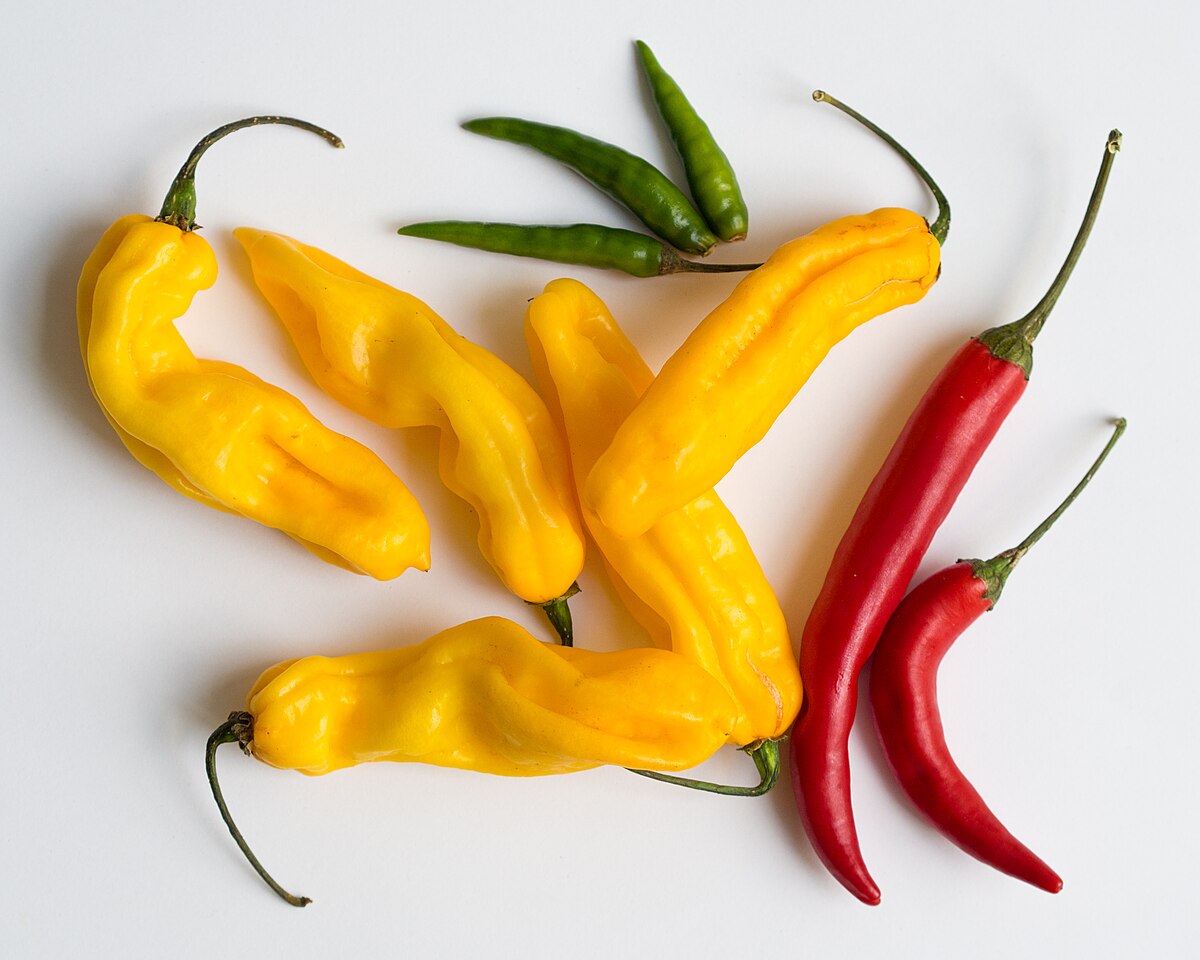
A grocery display grouping different chili pepper varieties by their Scoville heat ratings. WhisperToMe, Public domain, via Wikimedia Commons
Water content also skews perceived heat. Scoville ratings are calculated per unit of dry mass. A fresh chili contains around 90% water, while Tabasco sauce contains roughly 95% water, which means comparing fresh peppers directly to bottled sauces or pepper sprays requires adjusting for moisture differences.
Test yourself
What does a Scoville rating of 5,000 mean?
Diluted 5,000 times to stop the burn. The score reflects the dilution ratio needed until human testers feel no sting, rather than a raw weight measurement.
Why does capsaicin trigger a burning sensation?
It tricks nerves into feeling heat. Spiciness is not a flavor or actual thermal burn; capsaicin is a chemical defense that misleads nerve receptors.
The Scoville scale was originally invented for:
Standardizing a medicinal cream. Wilbur Scoville developed the test in 1912 to measure active ingredients for a muscle-soothing cream, not for culinary guides.
Play the lesson in edgi and the card is yours. It lands on your Map next to the ideas it connects to, and turns from matte to foil to gold as you learn more around it.
Pure capsaicin forms the baseline for hot peppers, but unrelated compounds reach much higher ratings. Resiniferatoxin, an alkaloid found in the sap of certain spurge plants, is 1,000 times hotter than capsaicin and has an estimated rating of 16 billion SHU.
Can the Scoville scale measure non-pepper spices?
The scale is sometimes used to estimate the strength of other spicy compounds. For example, piperine from black pepper is estimated at 150,000 SHU, while gingerol from ginger sits at around 60,000 SHU, though these are comparative estimates rather than official Scoville ratings.