Pituitary GlandHow a pea-sized organ directs the body
The pituitary gland is a tiny hormone-secreting organ at the base of the brain that directs the rest of the endocrine system. It sits in a protective bony pocket beneath the hypothalamus, translating neurological signals into chemical messengers. Despite weighing under a single gram, it regulates basic functions ranging from physical growth and metabolism to childbirth and fluid balance.
By the edgi team We find the most surprising true thing about an idea and build a 60-second lesson around it.
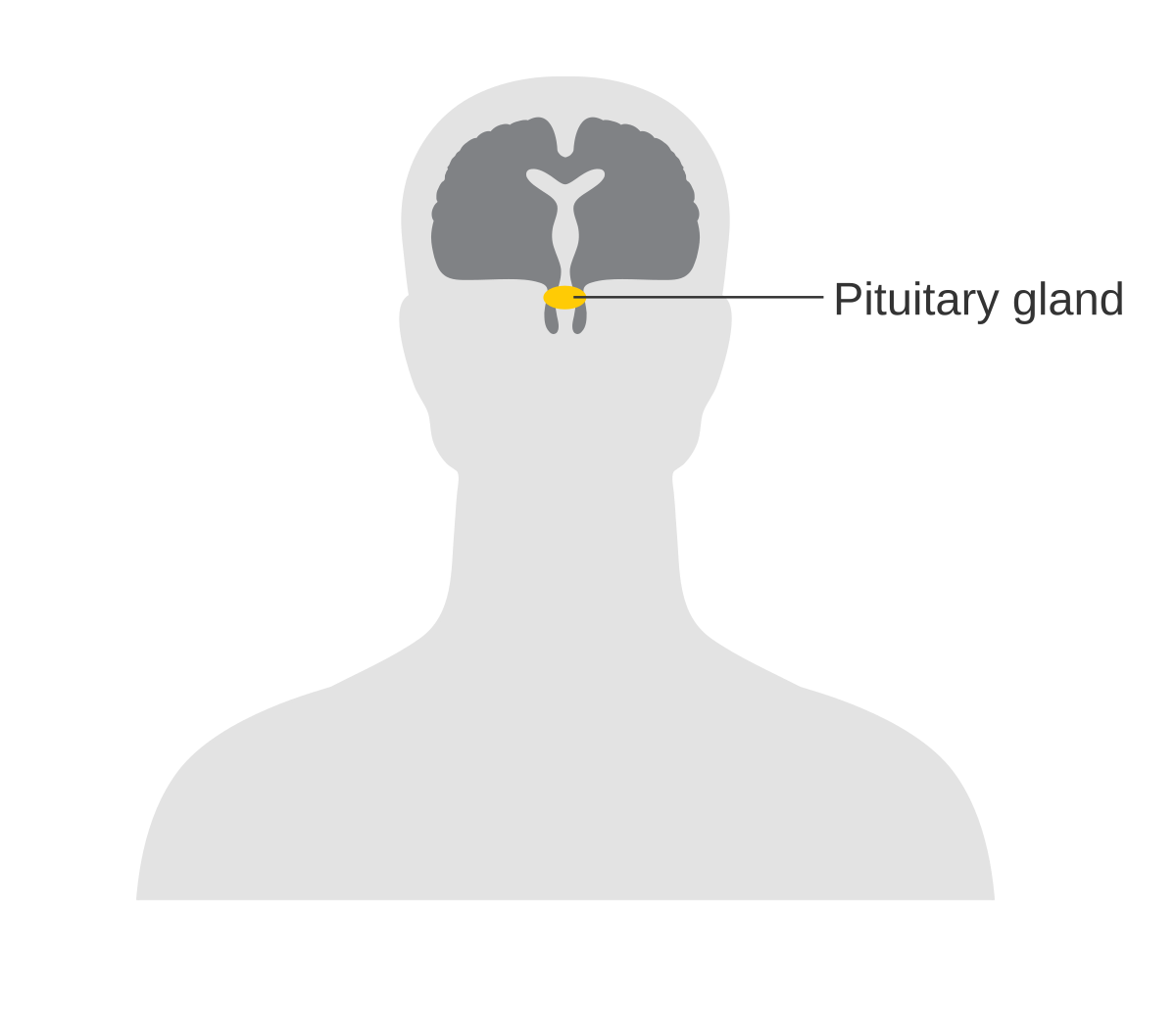
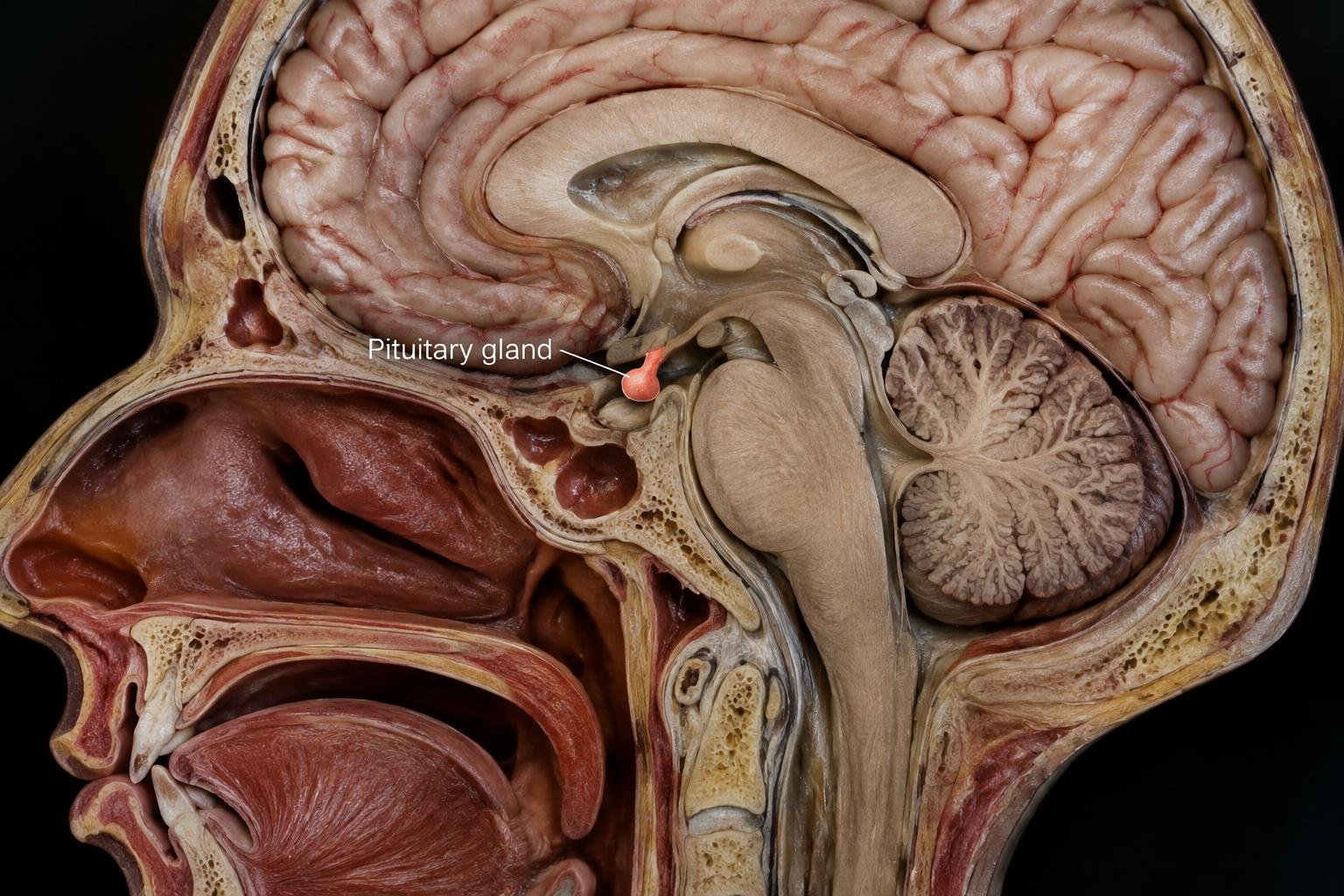
Hidden deep inside your skull, resting in a literal bony saddle called the sella turcica, sits your pituitary gland. It is only the size of a pea, yet it acts as the master conductor for your entire endocrine system.
Diagram showing the position of the pituitary gland within the human brain, depicted in a sagittal view of a head silhouette. Cancer Research UK uploader, CC BY-SA 4.0, via Wikimedia Commons
It translates electrical signals from your brain into chemical messages that tell your thyroid, adrenal glands, and reproductive organs exactly what to do.
The gigantism connection
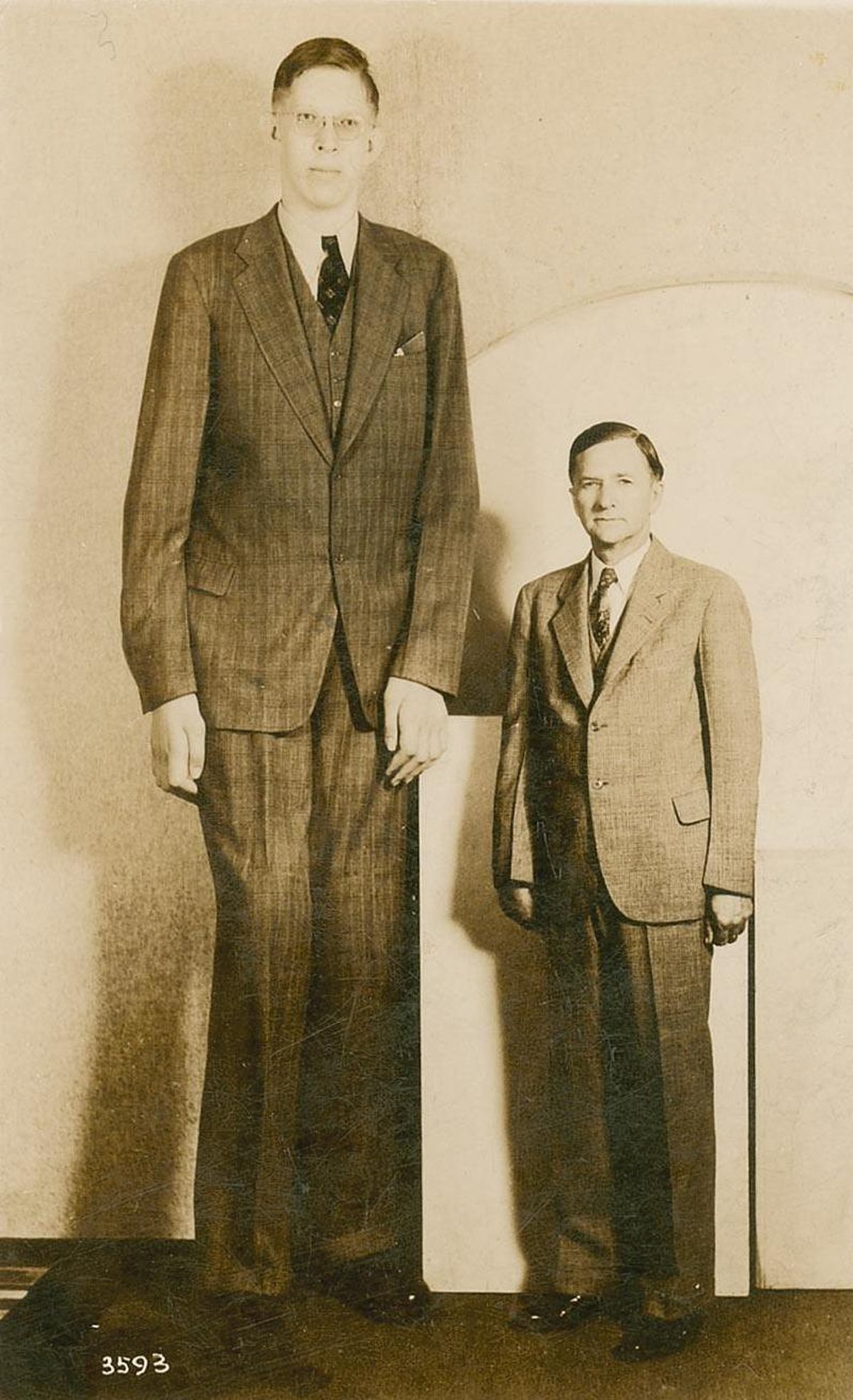
Robert Wadlow, the tallest man in recorded history at 8 feet 11 inches, was the victim of a misfiring pituitary. A non-cancerous tumor on his gland caused it to pump out massive, unchecked amounts of growth hormone.
Robert Wadlow, the tallest man in recorded history, stands beside a man of average height in a sepia-toned postcard photograph. Unknown authorUnknown author, Public domain, via Wikimedia Commons
His body didn't just grow tall; it grew continuously, putting so much strain on his frame that he required heavy leg braces just to stand.
The hypothalamus link
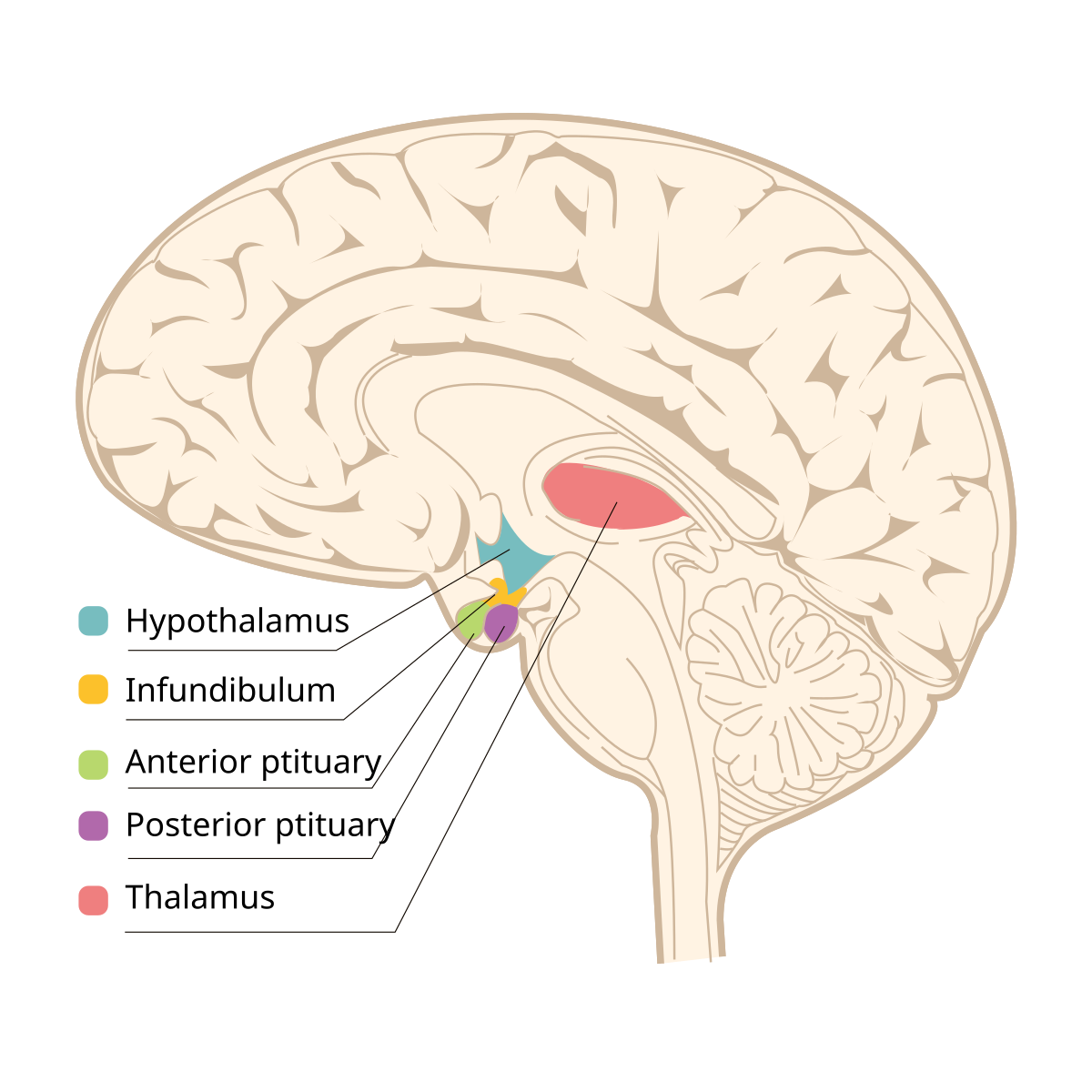
The pituitary is so closely connected to the hypothalamus that they function as a single unit. The hypothalamus acts as the sensor, and the pituitary acts as the broadcaster, flooding your bloodstream with instructions.
Diagram of the human brain highlighting the hypothalamus, pituitary gland, and surrounding structures. Hariadhi, CC BY-SA 4.0, via Wikimedia Commons
Whether you are dealing with stress, puberty, or a runner's high, this tiny organ is the gatekeeper turning your biology into reality.
How the two lobes work
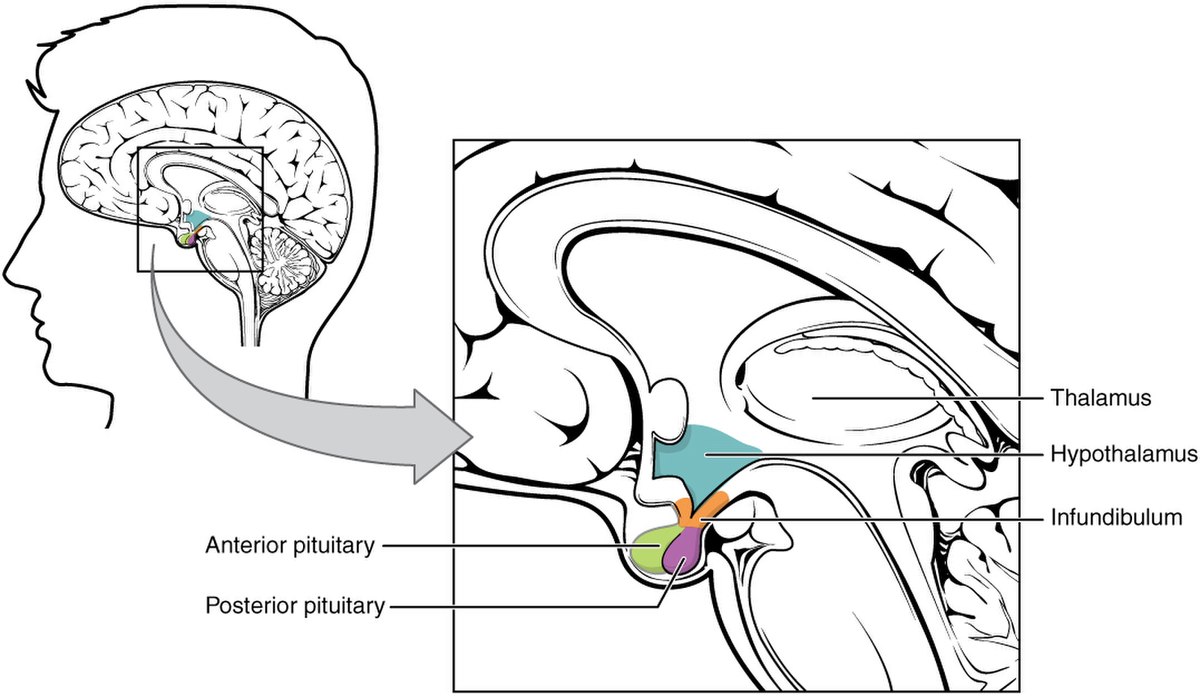
The pituitary gland consists of two main lobes with completely different biological origins. The anterior lobe develops from oral tissue and makes up about 80 percent of the gland. It synthesizes and secretes its own hormones, including growth hormone, thyroid-stimulating hormone, and prolactin, in response to chemical signals sent through a local network of blood vessels from the hypothalamus.
The magnified view shows the distinct anterior and posterior lobes attached to the hypothalamus by the infundibulum stalk. OpenStax College, CC BY 3.0, via Wikimedia Commons
The posterior lobe develops directly from brain tissue as an extension of the hypothalamus. It does not synthesize its own hormones. Instead, hypothalamic nerve cells project long fibers down the connecting pituitary stalk to deliver hormones like oxytocin and antidiuretic hormone directly into the posterior lobe, which stores and releases them into the bloodstream.
Where the pituitary sits in the skull
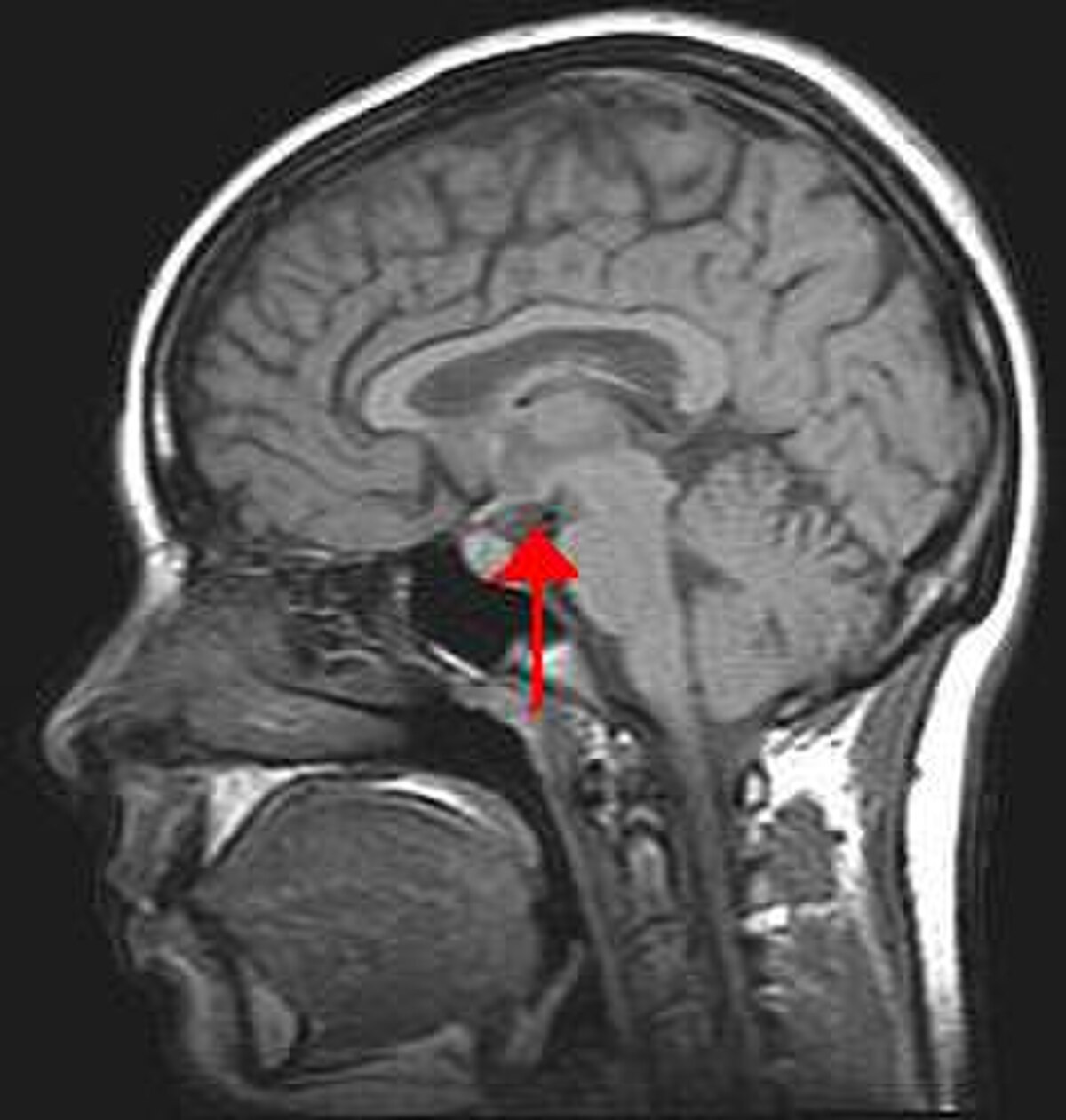
The pituitary gland rests inside a depression in the sphenoid bone known as the hypophyseal fossa, which forms part of a saddle-shaped bone structure called the sella turcica. A protective fold of brain lining covers the top of this bony pocket.
The entire organ measures roughly one centimeter across and has a volume between 200 and 440 cubic millimeters. Its physical shape varies between individuals: it is flat in about 46 percent of people, convex in roughly 31 percent, and concave in nearly 23 percent.
Test yourself
How do the pituitary gland and the hypothalamus work together to regulate the body?
The hypothalamus senses needs and the pituitary broadcasts instructions. The hypothalamus functions as the sensor in the system, while the pituitary acts as the broadcaster that floods the bloodstream with instructions.
Where is the pituitary gland located and what physical structure houses it?
Inside the skull, resting in a bony saddle called the sella turcica. The pea-sized pituitary gland is hidden deep inside the skull, resting within a literal bony saddle known as the sella turcica.
What role did the pituitary gland play in the condition of Robert Wadlow, the tallest man in history?
A tumor caused it to pump out unchecked amounts of growth hormone. A non-cancerous tumor caused his pituitary gland to produce massive amounts of growth hormone, leading to continuous growth.
Play the lesson in edgi and the card is yours. It lands on your Map next to the ideas it connects to, and turns from matte to foil to gold as you learn more around it.
What happens if the pituitary gland produces too much growth hormone?
Excessive growth hormone production causes unchecked physical growth. In extreme cases, such as in Robert Wadlow, a non-cancerous tumor on the gland leads to gigantism, putting severe strain on the skeleton and joints.
What is the intermediate lobe of the pituitary gland?
The intermediate lobe is a small boundary zone that sits between the anterior and posterior lobes. It is well-developed in animals such as rats and mice, but it is avascular and almost completely absent in adult humans.