Ghrelin is a hormone made mainly by cells in the stomach that travels to the brain to trigger hunger. It spikes right before your usual mealtimes to get your digestive system ready and drive you to eat. When you lose body fat, ghrelin levels rise instead of fall, signaling the brain to fight to regain lost weight.
By the edgi team We find the most surprising true thing about an idea and build a 60-second lesson around it.
Your stomach produces ghrelin to signal hunger. But it doesn't just wait for your fuel to run low; it learns your schedule. If you eat lunch at noon daily, your ghrelin levels spike at 11:45 AM. You feel hungry because your body expects food, not because you are truly starving.
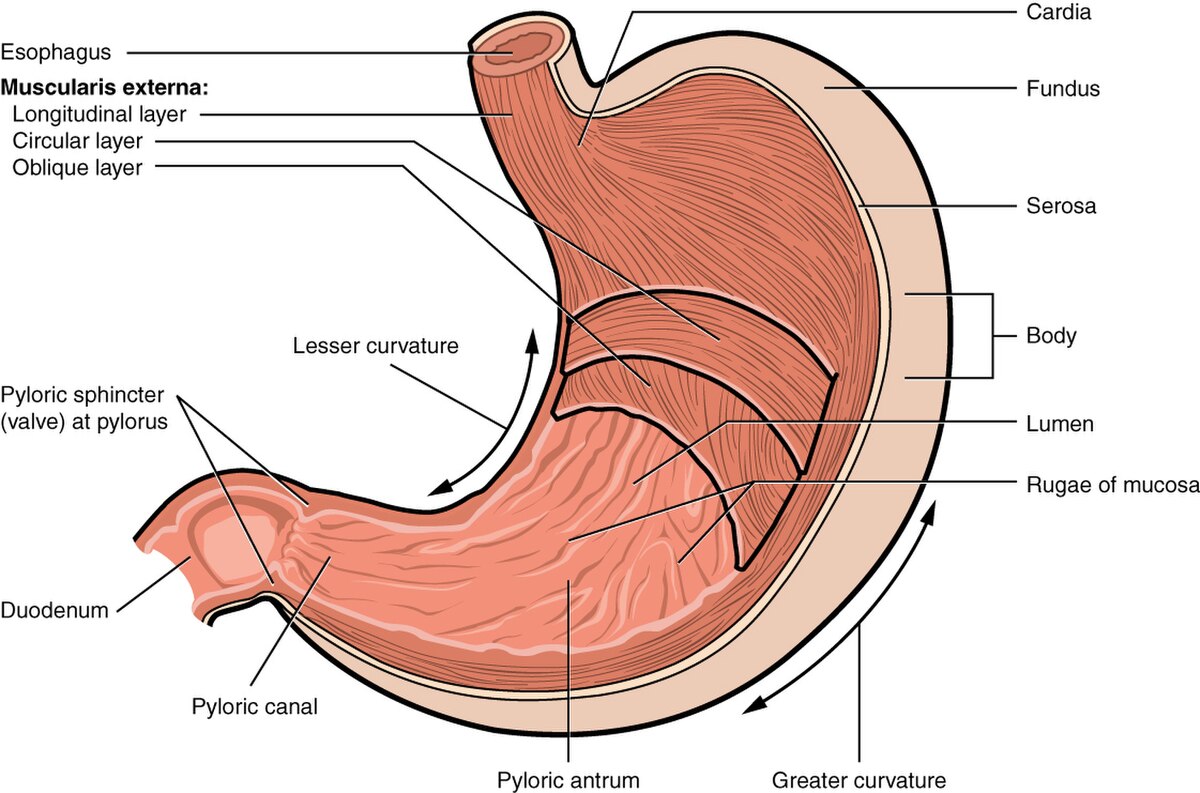
Diagram illustrating the anatomy of the human stomach, labeling key parts such as the esophagus, cardia, fundus, serosa, body, lumen, rugae of mucosa, lesser curvature, greater curvature, pyloric… OpenStax College, CC BY 3.0, via Wikimedia Commons
The accidental discovery
In 1999, researcher Masayasu Kojima was hunting for a molecule that triggered growth hormone. Instead, he found a peptide that sent rats into a frantic feeding frenzy.
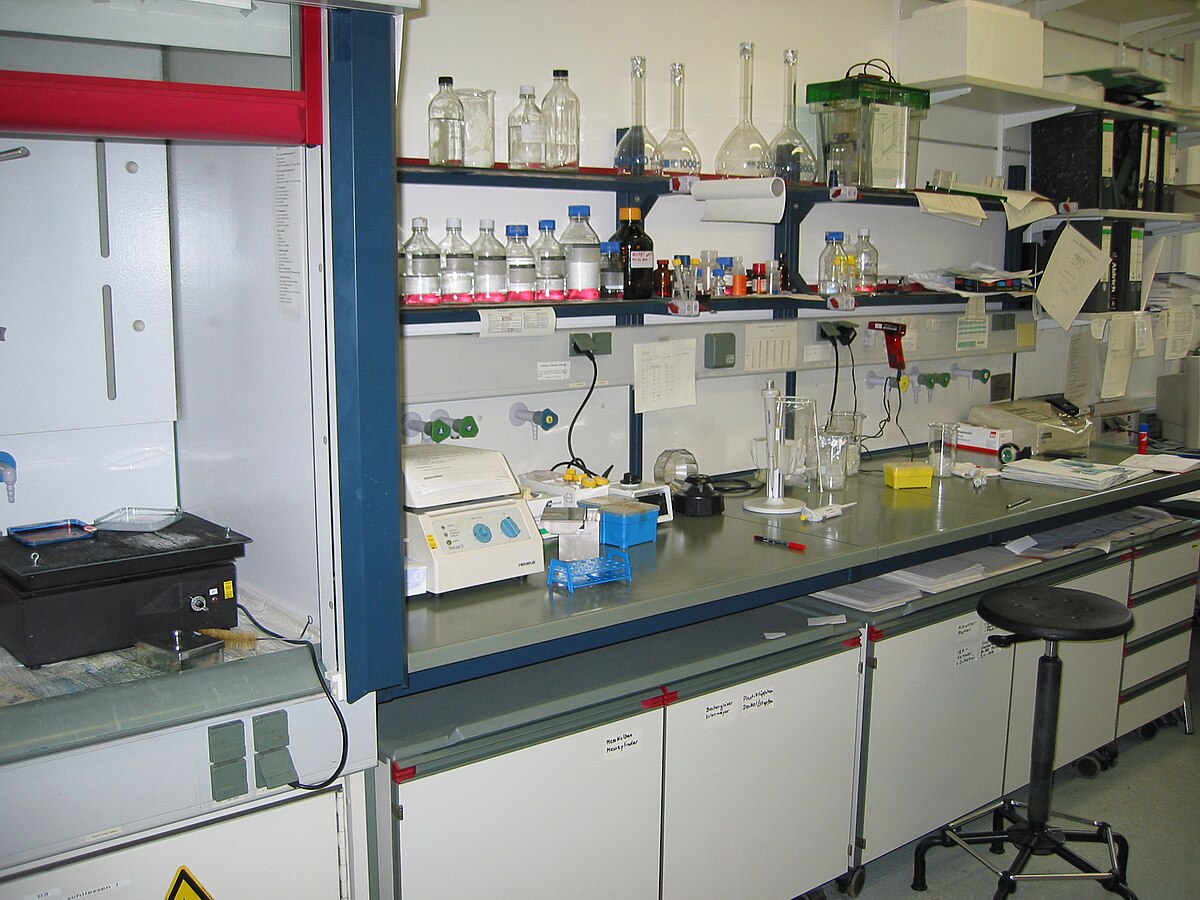
A laboratory bench at the Institute of Biochemistry, University of Cologne in Germany, equipped with various glassware, bottles of reagents, and scientific instruments. Magnus Manske, CC BY 1.0, via Wikimedia Commons
He named it ghrelin, from the Proto-Indo-European root 'ghre', meaning 'to grow'.
The famine trap
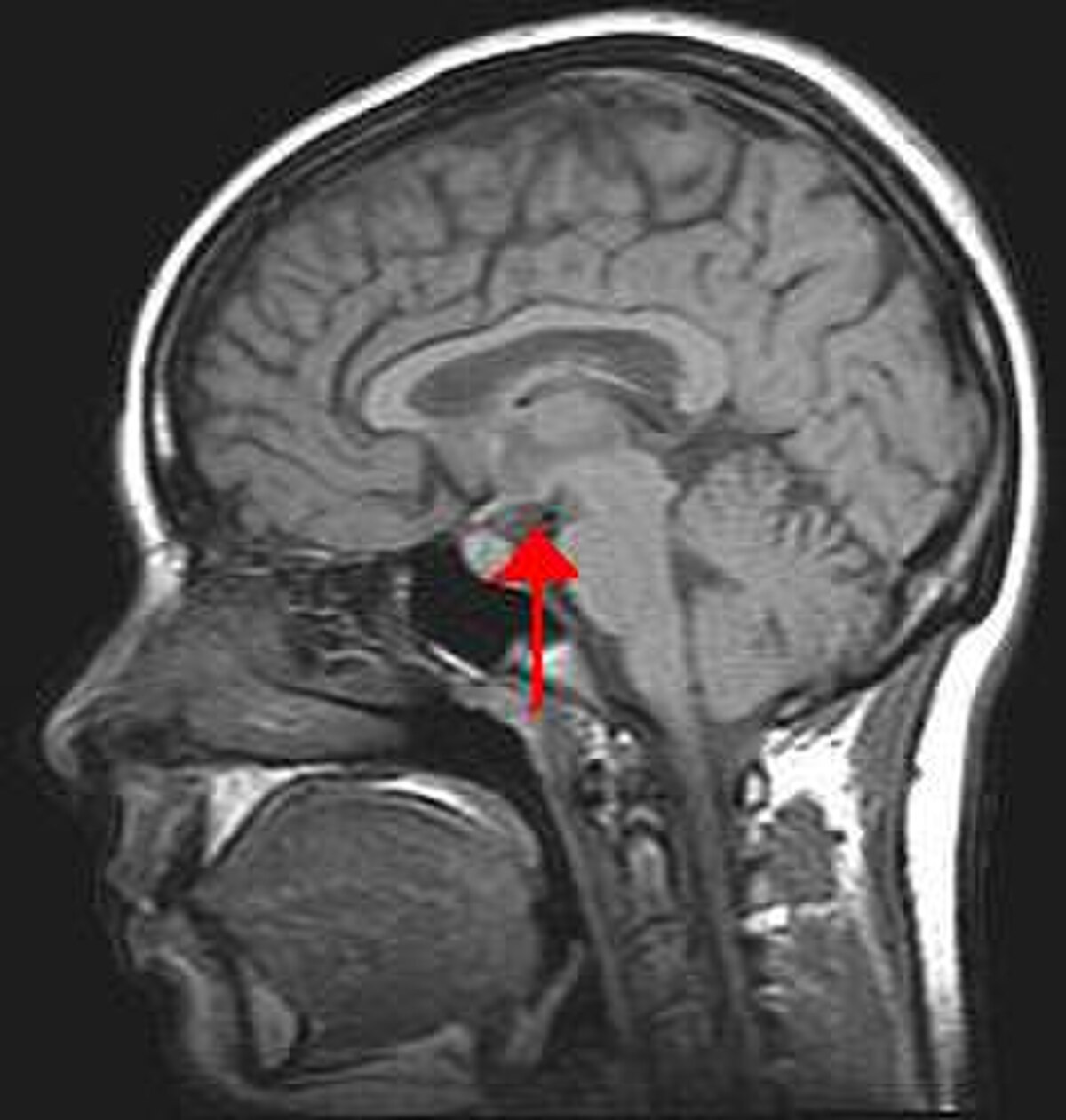
Ghrelin is the reason dieting feels like a physical battle. When you lose weight, your ghrelin levels actually increase. The hypothalamus interprets this as a famine, fighting to regain the fat you lost.
A sagittal MRI scan of a human head highlights the hypothalamus with a red arrow. Public domain, via Wikimedia Commons
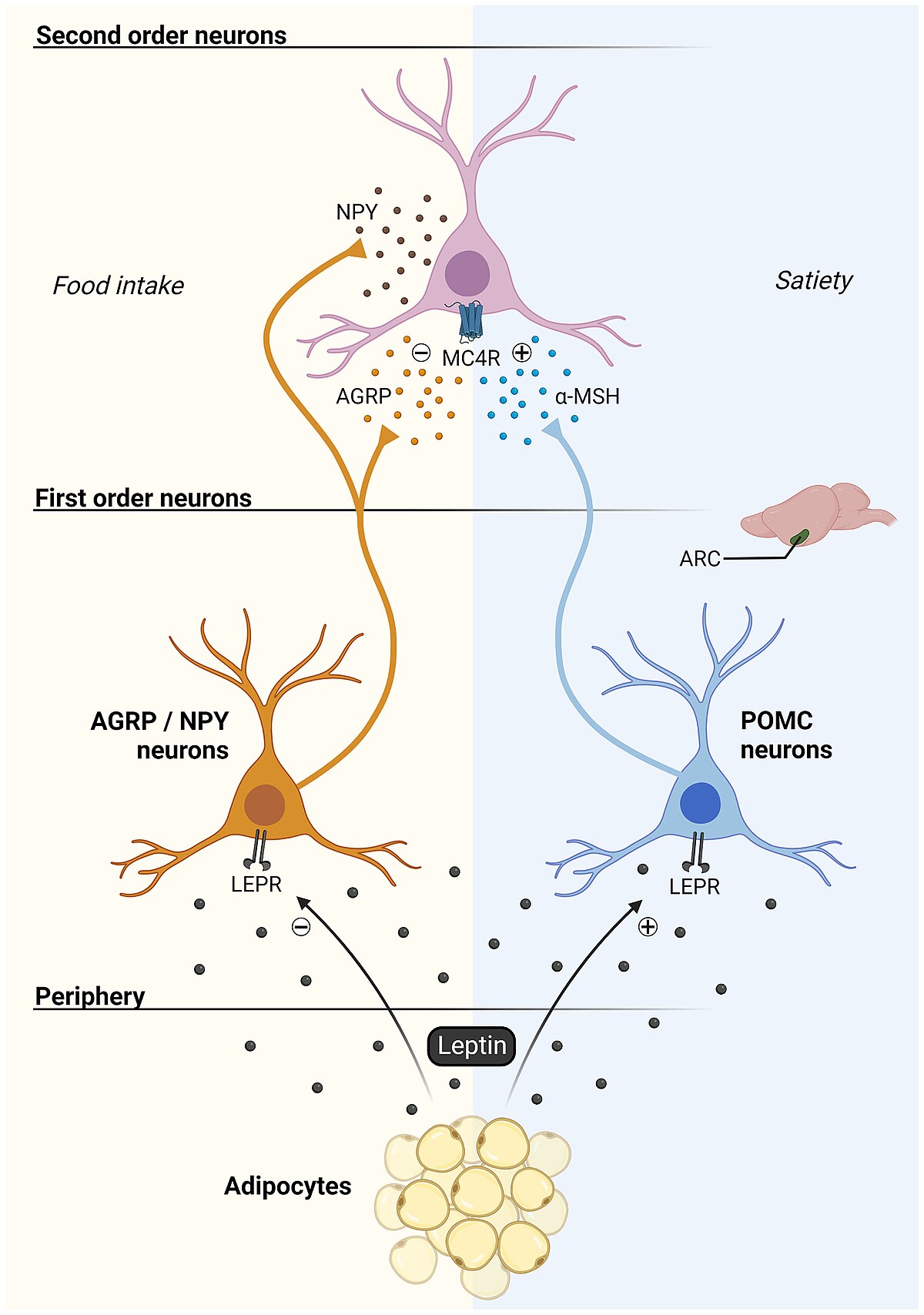
While leptin usually signals fullness, ghrelin creates a hormonal tug-of-war that makes persistent weight loss difficult.
How does ghrelin trigger hunger in the brain?
Ghrelin acts directly on specific receptors in the hypothalamus, known as growth hormone secretagogue receptors (GHS-R). It stimulates neuropeptide Y and agouti-related protein neurons in the hypothalamic arcuate nucleus. These specific nerve cells initiate appetite and drive feeding behavior.
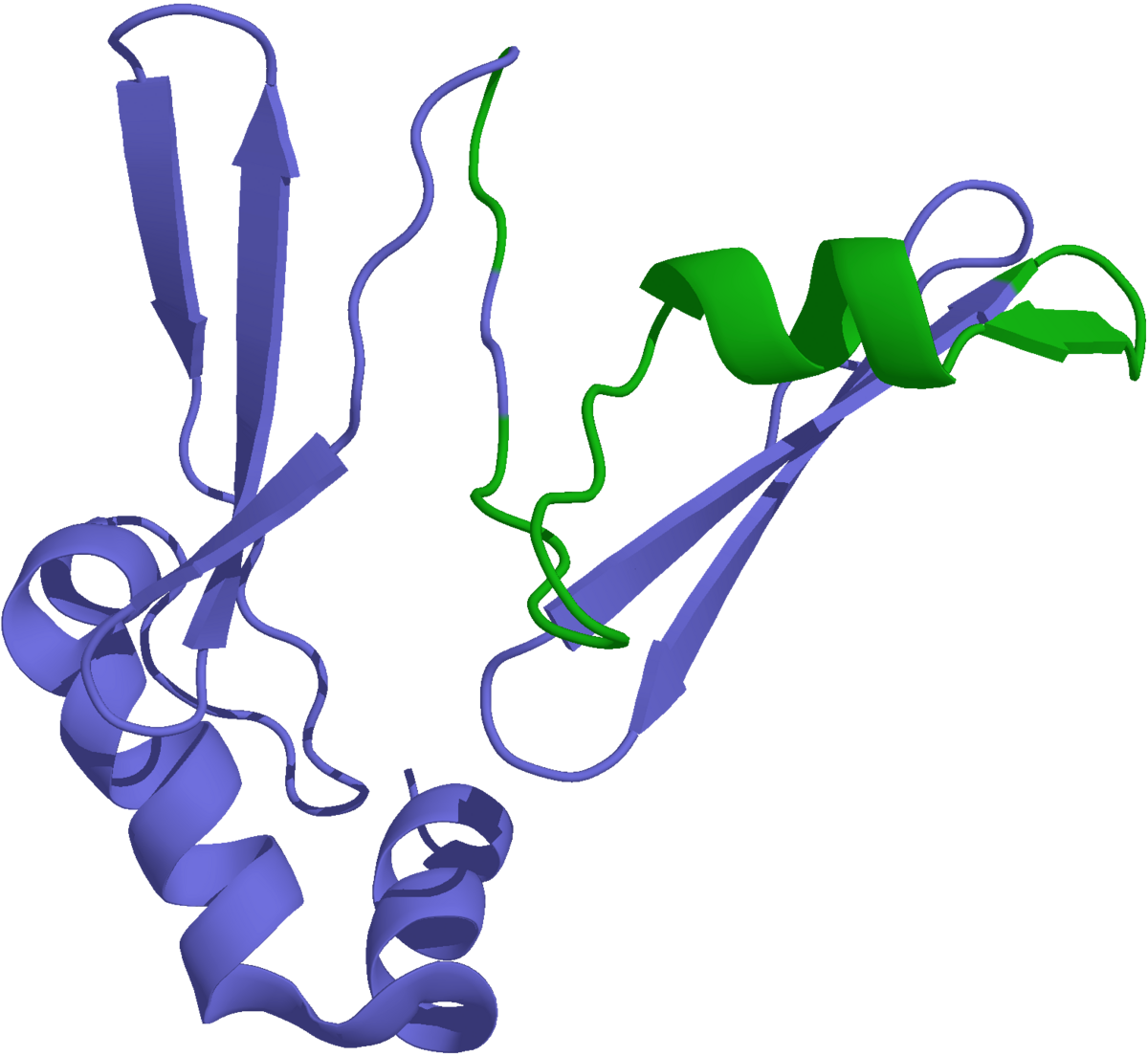
The precursor molecule preproghrelin is cleaved down to form the active 28-amino acid ghrelin peptide. own work, Public domain, via Wikimedia Commons
Beyond prompting basic hunger, ghrelin plugs directly into the brain's reward pathways. It activates the mesolimbic dopamine circuit and inputs to the ventral tegmental area, which communicate the pleasure and reinforcement from rewarding foods and alcohol. Injections of ghrelin cause animals to forage, sniff, and hoard food, increasing the total number of meals they eat rather than the size of each single meal.
Where is ghrelin produced and activated?
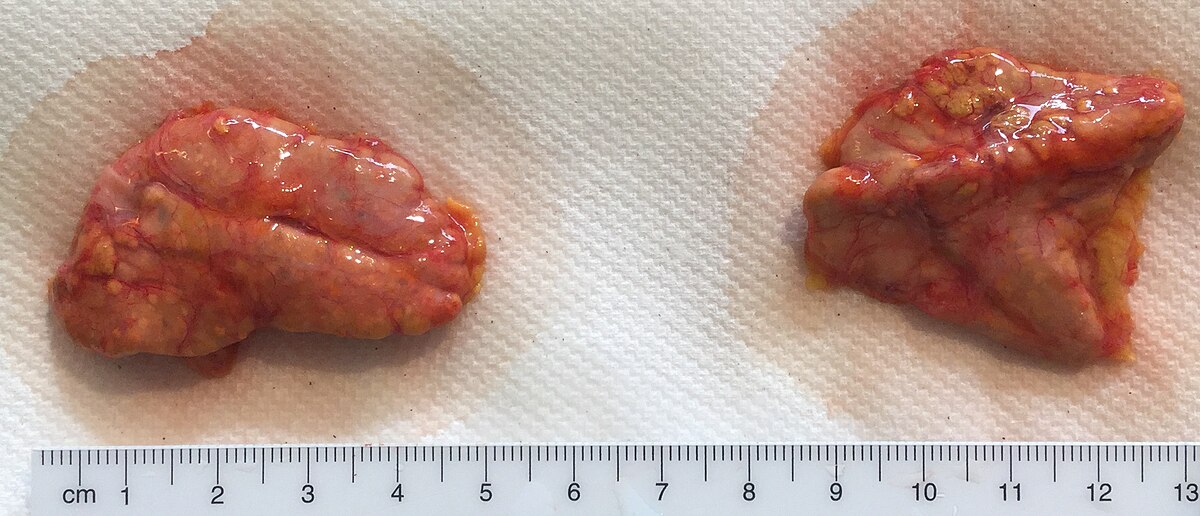
Specialized enteroendocrine cells called ghrelin cells produce the hormone primarily in the stomach and duodenum, though smaller amounts are made in the lungs, pancreatic islets, kidneys, and local brain regions. In the stomach, they make up about 20 percent of the cells in oxyntic glands.
The hormone begins as a larger precursor called preproghrelin, which is cut down into a 28-amino acid peptide. To activate its primary brain receptor, an enzyme named GOAT must attach caprylic acid to its third amino acid position. Without this fatty acid modification, the resulting desacyl ghrelin cannot trigger the GHS-R receptor, though it carries out separate roles in heart function and glucose output.
Play the lesson in edgi and the card is yours. It lands on your Map next to the ideas it connects to, and turns from matte to foil to gold as you learn more around it.
What physical digestive changes does ghrelin cause?
Ghrelin stimulates the secretion of gastric acid and increases stomach motility to prepare the digestive tract for incoming food. It also decreases the sensitivity of stomach vagal nerves, making the stomach less sensitive to stretching as it fills.
Do all animals produce ghrelin?
No, certain reptiles like snakes, chameleons, and toadhead agamas have lost the genes required to produce ghrelin and its signaling proteins. These species frequently go weeks, months, or years between meals without relying on the hormone.
What other body functions does ghrelin influence?
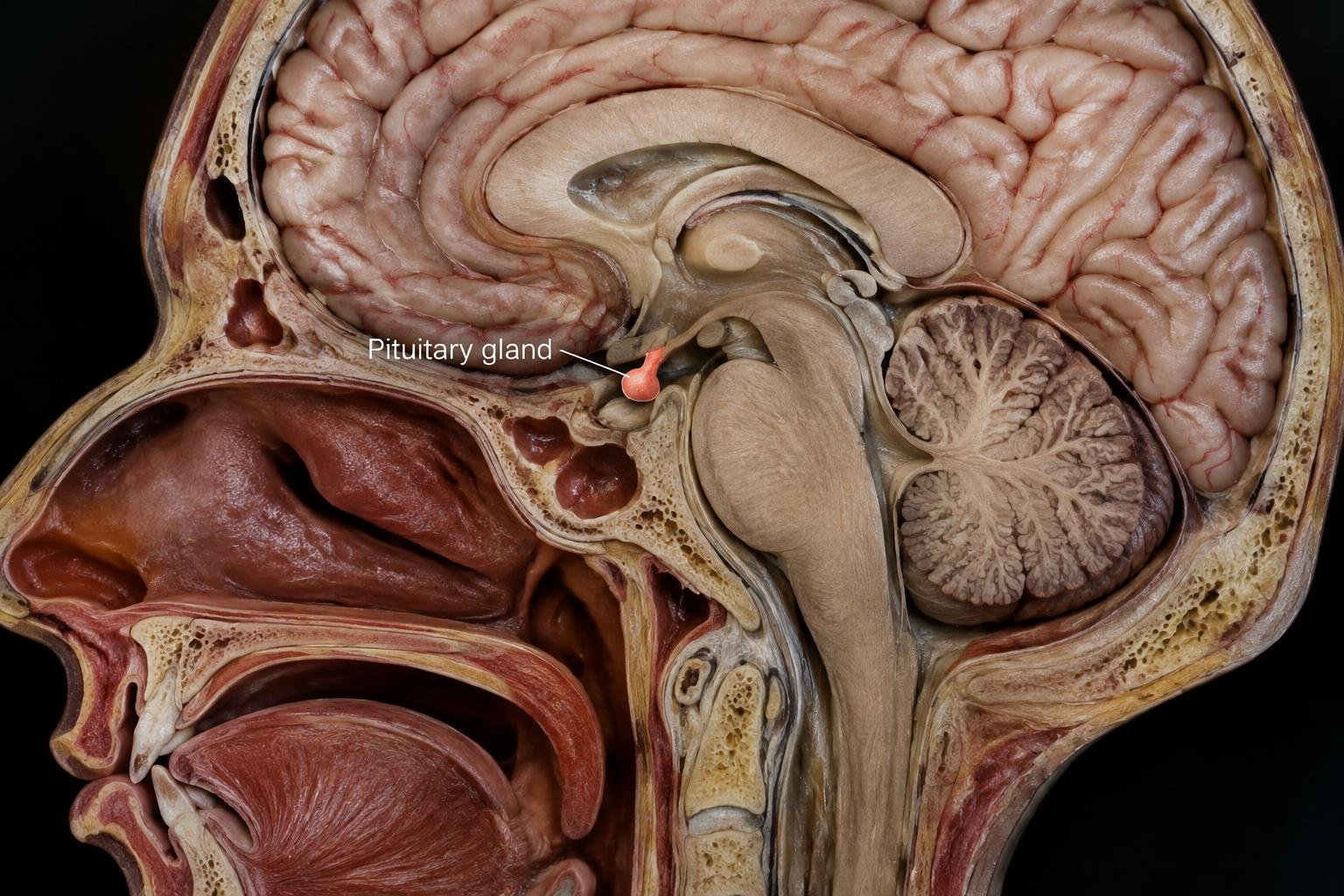
Ghrelin participates in glucose metabolism, taste sensation, the sleep-wake cycle, and learning and memory. It also stimulates the release of growth hormone from the anterior pituitary gland.