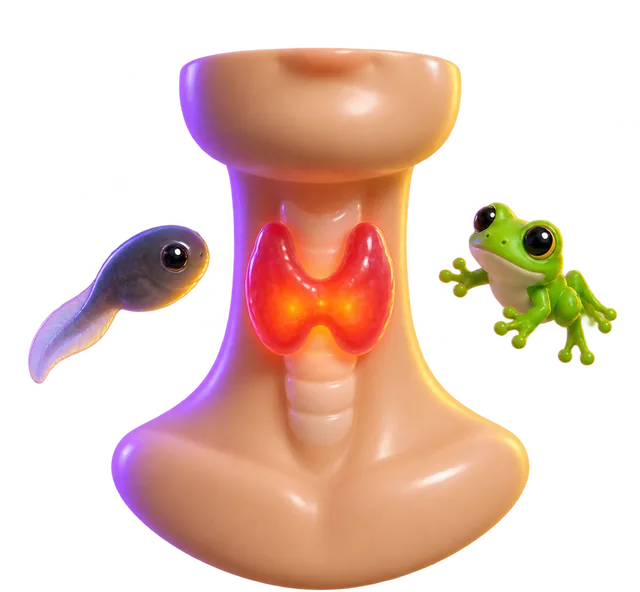
The thyroid gland is a butterfly-shaped endocrine organ in your neck, sitting just below the Adam's apple. It produces hormones that set the pace for your metabolism, controlling how fast your cells burn fuel, how fast your heart beats, and how you regulate body temperature. It is also the only organ in your body that actively pulls iodine from your bloodstream to manufacture these hormones.
By the edgi team We find the most surprising true thing about an idea and build a 60-second lesson around it.
The thyroid is a butterfly-shaped gland in your neck. It acts as your body's thermostat, deciding how fast every cell burns its fuel. It releases hormones that set the pace for your heart rate, body temperature, and how quickly your skin replaces itself.
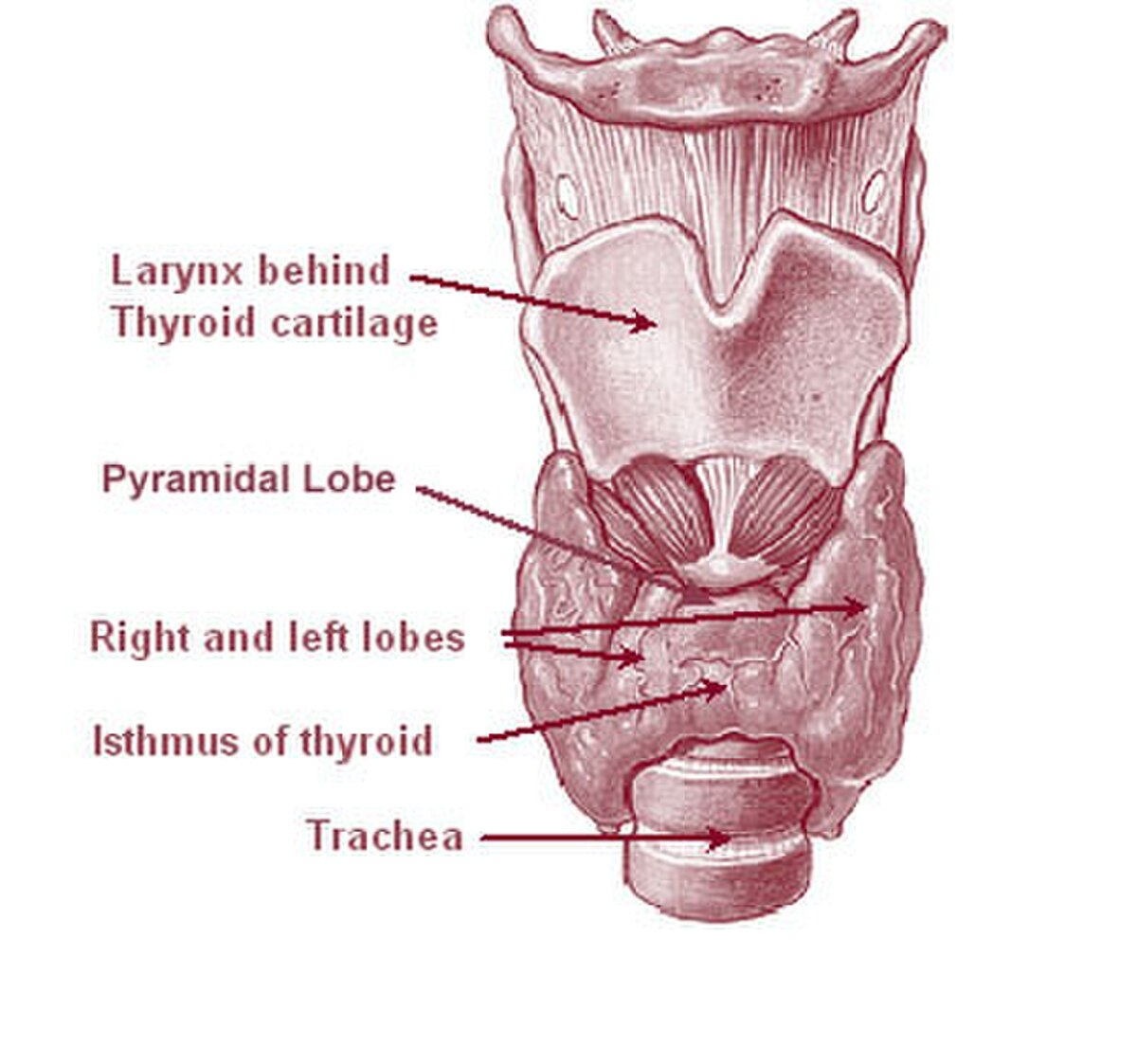
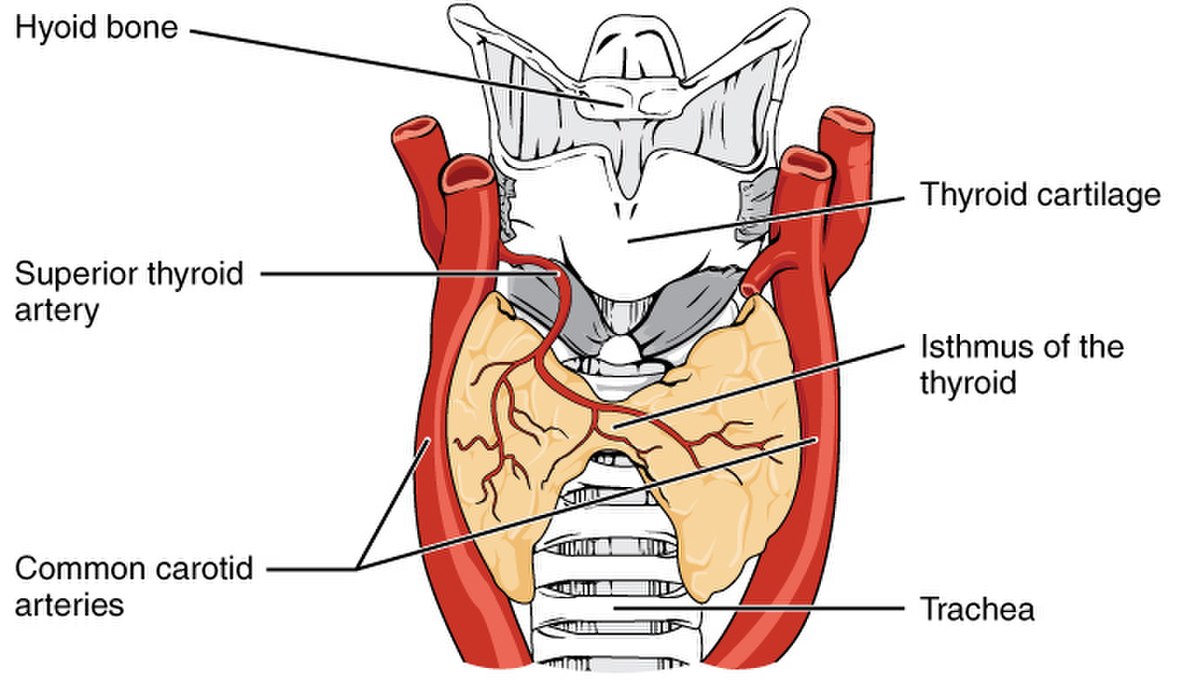
Diagram of the human thyroid gland, showing its anatomical position relative to the larynx and trachea. (current as of 23:25, 18 December 2010 (UTC)) - license for entire cancer.gov site here (https://www.cancer.gov/policies, Public domain, via Wikimedia Commons
The iodine hunter
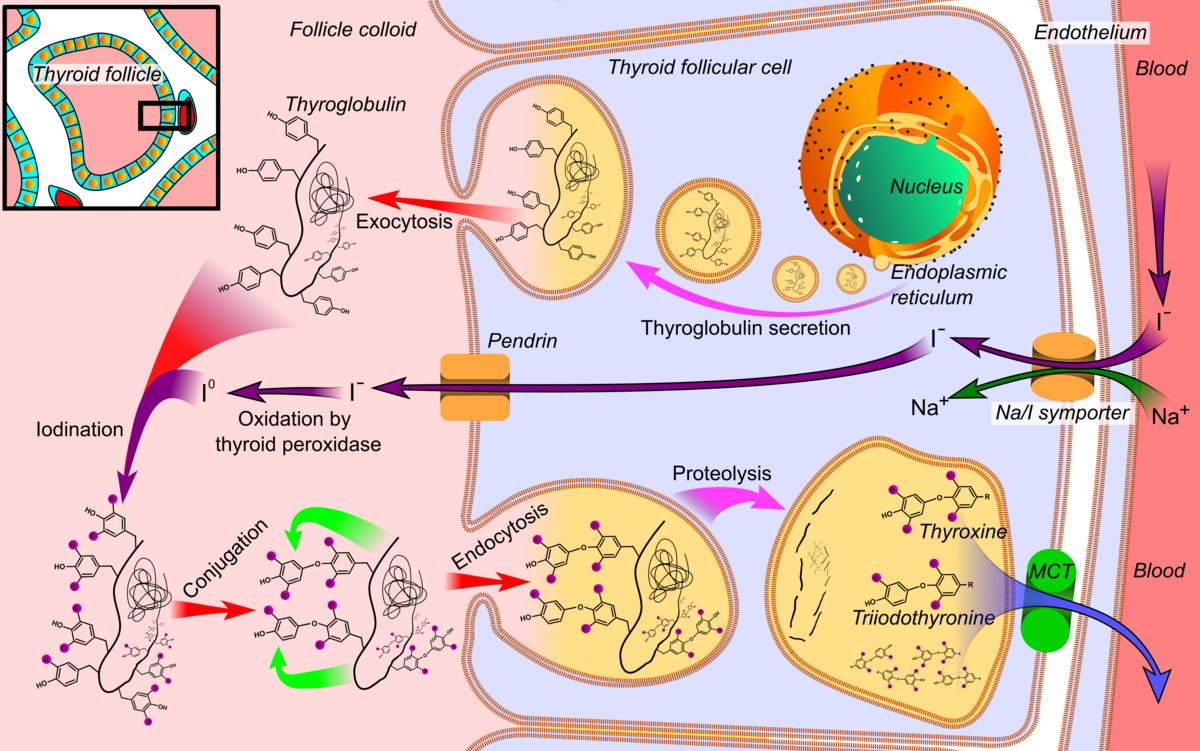
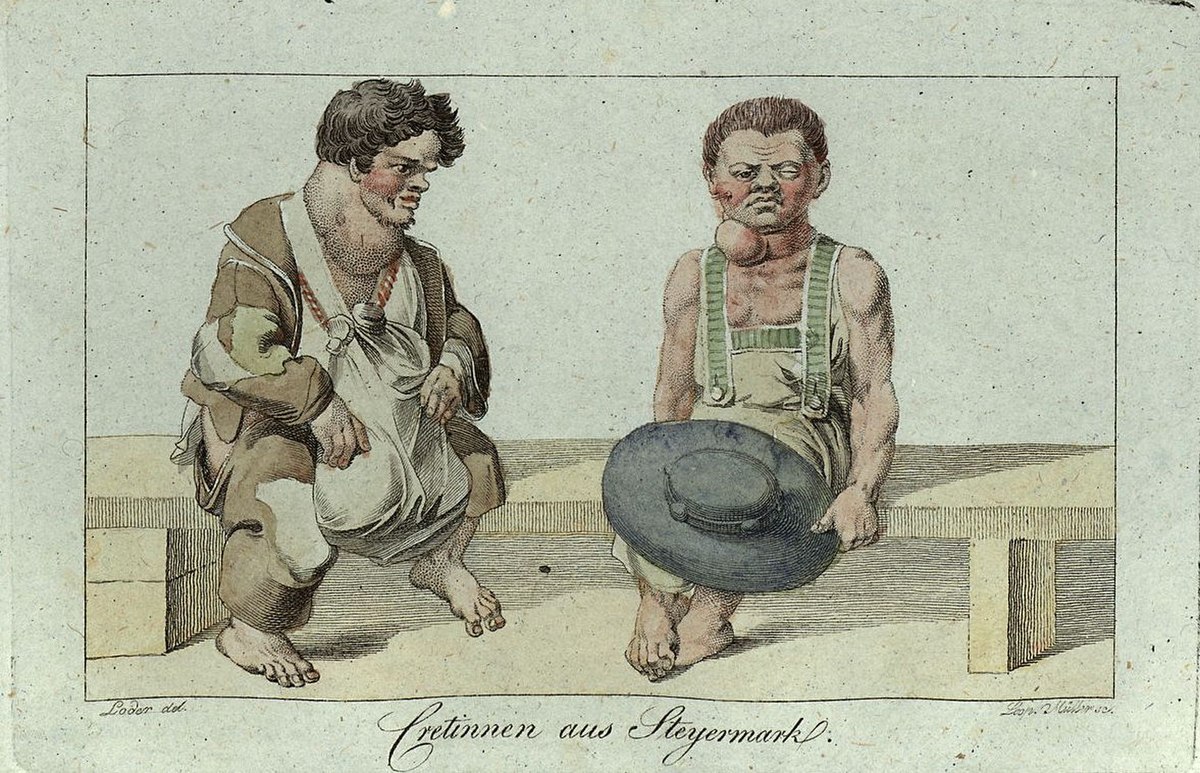
Your body cannot produce those hormones without iodine. The thyroid is the only organ that actively hunts for it, pulling it from your blood to use as a building block. If you do not get enough, the gland swells up in a desperate attempt to find more, creating a massive, visible lump in the neck called a goiter.
Diagram illustrating the synthesis of thyroid hormones within an individual thyroid follicular cell. Mikael Häggström. When using this image in external works, it may be cited as: Häggström, Mikael (2014). "Medical galler, CC0, via Wikimedia Commons
The salt fix
In the early 1900s, doctors realized landlocked regions were suffering from widespread metabolic crashes due to iodine deficiency. In 1924, they made a simple fix: they started adding potassium iodide to table salt. It remains one of the most effective public health interventions in history.
An 1815 copper engraving titled "Cretinnen aus Steyermark" (Cretins from Styria), depicting two men with visible goitres, seated on a bench, illustrating goitre and congenital iodine deficiency… Franz Sartori, Public domain, via Wikimedia Commons
How the thyroid regulates your metabolism
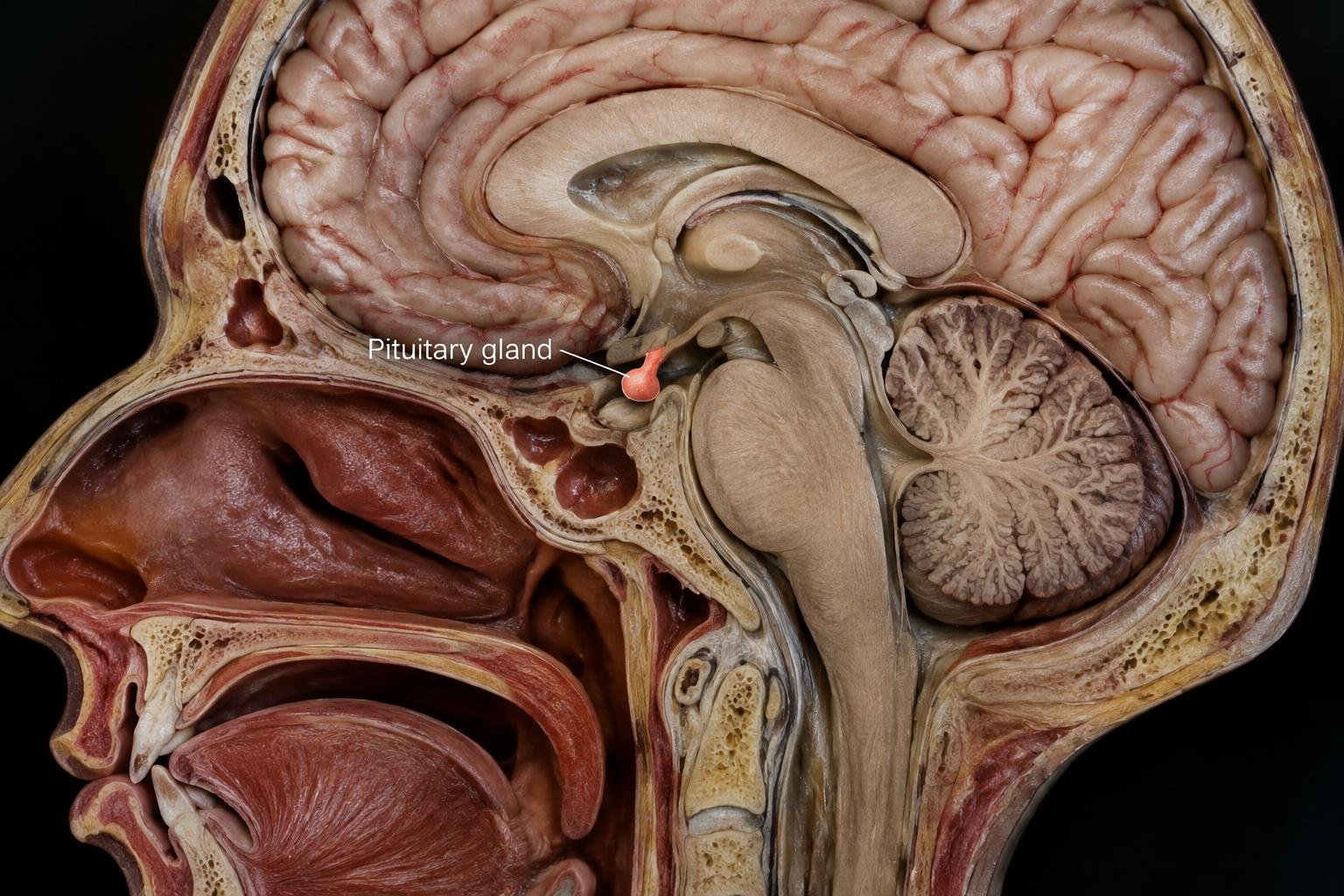
The thyroid gland secretes three key hormones directly into your bloodstream: triiodothyronine (T3), thyroxine (T4), and calcitonin. T3 and T4 control your metabolic rate, protein synthesis, and physical development, while calcitonin helps regulate calcium levels. The entire process is controlled from your brain: the hypothalamus releases thyrotropin-releasing hormone (TRH), which directs the pituitary gland to release thyroid-stimulating hormone (TSH), signaling your thyroid to work.
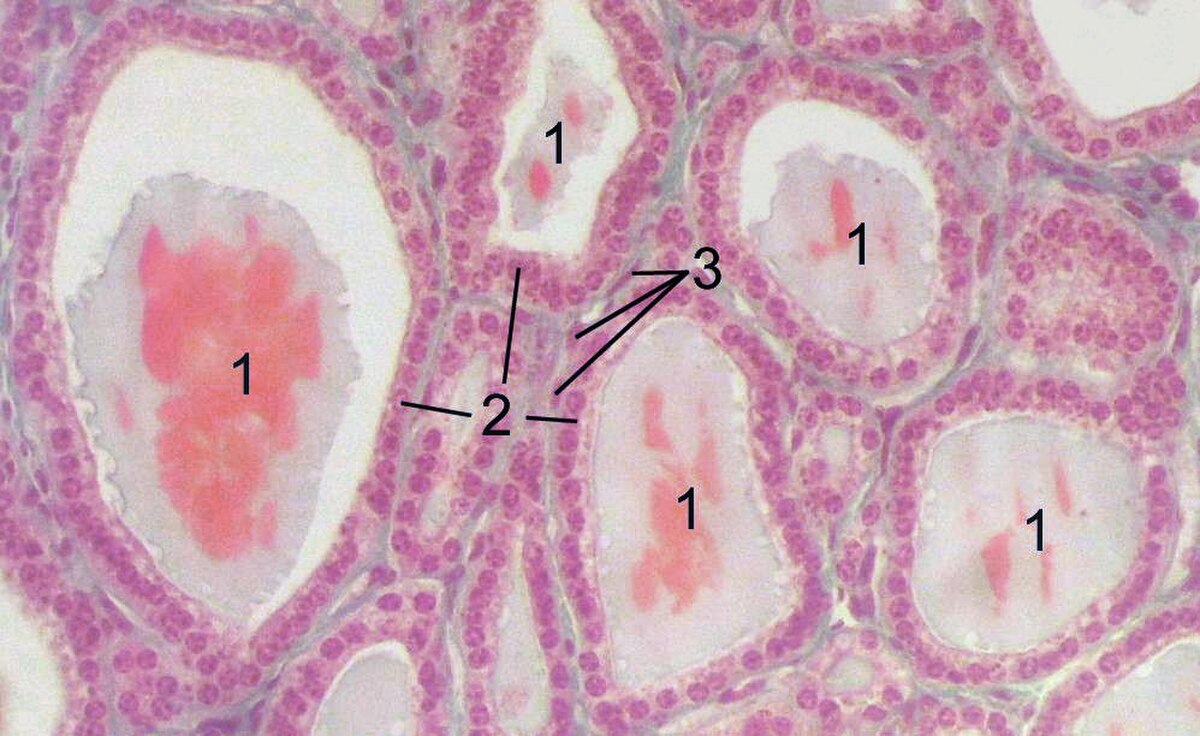
This microscopic section shows the spherical thyroid follicles, highlighting the hormone-storing colloid surrounded by follicular cells. Uwe Gille, CC BY-SA 3.0, via Wikimedia Commons
Under a microscope, the gland is organized into thousands of tiny spherical units called thyroid follicles. These follicles are lined with follicular cells that surround a core of fluid called colloid, where hormones are assembled and stored.
Where the thyroid sits and anatomical variations
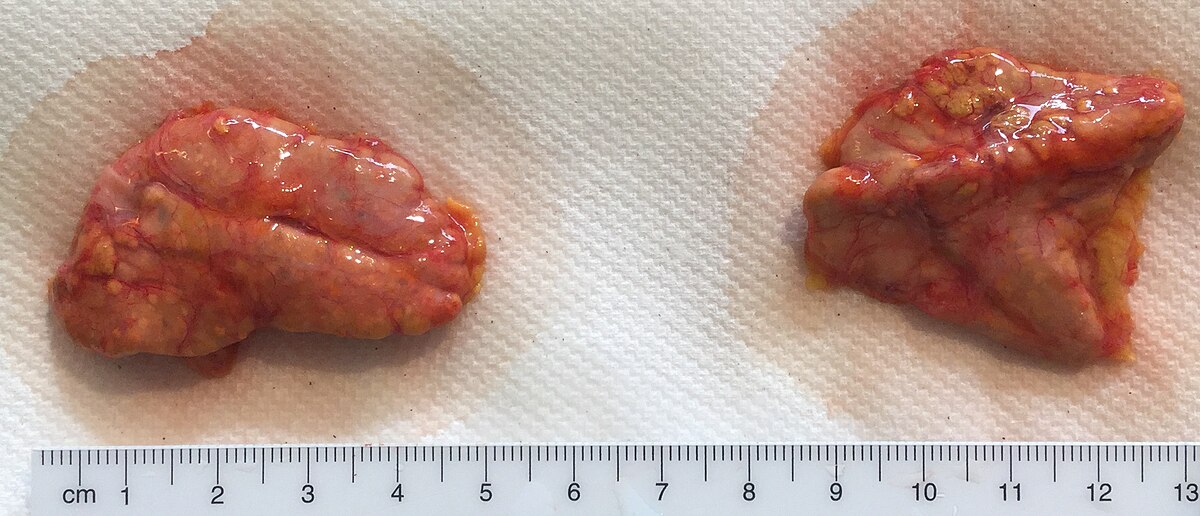
Weighing around 25 grams in adults, the thyroid consists of two lobes resting against the trachea and connected in the middle by a thin tissue bridge called the isthmus. Because it attaches to the surrounding cartilage through Berry's ligament, the thyroid moves up and down every time you swallow.
Anatomy varies from person to person. Between 18.3% and 44.6% of people have an extra third lobe called a pyramidal lobe, which points upward toward the hyoid bone as a leftover trace of embryonic development. The gland is also typically larger in women than in men and increases in size during pregnancy.
Common thyroid disorders
When the thyroid produces too much hormone, the condition is called hyperthyroidism, most commonly caused by the autoimmune condition Graves' disease. When it produces too little, it is called hypothyroidism. In regions with adequate dietary iodine, the primary cause of hypothyroidism is Hashimoto's thyroiditis, another autoimmune disorder.
Without enough iodine in the diet, the thyroid cannot assemble T3 and T4. It swells into a large, visible neck mass called a goiter as it tries to capture more iodine from the blood. In iodine-deficient regions, this lack of thyroid hormone is the leading cause of preventable intellectual disability in children.
Test yourself
Why can low iodine intake lead to a swollen thyroid?
The gland enlarges as it struggles to obtain iodine.. Iodine is needed to build thyroid hormones. With too little available, the gland can enlarge in an effort to obtain more.
How does iodine help the thyroid regulate metabolism?
It is a building block for thyroid hormones.. The thyroid uses iodine to make hormones that set the pace of many body processes; iodine itself is not the fuel that powers cells.
Why can adding iodine to table salt help prevent thyroid problems?
It supplies a raw material for thyroid hormones.. The thyroid needs iodine to build its hormones, which help regulate metabolism; iodized salt can provide that needed material.
Play the lesson in edgi and the card is yours. It lands on your Map next to the ideas it connects to, and turns from matte to foil to gold as you learn more around it.
Directly behind the thyroid lie the trachea, esophagus, lower pharynx, and carotid arteries. Four tiny parathyroid glands also sit embedded in the back of the thyroid's lobes.
Why was potassium iodide added to table salt?
Starting in 1924, public health officials added potassium iodide to salt to prevent widespread iodine deficiency and metabolic crashes in landlocked areas. It successfully eliminated goiters caused by a lack of dietary iodine.
What is the isthmus of the thyroid?
The isthmus is the narrow central band of tissue that connects the lower portions of the thyroid's left and right lobes across the front of the windpipe.