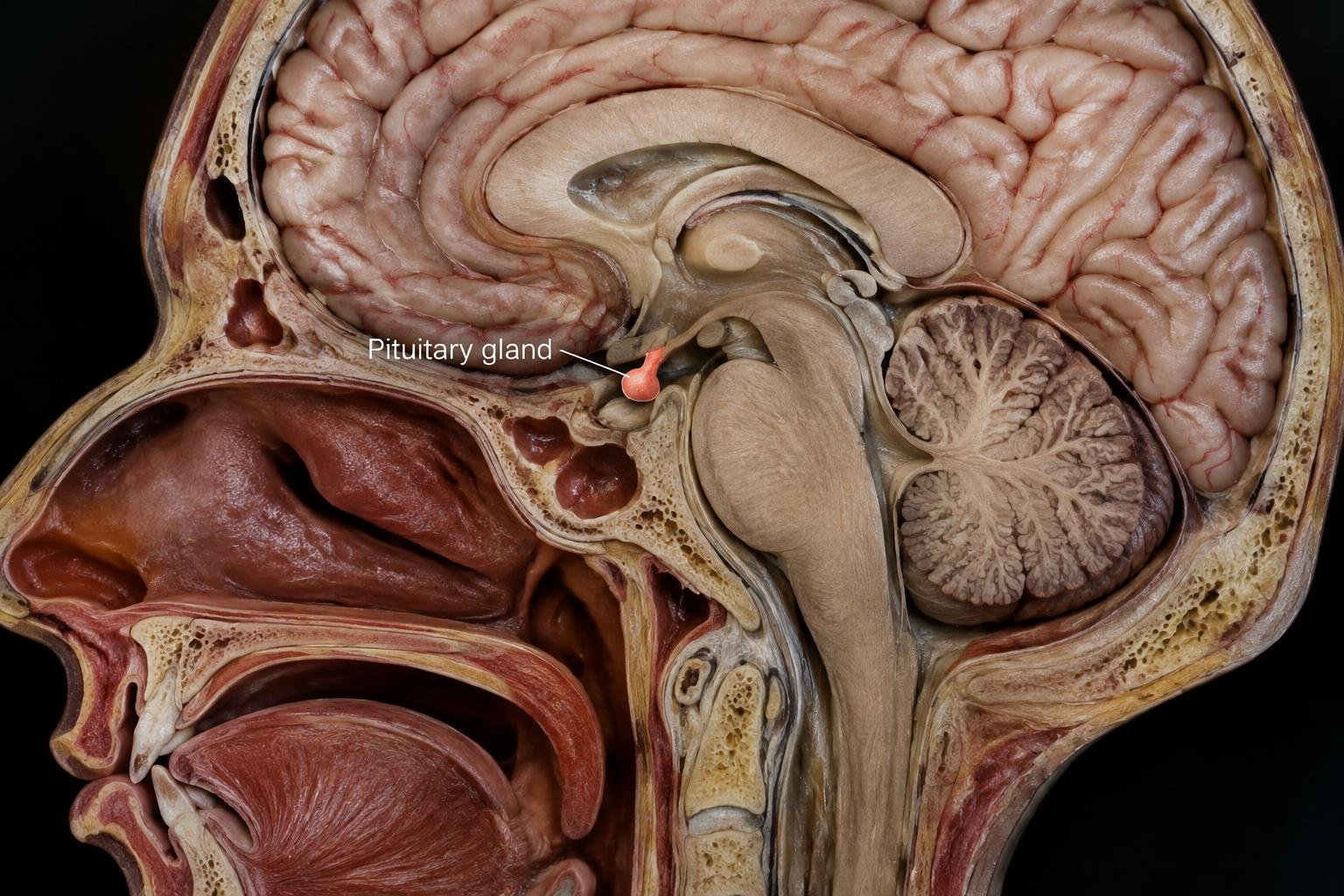
The hypothalamus is an almond-sized brain structure located below the thalamus that connects your nervous system to your hormone system. It constantly monitors your body to control basic survival functions, including body temperature, hunger, thirst, and sleep cycles. Without its chemical commands, your body would fail to signal basic needs like drinking water or shivering when cold.
By the edgi team We find the most surprising true thing about an idea and build a 60-second lesson around it.
The hypothalamus is the bridge between your thoughts and your blood. It translates electrical brain signals into chemical hormones.
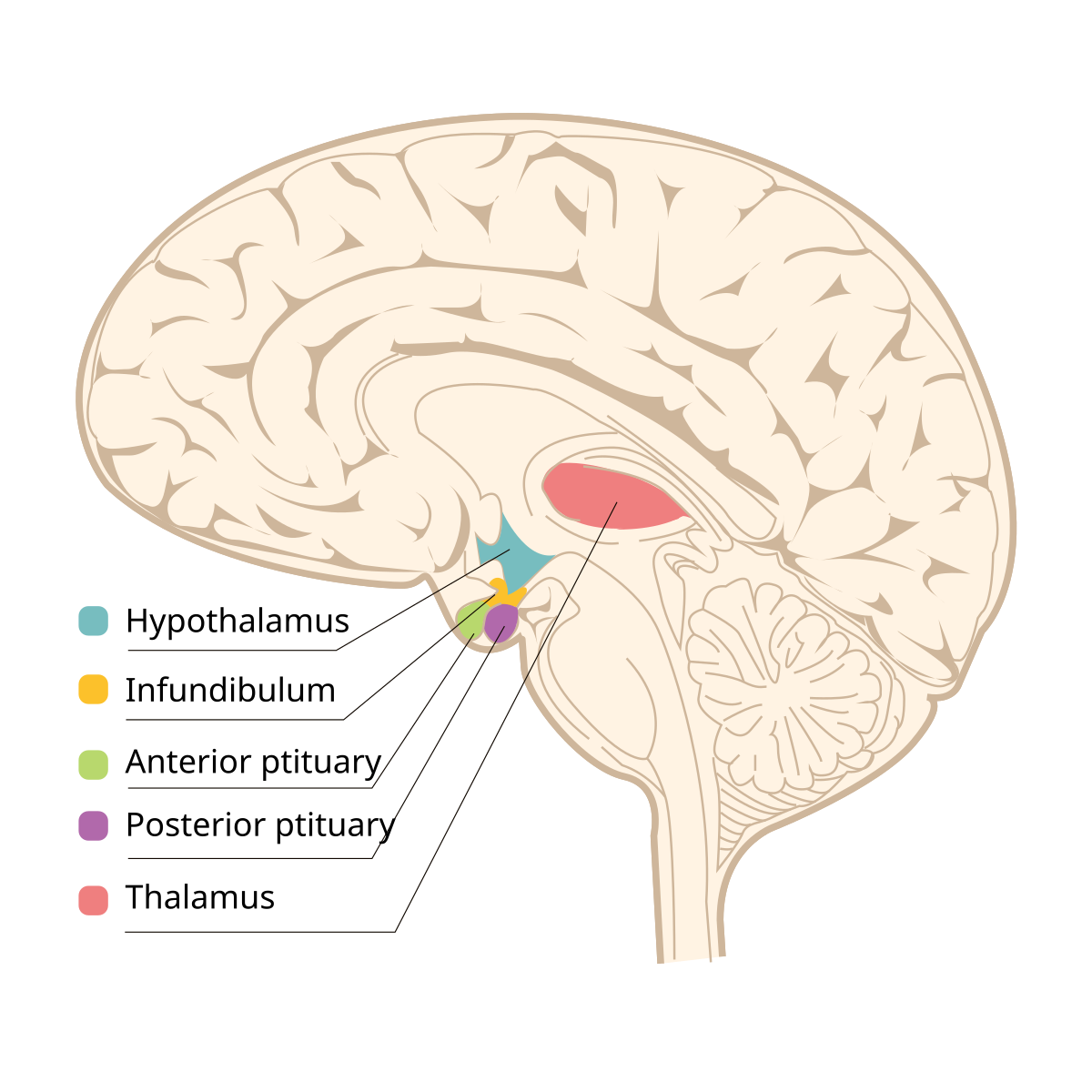
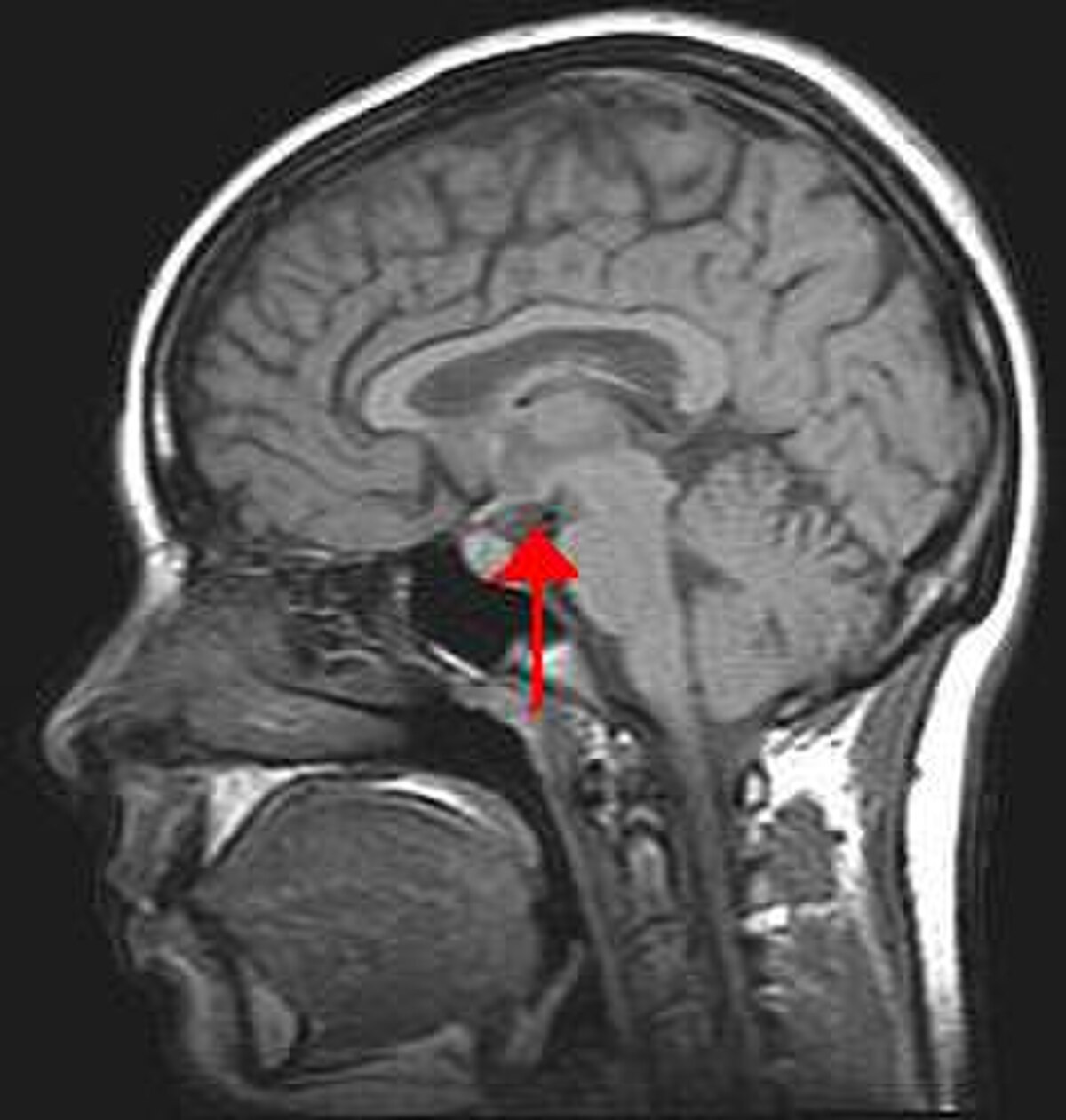
Diagram of the human brain highlighting the hypothalamus, pituitary gland, and surrounding structures. Hariadhi, CC BY-SA 4.0, via Wikimedia Commons
Think of it as your body's thermostat, maintaining homeostasis, that perfect internal balance of temperature, hunger, and sleep.
The thirst switch
This tiny, almond-sized structure controls your most basic survival drives. If it is damaged, you can develop a condition called adipsia.
You could be dying of dehydration while staring at a glass of water, because your brain simply never sends the signal that you need to drink.
Water is being poured from a clear glass bottle into a clear glass, creating splashes and bubbles. Walter J. Pilsak, Waldsassen, Germany, CC BY-SA 3.0, via Wikimedia Commons
Your internal clock
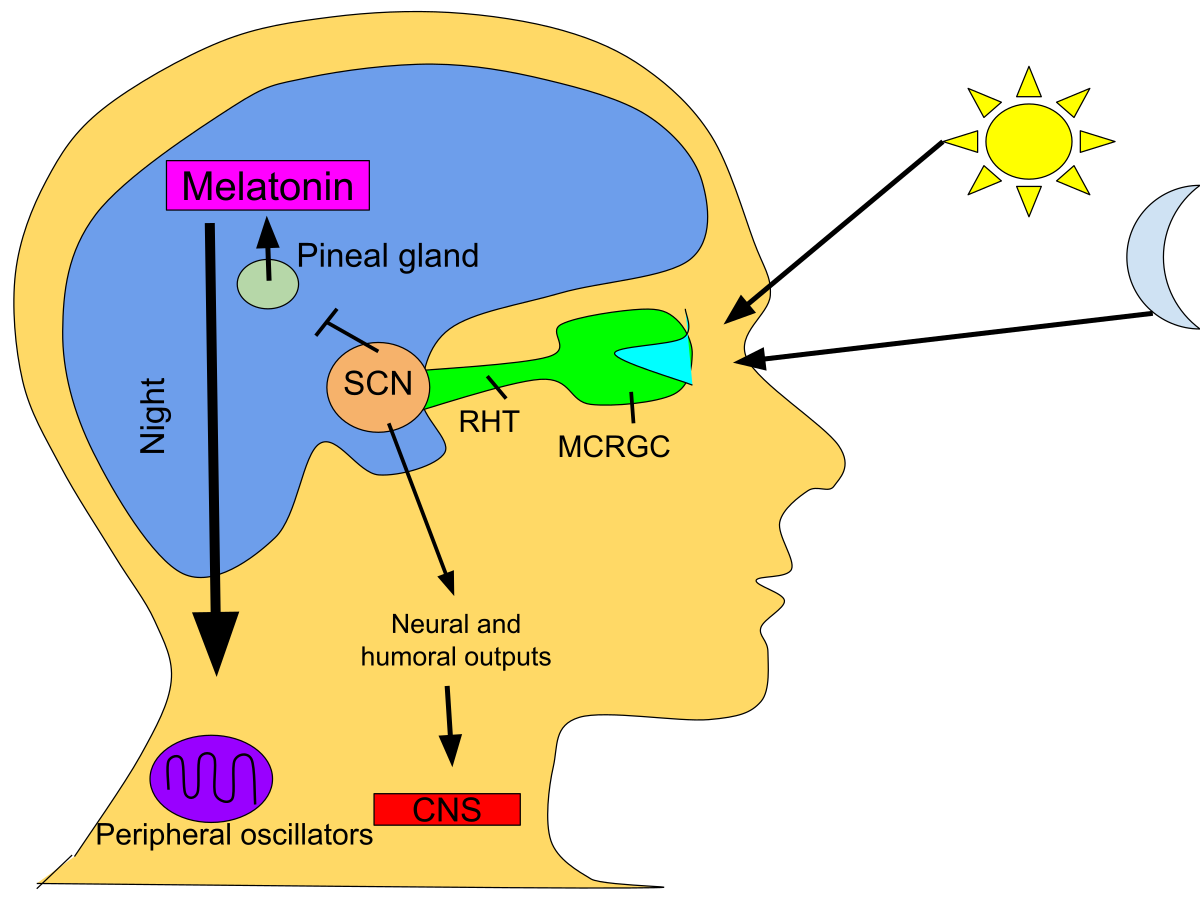
Tucked inside the hypothalamus is an even smaller cluster of cells: the suprachiasmatic nuclei. This is your internal clock. It monitors light from your eyes to decide when to release hormones like melatonin.
Diagram illustrating the mechanism of circadian rhythm regulation in the human brain, showing how light detected by the eyes influences the pineal gland's melatonin production via the SCN… Srruhh, CC BY-SA 4.0, via Wikimedia Commons
It dictates your energy, your sleep, and even when you shiver to keep warm.
The survival engine
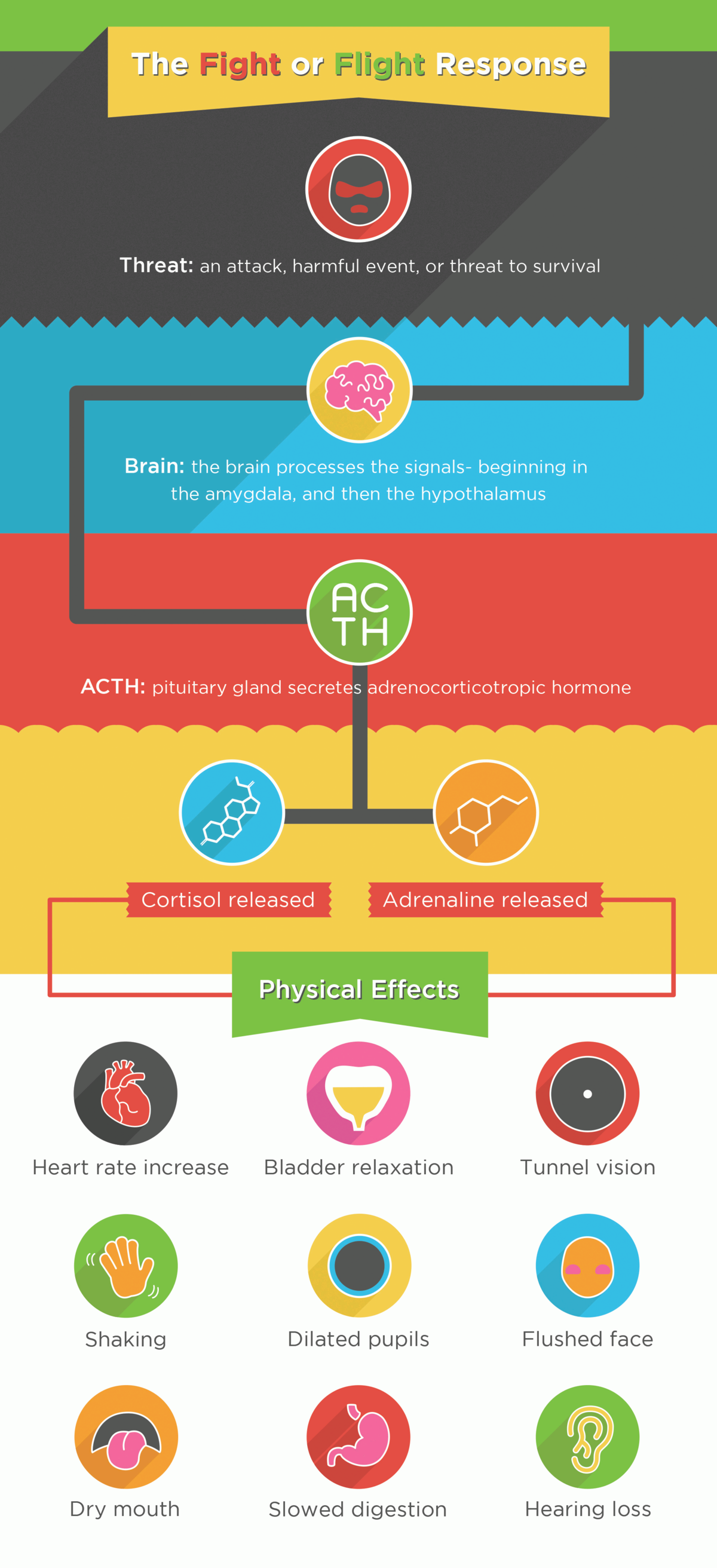
Your personality might live in the cortex, but your survival is managed by the hypothalamus. It commands the pituitary gland to flood your body with instructions.
It is the reason your heart races when you are scared and why you feel full after a meal.
Diagram illustrating the "Fight or Flight Response" and its physical effects. Jvnkfood (original), converted to PNG and reduced to 8-bit by Pokéfan95, CC BY-SA 4.0, via Wikimedia Commons
How the hypothalamus controls hormones
The hypothalamus links the nervous system to the endocrine system by sending chemical instructions directly to the pituitary gland. It synthesizes releasing hormones that either stimulate or block hormone secretion in the pituitary, controlling processes across the entire body.
Specific clusters of cells handle different hormonal routes. Large neurosecretory cells in the paraventricular and supraoptic nuclei produce oxytocin and vasopressin, sending them straight to the posterior pituitary to enter the bloodstream. Meanwhile, smaller cells release corticotropin-releasing hormone into a local blood vessel network to signal the anterior pituitary.
Where the hypothalamus is located and structured
Located below the thalamus, the hypothalamus forms the base of the diencephalon and belongs to the limbic system. Anatomic regions divide it into four sections from front to back (preoptic, supraoptic, tuberal, and mammillary) and three medial-to-lateral zones (periventricular, intermediate, and lateral).
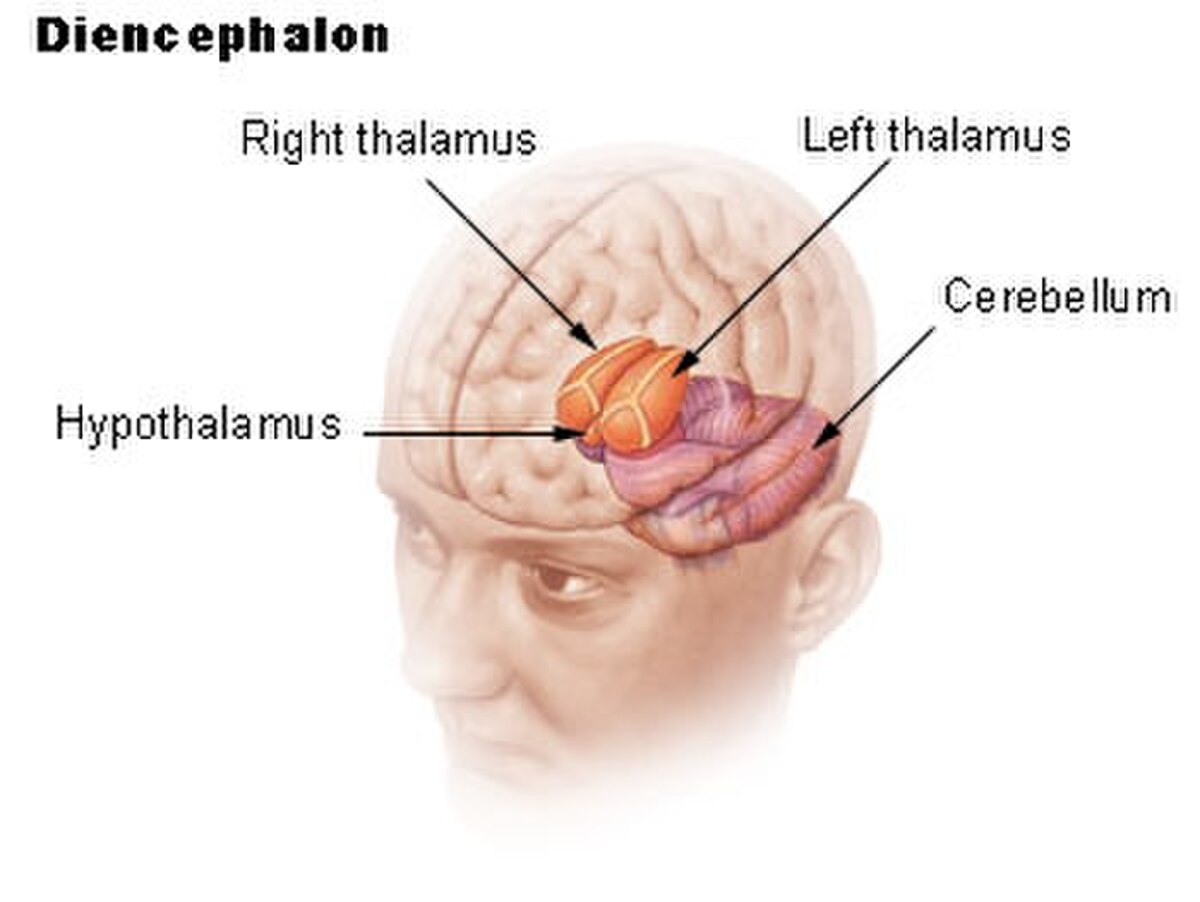
This transparent view illustrates the position of the hypothalamus at the base of the diencephalon beneath the thalamus. Public domain, via Wikimedia Commons
It connects broadly with the rest of the central nervous system, especially the brainstem, amygdala, and autonomic pathways. Most nerve fibers running through it carry two-way traffic. Downward signals travel along tracts toward the sympathetic motor system, while incoming signals arrive from brainstem regions like the locus coeruleus.
What functions the hypothalamus regulates
Beyond hunger and body temperature, the hypothalamus manages sleep cycles, fatigue, parenting behaviors, and aggression. Inside it, the suprachiasmatic nuclei read incoming light levels to set circadian rhythms and control hormone release.
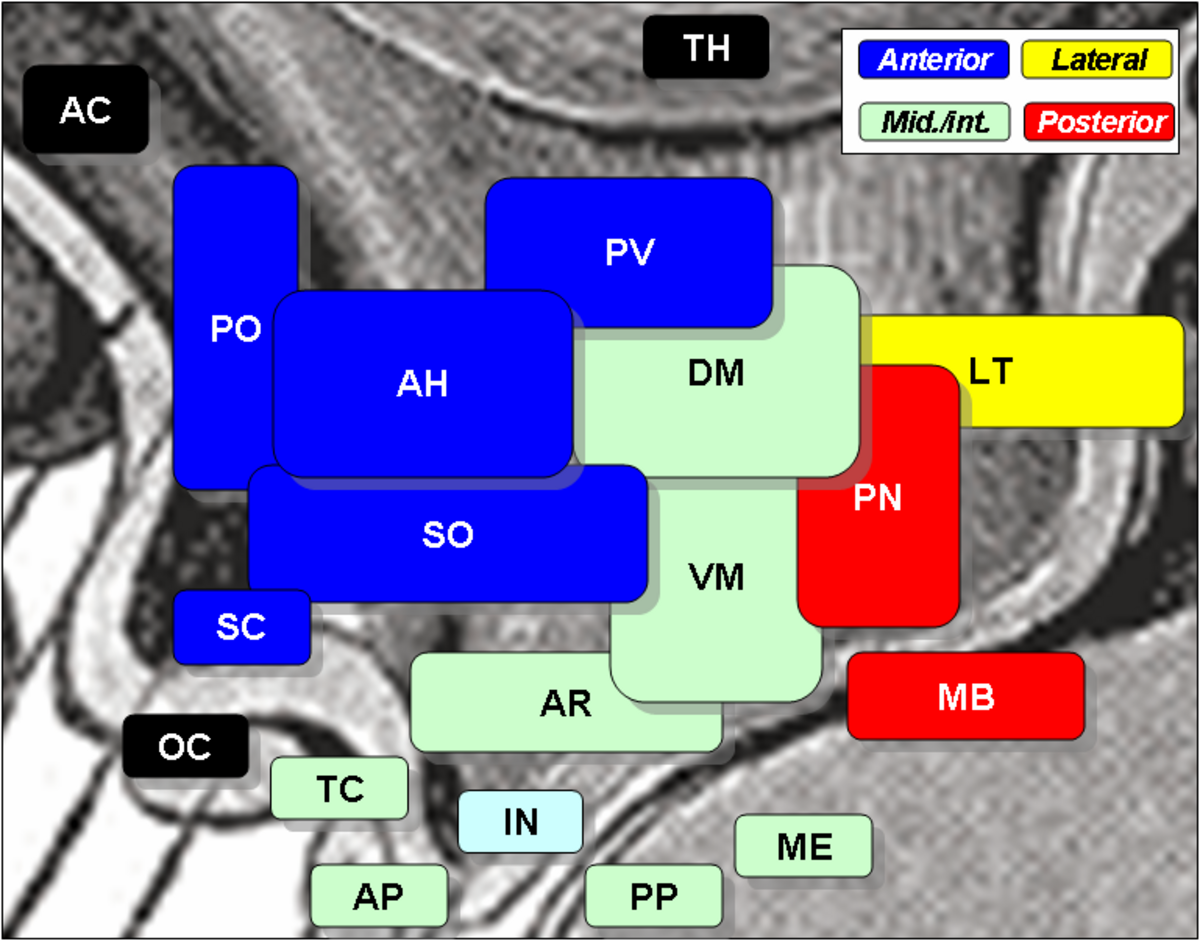
This map displays the specific nuclei grouped across the anterior, lateral, intermediate, and posterior regions of the hypothalamus. Public domain, via Wikimedia Commons
Several hypothalamic nuclei show structural and functional differences between males and females, known as sexual dimorphism. In the preoptic area, these differences alter neuron connectivity and hormone receptor distribution, influencing behaviors such as partner preference and maternal attachment.
Test yourself
How does the hypothalamus link the nervous and endocrine systems?
It converts neural signals into hormonal instructions.. The hypothalamus links the systems by converting neural activity into hormonal instructions, not by serving as a general nerve relay.
The hypothalamus functions by directly converting electrical signals into hormones.
True. The hypothalamus acts as a bridge, translating electrical brain signals into chemical hormones to command the pituitary gland.
Play the lesson in edgi and the card is yours. It lands on your Map next to the ideas it connects to, and turns from matte to foil to gold as you learn more around it.
Hypothalamic damage can disrupt basic survival drives, leading to conditions such as adipsia, where the brain fails to trigger thirst even during extreme dehydration. It can also disrupt body temperature regulation, sleep schedules, and metabolic balance.
How does the hypothalamus regulate body temperature?
It acts as an internal thermostat by tracking thermal inputs and issuing automatic physical responses. When cold, it triggers shivering to generate heat and adjusts hormone levels to stabilize internal temperature.
Do all animals have a hypothalamus?
All vertebrate brains contain a hypothalamus. Across these species, it consistently performs foundational tasks such as maintaining homeostasis and linking brain activity to hormone release.