Psychedelic therapyOne to three doses, not daily pills
Psychedelic therapy is the use of psychedelic substances under professional supervision to treat mental health disorders. Instead of daily pills, patients take a compound in one to three structured sessions combined with psychotherapy. This process temporarily alters brain activity, helping people confront trauma and break out of rigid thought patterns.
By the edgi team We find the most surprising true thing about an idea and build a 60-second lesson around it.
In the 1950s, psychiatrist Humphrey Osmond coined the word psychedelic while treating alcoholics in Saskatchewan with LSD. He noticed the drug produced a profound mystical experience that helped patients view their addiction from an outside perspective for the first time.
His work was so promising that Bill Wilson, the co-founder of Alcoholics Anonymous, actually tried LSD and wanted to bring it into the program.
The brain reset
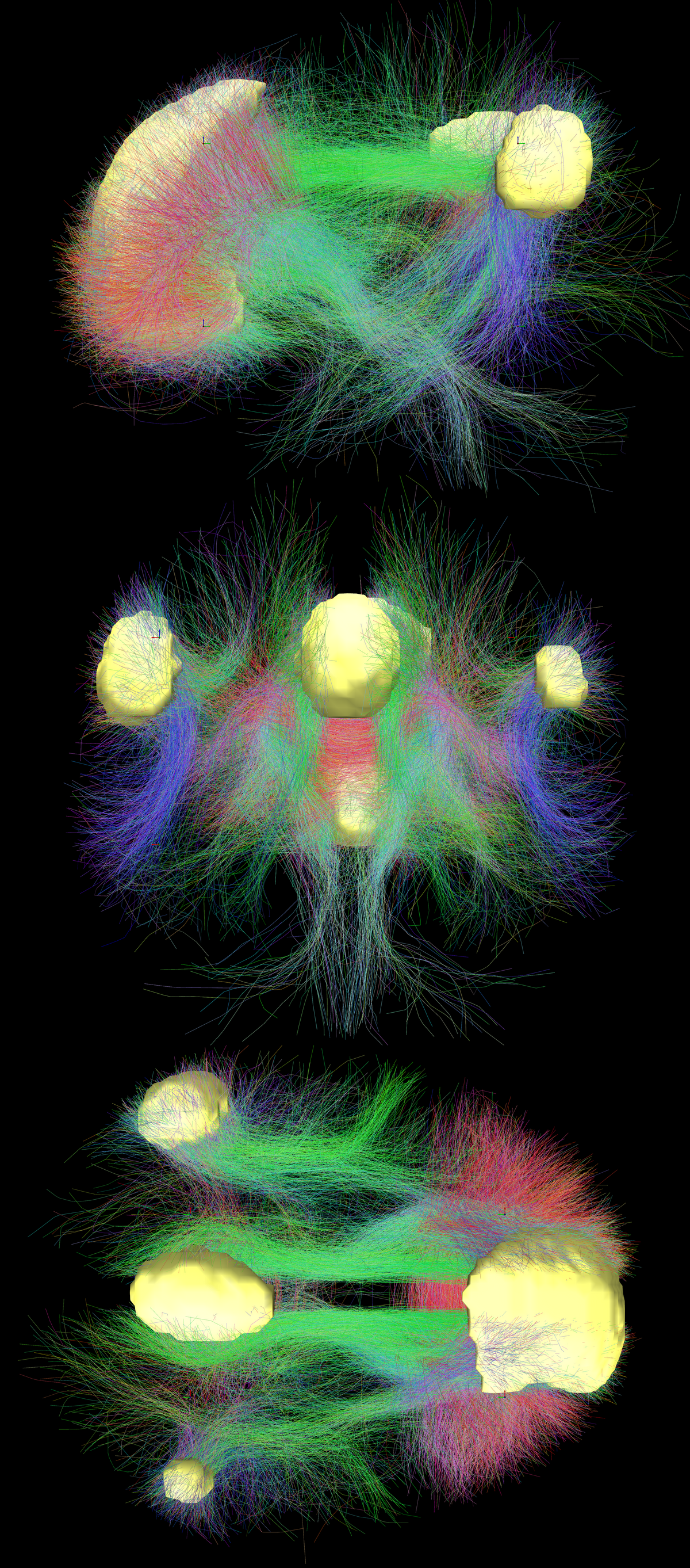
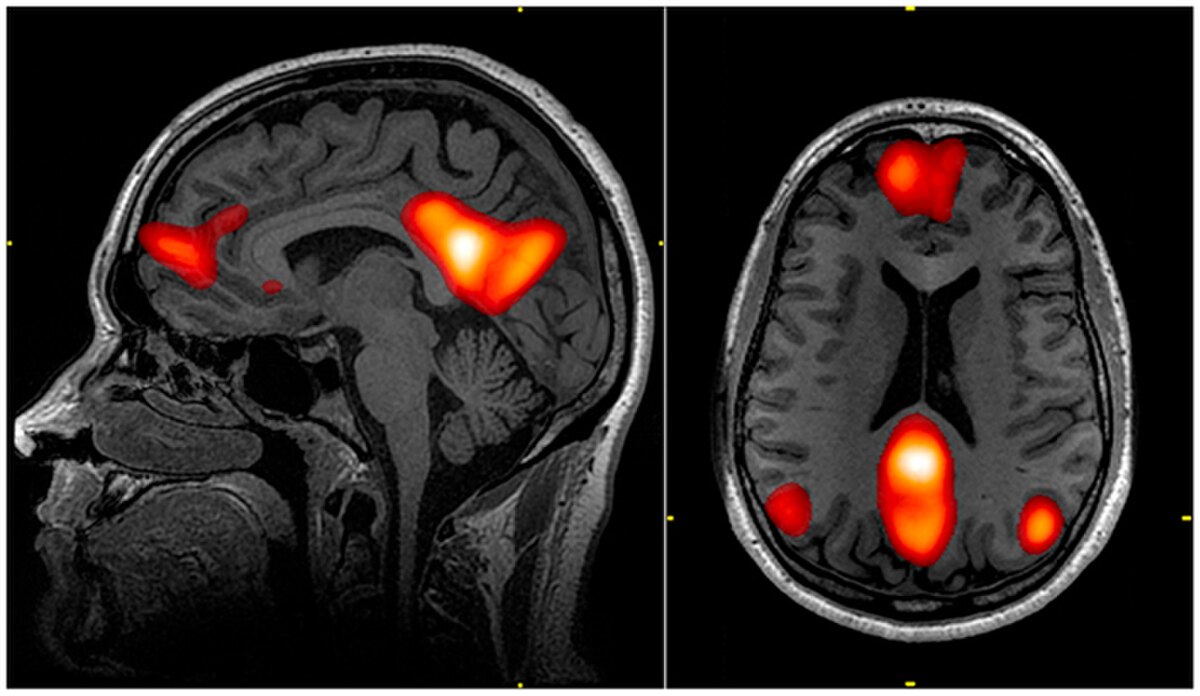
Psychedelic substances act as a biological catalyst that temporarily disrupts the brain's default mode network. This network keeps us locked in repetitive thought loops, especially in depression and addiction.
Three views (top, front, side) of the default mode network connectivity in the brain, showing main regions in yellow and connectivity between regions color-coded by structural traversing direction… Andreashorn, CC BY-SA 4.0, via Wikimedia Commons
Slowing it down opens a brief window of neuroplasticity, allowing a patient to process trauma without their usual defensive barriers.
Clinical results
Modern clinical trials show that a single guided session can provide rapid relief for treatment-resistant depression. The goal is never the drug alone, but using that chemically induced state alongside psychotherapy to build healthier mental pathways.
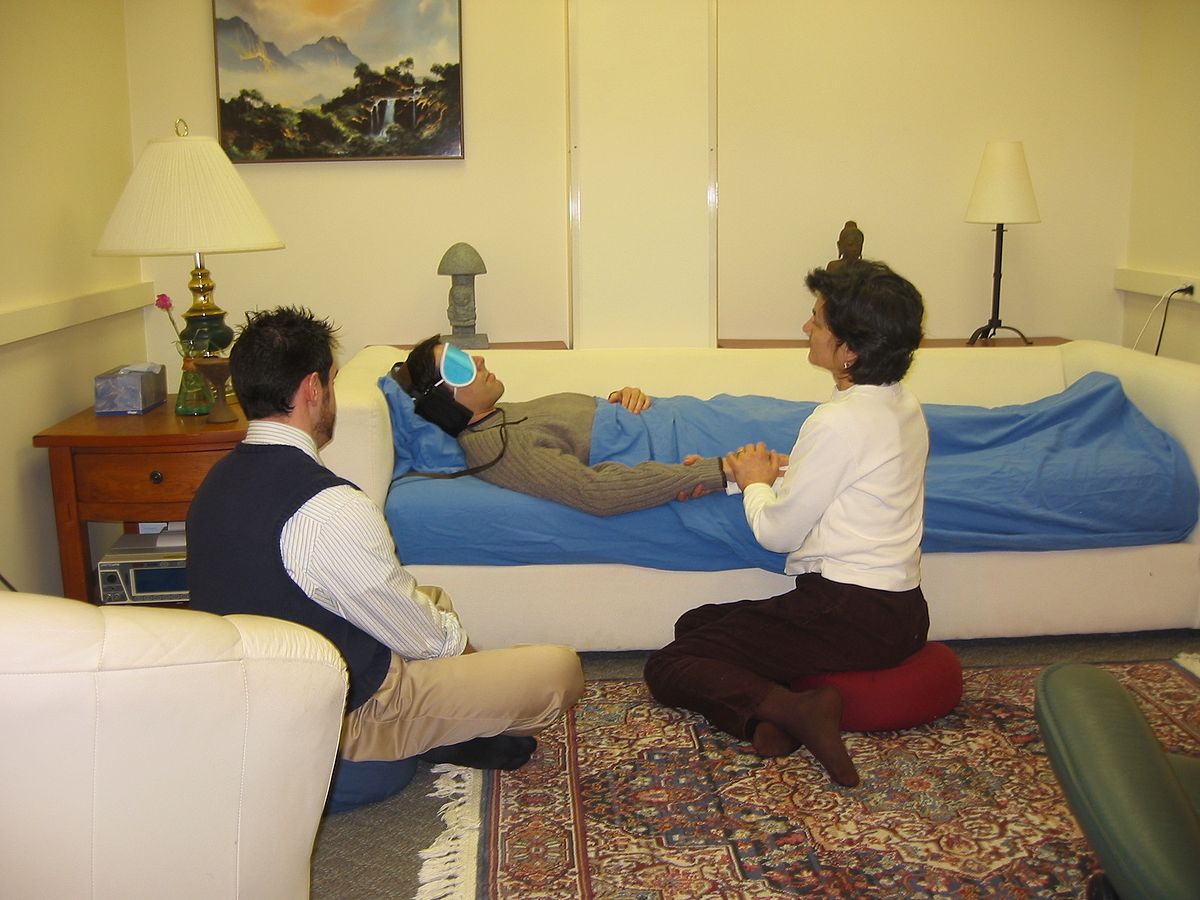
A psilocybin session room at Johns Hopkins University, showing a person lying on a couch with eyes covered and headphones on, attended by two guides. Matthew W. Johnson, CC BY-SA 3.0, via Wikimedia Commons
It is an attempt to turn a temporary trip into a permanent shift in how a person perceives their own history.
How does a session work?
A typical treatment looks nothing like taking daily psychiatric medicine. Therapists prepare the patient in advance before administering substances like psilocybin, LSD, or MDMA in a clinical setting.
During the session, the patient lies down wearing eyeshades and listening to music to keep their focus inward. A therapeutic team stays in the room to offer reassurance if disorientation or anxiety occurs. Afterward, integration sessions help the patient process their insights and translate them into lasting behavioral changes.
What conditions are being studied?
Modern clinical trials focus on conditions that resist traditional treatments. Ongoing research evaluates these compounds for major depressive disorder, post-traumatic stress disorder, and anxiety linked to terminal illness.
Regulatory agencies have taken note of early clinical results. The United States Food and Drug Administration has granted breakthrough therapy status to MDMA for post-traumatic stress disorder and psilocybin for treatment-resistant depression to accelerate their evaluation.
Why did early research stop?
Clinical interest exploded in the 1950s after Sandoz Laboratories began distributing LSD to researchers, leading to over 1,000 clinical papers on roughly 40,000 patients. Early investigators tested psychedelics on alcoholism, prison recidivism, and end-of-life distress.
Rising non-medical use in the 1960s prompted severe government crackdowns. By the time the United States passed the Controlled Substances Act in 1970, formal research had ground to a halt, only reviving in the early 2000s alongside modern neuroimaging tools.
Play the lesson in edgi and the card is yours. It lands on your Map next to the ideas it connects to, and turns from matte to foil to gold as you learn more around it.
Which substances are studied in psychedelic therapy?
Researchers examine several compounds, including psilocybin from mushrooms, MDMA, LSD, mescaline from peyote, DMT, 5-MeO-DMT, ayahuasca, and ibogaine.
Is psychedelic therapy legally available today?
As of 2021, most psychedelics remain controlled substances worldwide and are generally restricted to clinical trials. Some jurisdictions have created exceptions, such as psilocybin facilitator training programs in Oregon.