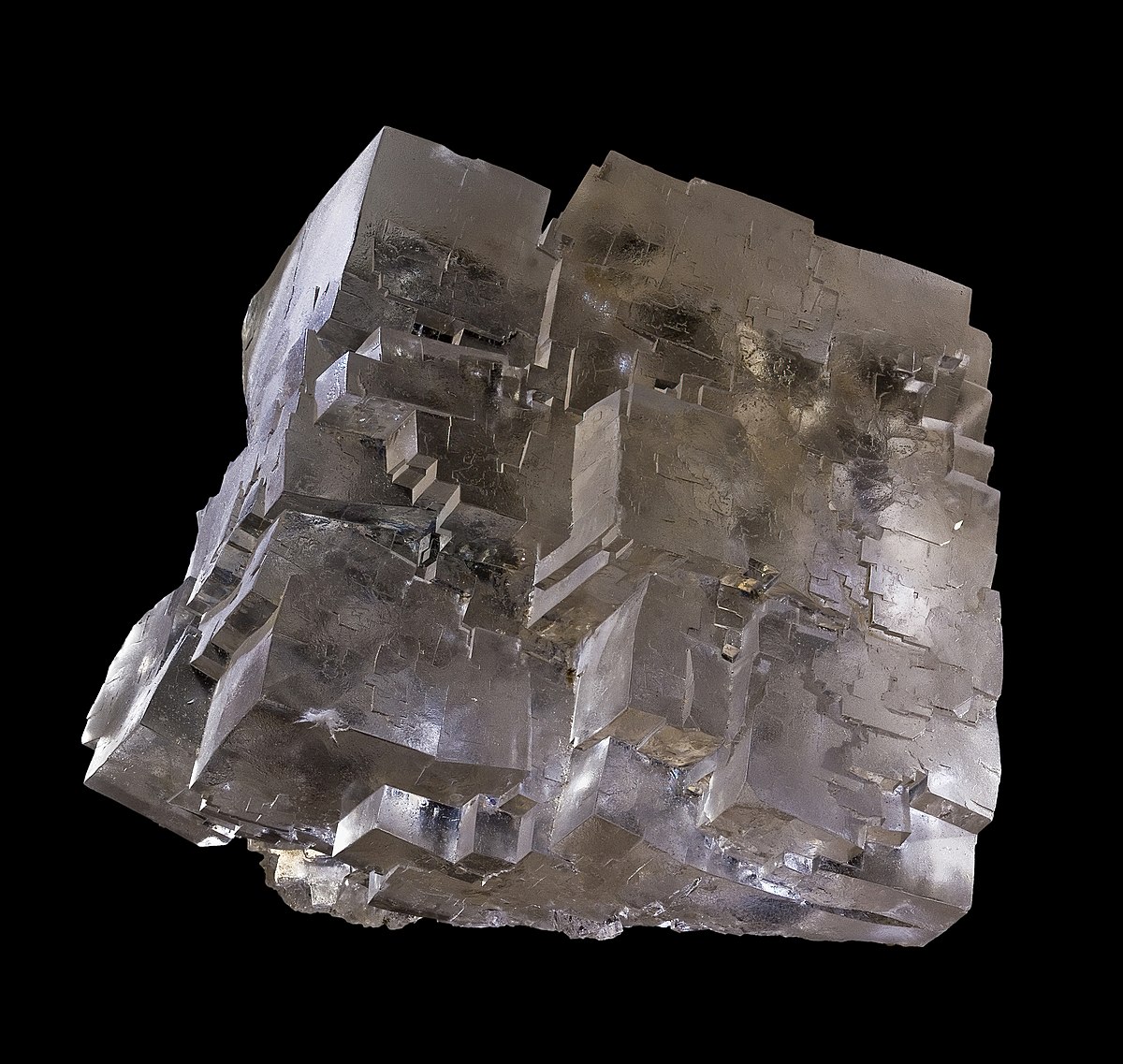
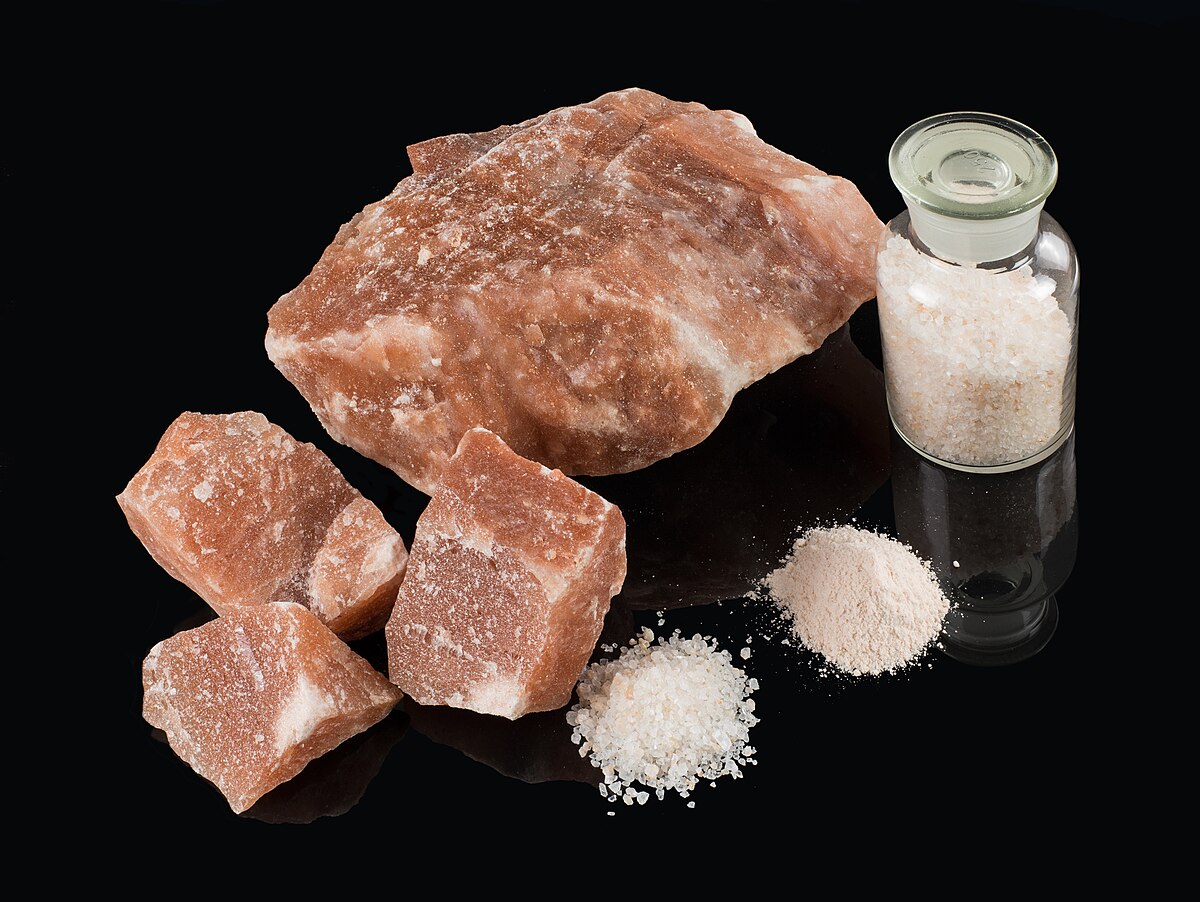
Salt is a crystalline mineral made mostly of sodium chloride, a compound of sodium and chlorine. Beyond seasoning and preserving food, it provides the essential electrolytes your body requires to transmit electrical signals across nerves and muscles. Only a tiny fraction of the salt harvested worldwide is ever eaten, with the rest serving as a raw material for heavy industry.
By the edgi team We find the most surprising true thing about an idea and build a 60-second lesson around it.
The word salary comes from the Latin salarium. It was an allowance given to Roman soldiers specifically to buy salt.
Salt was once a global currency because it was the only reliable way to preserve food, allowing cities to survive winters and armies to march.
The electrical trigger
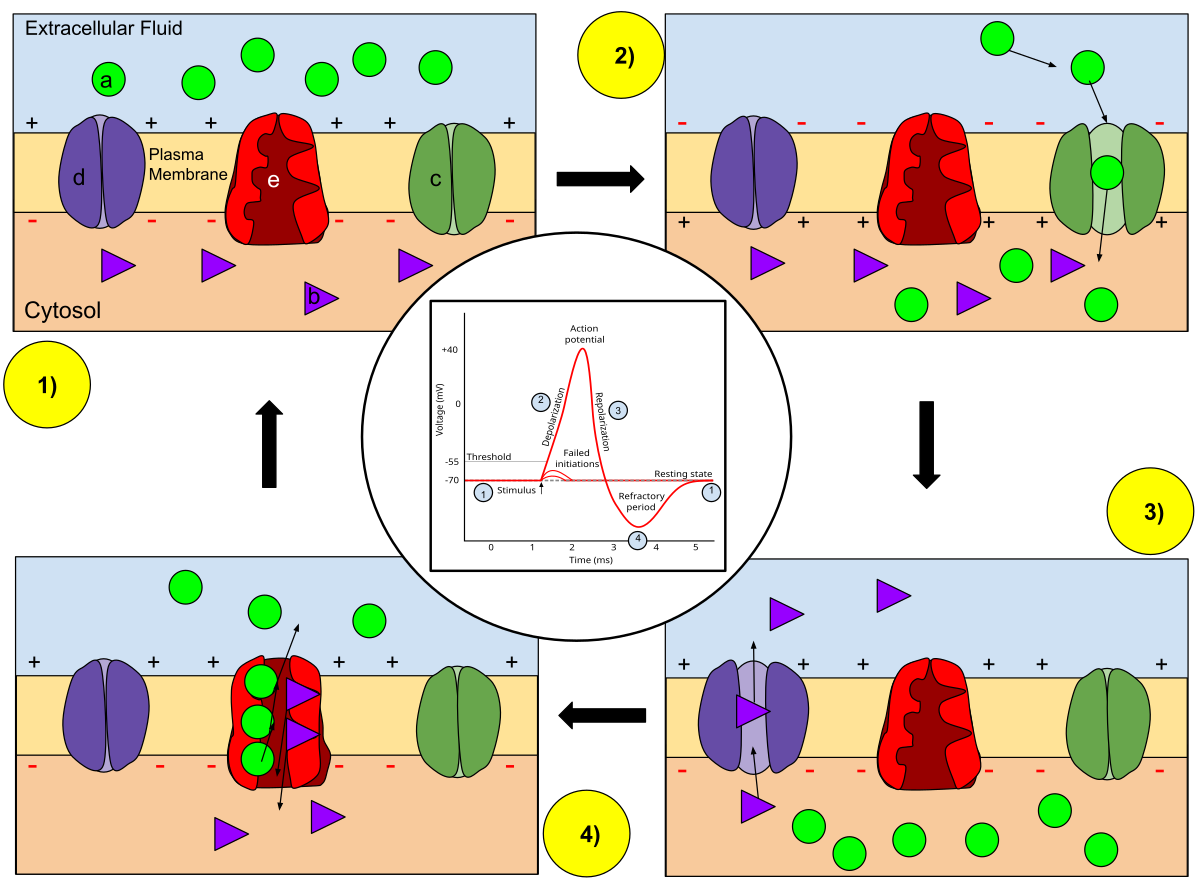
Beyond the kitchen, salt is essential for life. Your body uses sodium ions to send the electrical signals that keep your heart beating and your brain thinking.
A circular diagram illustrating the stages of ion movement during an action potential across a neuron's plasma membrane, with an inset graph of the action potential voltage over time. CThompson02, CC BY-SA 4.0, via Wikimedia Commons
This is why your taste buds evolved to crave it; in nature, salt is a signal for survival.
The power of a mineral
Because salt was so valuable, controlling it meant controlling the population. In 1930, Mahatma Gandhi challenged the British monopoly on salt with the Salt March, walking 240 miles to the sea.
Mahatma Gandhi bends down to collect salt at Dandi Beach on April 6, 1930, during the Salt March. Unknown authorUnknown author, Public domain, via Wikimedia Commons
He simply boiled a pot of seawater, turning a basic mineral into a symbol of mass resistance against an empire.
How is salt sourced and processed?
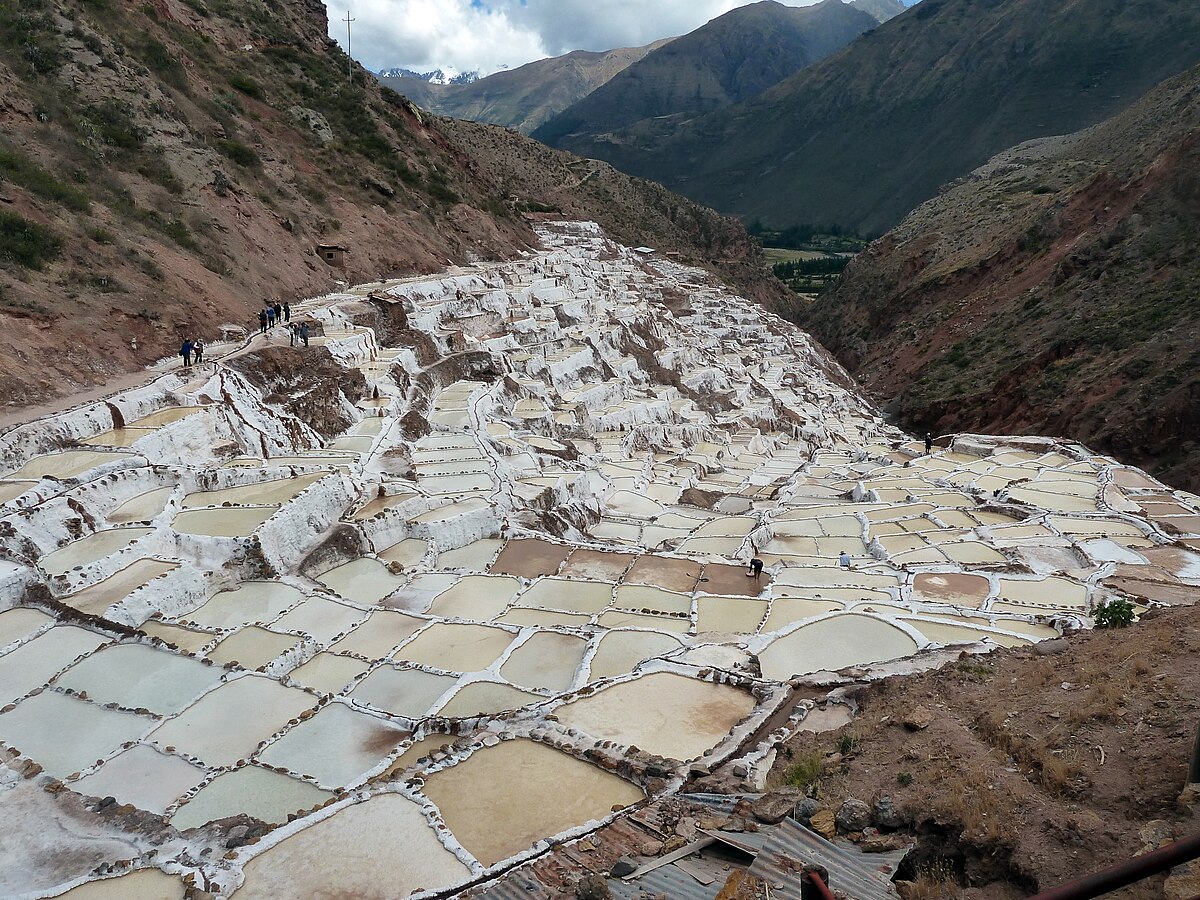
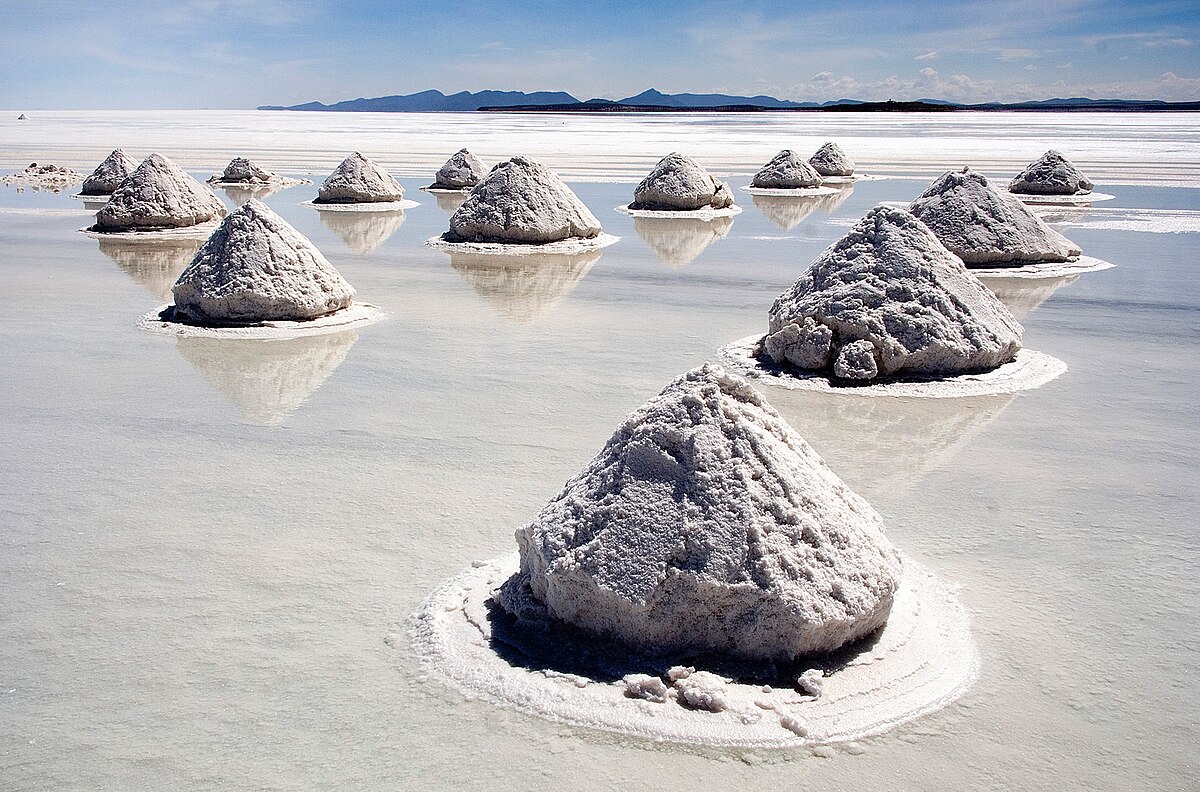
Salt comes from two main sources: subterranean rock deposits and saline water. Geological deposits are harvested from salt mines as rock salt, also called halite. Water-based operations extract sea salt or spring salt by trapping brine in shallow pools, allowing the sun and wind to evaporate the water, or by boiling mineral-rich spring water in large vessels.
Terraced evaporation ponds at Maras, Peru, showing how mineral spring water has been pooled to harvest salt since pre-Inca times. pululante, CC BY 2.0, via Wikimedia Commons
Humans have used these extraction techniques for millenia. As early as 6000 BC, ancient communities in modern-day Romania and China boiled spring water and harvested lake beds to produce salt crystals. Today, commercial table salt is refined, combined with anti-caking agents to prevent clumping, and frequently iodised to protect against dietary iodine deficiencies.
Where does all the salt go?
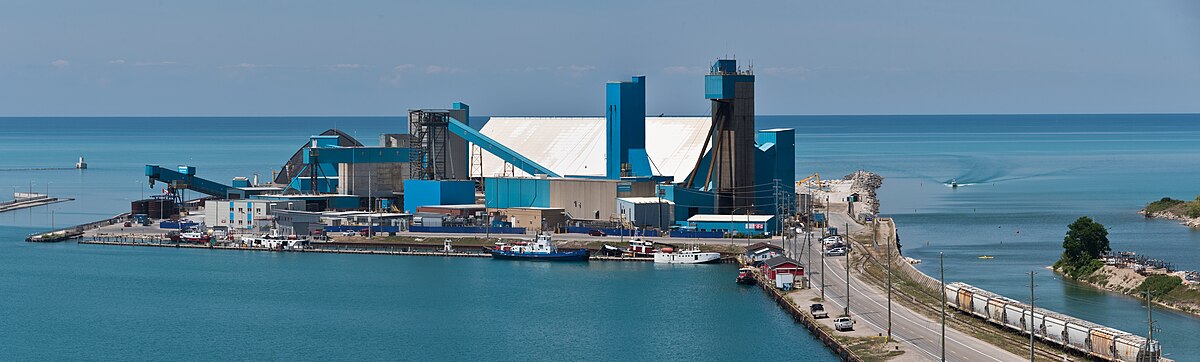
Around three hundred million tonnes of salt are produced globally each year, but only a small percentage is consumed by humans. The largest single use of sodium chloride is as an industrial feedstock for manufacturing chemicals.
An industrial salt mine and harbor plant in Ontario, Canada, illustrating the massive scale of modern salt harvesting. Gordon Leggett, CC BY-SA 4.0, via Wikimedia Commons
Chemical plants process salt to yield chlorine and caustic soda, materials needed to manufacture plastics, polyvinyl chloride, and paper pulp. Highway departments spread large quantities of coarse salt to de-ice frozen roads in winter, while other industries use it for water conditioning and agriculture.
Why is salt necessary for human health?
Sodium acts as an essential electrolyte and osmotic solute in the human body. Because plant tissues contain relatively little salt compared to meat and blood, human societies that shifted from hunting to cereal-based agriculture had to actively supplement their diets with mined or evaporated salt.
While necessary for survival, excessive sodium intake strains the cardiovascular system and causes hypertension. The World Health Organization recommends that adults restrict their consumption to less than 2,000 milligrams of sodium per day, which equals about 5 grams of total salt.
Test yourself
Which person is most likely to have a salt-driven blood pressure problem?
Someone eating packaged food daily with weak kidneys. Steady high sodium intake combined with kidneys that clear sodium poorly pushes fluid volume and pressure up. Occasional salt is cleared easily by healthy kidneys.
Why does extra sodium in the blood raise blood pressure?
Water follows it, adding fluid volume. Water follows sodium, so more sodium means the body holds more fluid in the blood vessels. More volume in the same vessels presses harder on the walls.
Why can damaged kidneys make a high-salt diet raise blood pressure?
Retained sodium holds extra water in blood. If sodium cannot leave, it keeps water in the bloodstream. The larger blood volume pushes harder on artery walls.
Play the lesson in edgi and the card is yours. It lands on your Map next to the ideas it connects to, and turns from matte to foil to gold as you learn more around it.
What is the difference between rock salt and table salt?
Rock salt is the natural, unrefined mineral form known as halite mined directly from underground deposits. Table salt is refined, granulated sodium chloride that often contains added anti-caking compounds and dietary iodine.
How was salt used as money in history?
Salt was compact, durable, and universally needed, making it an ideal trading currency across regions without local supplies. Sub-Saharan African trade networks used rock salt slabs and sea salt as currency, while Roman soldiers received an allowance called a salarium specifically to purchase salt.
What was the symbolic practice of salting the earth?
Ancient armies sometimes scattered salt across conquered lands or cities during wartime. This was a symbolic act meant to curse the land and ruin its fertility, ensuring crops could no longer grow.