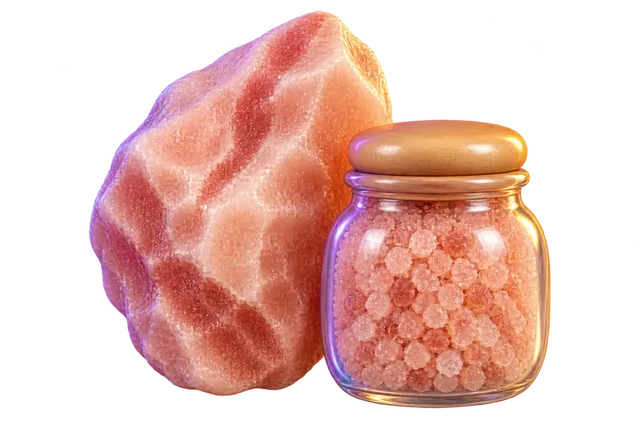
Himalayan salt is rock salt mined from ancient mineral deposits in the Punjab region of Pakistan. Its distinctive pink tint comes from trace mineral impurities like iron oxide, which is the same compound found in rust. Chemically and nutritionally, it is almost identical to standard white table salt.
By the edgi team We find the most surprising true thing about an idea and build a 60-second lesson around it.
The story goes that Alexander the Great’s army discovered the deposit in 326 BC when they saw their horses licking the rocks for salt. Today, that site is the Khewra Salt Mine in Pakistan, the primary source of almost all the Himalayan salt sold worldwide.
The rusty hue
That famous pink hue comes from impurities like iron oxide, the exact same chemical compound that causes iron to rust. While often sold as a nutritional powerhouse, it is chemically nearly identical to standard white table salt, or sodium chloride.
The health myth
Marketing claims often boast about the 84 trace elements in the salt. But these minerals exist in such microscopic quantities that they have zero impact on your body.
You are paying for the aesthetic, not the nutrition.
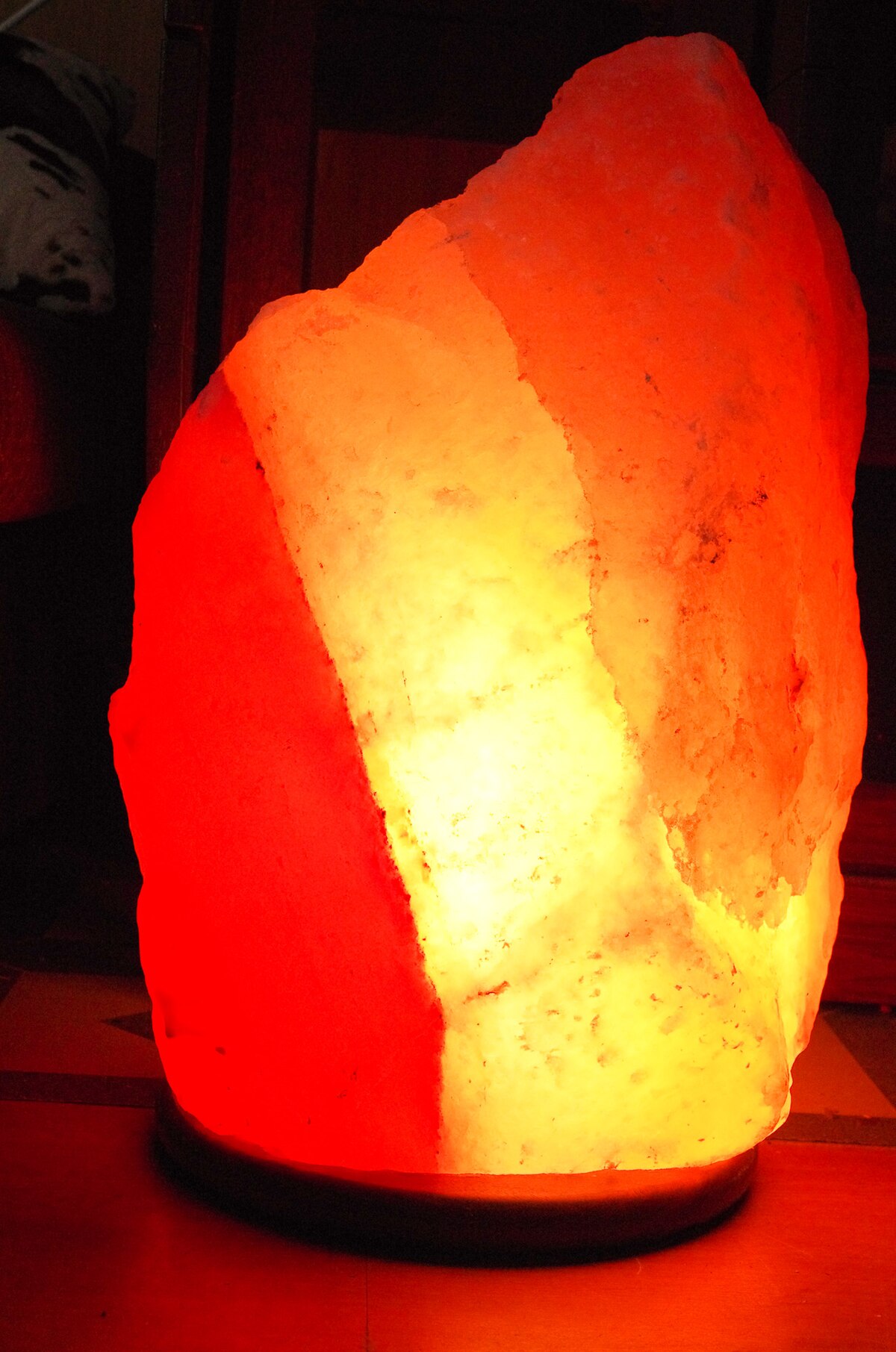
A glowing Himalayan salt lamp, carved from a large piece of pinkish-orange salt, emitting a warm, reddish-orange light. Gnangarra, CC BY-SA 3.0, via Wikimedia Commons
What is Himalayan salt made of?
Chemical analysis shows that Himalayan salt is between 96% and 99% sodium chloride. The remaining fraction consists of tiny trace amounts of minerals like calcium, iron, zinc, chromium, magnesium, and sulfates, all existing at levels below 1%.
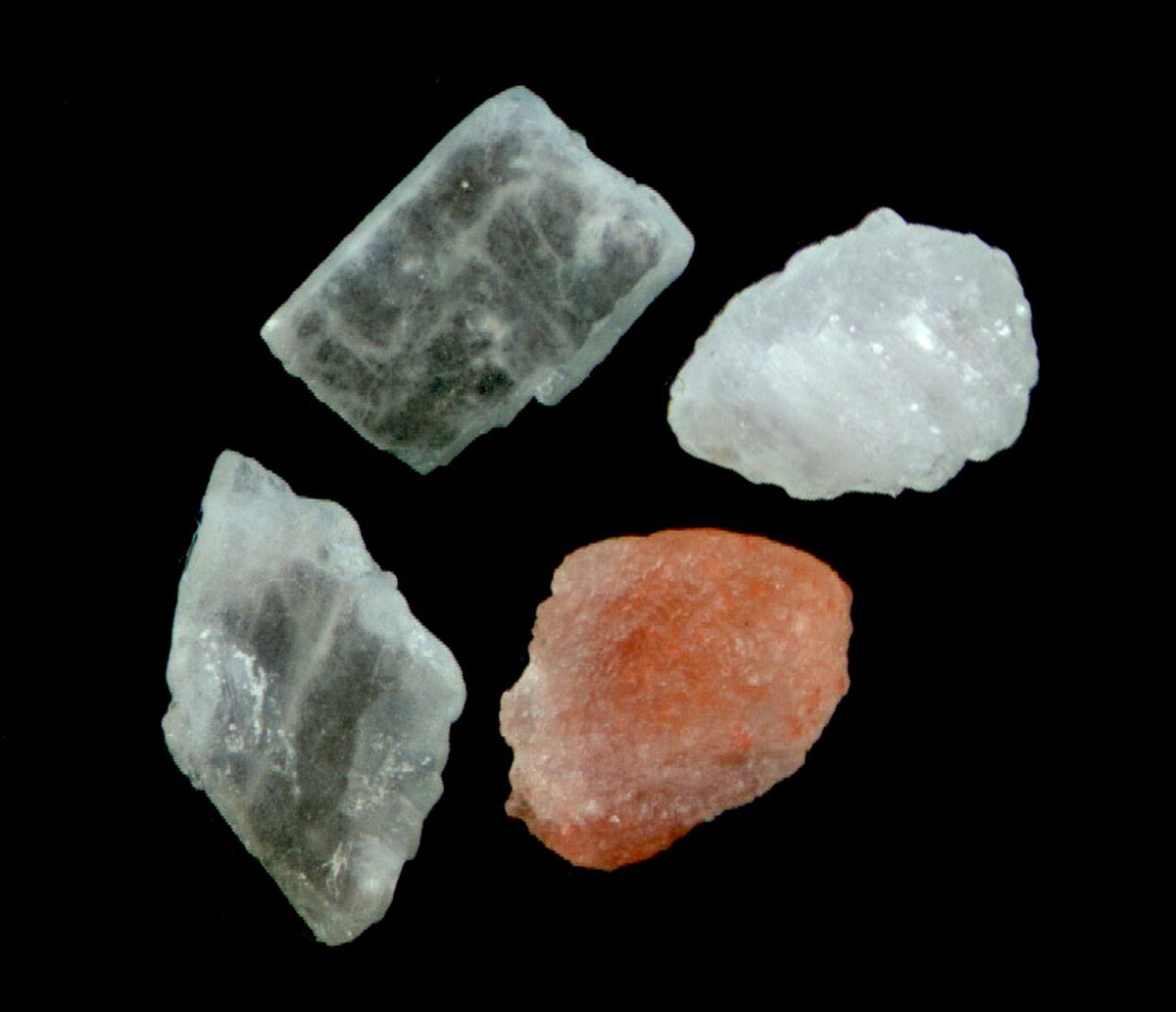
Individual crystals of Himalayan salt showing the color variation caused by trace mineral impurities. Lordtct, Public domain, via Wikimedia Commons
These trace minerals give the crystals their range of color, from off-white and transparent to pink, reddish, or beet-red. Because it is nearly pure sodium chloride, it contains roughly the same sodium levels as conventional table salt. The mineral quantities are far too microscopic to provide any measurable nutritional benefit without consuming dangerous amounts of sodium.
Where does Himalayan salt come from?
Despite its name, the salt does not come from high mountain peaks. It is mined from the Salt Range mountains, a geological formation in the foothills south of the Himalayas in Pakistan.
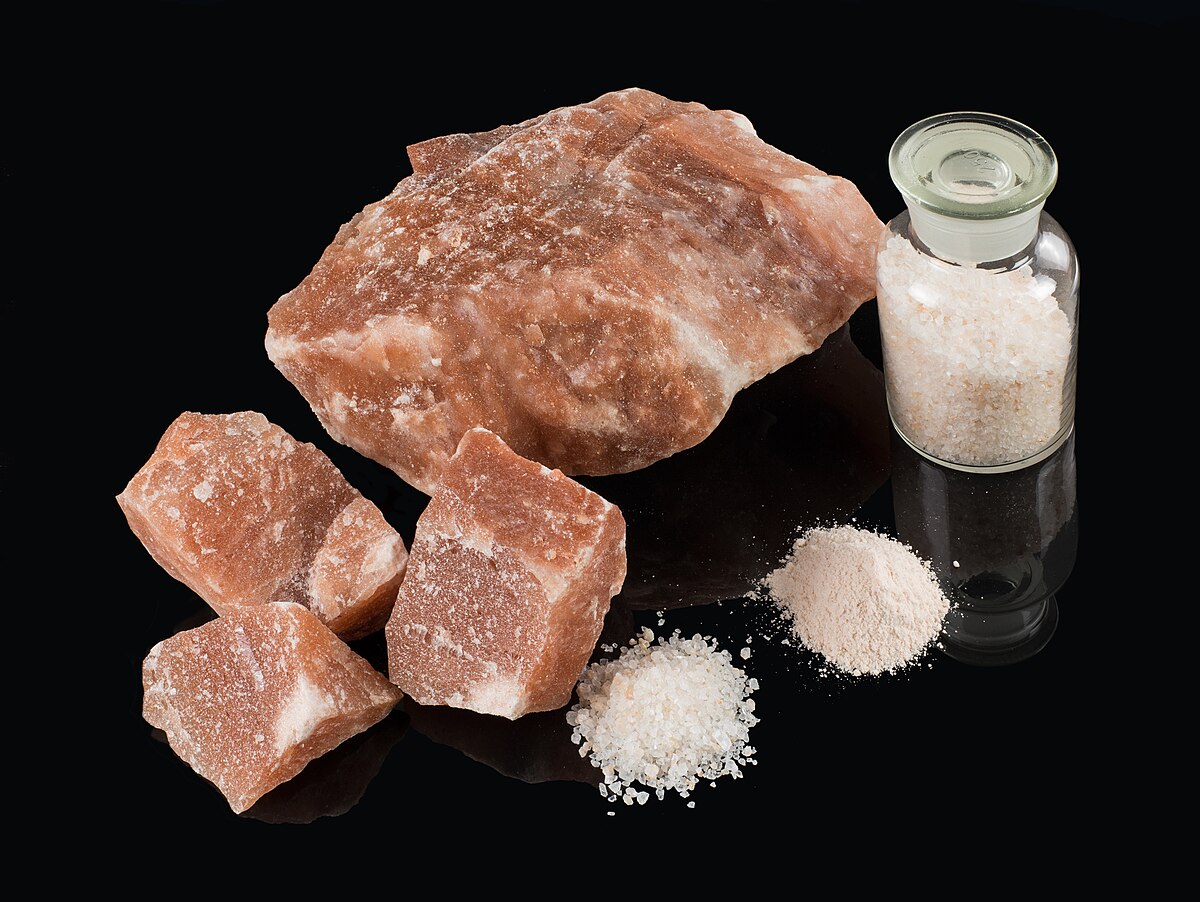
A chunk of raw rock salt from the Khewra Salt Mine in Punjab, Pakistan. Hubertl, CC BY-SA 4.0, via Wikimedia Commons
The primary source is the Khewra Salt Mine in the Jhelum District of Punjab. These thick underground salt beds formed between 600 and 540 million years ago from prehistoric marine evaporites. While legend credits Alexander the Great's army with finding the deposit in 326 BC, the earliest official records of mining date back to the Janjua clan in the 1200s.
Everyday uses and health claims
Himalayan salt costs up to 20 times more than standard table salt, driven largely by marketing rather than production expense. Beyond seasoning food, solid slabs are carved into serving dishes, baking stones, griddles, and shot glasses.
Hollowed-out blocks fitted with light bulbs are sold as decorative salt lamps that emit an orange glow. Sellers frequently claim these lamps release beneficial air ions or that salt spa treatments heal illnesses, but scientific testing has found no evidence for these effects. Unprocessed Himalayan salt also lacks the added iodine found in standard fortified table salt, which prevents iodine deficiency disorders.
Test yourself
What causes the pink hue in Himalayan salt?
Iron oxide impurities. The pink color comes from iron oxide, which is chemically identical to rust, rather than a dense concentration of beneficial trace elements.
How should a consumer evaluate marketing claims about trace minerals in Himalayan salt?
Ignore them as nutritionally inert. Trace elements in Himalayan salt exist in microscopic quantities that have zero impact on human nutrition, making such claims purely aesthetic marketing.
Play the lesson in edgi and the card is yours. It lands on your Map next to the ideas it connects to, and turns from matte to foil to gold as you learn more around it.
Yes. Pets like cats and dogs can suffer from salt poisoning if they repeatedly lick the exposed salt blocks.
Why is Himalayan salt used during religious fasts in India?
Himalayan salt is mined from underground rock deposits rather than evaporated from the sea. Because of this non-marine origin, it is traditionally permitted in certain Hindu dietary practices during fasting periods.
Does Himalayan salt contain iodine?
It naturally contains little to no usable iodine. Standard commercial table salt is deliberately fortified with iodine to prevent deficiency disorders, a benefit pink rock salt lacks unless specifically iodized.