Sodium ChlorideHow two deadly elements make table salt
Sodium chloride is an ionic compound made of equal parts sodium and chlorine ions, commonly known as table salt or the mineral halite. It forms when explosive sodium metal transfers an electron to toxic chlorine gas, locking both into a stable, brittle crystal. While people know it as a food seasoning and preservative, industry uses hundreds of millions of tonnes each year to make chemicals, treat water, and melt road ice.
By the edgi team We find the most surprising true thing about an idea and build a 60-second lesson around it.
Sodium is a highly reactive alkali metal that explodes on contact with water. Chlorine is a choking, yellow-green gas that was famously used as a chemical weapon in World War I.
Yet, when these two volatile enemies meet, they engage in a violent exchange of electrons.
The chemical truce
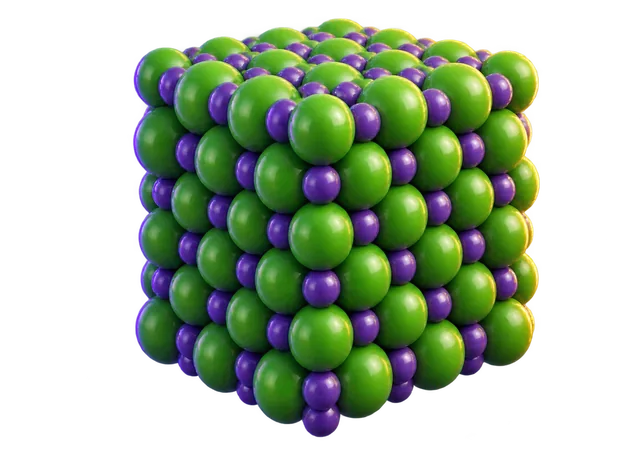
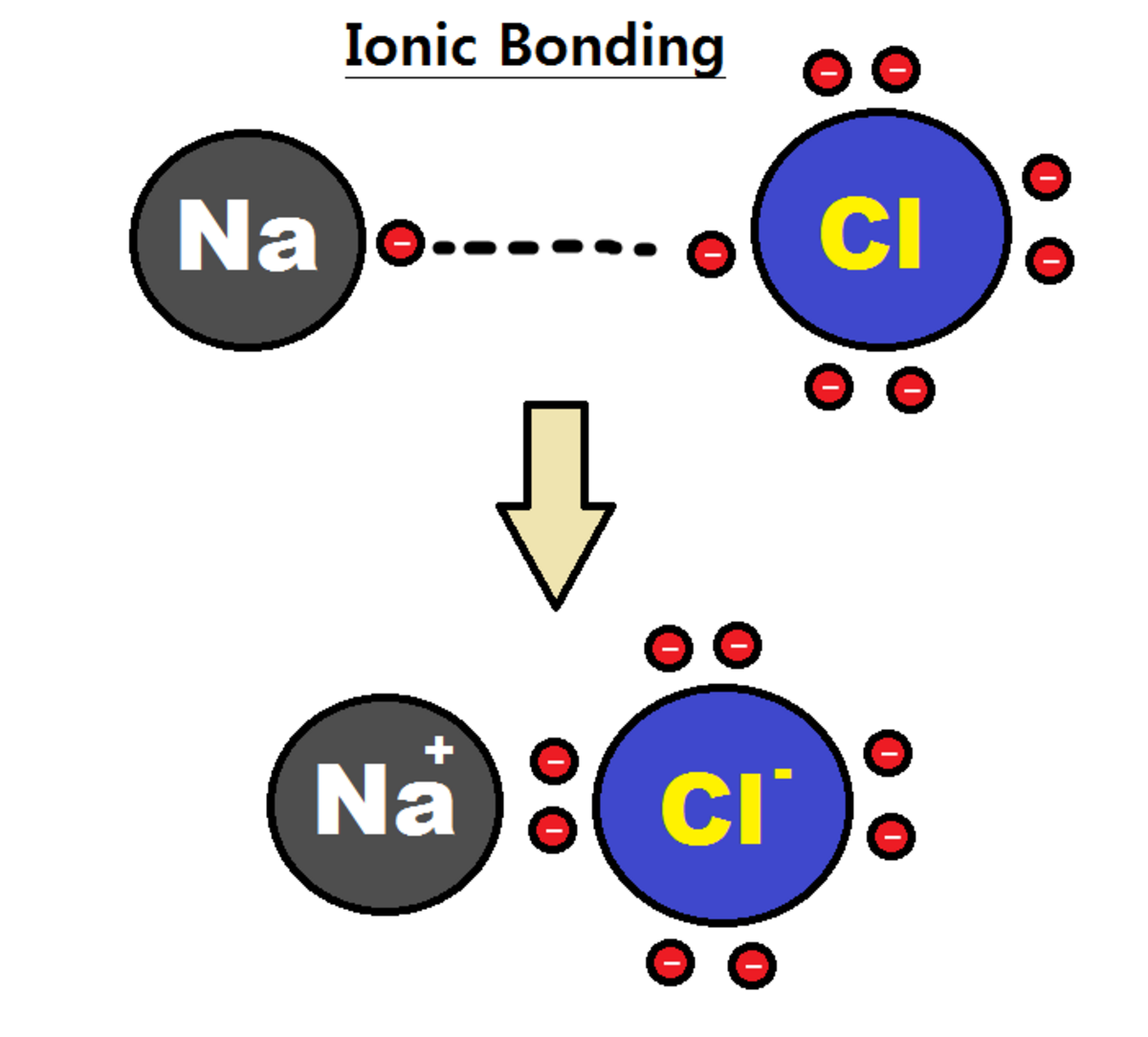
The sodium atom gives up an electron, and the chlorine atom greedily takes it. This creates an ionic bond, a powerful magnetic-like attraction that locks them into a rigid, repeating grid.
Diagram illustrating ionic bonding between sodium (Na) and chlorine (Cl) atoms. Rhannosh, CC BY-SA 3.0, via Wikimedia Commons
The result is a stable, life-sustaining crystal: sodium chloride.
The discovery
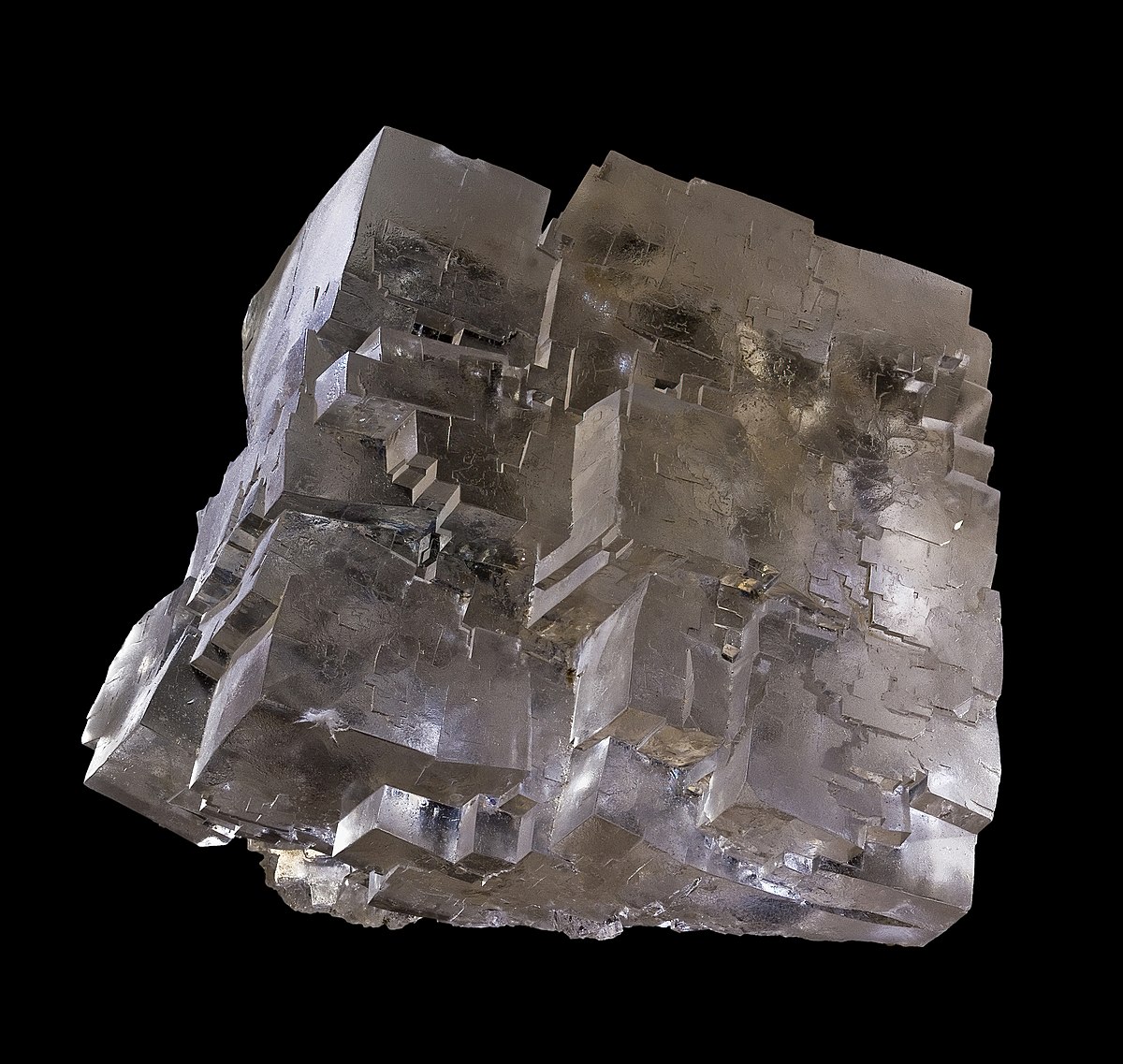
For centuries, humans knew salt as a rock, not a combination of hidden elements. In 1807, chemist Humphry Davy used a massive battery to force the ions apart.
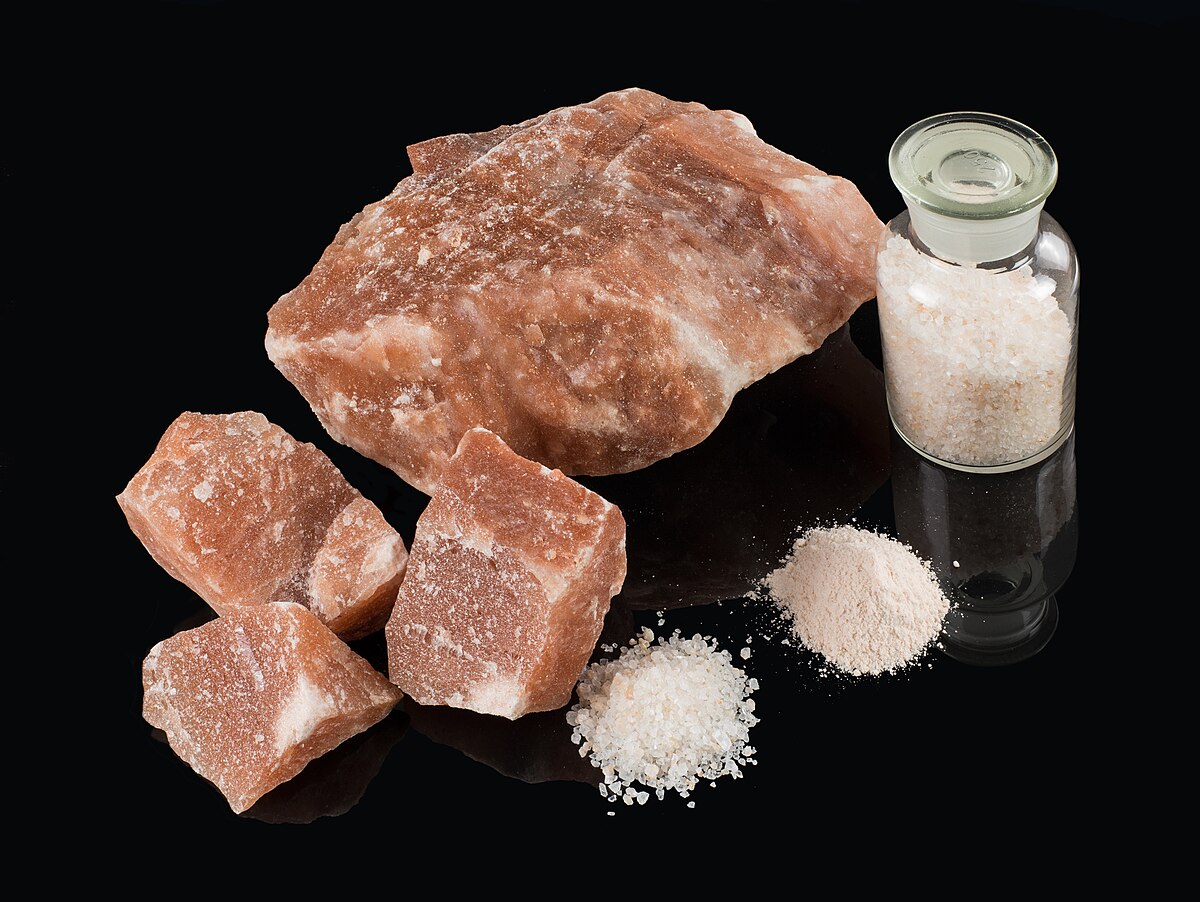
A large, translucent halite (sodium chloride) crystal specimen is shown against a black background, exhibiting a cubic crystal habit with stepped faces. Didier Descouens, CC BY-SA 4.0, via Wikimedia Commons
He watched the pure metal and the gas emerge from the crystal, known naturally as halite, proving the truce could be broken.
How sodium and chlorine form a stable crystal
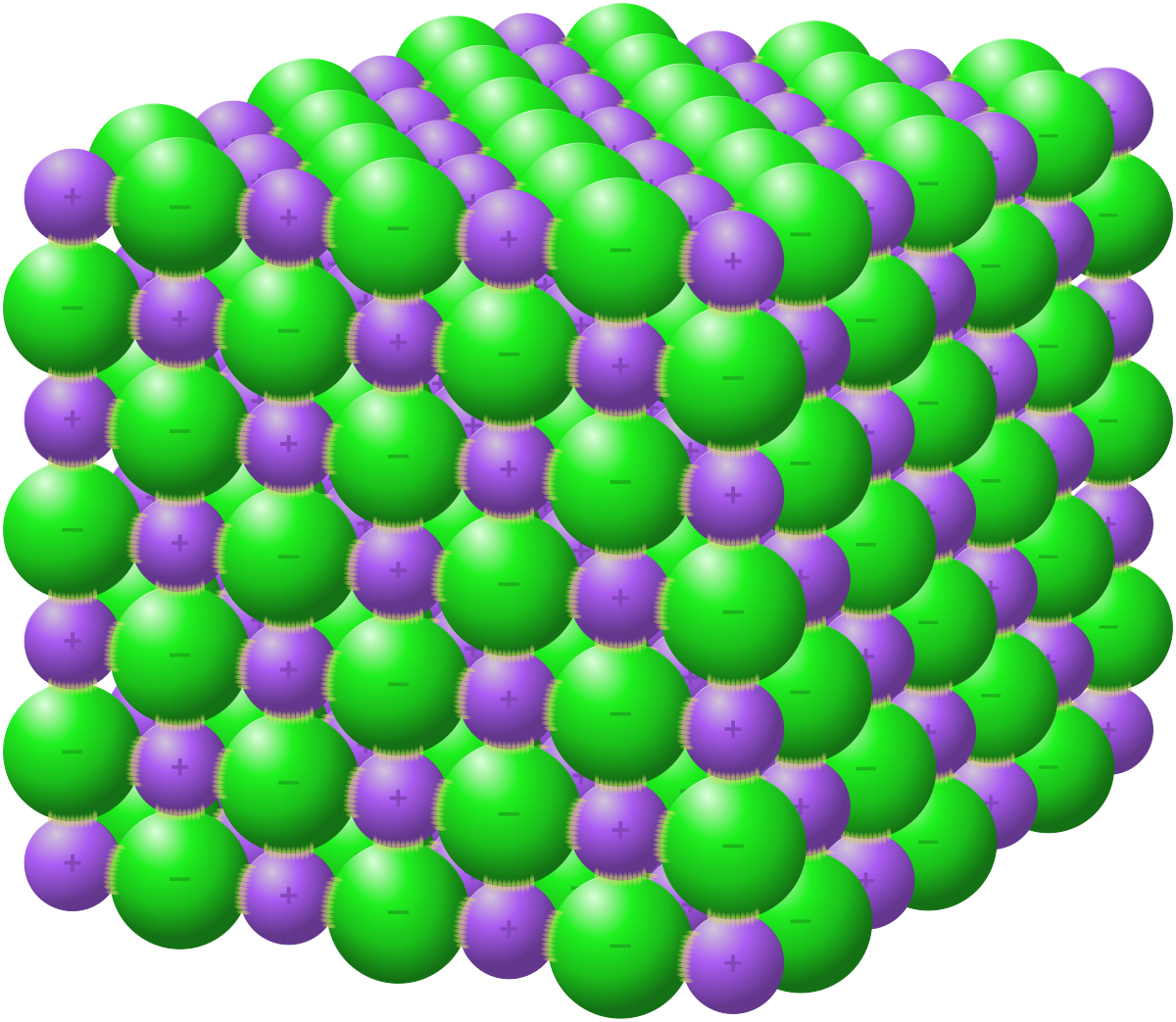
Sodium chloride forms through ionic bonding, which occurs when atoms transfer electrons to create charged particles that pull toward each other. A sodium atom gives up one electron to become a positively charged ion, while a chlorine atom takes that electron to become a negatively charged chloride ion.
Alternating sodium and chloride ions link in a repeating cubic grid, held together by electrostatic attraction. Goran_tek-en, CC BY-SA 4.0, via Wikimedia Commons
These opposite charges generate a strong electrostatic attraction, arranging the ions into a repeating cubic grid. This microscopic structure makes the solid material transparent or translucent, brittle, and hygroscopic, meaning it absorbs moisture from the air.
How industry consumes most of the world's salt
Most of the roughly 250 million tonnes of salt produced annually never reaches a kitchen table. Instead, it serves as the primary raw material for chemical manufacturing across multiple heavy industries.
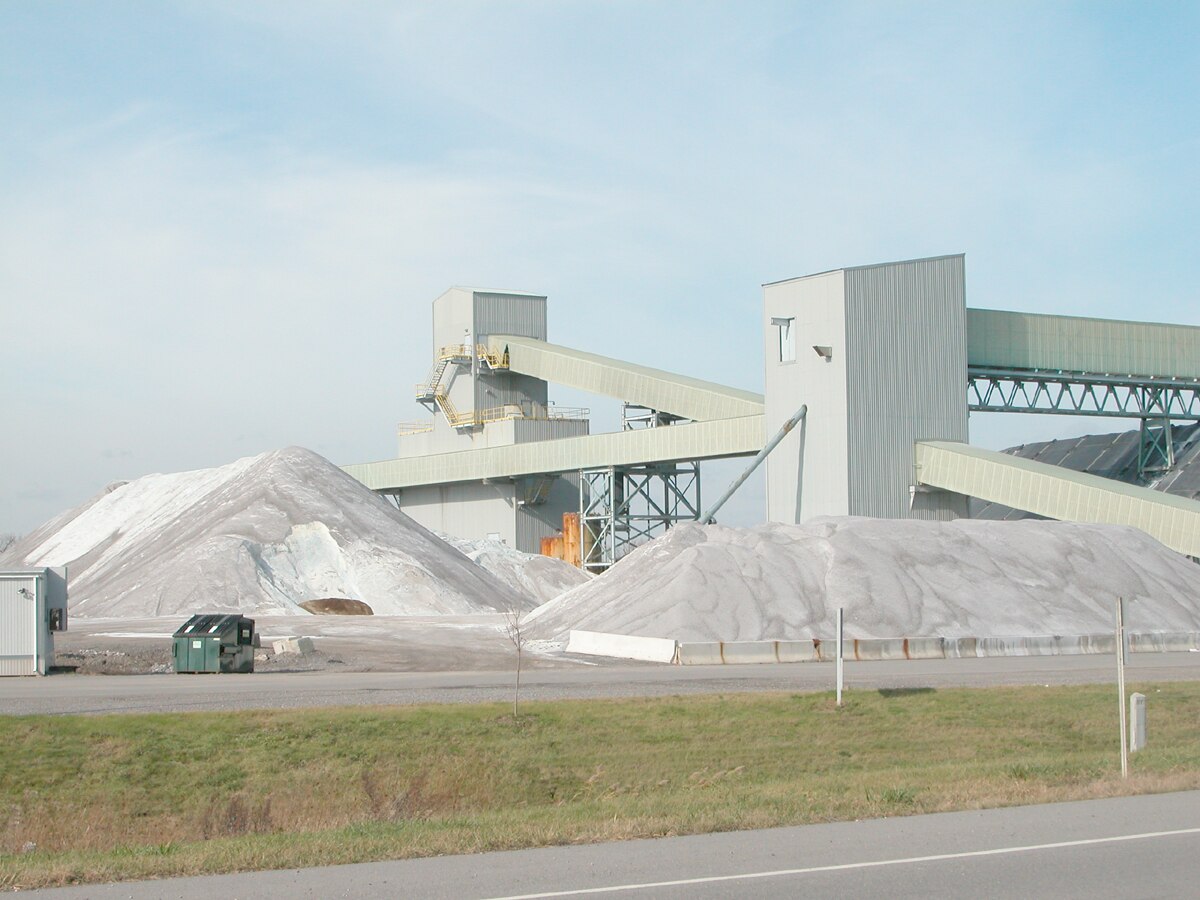
Large salt mining and processing facilities extract millions of tonnes of salt annually to supply chemical feedstocks. The original uploader was Pollinator at English Wikipedia., CC BY-SA 3.0, via Wikimedia Commons
In the chloralkali process, manufacturers run electrical currents through saltwater solutions to break it into chlorine gas, hydrogen gas, and sodium hydroxide. The resulting chlorine goes into PVC plastics, solvents, and disinfectants, while sodium hydroxide is used to produce paper, soap, and aluminum. Salt also drives the Solvay process to make sodium carbonate for glassmaking and the Mannheim process to yield hydrochloric acid.
Why salt prevents winter road ice
Spreading salt or concentrated saltwater brine onto roadways prevents snow and ice from bonding to pavement. Salt lowers the freezing point of water, making it an effective de-icing agent down to −10 °C (14 °F), below which it loses effectiveness.
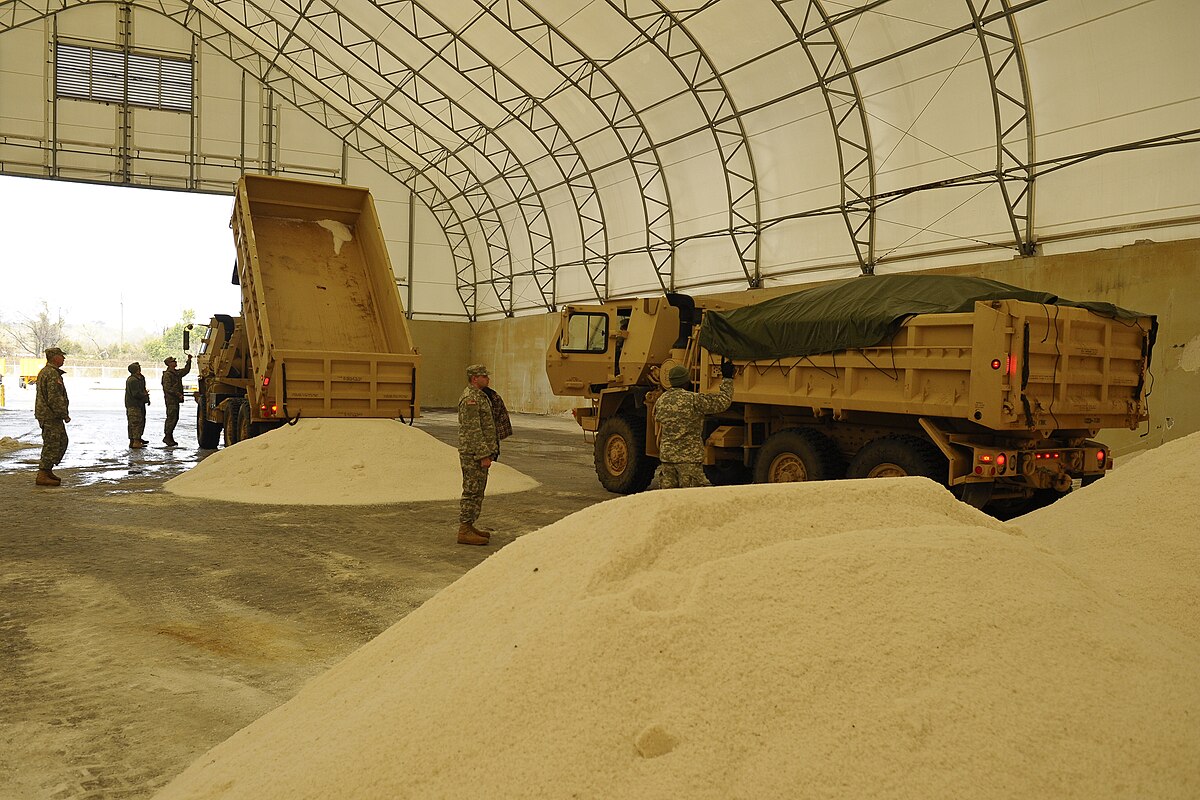
Massive stockpiles of road salt stand ready for winter distribution to melt ice and keep roads clear. (U.S. Air National Guard Photo by Tech. Sgt. Jorge Intriago/Released), Public domain, via Wikimedia Commons
Highway crews often mix rock salt with anticaking agents such as sodium ferrocyanide to keep stockpiles flowing smoothly through gritting trucks. In some regions, road treatments include agricultural additives, such as carbohydrate solutions from sugar-beet processing, which help the salt cling to road surfaces 40 percent better and reduce the need for repeat applications.
Test yourself
In sodium chloride, what happens when sodium and chlorine form an ionic bond?
Sodium transfers an electron to chlorine. Sodium gives up an electron and chlorine takes it; the resulting charged ions attract and form the crystal.
Why can table salt be stable even though sodium and chlorine are hazardous?
Their ions form a crystal held by attraction. Electron transfer creates ions whose attraction holds sodium chloride in a repeating crystal; the compound is not simply the hazardous elements mixed together.
In the ionic bond of sodium chloride, what maintains the stable crystal structure?
Magnetic-like attraction of ions. Sodium chloride forms through a complete electron transfer rather than sharing, creating charged ions locked together by ionic attraction.
Play the lesson in edgi and the card is yours. It lands on your Map next to the ideas it connects to, and turns from matte to foil to gold as you learn more around it.
Hard water contains dissolved calcium and magnesium ions that cause mineral scale in plumbing and reduce soap performance. Water softeners run this water through ion-exchange resins to strip out the calcium and magnesium, and sodium chloride is used to clean and regenerate these resins.
What is halite?
Halite is the natural mineral form of sodium chloride. It is a rock salt crystal that forms transparent or translucent cubic structures in nature.
How is salt used in oil drilling and leather tanning?
In drilling, salt increases the density of drilling fluid to manage downwell gas pressures and prevents drilling fluids from dissolving underground salt layers. In leather treatment, workers apply salt to animal hides to draw out moisture and inhibit microbial growth.