Kosher saltWhy grain shape changes everything in cooking
Kosher salt is a coarse, large-grained edible salt made primarily of sodium chloride that usually contains no iodine or other flavor-altering additives. It gets its name from the traditional Jewish practice of dry brining meat to draw out blood, rather than from being inherently holy. Chefs prefer it because its wide, irregular flakes allow for precise hand seasoning without accidentally over-salting food.
By the edgi team We find the most surprising true thing about an idea and build a 60-second lesson around it.
Kosher refers to shechita, the traditional Jewish process of preparing meat. Religious law requires that all remaining blood be removed from meat before it can be consumed.
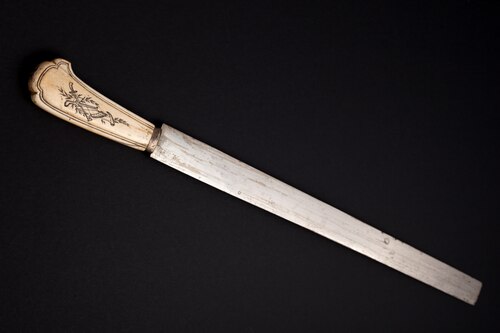
A long, straight chalaf (shechita knife) with an ornate, light-colored handle is displayed against a dark background. LGJMS, CC BY-SA 4.0, via Wikimedia Commons
The large, coarse crystals were engineered to cling to the surface of raw meat and draw out moisture.
The chef's secret
Chefs love kosher salt not for its chemistry, but for its volume. Because the grains are large and irregular, you can grab a precise pinch with your fingers.
Fine-grained table salt is so dense that it is incredibly easy to accidentally over-salt a dish.
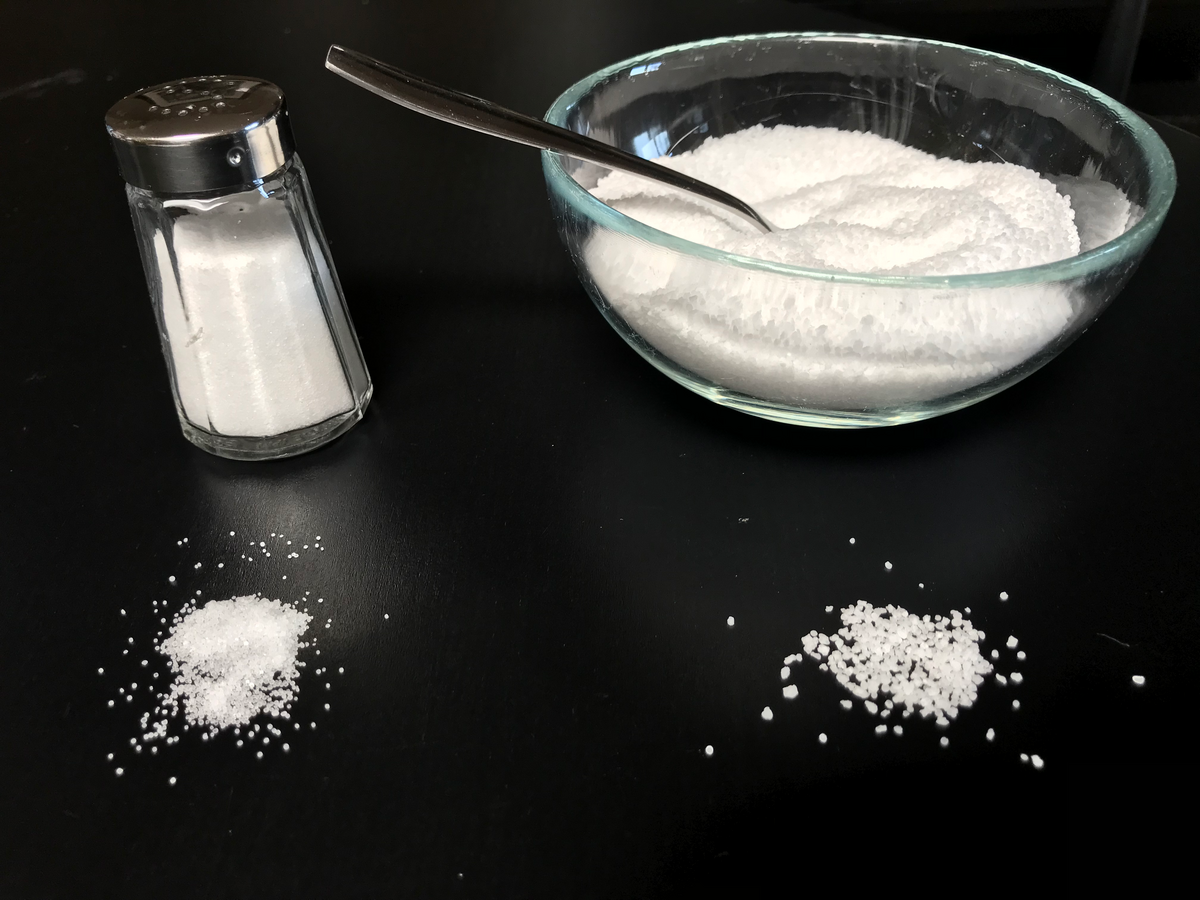
A comparison of table salt (left) and kosher salt (right) shows their different crystal sizes and shapes. Lexlex, CC BY-SA 4.0, via Wikimedia Commons
The danger of the swap
Unlike iodised salt, kosher salt is usually free of additives like iodine or anticaking agents. But the real danger is volume. A pinch of table salt contains twice as many grains as a pinch of kosher salt.
If a recipe calls for a tablespoon of kosher salt and you swap it for table salt, you will likely ruin the dish.
Why grain shape and volume matter
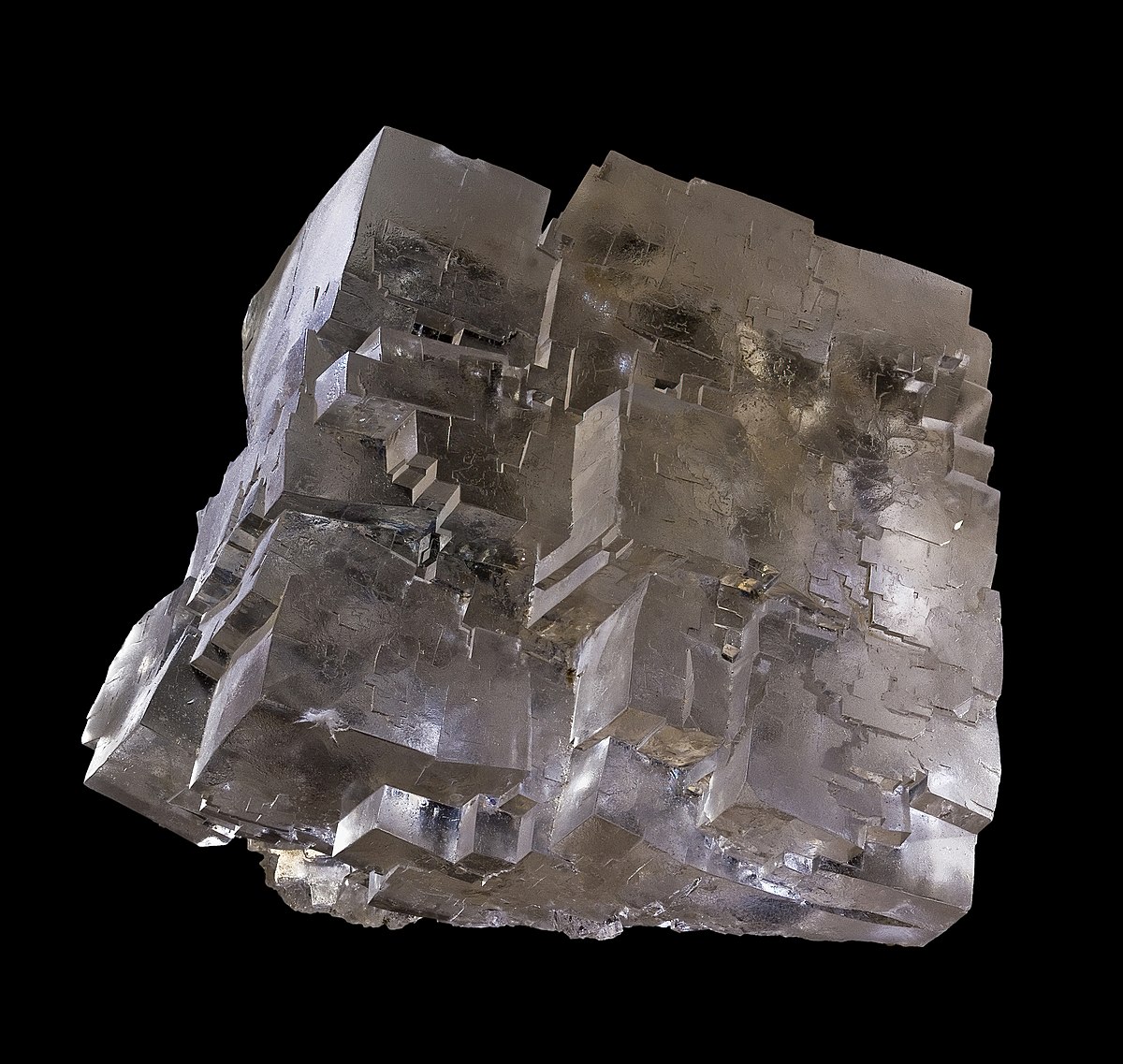
Kosher salt crystals are shaped like flat plates or hollow pyramids rather than dense cubes. Morton creates flat flakes by flattening cubic crystals under pressure between rollers, while Diamond Crystal uses an evaporative technique called the Alberger process to form hollow pyramidal flakes.
Because these irregular shapes pack loosely, a spoonful of kosher salt contains far less sodium chloride by mass than the same volume of fine table salt. This low density makes hand seasoning much easier to gauge by sight and touch, but it makes direct volume substitutions risky. Swapping a tablespoon of table salt into a recipe designed for kosher salt will roughly double the salinity and spoil the dish.
How kashering meat works
The traditional Jewish process of kashering requires drawing out blood from raw meat before it is eaten. Meat is soaked in cool water, drained, and coated in a thin layer of kosher salt on a board or rack for an hour or more.
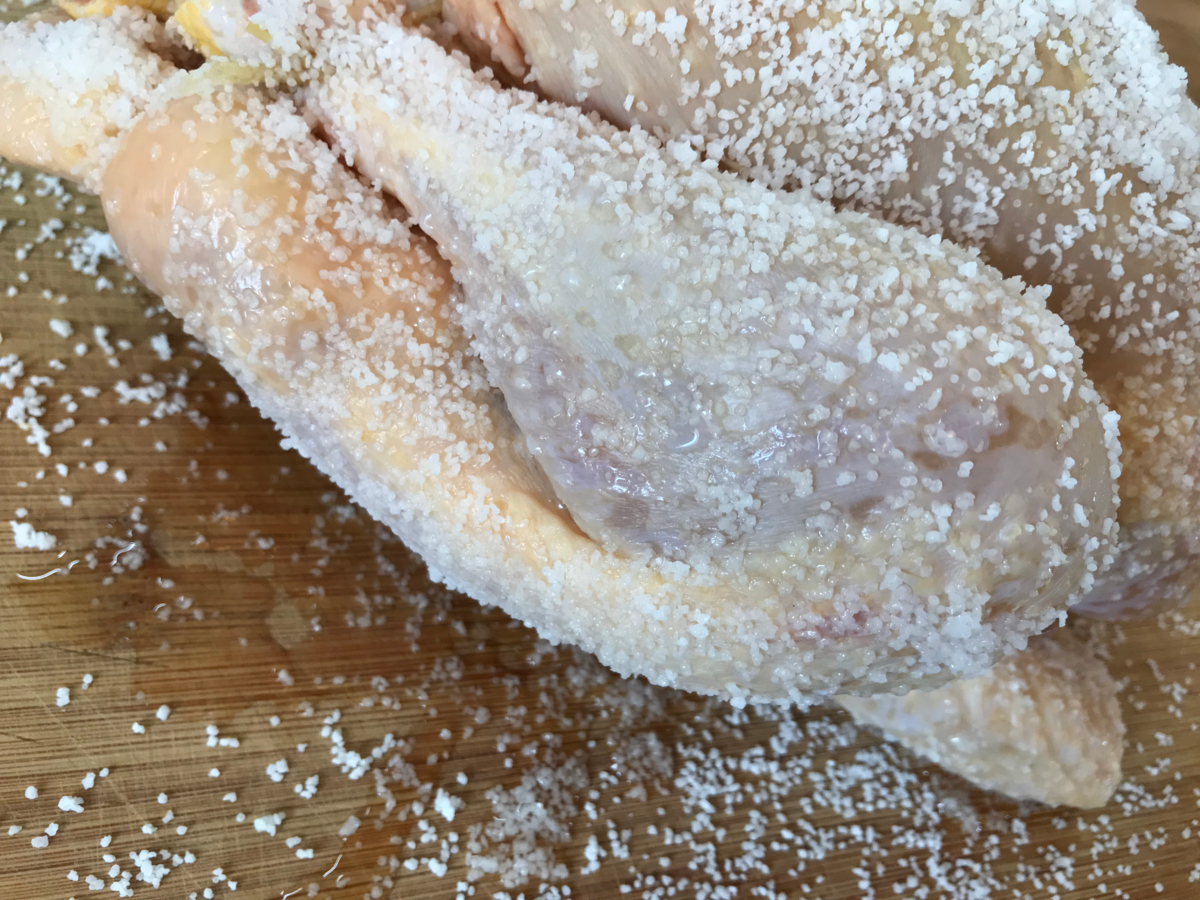
Coarse salt crystals sit on raw poultry to extract fluids across an hour of dry brining. Lexlex, CC BY-SA 4.0, via Wikimedia Commons
The coarse crystals stay largely undissolved on the meat surface, pulling moisture and fluids outward. In general cooking, this dry-brining method helps meat reabsorb its own seasoned juices, improving tenderness and succulence before the surface salt is rinsed away.
Other uses in the kitchen
Kosher salt contains no added iodine, fluoride, or dextrose, which prevents the subtle metallic taste sometimes found in standard table salt. That clean flavor profile helped it become the standard seasoning in American restaurant kitchens and modern cookbooks.
Its coarse grain also makes it a practical abrasive cleaner for cookware like cast iron skillets. When scrubbed with oil, the salt scrapes away residue without scratching surfaces, and it dissolves completely in water afterward without leaving a gritty film.
Test yourself
Why can swapping kosher salt for table salt by volume make food too salty?
Table salt packs more grains into the same volume. Coarse kosher crystals take up more space, so the same volume of fine table salt contains more salt and can over-season a dish.
A recipe calls for 1 tablespoon of kosher salt. What should a cook consider when using table salt instead?
Use less table salt because it is denser. Fine table salt is denser by volume, so matching the kosher salt measure can add too much. Adjust the amount rather than swapping equal volumes.
Kosher salt’s coarse crystals were useful in preparing meat because they…
Clung to meat and drew out moisture. The coarse crystals cling to the meat’s surface and help draw out moisture, including blood; their original role was not faster seasoning.
Play the lesson in edgi and the card is yours. It lands on your Map next to the ideas it connects to, and turns from matte to foil to gold as you learn more around it.
Why does table salt have iodine while kosher salt does not?
Iodine is added to table salt as a public health measure to prevent iodine deficiency. Kosher salt is typically left free of additives, which gives it a cleaner flavor but does not supply dietary iodine.
Are all brands of kosher salt the same density?
No, density varies dramatically between manufacturers depending on their production method. For example, a single cup of one brand can weigh twice as much as a cup from another, which is why measuring by weight gives the most consistent results.