Fleur de sel is a delicate crust of pyramid-shaped crystals that forms on the surface of evaporating seawater in coastal salt marshes. Hand-skimmed using ancient methods, it yields tiny quantities and retains high moisture and trace minerals. Chefs value it as a finishing salt because its crystals do not melt immediately, delivering an intense pop of flavor on food.
By the edgi team We find the most surprising true thing about an idea and build a 60-second lesson around it.
Unlike standard salt mined from the earth, fleur de sel is harvested like a delicate crop from the very top of seawater. It only forms on rare, windless days when a thin crust of crystals floats on the surface of coastal salt marshes.
If the wind ripples the water or a raindrop falls, the fragile sheet sinks to the bottom and becomes ordinary salt.
The roman method
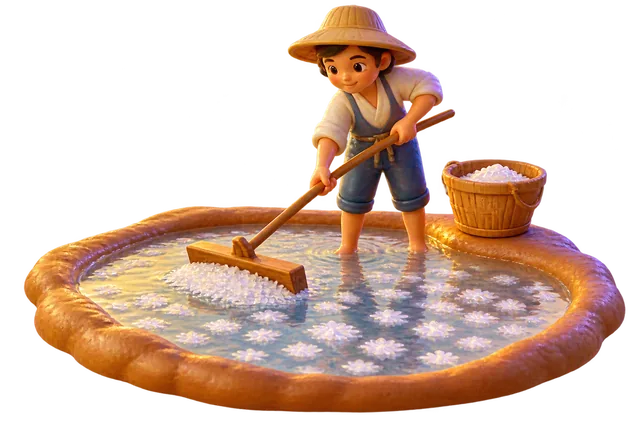
Pliny the Elder recorded the use of this flower of salt in the 1st century, though he prized it as a medicinal salve. Traditional harvesters, known as paludiers, use long wooden lutes to gently skim the surface by hand.
It remains one of the few food products on Earth still collected using the exact manual techniques of the Roman Empire.
The flavor
Because it is never ground, the crystals retain a high moisture content and a complex profile of trace minerals. Microscopic algae living in the marshes, called halophytes, impart a faint, natural aroma of violets to the flakes.
It doesn't dissolve instantly on the tongue, providing a sudden pop of flavor that chefs use only as a finishing touch.
How fleur de sel forms and is harvested
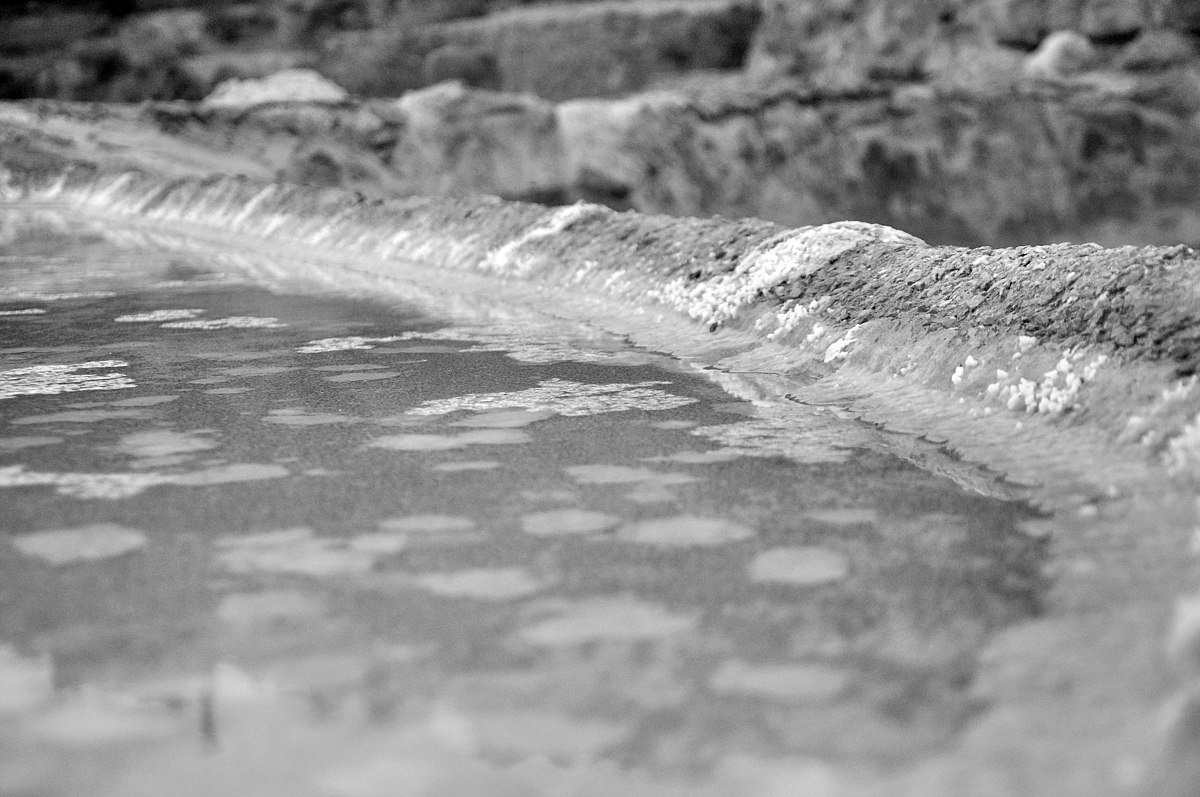
Each salt marsh produces only about one kilogram of fleur de sel per day. It crystallizes only when conditions are dry, sunny, and accompanied by slow, steady winds. As water evaporates from coastal salt pans, most salt precipitates and sinks to the bottom as ordinary sea salt, while a fragile crust of irregular crystals floats on top.
Fleur de sel crystals floating on the water surface during evaporation in Feraoun, Algeria. Hamla Mourad, CC BY-SA 4.0, via Wikimedia Commons
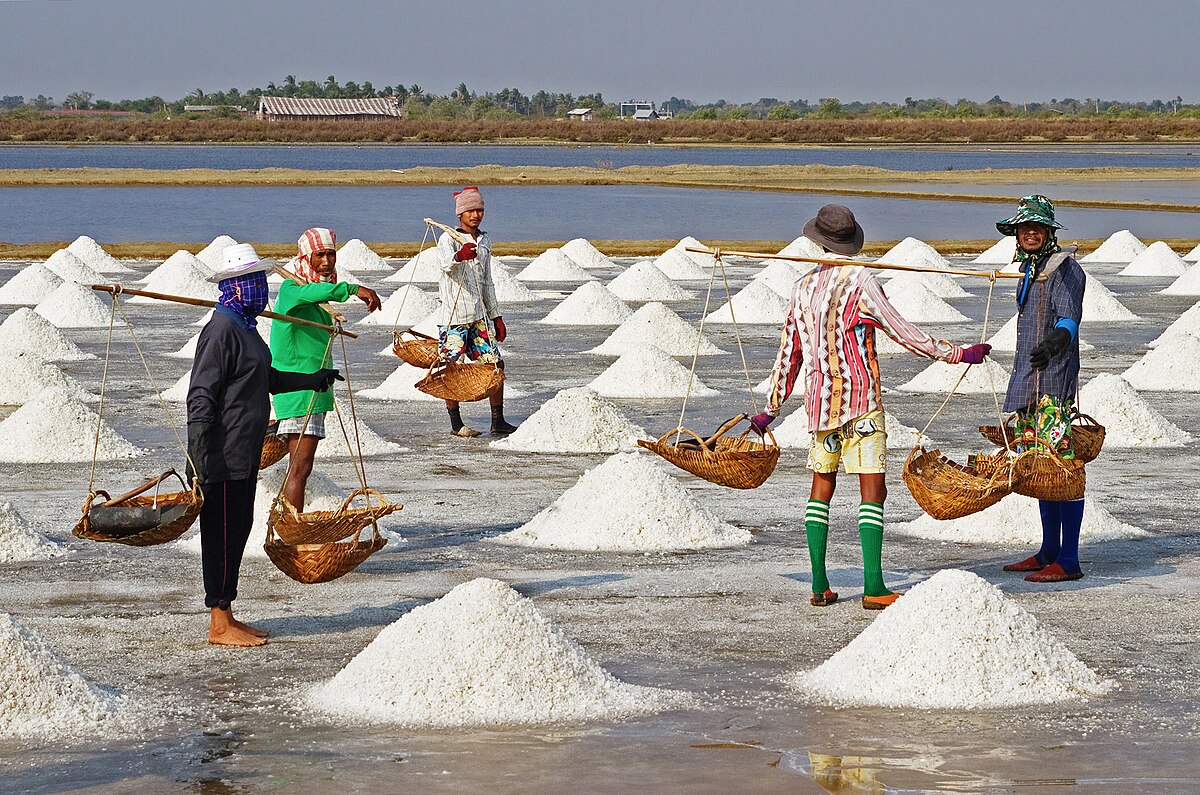
Harvesters skim this thin layer by hand before it sinks. In France, workers called paludiers use a wooden rake called a lousse à fleur. In Portugal, collectors use a butterfly-shaped sieve known as a borboleta. The gathered flakes are placed in special boxes to dry in the sun without crushing their delicate structures.
What makes its flavor and texture unique
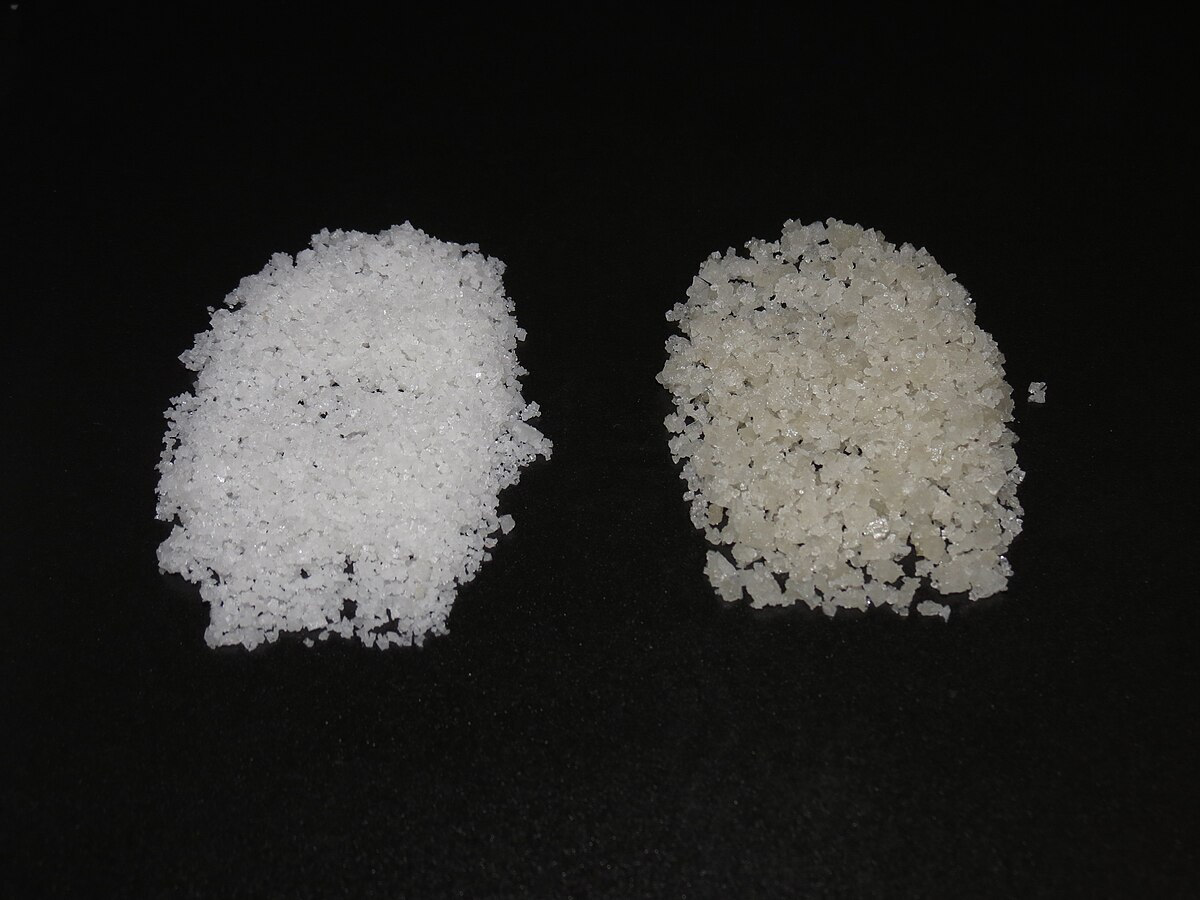
Fleur de sel contains up to 10% moisture, compared to just 0.5% in common table salt. This trapped water helps the crystals cling together in snowflake-like clusters rather than uniform grains. Because it is never ground, it melts slowly on the tongue rather than dissolving instantly.
A comparison showing the irregular flakes of Guérande fleur de sel on the left beside coarse sea salt on the right. Romain Bréget, CC BY-SA 3.0, via Wikimedia Commons
Residual minerals like calcium and magnesium chloride give fleur de sel a pronounced taste of the sea and make it taste even saltier than pure sodium chloride. The salt is rarely pure white; clay from marsh beds turns it pale gray or off-white, while the pink microalga Dunaliella salina can give flakes a faint pink tinge.
Play the lesson in edgi and the card is yours. It lands on your Map next to the ideas it connects to, and turns from matte to foil to gold as you learn more around it.
Why is fleur de sel used as a finishing salt instead of for cooking?
Only about 5% of salt is used in cooking, and fleur de sel is saved for the end of preparation because heat and liquid quickly dissolve its unique crystal structure. Sprinkled directly on foods like meat, fish, eggs, chocolate, or caramel just before serving, it provides a crunchy texture and bursts of flavor.
Where is fleur de sel produced?
Major historical production centers include coastal France, especially Guérande in Brittany, Noirmoutier, and Île de Ré. It is also gathered in Portugal (under the name flor de sal) in the Algarve and Aveiro, across Greece on the Mani Peninsula and Missolonghi, and in Spain at the Ebro Delta and Mallorca.
Why was fleur de sel discarded in the past outside France?
For centuries in places like Portugal, the floating salt crust was viewed as an obstacle that slowed the evaporation needed to form ordinary sea salt below. Workers scraped it away and discarded it or gave it away, only reviving commercial harvesting for export in recent decades.