Iodised saltThe trace mineral fix for brain health
Iodised salt is common table salt mixed with tiny amounts of chemical iodine compounds. The human body uses this added mineral to synthesize essential thyroid hormones, which regulate growth and brain function. Because salt is consumed in steady amounts across all demographics, fortifying it provides a cheap defense against severe developmental disabilities and thyroid swelling.
By the edgi team We find the most surprising true thing about an idea and build a 60-second lesson around it.
Iodine is a trace mineral your body needs to make thyroid hormones. Without it, the thyroid gland swells up in a desperate attempt to catch any trace of it in the blood, forming a massive growth called a goitre.
More critically, lacking iodine during fetal development leads to severe intellectual disabilities.
The simple fix
In 1924, Michigan became the first US state to routinely add sodium iodide to commercial table salt. Salt was the ideal vehicle because everyone eats it in relatively steady amounts regardless of wealth.
It required no behavioral change from the public, just a quiet shift in how factories processed a kitchen staple.
The global impact
The addition of iodine to table salt is hailed as one of the greatest public health successes of the twentieth century. Global IQ averages rose measurably in regions once plagued by severe deficiency.
It remains one of the cheapest and most effective medical interventions in human history.
How salt is iodised
Manufacturers iodise edible salt by spraying it with a solution containing one of four inorganic compounds: potassium iodate, potassium iodide, sodium iodate, or sodium iodide. Treating an entire short ton (2,000 pounds) of salt requires only 57 grams of potassium iodate, which cost roughly US$1.15 in 2006.
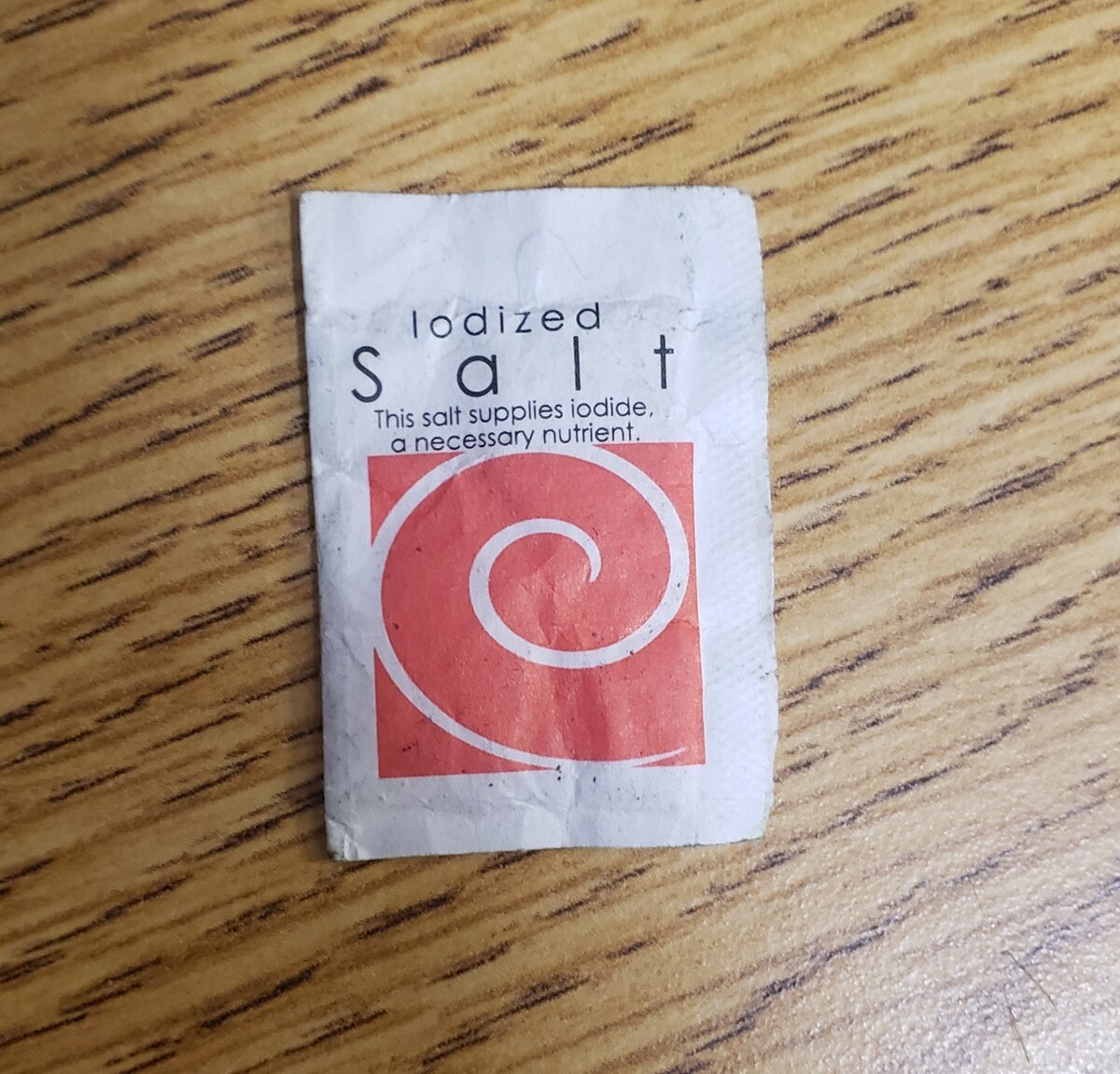
Packets of iodized salt distribute essential trace iodine compounds to households worldwide. Ethantrott, CC BY-SA 4.0, via Wikimedia Commons
Potassium iodate offers superior stability against heat and storage, making it the preferred additive across much of the globe, though it is not approved by the US FDA. When producers use potassium iodide instead, they often add stabilizers like dextrose and sodium thiosulfate. These additions stop the iodide from oxidizing and evaporating away into the air.
Why salt fortifies public health
Iodine is relatively rare in the Earth's crust and naturally occurs mainly in coastal soils and seafood. Inland populations frequently lack dietary access to it. Deficiencies impair the thyroid gland's ability to create thyroxine (T4) and triiodothyronine (T3) hormones, leading to goitres and preventable intellectual disabilities in children.
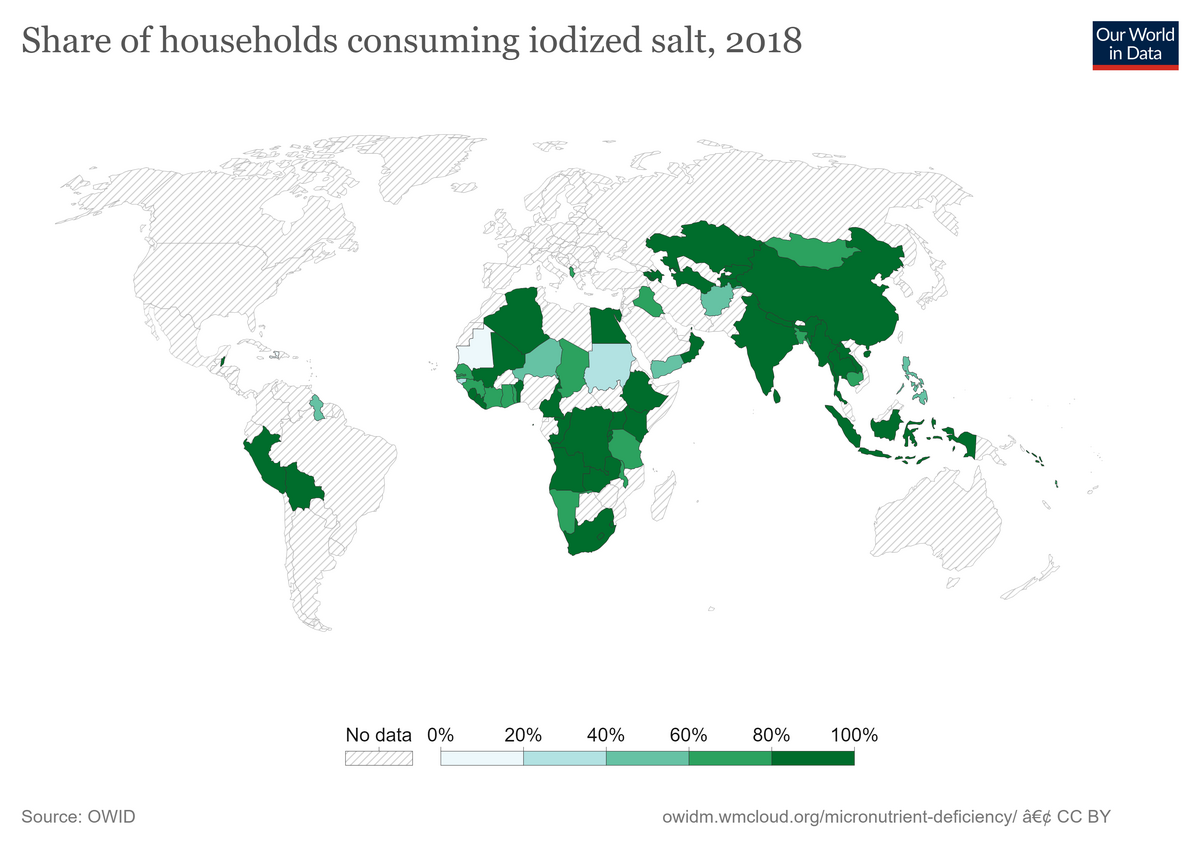
Global tracking shows the expanding share of households consuming iodized salt across different regions. MDWiki (from Our World In Data), CC BY 4.0, via Wikimedia Commons
Salt is the practical vehicle for public distribution because it never spoils and people consume it predictably. According to public health experts, iodizing salt costs approximately US$0.05 per person per year. Global initiatives raised the share of households consuming iodized salt from 25 percent in 1990 to 66 percent by 2006.
Storage and chemical stability
An opened package of iodide-fortified salt loses its iodine over time when exposed to air, high temperatures, and high humidity. These conditions trigger oxidation and iodine sublimation. Fortifying with iodate resists heat and storage breakdown better, although moisture can still degrade it if reducing impurities remain in the salt blend.
Play the lesson in edgi and the card is yours. It lands on your Map next to the ideas it connects to, and turns from matte to foil to gold as you learn more around it.
Can iodised salt protect against radiation from nuclear accidents?
No. Iodised salt does not contain enough concentrated iodine to block the thyroid from absorbing radioactive iodine during a nuclear emergency.
How much iodine do adults need each day?
The United States Food and Drug Administration recommends that adults consume 150 micrograms (0.15 milligrams) of iodine daily.
Why do some countries add iodised salt to bread?
After finding iodine deficiencies among children in 2003 and 2004, the Australian government mandated that commercial bread makers use iodised salt in all non-organic bread.