Scarcity is the psychological tendency to place a higher value on things that are limited, and a lower value on things found in abundance. When access to an item starts shrinking, people feel a strong urge to get it before it runs out. This mental reaction happens with physical goods as well as abstract resources like time and energy.
By the edgi team We find the most surprising true thing about an idea and build a 60-second lesson around it.
In 1975 researchers handed people a chocolate chip cookie from a jar and asked how much they wanted it. Some jars held ten cookies. Some held two. Same batch, same recipe, same cookie. The one from the nearly empty jar was rated more desirable. That is scarcity: less of it available, more of it wanted.
Then they ran a version where the jar started full and was emptied down to two while the taster watched. Those cookies rated highest of all. So what lifts the value is not the small number sitting there. It is the number going down, because a falling supply means your access is closing while you watch.
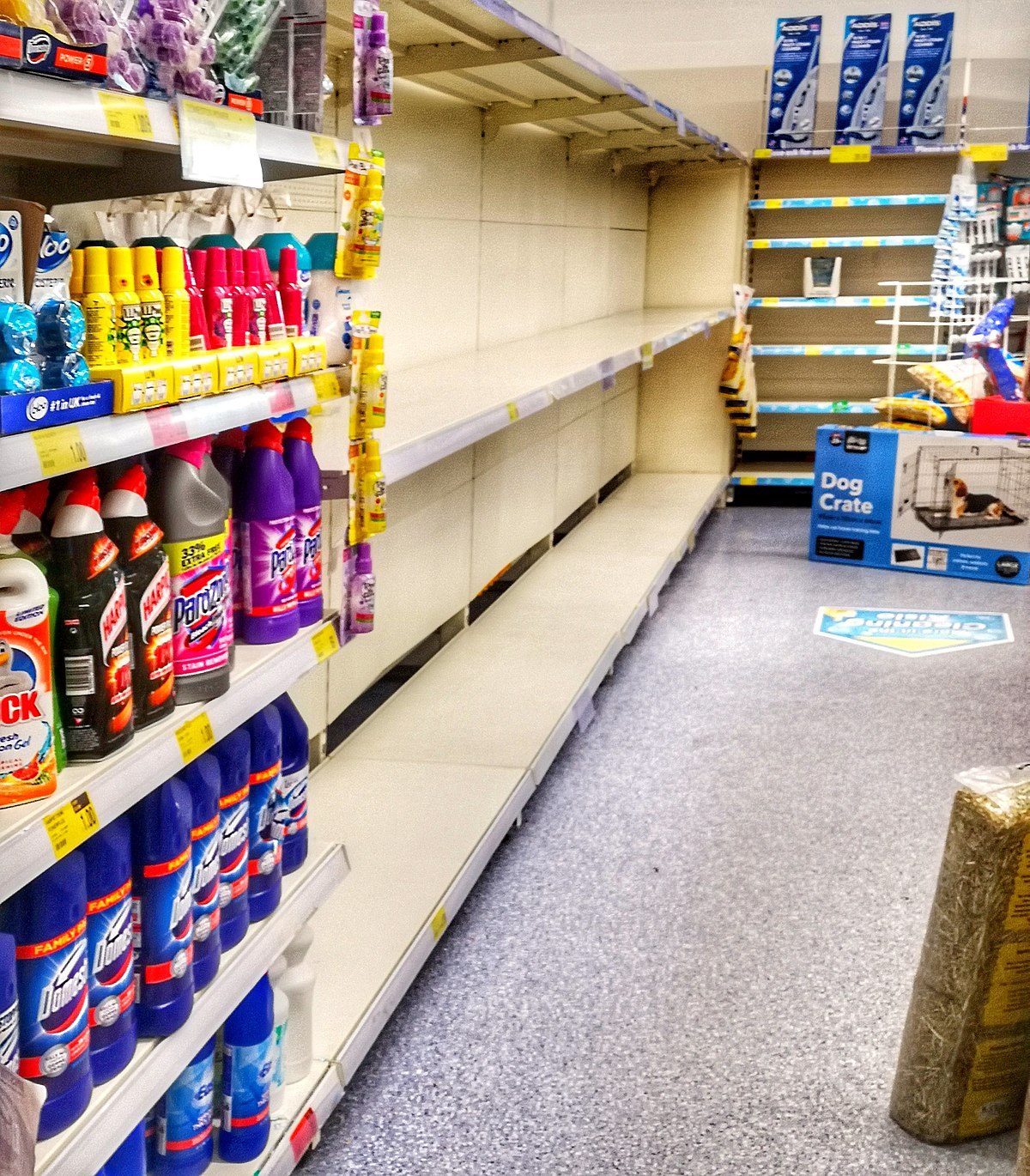
Empty shelves in a store in Bangor, Wales, are shown in March 2020, indicating a scarcity of products. Hefin Owen, CC BY-SA 2.0, via Wikimedia Commons
What is actually being threatened
A limited sneaker drops in a colorway you do not even like. Three hundred pairs, and the number is falling while you are still looking at it. A loss lands harder than a gain of the same size, so a supply that is shrinking pushes harder than a price that is dropping. The shoes have not improved. Your access to them is closing.
The question has swapped too. You opened on whether you want the shoes and you are now on whether you are about to miss them, and those two have different answers.
The clock on the checkout page
Every countdown clock on a checkout page is that cookie jar, redrawn as a number going down. Only 3 left in stock. Sale ends in 04:59. Last room at this price. Each one is artificial scarcity: a fall in availability where nothing was falling on its own, and it costs the seller nothing to print.
Manufactured urgency has a tell. Real scarcity doesn't need the seller announcing it to you again and again, and it does not reset at midnight. Somebody chose that number when they built the page. Tomorrow the page will choose a different one, and the sale will end again at midnight.
How the scarcity heuristic changes consumer choices
People rely on heuristics, which are mental shortcuts used to make rapid judgments without long deliberation. According to Robert Cialdini, the scarcity heuristic biases daily decisions across quantity, rarity, and time. When an item is rare or difficult to replicate, like a rare baseball card or stamp, people assign it a higher worth.
Two related social psychology principles intensify this effect. The first is social proof: when store shelves are empty, people assume the product must be superior because everyone else bought it. The second is commitment: when a person commits to an objective and is told they cannot have it, their desire for it rises sharply.
Why perceived shortages cause panic buying and hoarding
Fear of going without an item triggers both impulse buying and hoarding behaviors. During the COVID-19 pandemic in 2020, shoppers engaged in panic buying of toilet paper out of fear of shortages, creating an actual shortage on store shelves. The fear of needing something and lacking it pushes people to buy items without considering whether they actually need them.
This dynamic fuels retail frenzies like Black Friday shopping in the United States, where shoppers want the competition of obtaining products as much as lower prices. Brands also harness this by releasing limited-edition runs. In the summer of 2020, Anheuser-Busch launched Busch Light Apple as a limited-edition beer, driving over one million cases in sales when it returned in 2021 purely through manufactured scarcity.
How scarcity affects time and human empathy
Scarcity is not limited to physical goods; it applies equally to abstract resources like time. The Good Samaritan study demonstrated that when people feel pressed for time, they display less empathy and are less willing to stop and help others in need.
People who constantly experience a scarcity of time report higher stress during everyday decisions and lower overall life satisfaction. When time is scarce, choices are made in haste, increasing the likelihood of errors.
Test yourself
How does manufactured urgency alter a buyer's mental question during a purchase?
From wanting it to avoiding loss. Artificial scarcity shifts focus from whether you actually desire an item to whether you are about to miss your chance to get it.
What drives the spike in perceived value when an item's available supply drops?
Access is closing. Scarcity increases value because a shrinking supply signals that access is closing, triggering loss aversion rather than a sudden change in the item's intrinsic quality.
Both jars are down to two cookies. Which cookie is wanted more?
The one from the jar you watched empty. Two left is two left, so the amount cannot be what moved. What moved was access closing while the taster watched, and access closing is felt as something being taken away.
Play the lesson in edgi and the card is yours. It lands on your Map next to the ideas it connects to, and turns from matte to foil to gold as you learn more around it.
In a study testing help-wanted ads for restaurant servers, applicants who saw an ad advertising very few openings rated the employer higher than those seeing an ad with numerous vacancies. They assumed the scarce job opening signaled higher wages and a superior workplace.
What is the self-reinforcing cycle of scarcity?
When consumers fear an item might run out, they buy and hoard far more than they need. This collective over-purchasing empties the supply, transforming a perceived shortage into an actual physical shortage.