A sunk cost is money, time, or effort that has already been spent and cannot be recovered by any future choice. Standard economics states that these past expenses are irrelevant to rational decisions, which should depend only on future costs and benefits. People still routinely pour extra resources into failing choices, effectively throwing good money after bad to avoid admitting a loss.
By the edgi team We find the most surprising true thing about an idea and build a 60-second lesson around it.
A sunk cost is money or effort already spent that nothing you do next can get back. It should have no say in what you do now, and it has an enormous one. In 1985 Hal Arkes and Catherine Blumer put a case to students. You have paid $100 for a ski weekend in Michigan and $50 for a weekend in Wisconsin. Wisconsin is the one you actually want.
Then both trips turn out to be the same weekend, so one ticket is wasted either way. 54 percent picked Michigan, the trip they had just said they would enjoy less. The $100 is gone in both futures. What Michigan buys is not a better weekend. It is not having to look at the $100 and call it a loss.
Why the bill keeps growing
Choosing Michigan costs you one weekend. The expensive version is when the same choice comes round again and again, each payment postponing a loss that grows while you pay to avoid it. That is escalation of commitment, and it is how these bills reach sizes nobody would have agreed to at the start.
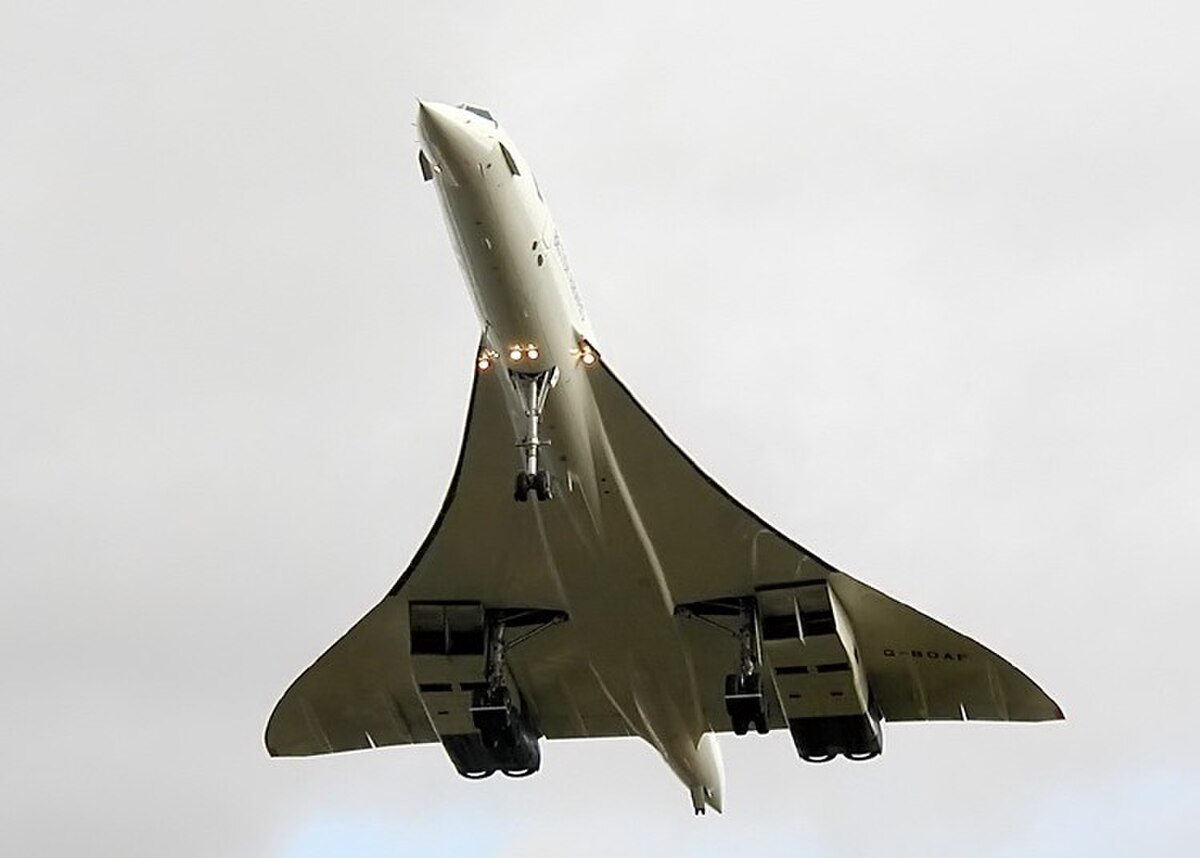
In 1962 an independent review told the British and French governments that the supersonic airliner they had started would never pay for itself. The budget at that point was £70 million. They carried on for another fourteen years and spent close to £2 billion. They had forecast sales of 350 aircraft. The plane was Concorde, and the trap is now called the Concorde fallacy.
A Concorde supersonic jet, registration G-BOAF, is shown with its landing gear extended, preparing for landing or taking off against a cloudy sky. Arpingstone, Public domain, via Wikimedia Commons
Keeping the mark paying
A long con needs its mark to keep paying after the first doubt, and the money already sent is what keeps them paying. In a crypto investment scam the victim watches a balance climb on a fake platform, then finds the withdrawal blocked behind a fee: a tax, a minimum, a release charge.
Each fee is small beside the balance. Paying it keeps the balance real, and refusing it turns everything already sent into a loss, so victims commonly pay several times over. The mark can usually see by then that the fee is strange. They pay it anyway, because the alternative is to call everything already sent a loss. Then the next fee arrives.
How the bygones principle works
In rational choice theory, the bygones principle dictates that past costs are water under the bridge. Decisions should look only at prospective costs, which are future expenses that can still be avoided by choosing a different path.
Consider a factory originally budgeted at $100 million that is projected to yield $120 million in value. Suppose $30 million is spent, but new projections show the factory's final value will reach only $65 million. Finishing the project requires an additional $70 million, which exceeds the entire $65 million return. A rational manager cancels the build immediately, treating the $30 million as sunk, rather than spending $70 million more to finish an unprofitable asset.
Why people throw good money after bad
Real-world behavior routinely violates rational choice models. People show a strong tendency to continue an endeavor once they have invested time, money, or effort into it, a pattern researchers call the sunk cost fallacy.
This effect shows up across many domains beyond business. Experiments by Rego, Arantes, and Magalhães proved that people who invest time, effort, and money into failing personal relationships are far more likely to stay in them rather than leave. Similar traps appear in public spending, such as United States utility managers who spent years refusing to cancel economically unviable nuclear power plants after public support and financial viability collapsed in the 1970s and 1980s.
Test yourself
When a non-recoverable expense influences a present decision, what is usually being avoided?
Facing the finality of the loss. People often continue bad investments simply to avoid acknowledging that money is permanently gone, treating the ongoing payment as a shield against reality.
How does the sunk cost fallacy typically distort ongoing project budgets over time?
Prior spending is used to justify more. Past expenditures exert a psychological pull, causing decision-makers to pour fresh resources into failing ventures to protect the record of past choices.
Two trips, same weekend, both paid. Does the pricier ticket deserve any weight?
No, both are spent either way. The second is the arithmetic most people actually run, and it is wrong: both tickets are paid for whatever you do, so going recovers nothing. What changes is the word you have to use about the money, and "wasted" is a harder word than "spent."
Play the lesson in edgi and the card is yours. It lands on your Map next to the ideas it connects to, and turns from matte to foil to gold as you learn more around it.
A sunk cost is an unrecoverable, one-time past payment, such as an upfront enterprise software installation fee. A fixed cost is an ongoing future expense that stays the same regardless of volume, like monthly service contracts or licensing fees.
Can considering sunk costs ever be rational?
It can be personally rational for an individual manager. For example, a manager might persist with a failing project to protect their professional reputation, avoid blame for past mistakes, or because they hold private information that outsiders lack.