Work–life balance is the equilibrium between a person's job and their personal life, including family, leisure, and health. It is a two-way relationship where work can disrupt private life, but personal responsibilities can also interrupt work. Maintaining this balance prevents occupational burnout, with struggling employees being over four times more likely to show burnout symptoms.
By the edgi team We find the most surprising true thing about an idea and build a 60-second lesson around it.
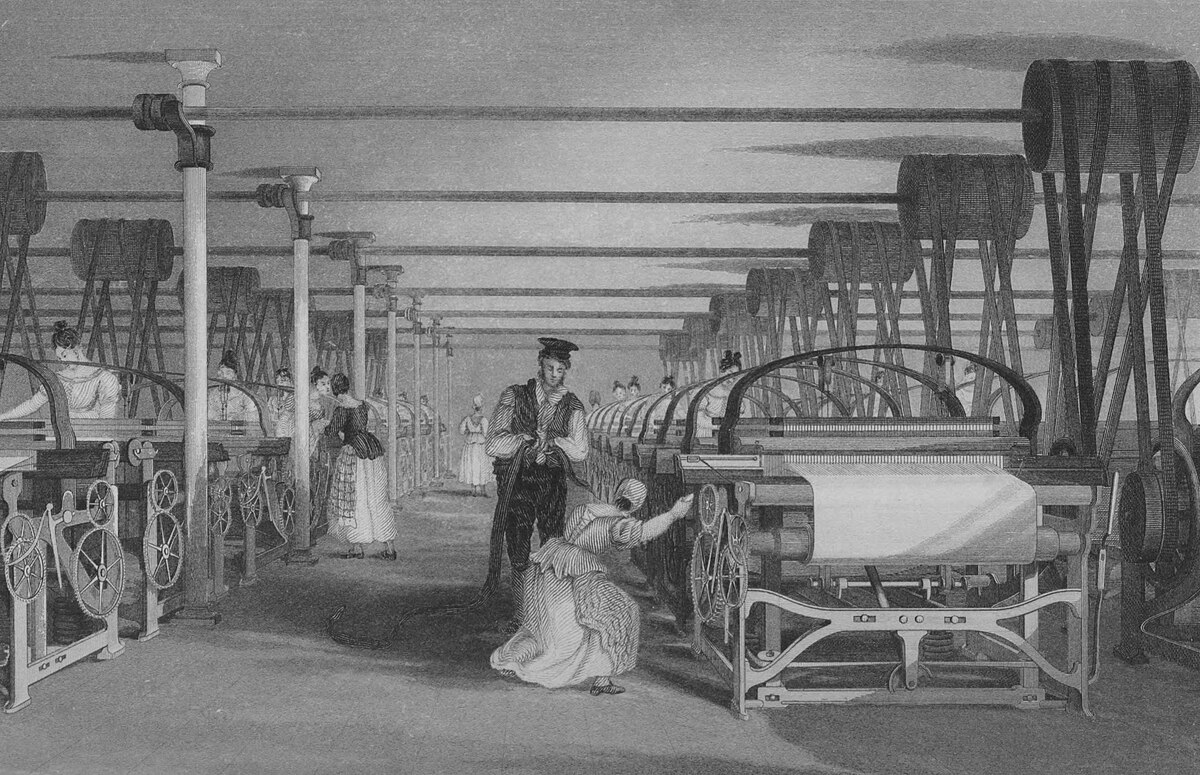
In 1817, textile mills routinely demanded 14-hour shifts, treating workers as interchangeable parts of a machine. Welsh reformer Robert Owen fought back with a simple, radical slogan: 'Eight hours labour, Eight hours recreation, Eight hours rest.'
An engraving depicting a weaving shed in the United Kingdom in 1835, showing multiple Roberts looms in operation with workers attending to them. Illustrator T. Allom, Engraver J. Tingle, Public domain, via Wikimedia Commons
He wasn't advocating for a lifestyle; he was demanding a hard limit on how much of a human being an employer could own.
The productivity trap
Owen discovered that exhausted workers were not only miserable; they were dangerously inefficient. By forcing a hard stop, he proved that a worker with a private life was actually more productive than a worker with no life at all.
A man in a suit sits at a desk with his head in his hands, appearing overwhelmed, while hands from off-frame offer him a phone and a notebook. CIPHR Connect, CC BY 2.0, via Wikimedia Commons
This created the framework for the weekend and the modern standard of work–life balance.
The digital blur
Today, that boundary is dissolving again. With remote work, our living rooms are offices and our phones are portable leashes that ping us long after the workday ends.
A man working on a laptop while relaxing on a lounge chair under a straw umbrella on a sandy beach. AbhiSuryawanshi, CC BY-SA 4.0, via Wikimedia Commons
We are losing the physical exit from the workplace, forcing us to build digital walls to prevent our professional lives from swallowing our personal ones.
How work and personal life interact
The interaction between personal life and professional obligations operates in both directions, producing either conflict or enrichment. When roles clash, work-life conflict occurs. When positive experiences in one domain improve quality of life in the other, researchers classify it as work-life enrichment.
Sociologists and psychologists rely on boundary theory and border theory to explain these role conflicts. Modern information and communication technologies have altered this interface by allowing tasks to happen at any time and in any location. As a result, professional and private domains blend together, leaving physical and digital boundaries almost nonexistent.
Greedy institutions and burnout
Sociologist Lewis A. Coser introduced the concept of greedy institutions to describe organizations that demand total loyalty and attempt to push out other social spheres. Academia, senior management, top-level sports, religious orders, and the military act as greedy institutions, but caretaking for a family makes identical all-encompassing demands. Severe role conflicts emerge whenever an individual tries to serve two greedy institutions simultaneously.
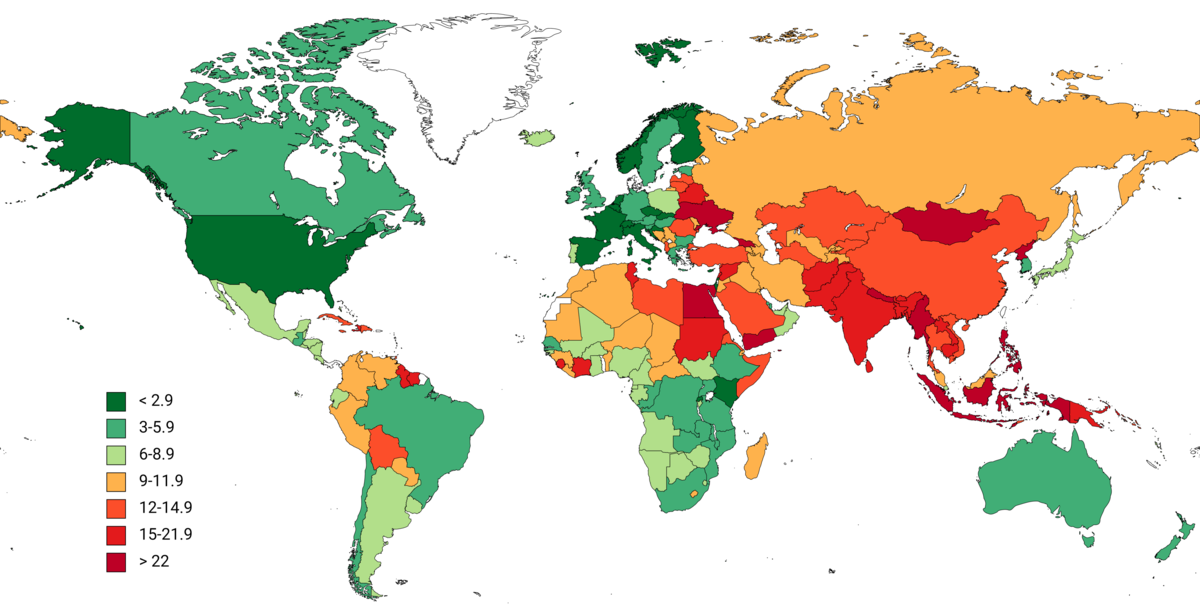
This chart shows deaths per 100,000 people caused by long working hours around the world in a 2016 study by the World Health Organization and International Labour Organization. Ly.n0m, CC BY-SA 4.0, via Wikimedia Commons
A 2020 LinkedIn survey of over 2.9 million workers found that employees struggling to maintain work-life balance were 4.4 times more likely to experience occupational burnout symptoms. Long shifts take a measurable toll on global health, as documented by joint research on overwork mortality.
Theories of work-family boundaries
Researchers use several models to map how workers handle multiple roles. Structural functionalism, which emerged after World War II, viewed work and family as radically separated spheres where workplaces handled instrumental tasks and homes provided affective support. Segmentation theory similarly treats work and home as independent compartments that do not affect each other.
Other frameworks examine how states of mind transfer across roles. Under spillover theory, experiences in one domain bleed into the other. This effect is visible in everyday habits: a 2021 study by Indeed found that 53% of on-site workers struggled to stop thinking about work during their spare time. In contrast, compensation theory suggests employees turn to their homes as havens to find the personal satisfaction their jobs fail to deliver.
Test yourself
What was Robert Owen's primary goal in proposing the 8-8-8 rule for labor?
To limit how much employers could exploit human labor. Owen demanded hard time limits to protect workers from being treated as interchangeable machine parts, not merely to boost short-term manufacturing speed.
How does remote work threaten modern work–life balance without physical office walls?
Digital tools act as leashes that extend professional demands. Without a physical exit from the workplace, portable devices and notifications dissolve boundaries, allowing professional tasks to swallow personal time.
Why did early labor reformers push for hard limits on daily working hours?
To protect workers from total burnout. Hard limits were originally created to stop employers from consuming human energy entirely, turning out to make workers more efficient as a side effect.
Play the lesson in edgi and the card is yours. It lands on your Map next to the ideas it connects to, and turns from matte to foil to gold as you learn more around it.
The work enrichment model explains how positive experiences in one role improve performance and satisfaction in another. Rather than draining your energy, skills and positive emotions gained from work can improve your family life, and vice versa.
What is role enhancement theory?
Role enhancement theory argues that holding multiple roles, such as being both an employee and a parent, generally improves well-being. It proposes that distress and overload only occur when demands cross a high upper limit.