Stress ManagementControlling perception and bodily responses
Stress management is a set of techniques and therapies designed to control psychological tension and prevent chronic health problems. It operates on the principle that stress is less an automatic reaction to external events than a physiological state influenced by your perception and coping resources. Learning to signal safety to the nervous system and reframe challenges keeps natural survival mechanisms from damaging the body.
By the edgi team We find the most surprising true thing about an idea and build a 60-second lesson around it.
In the 1950s, cardiologists Meyer Friedman and Ray Rosenman noticed something strange in their waiting room. Their patients were wearing out the front edges of the seats. They weren't sitting back; they were perched, ready to bolt.
This observation led to the definition of the Type A personality: a competitive, impatient drive that Friedman linked directly to heart disease.
The biological glitch
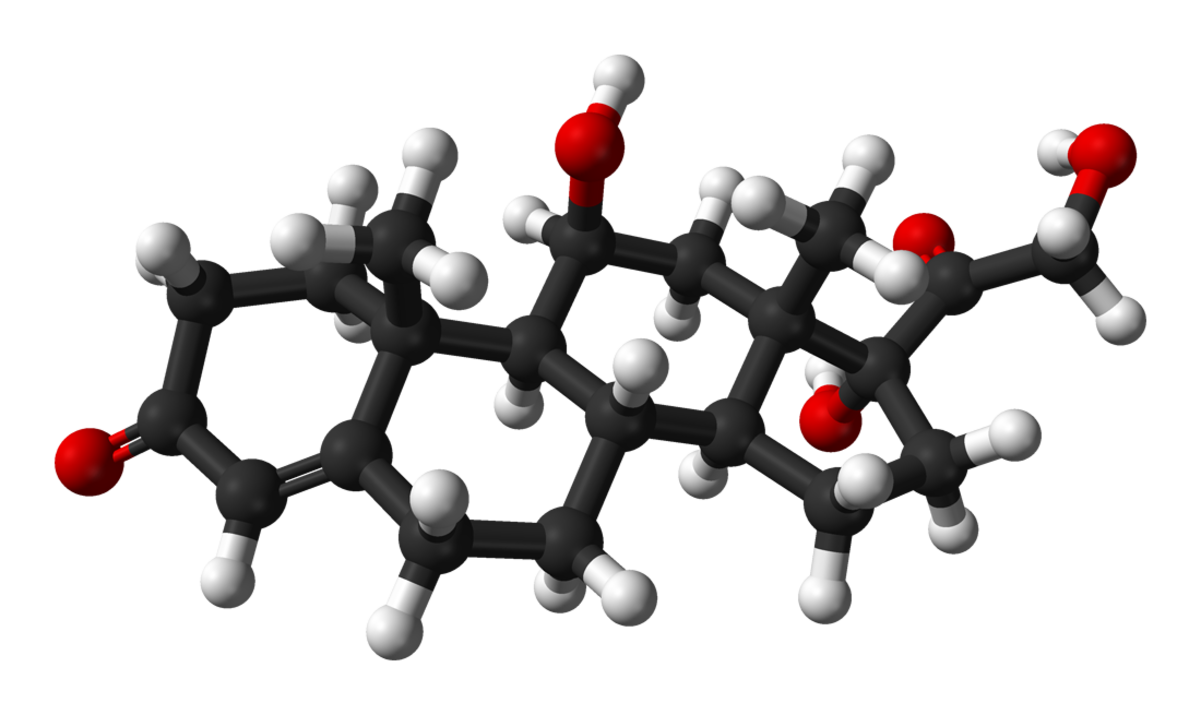
Your stress response is a prehistoric survival system designed to help you outrun a predator. It floods your blood with cortisol to provide instant physical energy. But in a modern office, that energy has nowhere to go.
Ball-and-stick model of the cortisol molecule, showing its three-dimensional chemical structure. Ben Mills, Public domain, via Wikimedia Commons
Instead of powering an escape, it sits in your system, eventually leading to exhaustion and Burnout.
Hacking the switch
Effective stress management isn't about 'calming down.' It is about signaling safety to your nervous system. Techniques like Progressive muscle relaxation manually override your fight-or-flight switch.
A black silhouette of a person in the lotus position, a cross-legged meditative pose, with hands resting on knees in a mudra. Bryan Helfrich, Alias52, CC BY-SA 3.0, via Wikimedia Commons
By physically tensing and then dropping your muscles, you trick your brain into believing the hunt is over, allowing your body to finally switch off.
How the science of stress evolved
Early stress research started with animal experiments. Walter Cannon and Hans Selye measured physiological reactions to extreme pressures like heat, cold, restraint, and surgery, laying the groundwork for Cannon's fight-or-flight model in 1914 and Selye's General Adaptation Syndrome in 1936.
Later, Richard Rahe and other researchers argued that stress came directly from distinct, measurable life events. This produced the Holmes and Rahe Stress Scale, which assigned life change units to specific life stressors to rank their correlation with physical illness.
Why perception changes the stress response
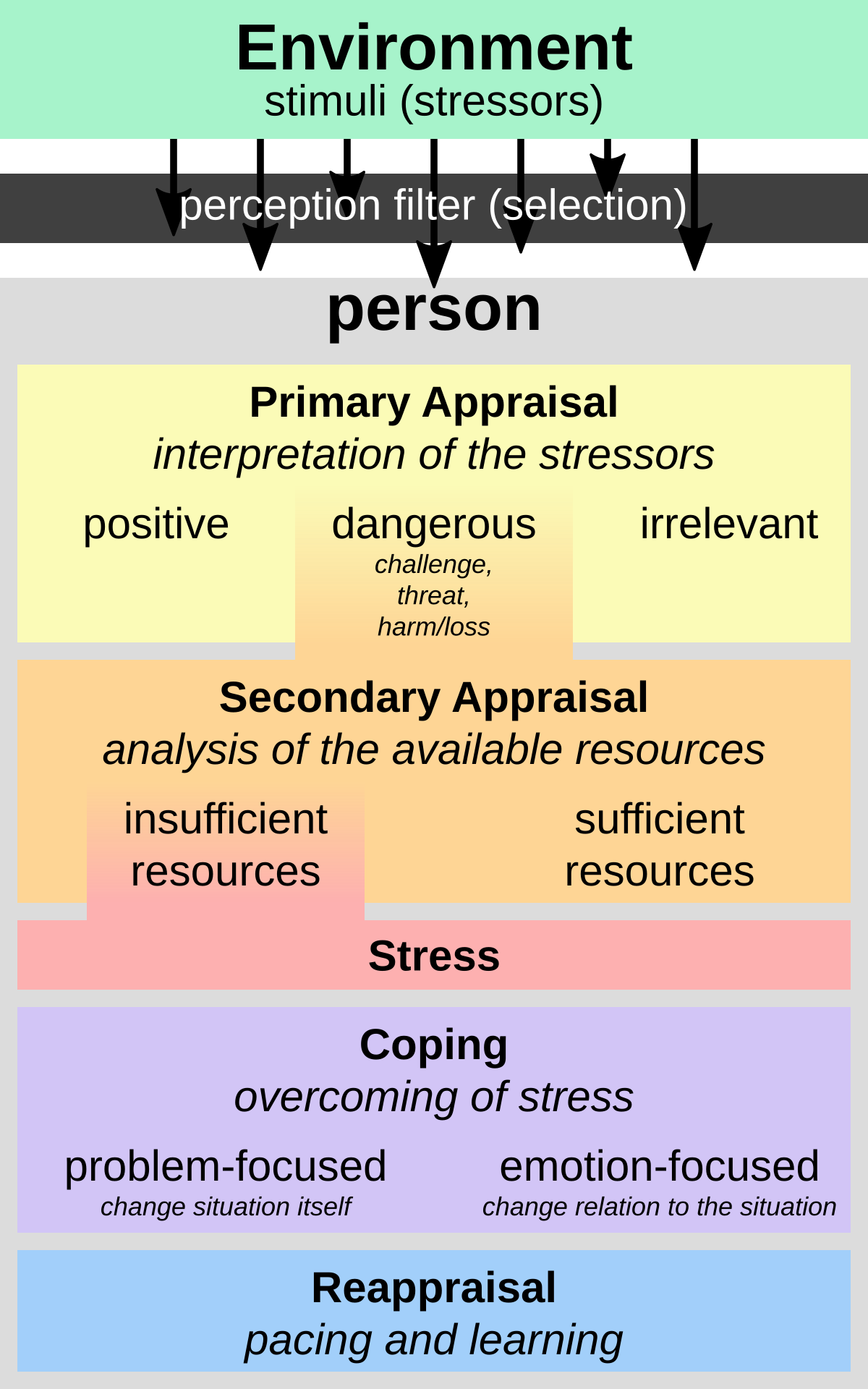
Modern models argue that external circumstances have no intrinsic power to create stress on their own. In 1981, Richard Lazarus and Susan Folkman introduced the Transactional Model, defining stress as an imbalance that happens when demands exceed a person's perceived resources to cope.
Richard Lazarus's Transactional Model shows how cognitive appraisal determines whether an external event triggers a stress response. Philipp Guttmann, CC BY-SA 4.0, via Wikimedia Commons
Under this model, an event does not trigger a harmful stress reaction if a person views it as positive or challenging rather than threatening. Because coping skills and perspectives can be taught, individuals can alter their biological and mental responses to workplace conflicts and heavy workloads.
Test yourself
What revealed the Type A personality to early researchers?
Worn-out chair edges in a waiting room. Doctors noticed patients wearing out the front edges of their seats, sitting poised to bolt before their appointments even began.
How can physical actions trick a stressed brain into feeling safe?
Deliberately releasing tension signals the danger has passed. Tensing and then dropping muscle groups mimics the aftermath of physical exertion, convincing the brain the hunt or flight is over.
Why does sitting at a desk all day cause physical exhaustion?
Stress chemicals mobilize energy that is never spent. The body prepares for physical escape, but trapped adrenaline and cortisol leave the system strained with nowhere to go.
Play the lesson in edgi and the card is yours. It lands on your Map next to the ideas it connects to, and turns from matte to foil to gold as you learn more around it.
What physical symptoms does chronic stress produce?
Chronic stress causes measurable declines in health, including headaches, chest pain, persistent fatigue, sleep problems, and depression.
What is the health realization model of stress?
The health realization model states that stress comes from viewing circumstances through a mental filter of negativity and insecurity rather than from external events. It proposes that moods fluctuate naturally and that individuals should avoid dwelling on negative thoughts until a quiet state of mind returns.