The fight-or-flight response is an automatic physical reaction to a perceived threat that prepares an animal to either confront danger or run away from it. Triggered before conscious thought, it floods the body with hormones that boost energy and divert resources to the muscles. This ancient survival tool helps organisms escape predators, though it also fires during everyday modern stresses.
By the edgi team We find the most surprising true thing about an idea and build a 60-second lesson around it.
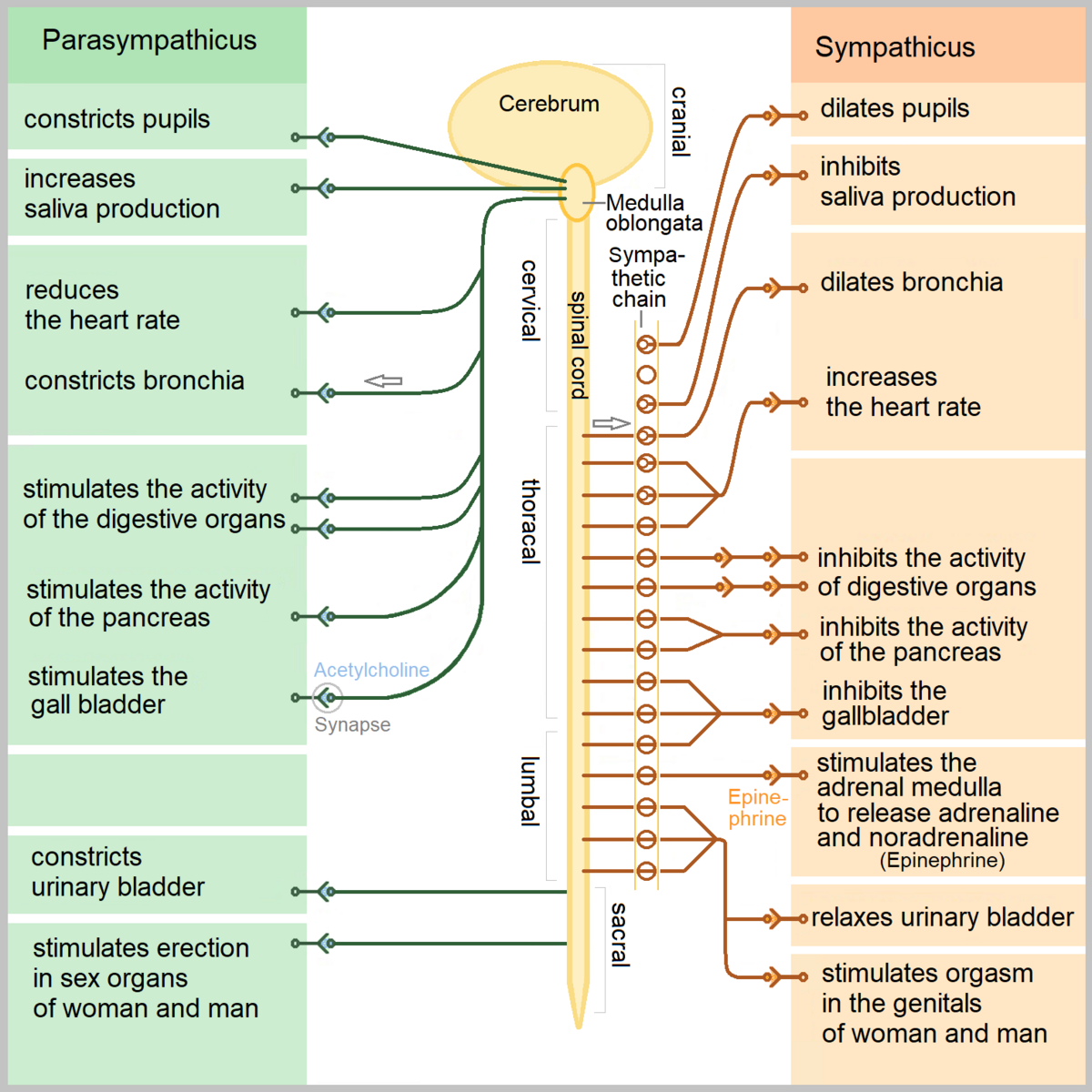
In 1914, physiologist Walter Bradford Cannon was studying digestion when he noticed his laboratory animals suddenly stopped processing food whenever startled. He realized the body has a binary switch: it can either rest and digest or gear up for a life-threatening emergency.
Diagram comparing the sympathetic and parasympathetic nervous systems, showing their effects on various organs. Sciencia58, CC0, via Wikimedia Commons
The amygdala hijack
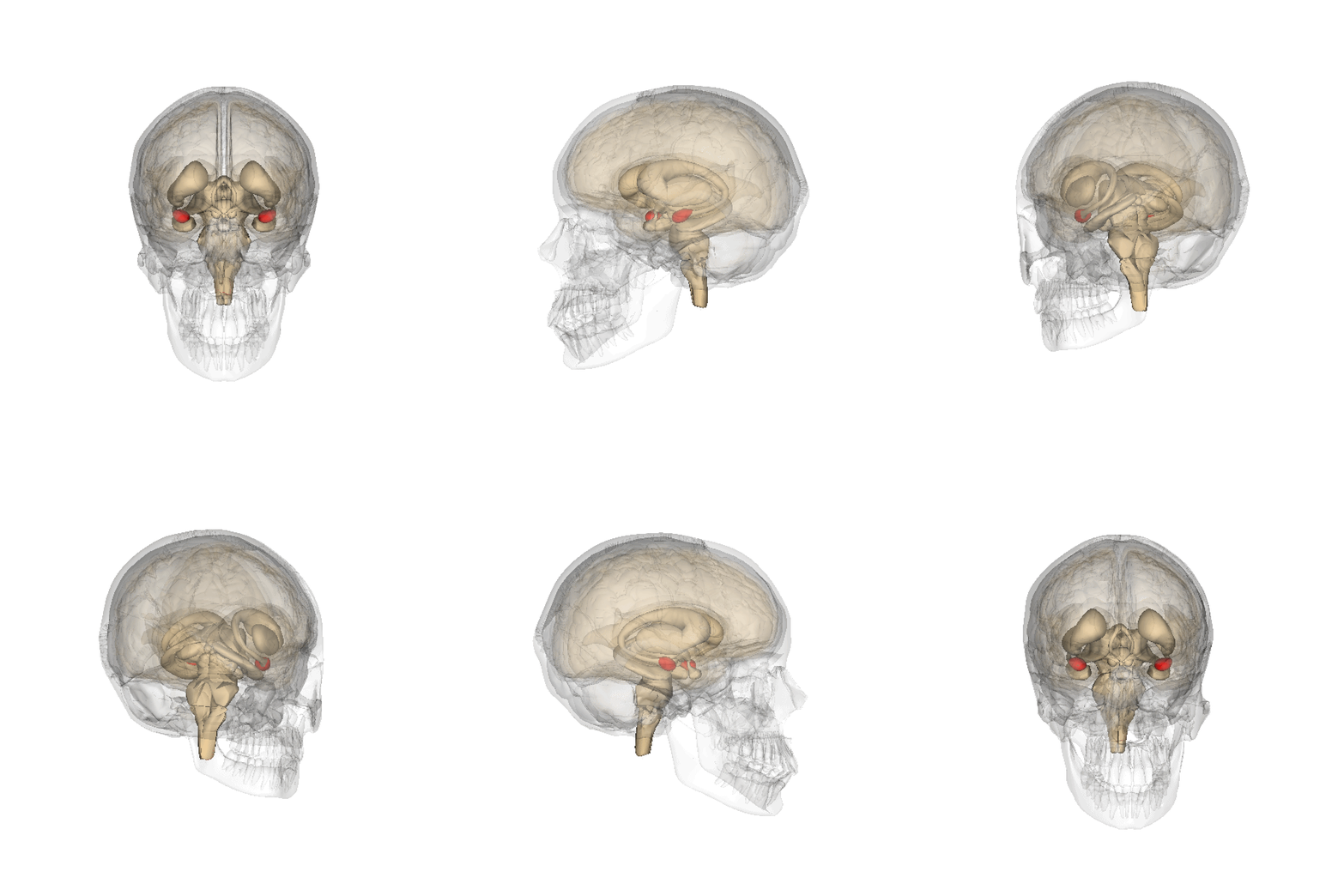
The process begins in the amygdala, a brain structure that acts as a smoke detector for threats. Before you consciously process a danger, the amygdala signals the adrenal glands to dump adrenaline into your blood.
3D anatomical animation of a human skull and brain, highlighting the amygdala in red. Images are generated by Life Science Databases(LSDB)., CC BY-SA 2.1 jp, via Wikimedia Commons
Your heart rate spikes, pupils dilate, and blood flows away from your gut and toward your muscles.
The modern problem
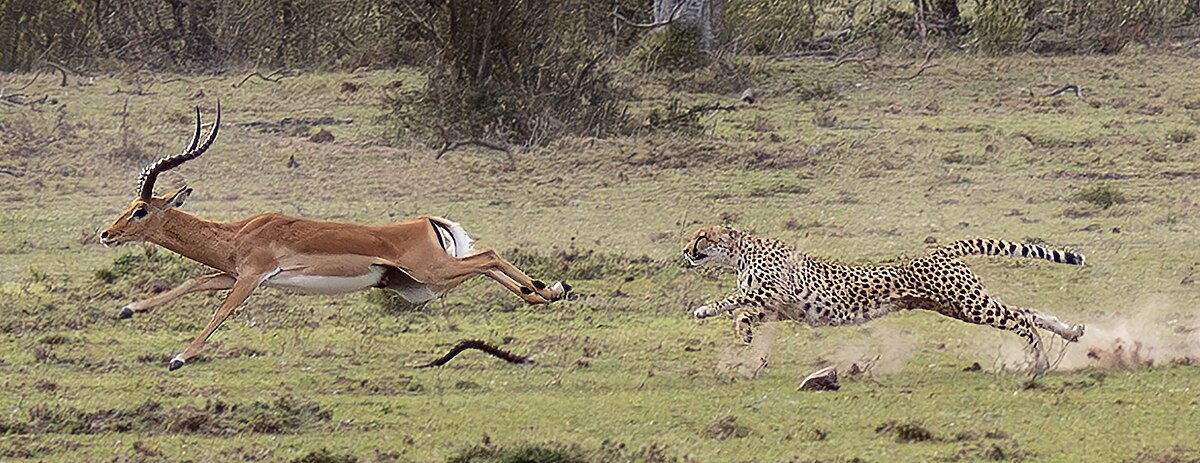
This system was built to outrun predators, not to handle stressful emails or traffic jams. When you trigger this response over a deadline, your body prepares for physical combat that never happens.
A cheetah actively chasing an impala across a grassy landscape, with both animals in mid-air during their pursuit. Clayhill1, CC BY-SA 4.0, via Wikimedia Commons
We live in a state of constant physiological arousal, with no physical outlet for the energy our bodies just spent.
How the body triggers the surge
Threat detection starts in the amygdala, which instantly signals the hypothalamus. This neural trigger prompts the pituitary gland to secrete ACTH while simultaneously activating the sympathetic nervous system. The adrenal medulla then floods the bloodstream with catecholamines, specifically epinephrine (adrenaline) and norepinephrine.
These chemical messengers force rapid metabolic shifts. Epinephrine binds to liver cells to trigger the release of glucose, while circulating cortisol converts fatty acids into usable energy. Breathing rates climb to provide oxygen for burning that fuel, and blood clotting accelerates to limit potential blood loss from injury.
Physical changes during acute stress
To maximize speed and physical power, the body reroutes blood flow away from non-essential organs. Blood vessels constrict in the digestive tract, which shuts down digestion and dampens appetite, while vessels expand toward the brain and major muscle groups.
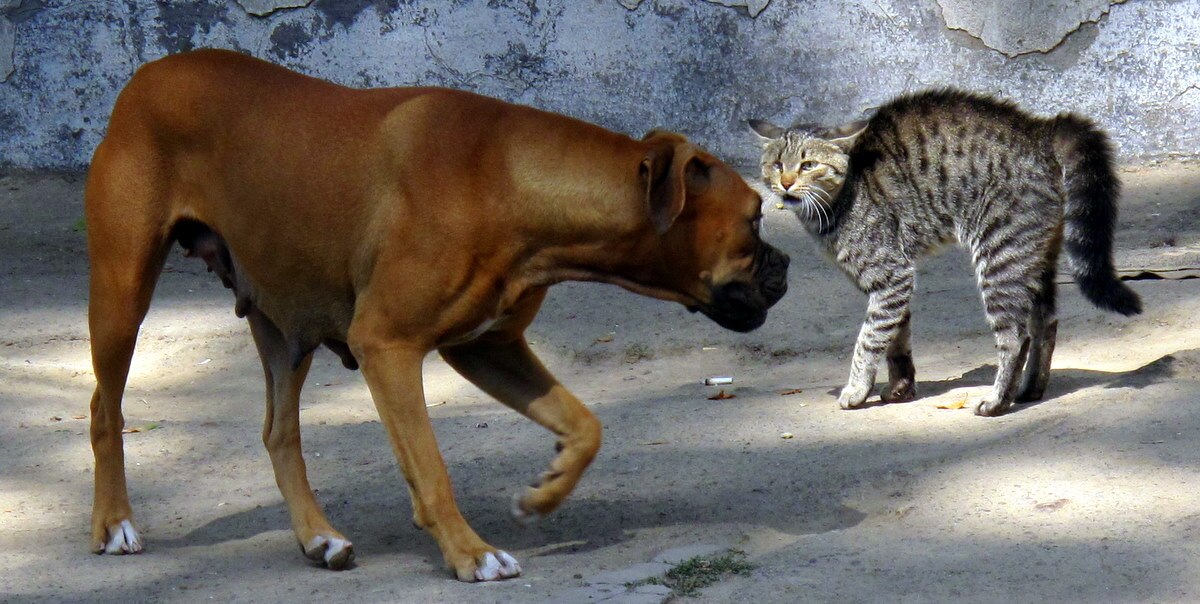
Defensive physical posturing shown by a cat facing a dog during an acute threat. Peretz Partensky from San Francisco, USA, CC BY-SA 2.0, via Wikimedia Commons
Pupils dilate to admit more light and sharpen peripheral vision. Heart rate and blood pressure surge to pump fuel across the body. Muscles tense in readiness for intense physical action, a state that often causes visible trembling until the energy is spent.
Beyond fighting and fleeing
Walter Bradford Cannon first described this reaction in 1914, noting that frightened animals instantly stopped digesting food. Modern researchers call the process hyperarousal or the acute stress response because organisms display a broader range of reactions than just combat or escape.
Threatened animals frequently freeze, faint, or flop rather than run. Other chemical messengers also shape how an organism reacts, including dopamine, serotonin, estrogen, testosterone, and osteocalcin. Once the danger passes, the parasympathetic nervous system releases acetylcholine to lower heart rate and restore baseline homeostasis.
Test yourself
Why does digestion completely pause during a sudden crisis?
The body prioritizes immediate survival fuel. An ancient binary switch prioritizes muscle power over maintenance systems, pulling blood away from the gut to handle immediate physical threats.
An office worker feels a spike of panic over an angry email. Why does their heart race?
Ancient survival reflexes lack modern context. The body treats a stressful email the same as a predator, triggering a physical combat response that has no physical outlet.
A gazelle escapes a predator and immediately shakes violently before grazing again. Why?
To discharge unused physiological arousal. Animals naturally discharge the adrenaline and high arousal of the survival response, preventing the chronic stress humans experience.
Play the lesson in edgi and the card is yours. It lands on your Map next to the ideas it connects to, and turns from matte to foil to gold as you learn more around it.
The rest and digest state is governed by the parasympathetic nervous system, which calms the body after an emergency. It uses the neurotransmitter acetylcholine to lower heart rate, resume digestion, and return the body to normal homeostasis.
Why do people freeze instead of running?
Freezing is an alternative survival reaction within the broader acute stress response. Research shows that hyperarousal includes behaviors like freezing, fainting, or flopping alongside traditional fighting and fleeing.
What role does cortisol play during acute stress?
Cortisol increases blood sugar and blood pressure while turning fatty acids into available energy for muscles. It also temporarily suppresses the immune system during the emergency.