Psychological stressWhy demands are inherently neutral
Psychological stress is a feeling of emotional strain and mental discomfort triggered when demands exceed your perceived ability to cope. It is an ancient bodily reaction that prepares you to act, meaning small amounts can sharpen motivation and performance. The physical and emotional damage happens when stress becomes excessive or chronic, raising the risk of ulcers, heart attacks, and depression.
By the edgi team We find the most surprising true thing about an idea and build a 60-second lesson around it.
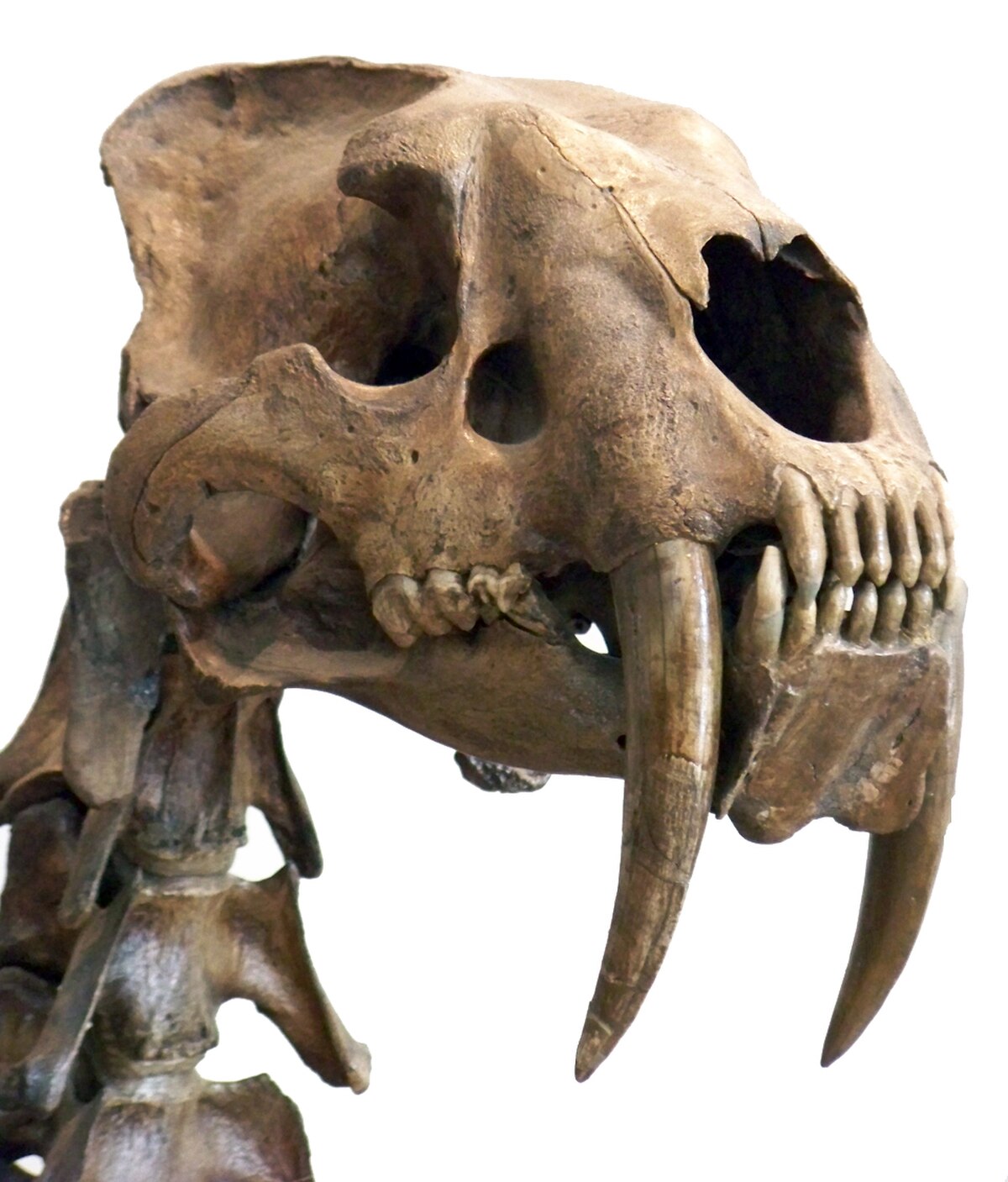
Your body doesn't know the difference between a looming deadline and a saber-toothed tiger. Both trigger the fight-or-flight response, flooding your system with cortisol to sharpen your senses.
A fossilized skull of Smilodon, commonly known as a saber-toothed tiger, is shown with its massive, dagger-like canines. Wallace63, CC BY-SA 3.0, via Wikimedia Commons
It’s an ancient survival kit designed to make you faster and smarter in a crisis.
The goldilocks zone
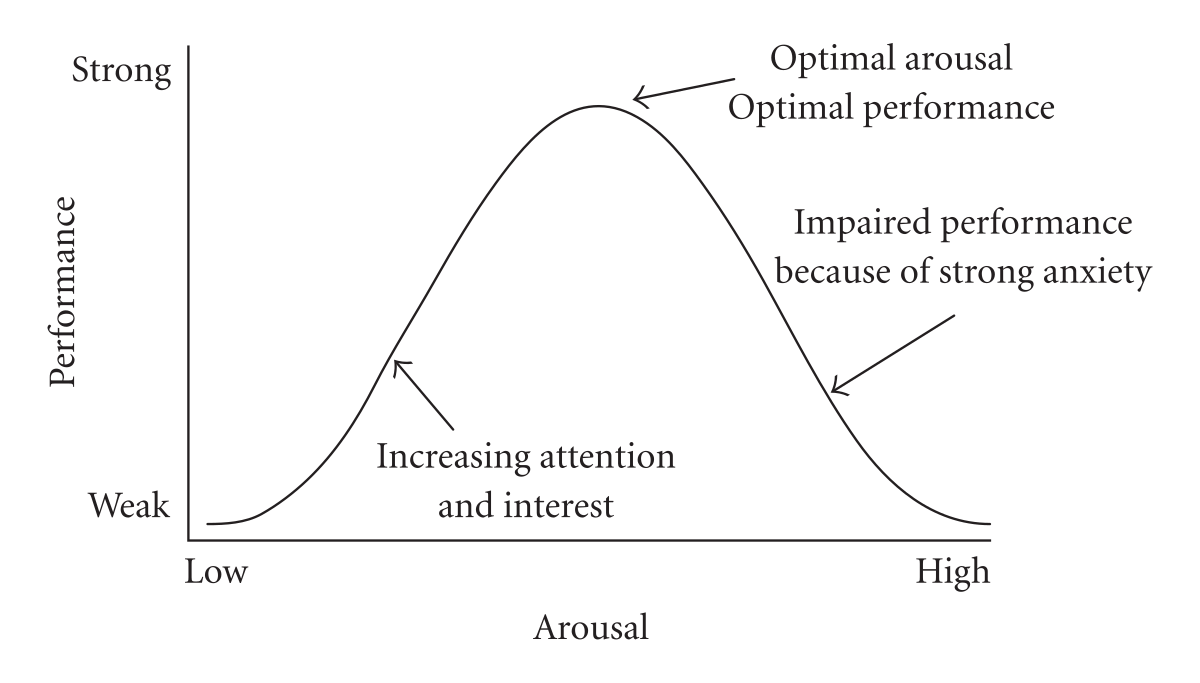
In 1908, psychologists Robert Yerkes and John Dodson found that stress isn't just misery; it’s a bell curve. They shocked mice to see how quickly they could navigate a maze.
Graph illustrating the Yerkes-Dodson curve for a difficult task, plotting Performance (Weak to Strong) on the Y-axis against Arousal (Low to High) on the X-axis. Yerkes and Dodson, Hebbian, CC0, via Wikimedia Commons
Performance peaked at a moderate level of discomfort, a state called eustress. Too little led to boredom; too much led to paralysis.
The modern trap
The problem today is the always-on environment. Digital pings keep us perpetually in the high-stress zone. Without time to power down, the body accumulates allostatic load, the wear and tear of being constantly on high alert.
An overhead view of a person with their head in their hands, sitting at a wooden desk with a laptop, notebook, pens, a coffee cup, and a small plant. Ciphr.com, CC BY 2.0, via Wikimedia Commons
We aren't failing; we are just running a sprint that never ends.
The four types of stress
A stressor itself is neutral: the exact same event can trigger completely different reactions depending on how a person perceives it. In 1974, researcher Hans Selye organized stress into four distinct variations across two axes. One axis measures quality: eustress (good stress that feels positive and motivating) versus distress (bad stress where demands outstrip capabilities).
The second axis measures quantity: hyperstress (too much stress) versus hypostress (too little stress, leading to boredom). Selye argued that the ideal state is to balance hyperstress and hypostress while experiencing as much eustress as possible.
What triggers psychological stress?
Psychologists classify stressors into four categories: sudden catastrophes, major life events, ambient stressors, and daily hassles. Catastrophes like earthquakes or combat are uncontrollable and acute, while major life milestones like getting married, moving, or entering college create stress through uncertainty. For example, research shows college freshmen are twice as likely to be stressed as final-year students.
Daily hassles are minor microstressors like traffic jams, deadlines, and interpersonal irritations. Because they happen constantly, daily hassles are the most frequent source of stress for adults and carry the heaviest long-term physiological toll on health.
Test yourself
Does psychological stress always impair task performance?
No, moderate stress can improve focus.. Moderate stress, or eustress, can heighten alertness and optimize performance before it tips into overwhelming distress.
Why does a modern always-on environment cause physical toll through psychological stress?
It prevents the body from recovering.. Continuous demands keep the nervous system activated without downtime, creating an allostatic load of cumulative wear and tear.
Does the body react differently to a work deadline than a physical attack?
No, both trigger the same alarm. Your ancient survival machinery cannot tell the difference between a modern email notification and an approaching predator.
Play the lesson in edgi and the card is yours. It lands on your Map next to the ideas it connects to, and turns from matte to foil to gold as you learn more around it.
Major positive events like marriage or a new job introduce sudden disruptions, changes in routine, and uncertainty. When a gap forms between what you expect and what is actually happening, your brain registers the demand as a stressor even if the outcome is desirable.
What physical health risks are linked to chronic stress?
Excessive and chronic stress raises the risk of strokes, heart attacks, ulcers, and clinical depression. It also aggravates pre-existing medical conditions by maintaining constant strain on the body.