Stress HormoneHow short-term survival wears you down
A stress hormone is a chemical signal released by endocrine glands to adjust your body during times of threat. The primary human stress hormone is cortisol, along with catecholamines like adrenaline and norepinephrine, vasopressin, and growth hormone. While they keep you alive by redirecting energy to immediate physical survival, prolonged exposure disrupts everyday body maintenance.
By the edgi team We find the most surprising true thing about an idea and build a 60-second lesson around it.
In the 1930s, an endocrinologist named Hans Selye was trying to isolate a new sex hormone from ovarian extracts. He was notoriously clumsy in the lab, constantly dropping his rats while trying to inject them.
A black and white portrait of Hans Selye shows him looking towards the viewer, wearing a suit and tie. Jean-Paul Rioux, CC BY-SA 4.0, via Wikimedia Commons
He noticed that regardless of the injection, every rat developed the same physical symptoms: stomach ulcers and enlarged adrenal glands. He hadn't found a hormone; he had discovered the body's universal physical response to pressure.
The emergency override
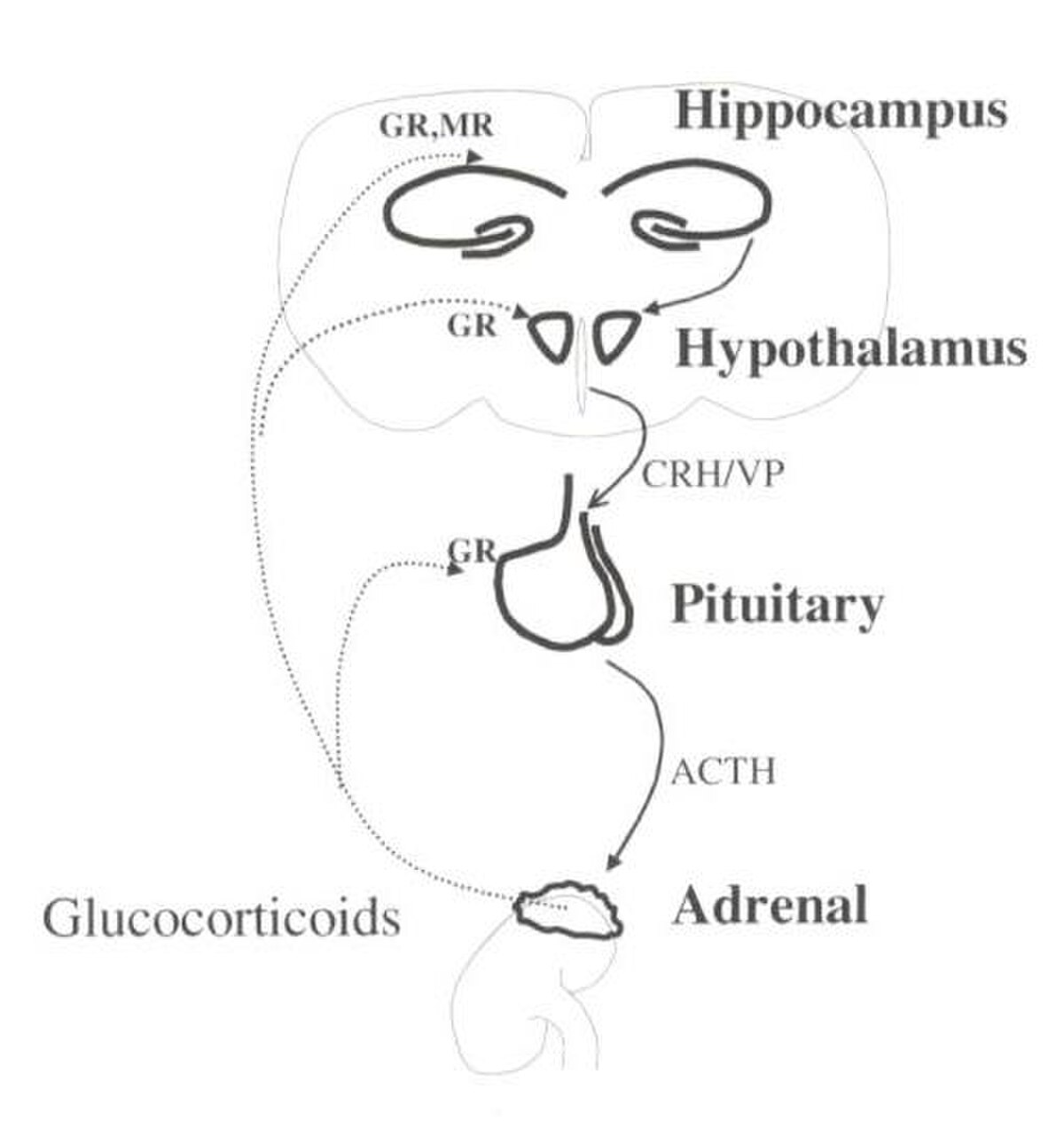
This is the fight-or-flight response. Your brain floods your system with adrenaline and cortisol. It instantly prioritizes survival: your heart rate spikes, digestion shuts down, and your immune system pauses.
Schematic diagram illustrating the hypothalamic-pituitary-adrenal (HPA) axis and its response to stress. Dorine Feldker, CC BY-SA 4.0, via Wikimedia Commons
It is a brilliant, short-term biological override designed to help you run from a predator.
The modern cost
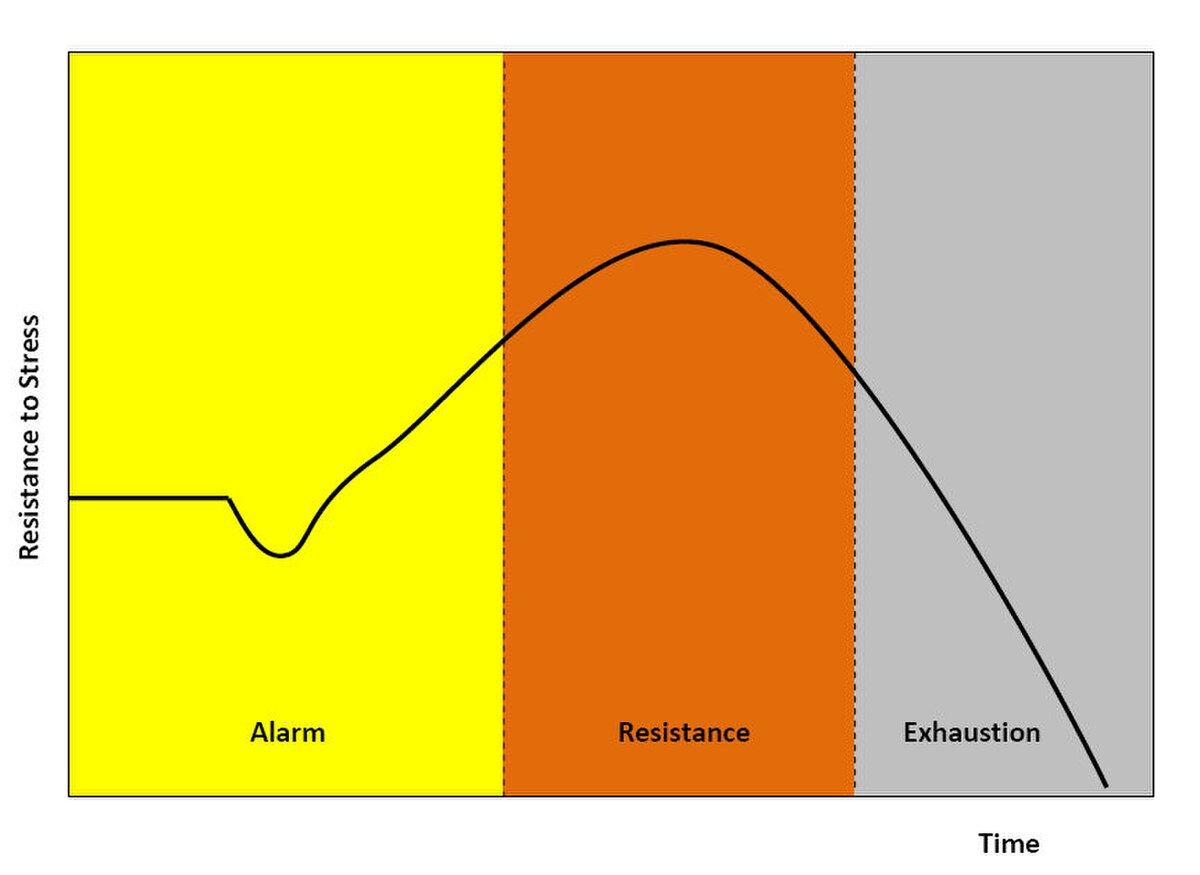
Selye called this the General Adaptation Syndrome. It is the cost of simply being alive under pressure. The problem is that modern life rarely triggers a predator, but it constantly triggers the alarm.
Diagram of the general adaptation syndrome model plotting resistance to stress on the Y-axis against time on the X-axis. David G. Myers, CC BY 3.0, via Wikimedia Commons
When your body stays in that emergency mode too long, the survival chemicals that save you start to wear you down.
How stress hormones alter the body
Stress hormones change your internal environment by mobilizing energy sources, accelerating heart rate, and downregulating processes that are not immediately necessary. The body temporarily depresses functions such as digestion while activating survival mechanisms. Other chemical secretions are also downplayed during times of high pressure.
The main stress hormones include cortisol, vasopressin, growth hormone, and catecholamines like adrenaline and norepinephrine. These chemicals act in unison to modify how organs use fuel and react to sudden demands.
Effects on the immune system
Stress hormones have a dual effect on the immune system depending on the duration and intensity of the stress. In the short term, they enhance defenses against acute infections like influenza and coronaviruses. They achieve this by increasing the production of inflammation-regulating cytokines and boosting the activity of natural killer cells and macrophages, which eliminate abnormal or infected cells.
Over long periods, high stress hormone levels suppress immunity by reducing the count and activity of antibody-producing lymphocytes. Long-term activation also causes chronic inflammation, damaging organs and increasing vulnerability to cardiovascular disease, arthritis, diabetes, and bacterial infections.
Viral suppression of cortisol
Certain viruses evade the immune system by stopping the body from producing stress hormones. Pathogens like influenza, SARS-CoV-1, and SARS-CoV-2 manufacture an incomplete protein that mimics human adrenocorticotropic hormone (ACTH), the signal that tells adrenal glands to produce cortisol.
When the immune system creates antibodies against the viral decoy, those antibodies also destroy the body's actual ACTH. This suppresses adrenal gland function and causes adrenal insufficiency, leading to fatigue, weight loss, low blood pressure, nausea, vomiting, and abdominal pain.
Test yourself
An animal faces a predator, then safely escapes. Why do its digestion and immune systems briefly pause?
Energy instantly shifts to muscles. Emergency survival requires total resource reallocation, stripping power away from long-term maintenance systems to fuel immediate physical action.
Why does physical stress like extreme cold produce the exact same bodily fatigue as a mental crisis?
The body uses one universal alarm. Evolution relies on a single, shared emergency override for any threat, rather than custom-tailoring a unique chemical response for every distinct problem.
Did Selye discover stress hormones by carefully planning his experiment?
No, it was a total accident. Selye was actually hunting for a sex hormone when clumsy lab technique caused identical symptoms across all his test animals, revealing a universal stress response instead.
Play the lesson in edgi and the card is yours. It lands on your Map next to the ideas it connects to, and turns from matte to foil to gold as you learn more around it.
Cortisol is the primary human stress hormone. It helps regulate metabolism, blood pressure, inflammation, and immune responses during challenging conditions.
What are catecholamines?
Catecholamines are a category of stress hormones produced by the endocrine system. The primary examples are adrenaline and norepinephrine, which act quickly during the body's survival response.
What happens when the body cannot produce enough cortisol?
A deficiency in cortisol leads to adrenal insufficiency. This condition causes low blood pressure, severe fatigue, weight loss, abdominal pain, nausea, and an impaired ability to manage physical stress.