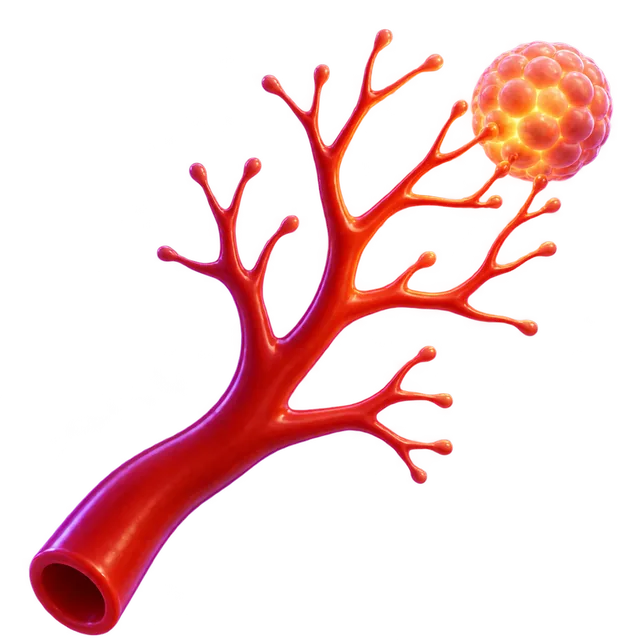
Angiogenesis is the biological process where new blood vessels sprout or split from existing ones to supply tissues with oxygen and nutrients. It is essential for healing wounds and building tissue after an injury. However, solid tumors also hijack this system to build private blood supplies, without which they cannot grow larger than the tip of a ballpoint pen.
By the edgi team We find the most surprising true thing about an idea and build a 60-second lesson around it.
Your body is constantly remodeling its internal plumbing. It sprouts new blood vessels to nourish hungry tissues through a process called angiogenesis. Without these new supply lines, a solid tumor could never grow larger than the tip of a ballpoint pen. It would simply starve in place.
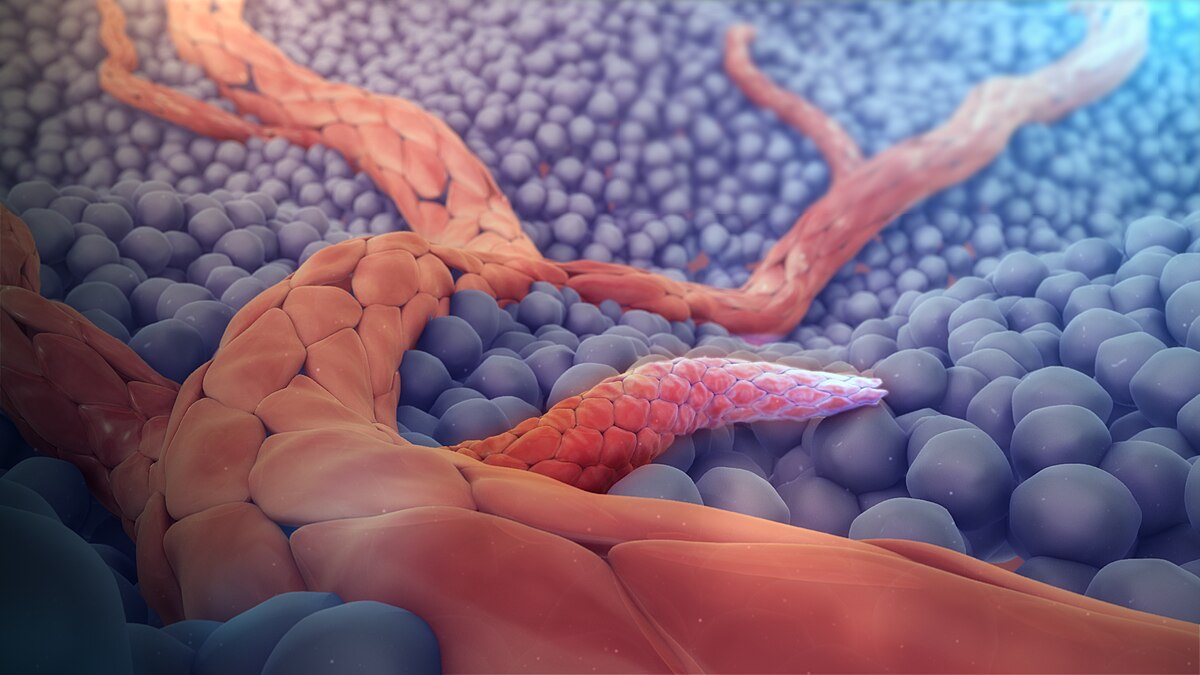
3D medical animation still showing angiogenesis, with new blood vessels branching off existing ones within a cellular matrix. www.scientificanimations.com, CC BY-SA 4.0, via Wikimedia Commons
The folkman revolution
In the 1970s, Dr. Judah Folkman proposed a radical idea: tumors were actively fishing for blood. He found that cancer cells release a signaling protein called Vascular endothelial growth factor to trick the body into building a private highway directly to the lesion.
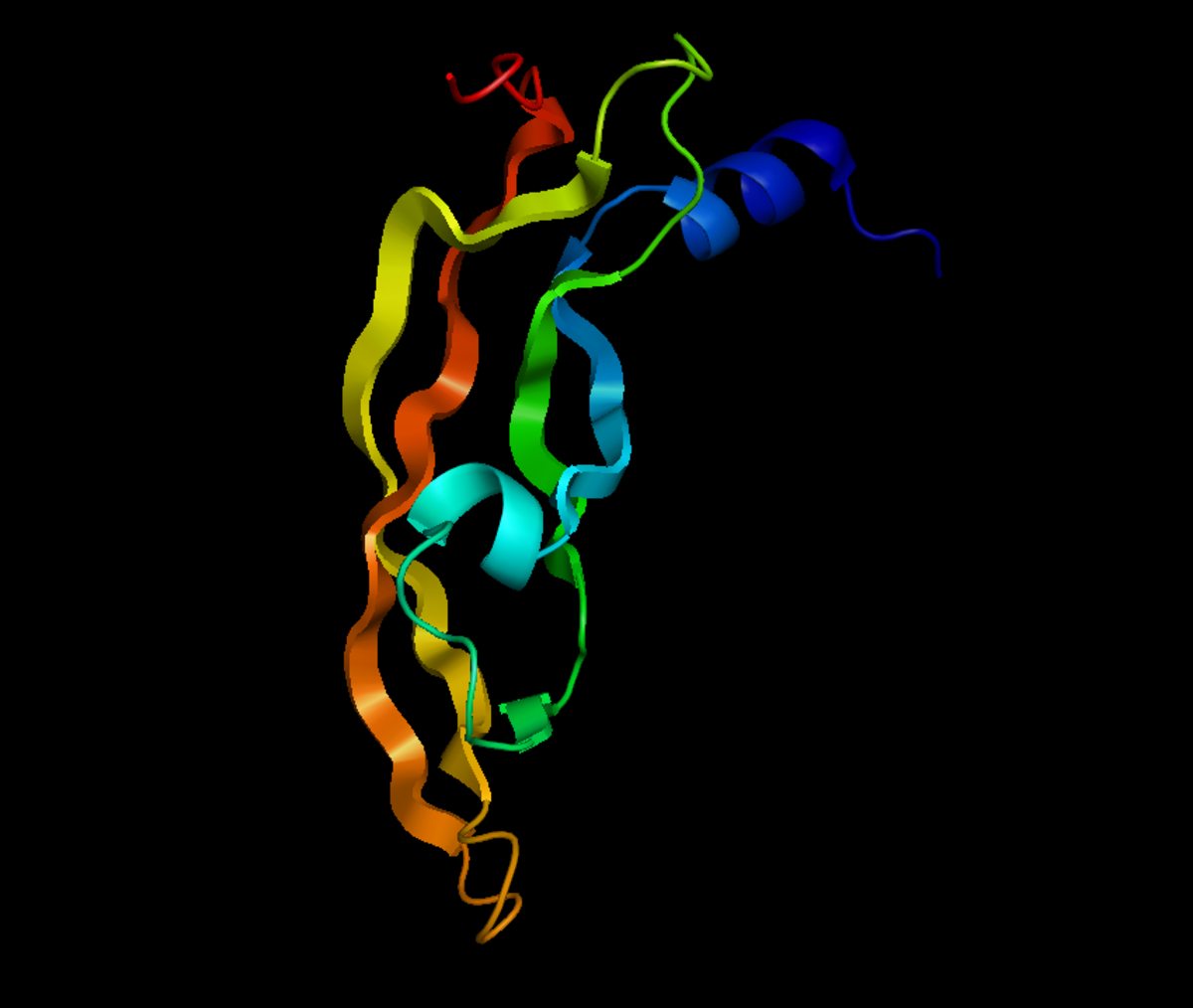
Crystal structure of Vammin, a VEGF-F protein derived from snake venom, displayed as a colorful ribbon diagram against a black background. Hannes Röst, Public domain, via Wikimedia Commons
Folkman was ridiculed for years, but he eventually proved that starving a tumor by blocking its supply lines could stop its growth.
A deadly double-edged sword
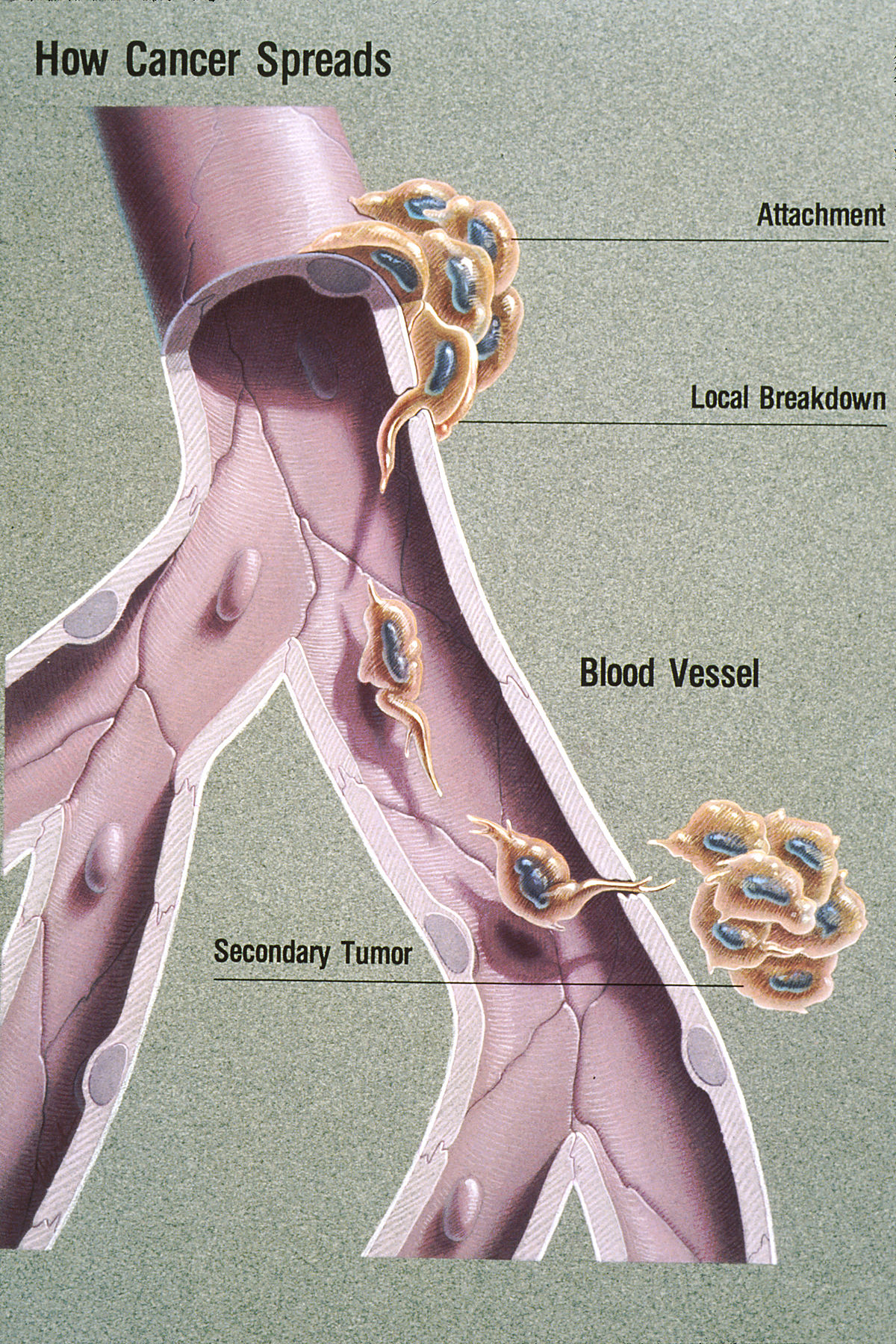
This biological mechanism is a lifeline for wound healing, where it builds the granulation tissue that seals your injuries. However, tumors co-opt this same growth for metastasis, using the new vessels as an escape route into the bloodstream.
A timeline diagram illustrating the approximate phases of wound healing, from minutes to years, with different processes highlighted by colored bars. Mikael Häggström. When using this image in external works, it may be cited as: Häggström, Mikael (2014). "Medical galler, Public domain, via Wikimedia Commons
Today, oncologists use an angiogenesis inhibitor to clog that plumbing, turning the body's own growth signal against the cancer.
How sprouting and splitting build new vessels
New vessels grow primarily through two distinct methods: sprouting and splitting. Sprouting begins when oxygen-deprived tissues release chemical signals like vascular endothelial growth factor (VEGF-A). Special cells at the vessel edge, called tip cells, release protease enzymes that break through the vessel wall. Stalk cells behind the tip then multiply rapidly, extending the new branch across tissue gaps at a rate of several millimeters per day.
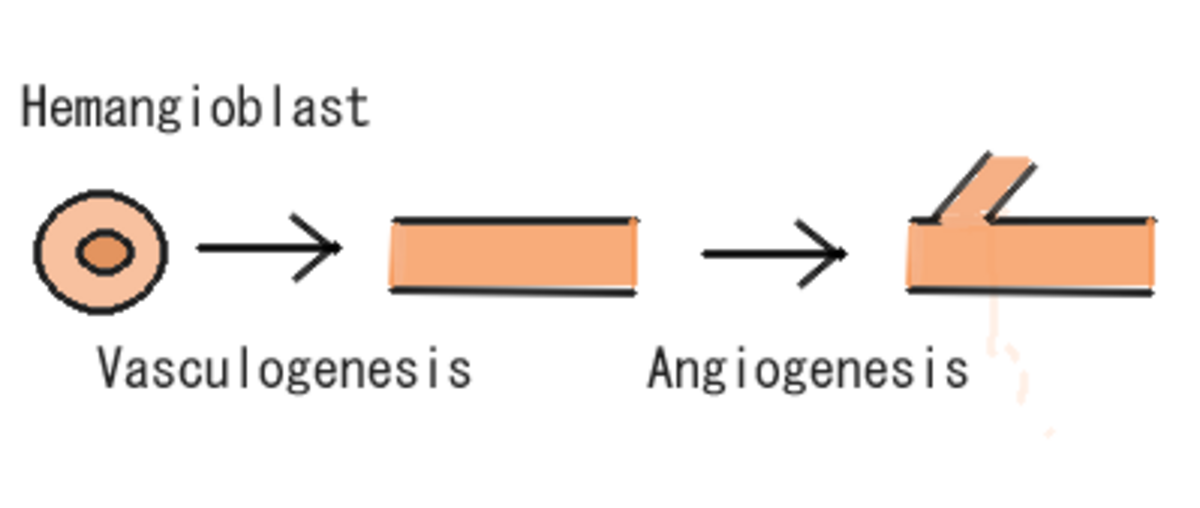
This diagram contrasts vasculogenesis, which creates the very first embryonic vessels, with angiogenesis, which branches new vessels off existing ones. puttinpurin1108, Public domain, via Wikimedia Commons
Splitting angiogenesis, or intussusception, works differently by dividing one existing blood vessel into two. The opposing inner walls of a capillary pull together until they touch, reorganize their junctions, and insert structural cells to split the channel. This allows the body to rapidly multiply capillary networks without having to generate large numbers of brand-new endothelial cells.
Chemical triggers and tumor growth
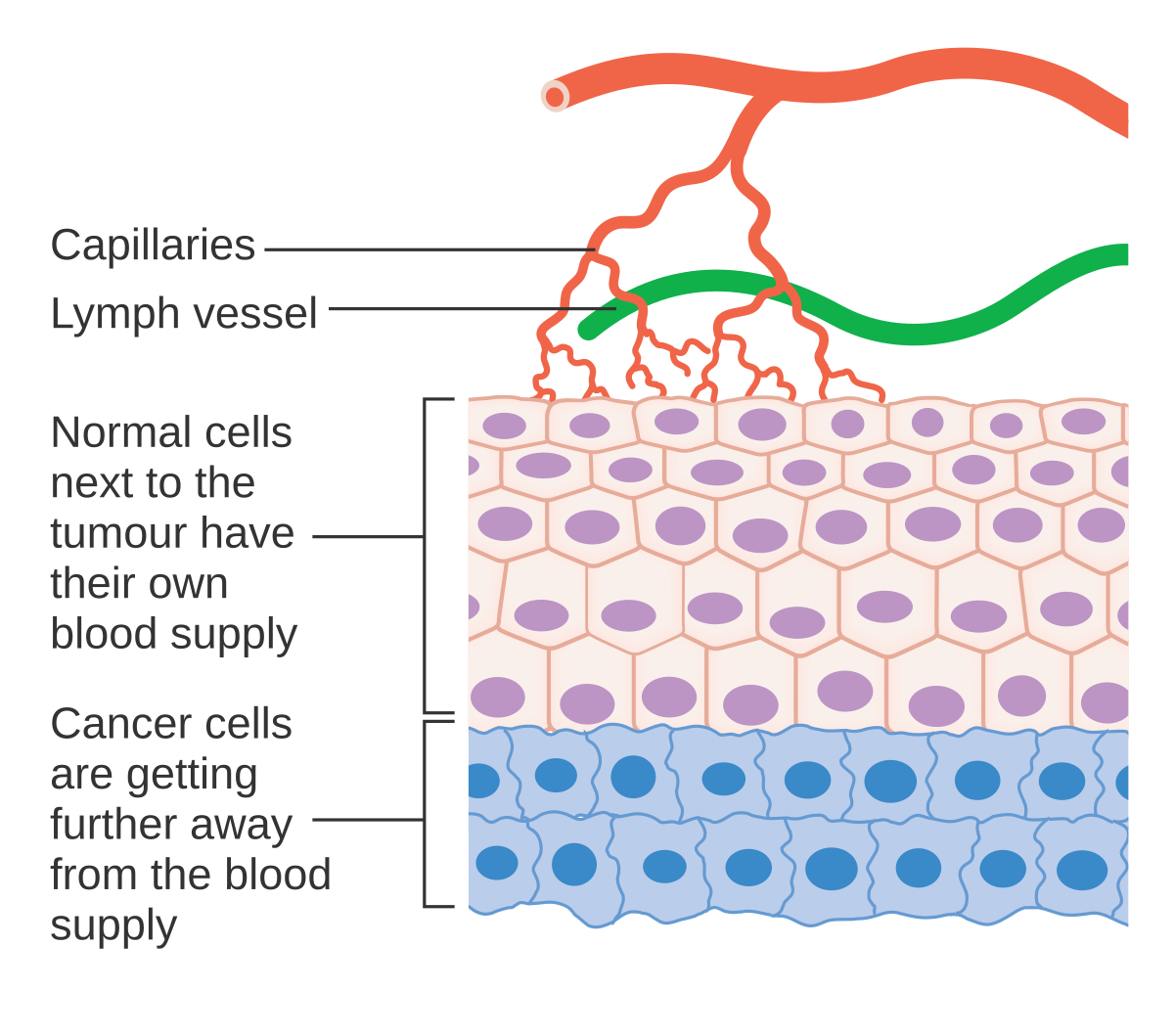
In 1971, Dr. Judah Folkman proposed that tumors depend on new blood vessels to expand, describing them as hot and bloody. Without angiogenesis, lack of oxygen and nutrients prevents solid tumors from growing into dangerous, malignant lesions.
This visual illustrates how a tumor remains small and dormant until angiogenesis provides the blood supply needed for rapid expansion. Cancer Research UK uploader, CC BY-SA 4.0, via Wikimedia Commons
A mix of chemical signals drives this growth. Signaling proteins like VEGF and fibroblast growth factors (FGF) bind to cell surface receptors to trigger vessel formation. Tumors exploit these pathways to build dense vessel networks, which they also use as escape routes into the bloodstream during metastasis. Modern cancer therapies use angiogenesis inhibitors to block these growth signals and starve tumors.
Test yourself
Why does a rapidly growing tissue eventually require new blood vessels?
Diffusion alone cannot reach its interior cells. Nutrients move through tissues via diffusion, which has a strict physical distance limit. Beyond a tiny size, inner cells starve unless new supply lines sprout inward.
True or false: A tumor grows because it has an internal, self-contained food supply.
False. Tumors are not self-contained; they must trick the body into building new blood vessels to supply the nutrients they need to grow beyond a tiny size.
Play the lesson in edgi and the card is yours. It lands on your Map next to the ideas it connects to, and turns from matte to foil to gold as you learn more around it.
What is the difference between vasculogenesis and angiogenesis?
Vasculogenesis creates the initial blood vessels in a developing embryo from precursor cells. Angiogenesis takes over afterward, expanding the circulatory network by branching, splitting, or elongating pre-existing vessels.
What is coalescent angiogenesis?
Coalescent angiogenesis is the reverse of splitting angiogenesis. Instead of dividing a vessel, separate capillary channels fuse together to form a larger vessel that accommodates increased blood flow.
Does physical exercise stimulate new blood vessels?
Yes. Muscle contractions during exercise increase the production of nitric oxide, which dilates blood vessels and contributes to the mechanical stimulation of angiogenesis.