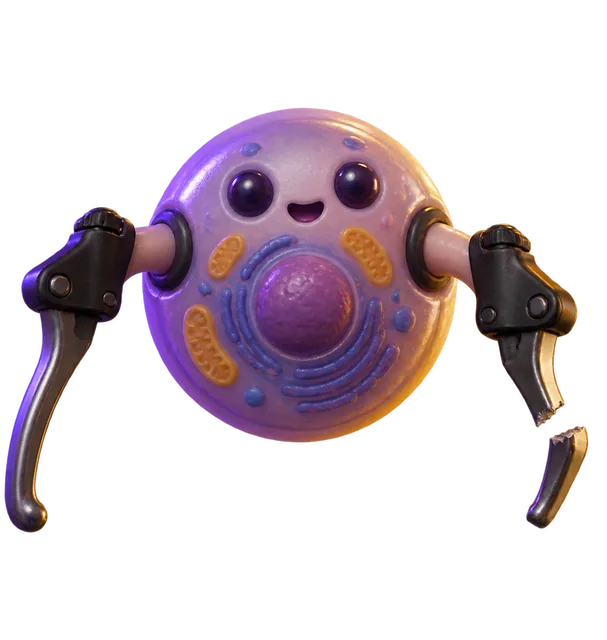
A tumor suppressor gene is a stretch of DNA that produces proteins to control cell division and stop abnormal cell growth. When working normally, it forces damaged cells to repair their DNA or undergo apoptosis, which is programmed cell death. If both copies of this gene become mutated or lost, the cell loses its brakes and can divide unchecked into a tumor.
By the edgi team We find the most surprising true thing about an idea and build a 60-second lesson around it.
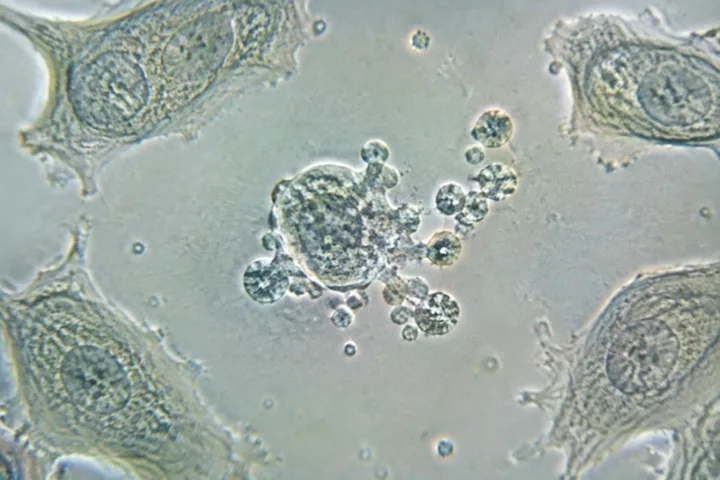
Your body contains specialized genes designed to stop cells from dividing if they detect damaged DNA. A tumor suppressor gene acts like a safety inspector, forcing a malfunctioning cell to either repair itself or self-destruct.
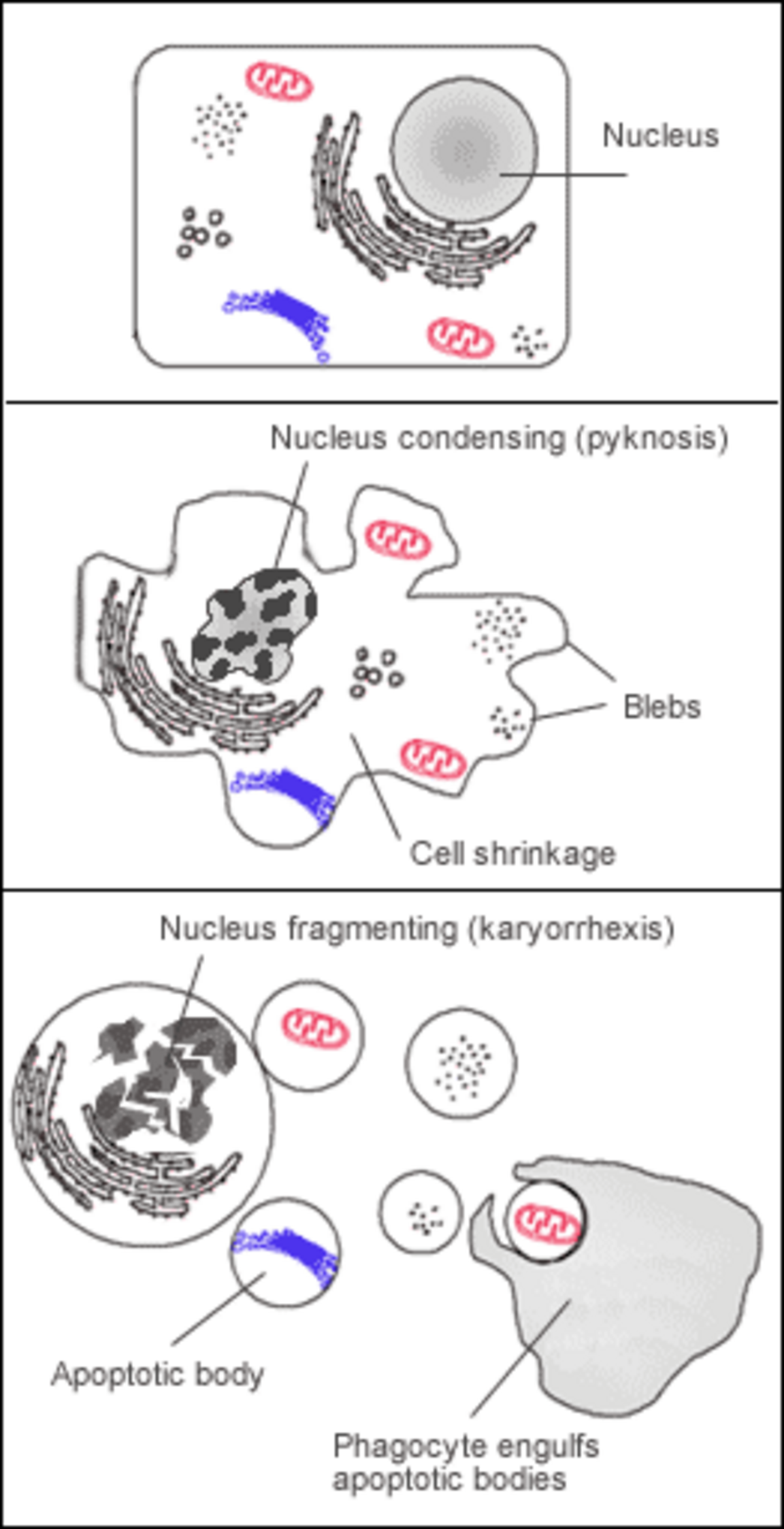
This process of programmed cell death is called apoptosis.
Diagram illustrating the process of apoptosis, or programmed cell death, in three stages. Emma Farmer, Public domain, via Wikimedia Commons
The guardian gene
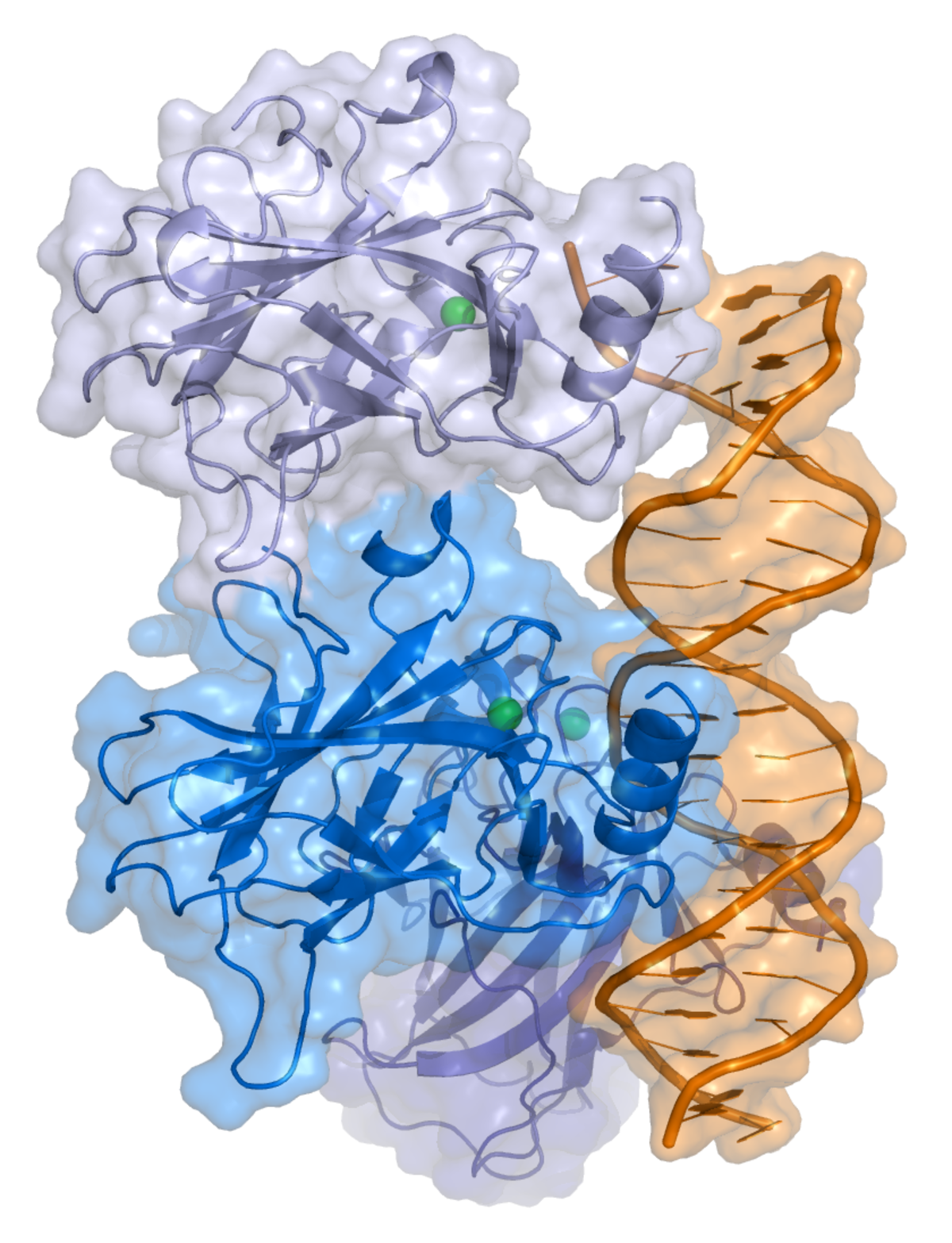
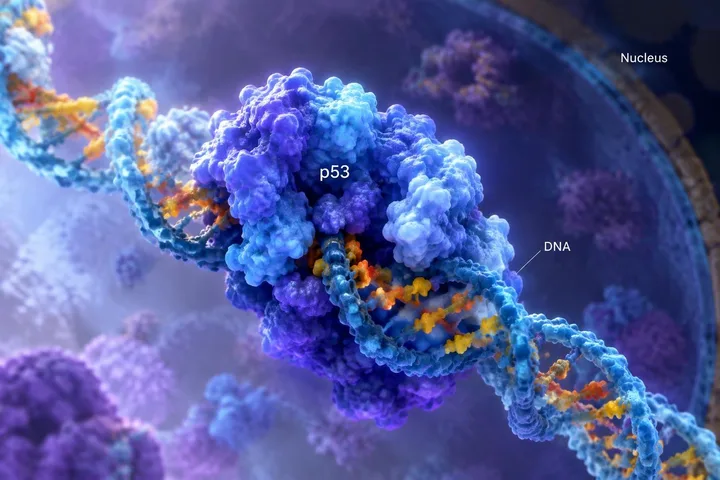
In 1979, researchers discovered p53, a protein so vital to this process that it was nicknamed the Guardian of the Genome. In over half of all human tumors, the p53 gene has been damaged or deleted, essentially cutting the brake lines of the cell.
Molecular model of the p53 protein (blue and light blue) bound to a DNA double helix (orange). Thomas Splettstoesser, CC BY-SA 3.0, via Wikimedia Commons
This loss of function is a fundamental driver of cancer.
Peto's paradox
Logically, massive animals with trillions of cells should get cancer constantly. Elephants defy this. While humans have only one pair of tumor suppressor genes, elephants have twenty redundant copies.
Their cells are fiercely protected against mutations, solving a puzzle known as Peto's paradox.
How do tumor suppressor genes protect cells?
Tumor suppressor genes encode proteins that inhibit cell proliferation and survival. These proteins generally work across three functional groups: gatekeepers, caretakers, and landscapers.
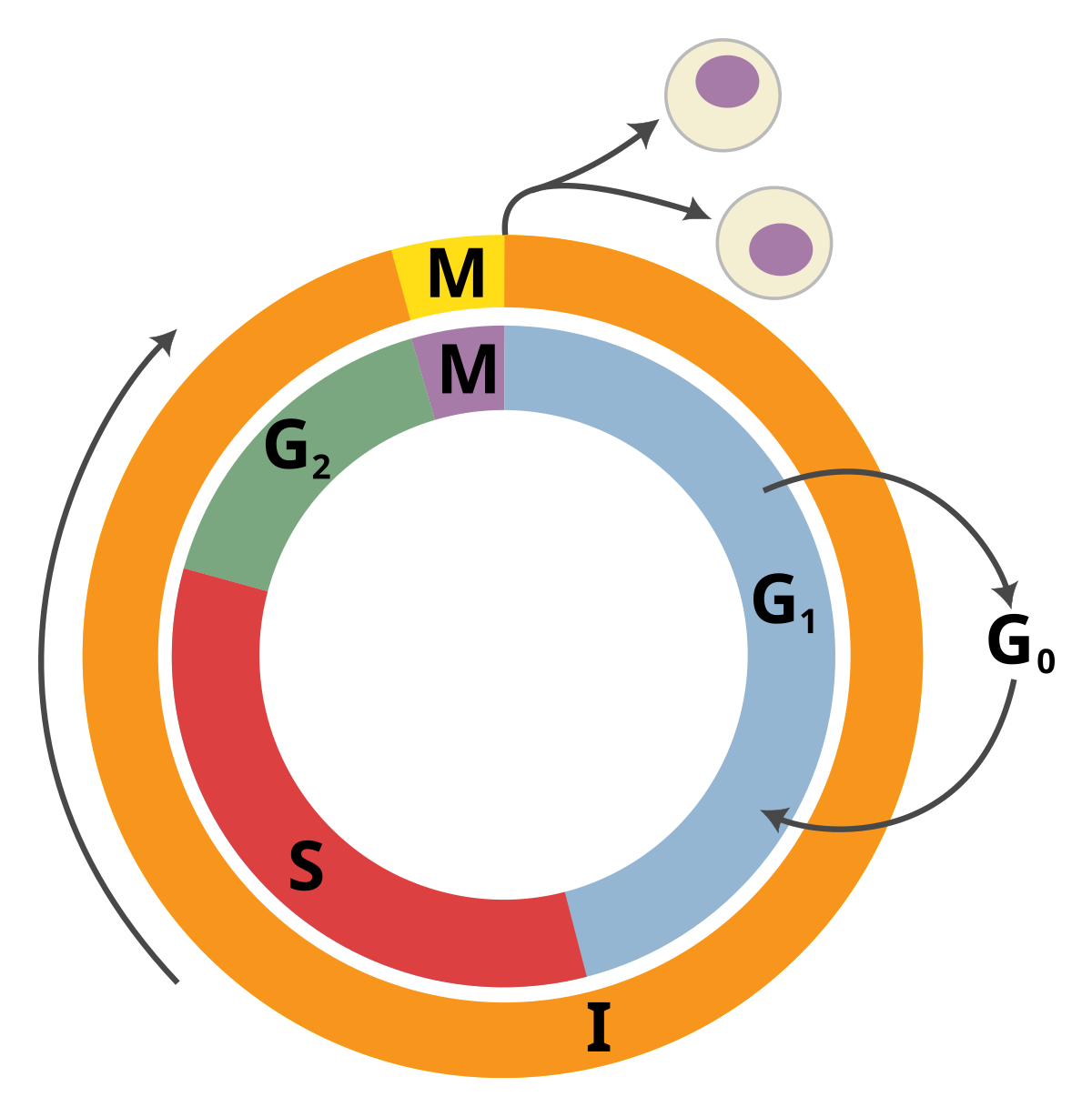
Checkpoints in the cell cycle rely on regulatory proteins to halt division when DNA is damaged. Cell_Cycle_3.png: *Cell_Cycle_2.svg: *Cell_Cycle_2.png: Original uploader was Zephyris at en.wikipedia derivative work: , CC BY-SA 3.0, via Wikimedia Commons
Gatekeeper genes directly control cell growth by stopping the cell cycle or triggering apoptosis when errors arise. Caretaker genes maintain genetic stability by managing DNA repair, preventing mutations from accumulating across the genome. Landscaper genes regulate the surrounding physical environment of the cell, where mutations can otherwise drive unregulated tissue proliferation.
When these genes lose function, the negative regulation that holds cell division in check disappears. In many instances, the loss of these suppressor proteins impacts the very same regulatory pathways that oncogenes overstimulate.
What is the two-hit hypothesis?
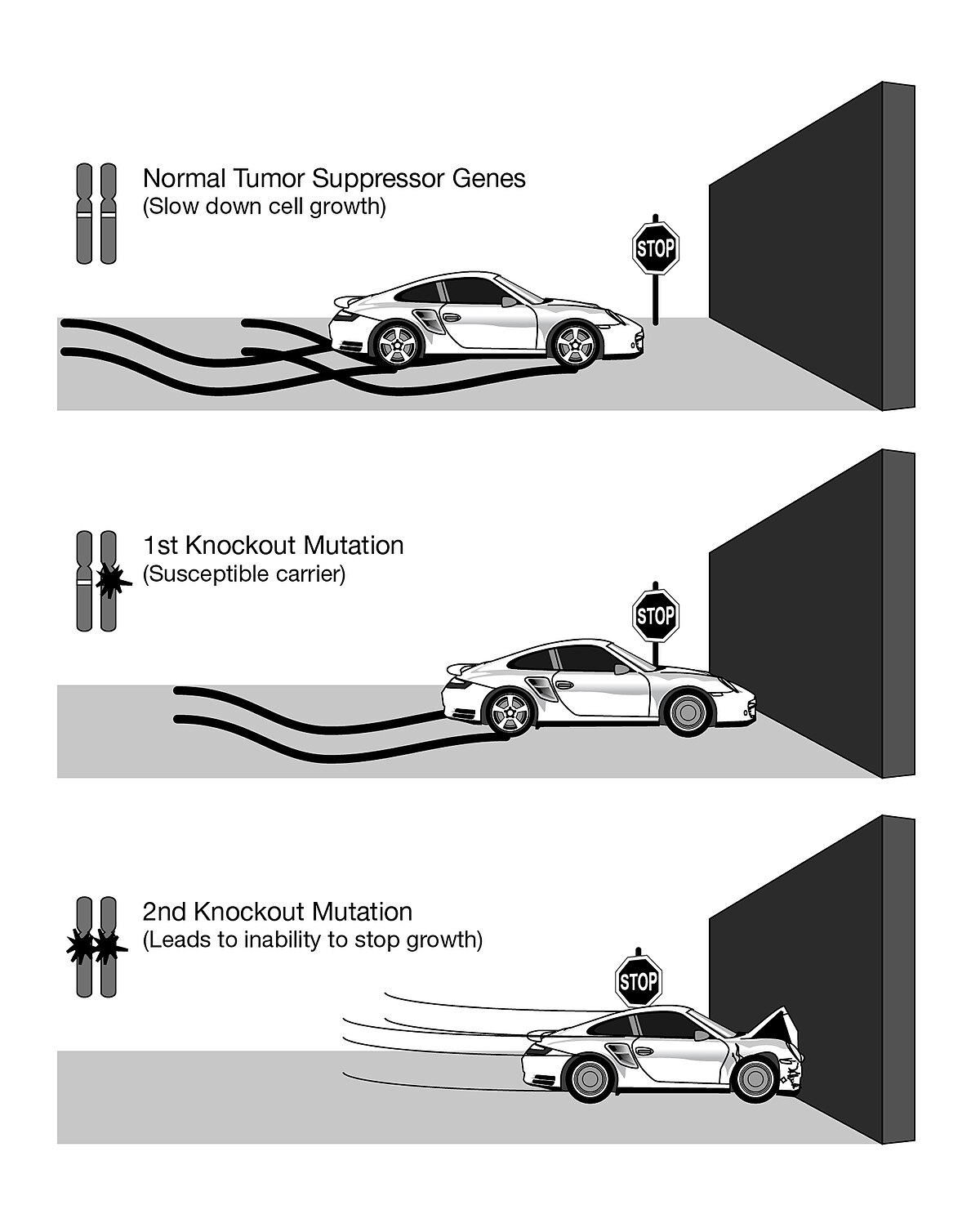
In 1971, Alfred G. Knudson studied retinoblastoma, an eye cancer in children, and realized that developing the disease requires two separate genetic hits. Because humans carry two copies, or alleles, of each tumor suppressor gene, one working copy can usually produce enough normal protein to prevent abnormal growth. Tumor suppressor mutations are therefore typically recessive.
The two-hit hypothesis requires mutations in both alleles of a tumor suppressor gene before cancerous growth begins. National Human Genome Research Institute, Public domain, via Wikimedia Commons
In hereditary retinoblastoma, a child inherits one mutated allele through the germ-line and only needs a single new mutation in the other allele to trigger a tumor. This causes tumors to appear earlier in life and often in both eyes. In non-hereditary cases, a single cell must acquire two independent mutations on its own, which takes longer and usually causes a single tumor in one eye.
Certain tumor suppressors break this rule. For example, some mutated p53 proteins act as dominant negatives, blocking the normal protein made by the healthy allele. Other genes like PTCH, NF1, and the cell-cycle inhibitor p27 exhibit haploinsufficiency, where losing just one allele increases susceptibility to tumor development.
Test yourself
Why do massive animals like elephants maintain multiple redundant copies of tumor suppressor genes?
To offset the higher cumulative mutation risk from more cells. Having more cells increases the statistical chance of a mutation, so extra tumor suppressor copies provide necessary protective redundancy.
How does a tumor suppressor gene normally prevent abnormal cell growth?
By halting division to repair or destroy damaged cells. Tumor suppressor genes act as safety inspectors that halt damaged cells from dividing, forcing them to repair or self-destruct.
What causes a cell to start growing abnormally?
The loss of a regulatory brake. Abnormal growth is typically driven by the failure of safety mechanisms, such as tumor suppressor genes losing their function, rather than just an active signal to grow.
Play the lesson in edgi and the card is yours. It lands on your Map next to the ideas it connects to, and turns from matte to foil to gold as you learn more around it.
How was the existence of tumor suppressor genes first proven?
In 1969, Henry Harris fused cancer cells with normal somatic cells to make hybrid cells. Because these hybrid cells did not form tumors in animals, researchers concluded that normal cells contain genes that actively suppress tumor growth.
How do tumor suppressor genes differ from oncogenes?
Oncogenes promote cell growth and generally require only one mutated allele to drive cancer, acting as dominant mutations. Tumor suppressor genes slow down growth and typically require both alleles to be inactivated before their protective braking effect is lost.