Natural SelectionEvolution through differential survival
Natural selection is the process where individuals with traits that better fit their environment are more likely to survive and produce offspring. This difference in reproductive success causes helpful heritable traits to become more common across generations. It operates without any conscious plan or goal, acting purely as an ongoing filter of existing variation.
By the edgi team We find the most surprising true thing about an idea and build a 60-second lesson around it.
Natural selection is not a conscious engineer. It is a filter that simply removes whoever fails to survive long enough to have offspring. It does not select for the strongest or smartest. It selects for whatever trait happens to work best in a specific environment right now.
Watching evolution
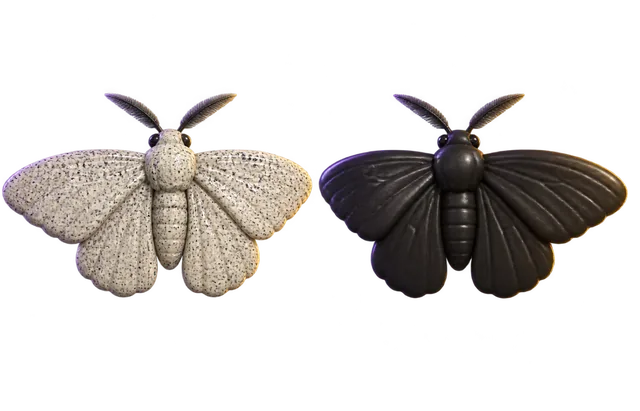
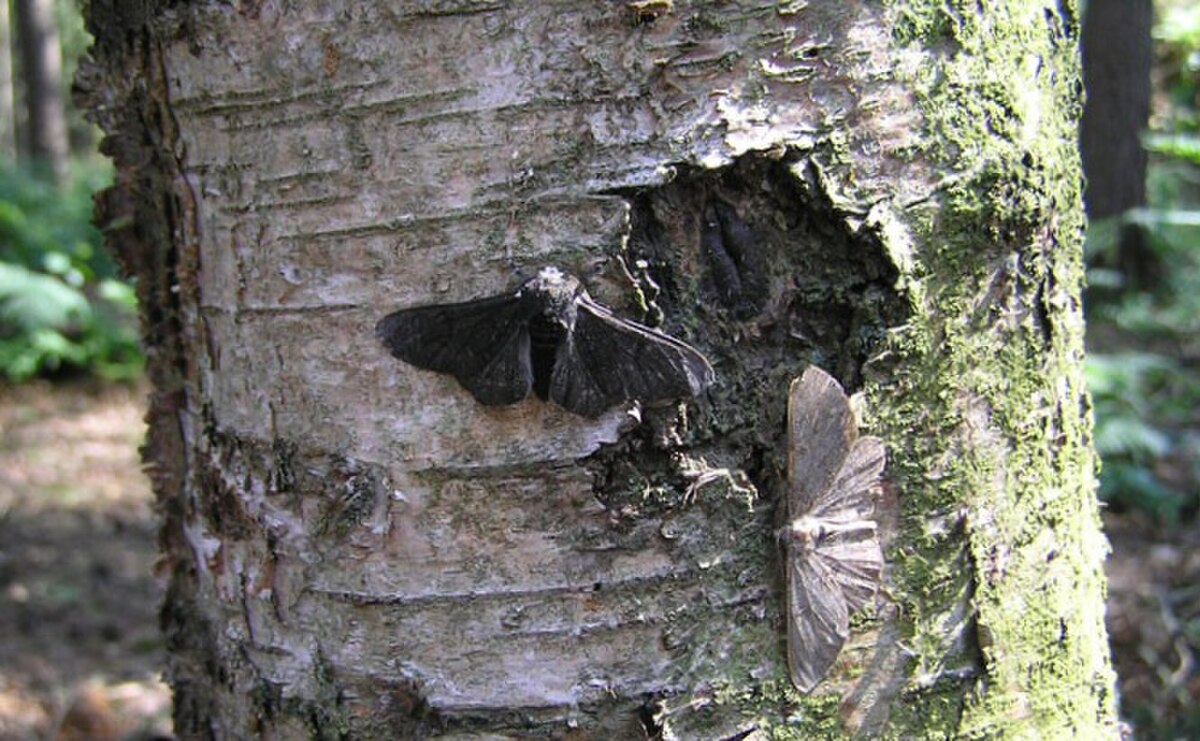
In the 1950s, Bernard Kettlewell watched this process in real-time with peppered moths in England. As coal soot from the Industrial Revolution blackened the trees, white moths were easily spotted and eaten.
Two peppered moths, one dark (melanic) and one light, camouflaged against the bark of a birch tree. Martinowsky; Chiswick Chap, CC BY-SA 4.0, via Wikimedia Commons
Rare black mutants, previously hidden, suddenly had the advantage. The population shifted from white to black in just a few years.
The long game
This shift is called industrial melanism. It proved that evolution isn't just ancient history; it is an ongoing tournament. Over generations, these tiny survival advantages accumulate, eventually changing a species so much it can no longer breed with its ancestors.
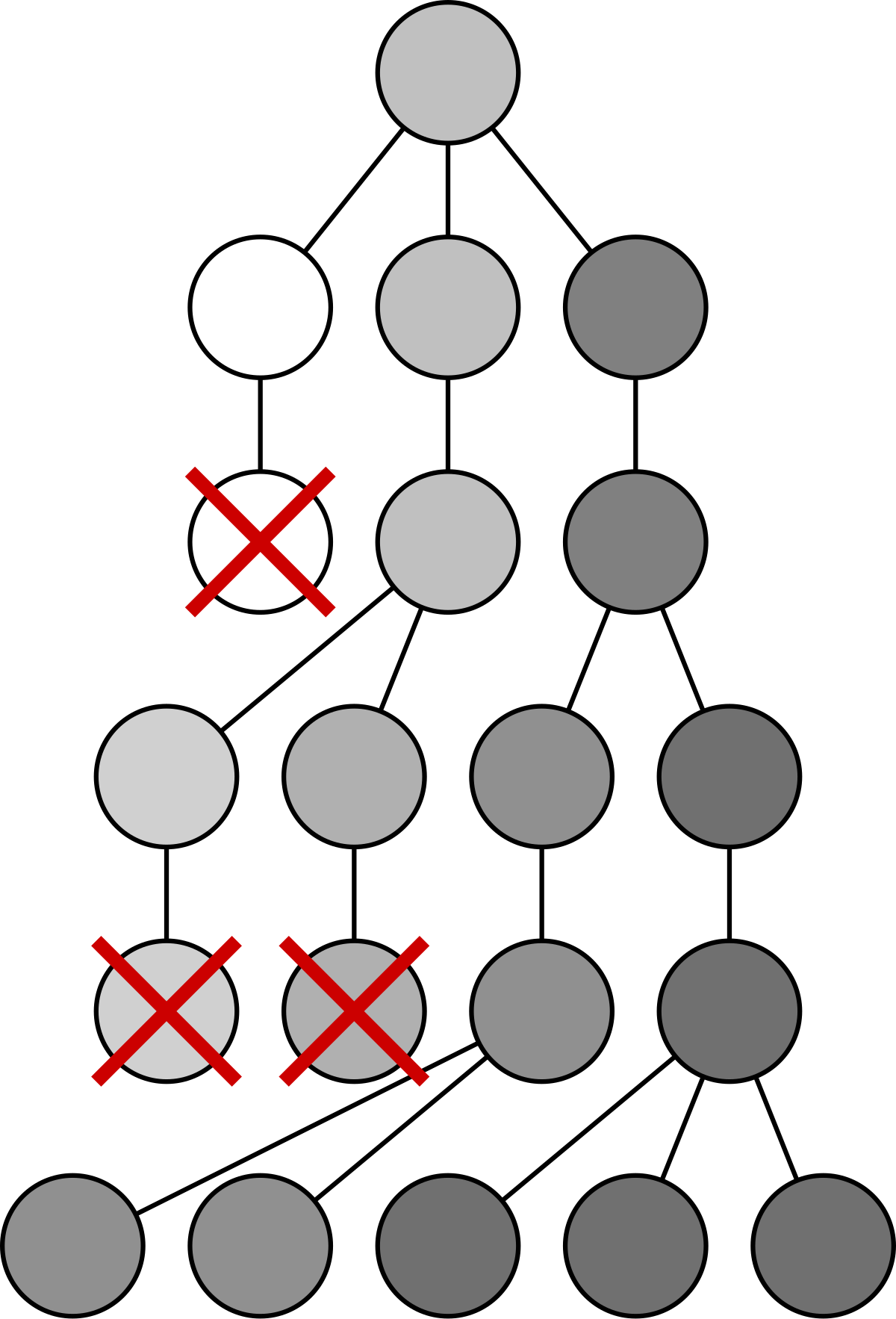
Diagram demonstrating mutation and selection, represented by a branching tree of circles with varying shades of gray. Elembis, CC BY-SA 3.0, via Wikimedia Commons
We call that speciation. It is how a billion years of elimination created the complexity of life we see today.
How does natural selection work?
Charles Darwin identified three core processes behind natural selection: variation among individuals, inheritance of traits from parent to offspring, and the struggle for existence. That struggle involves direct competition as well as cooperation and mutual aid among social organisms.
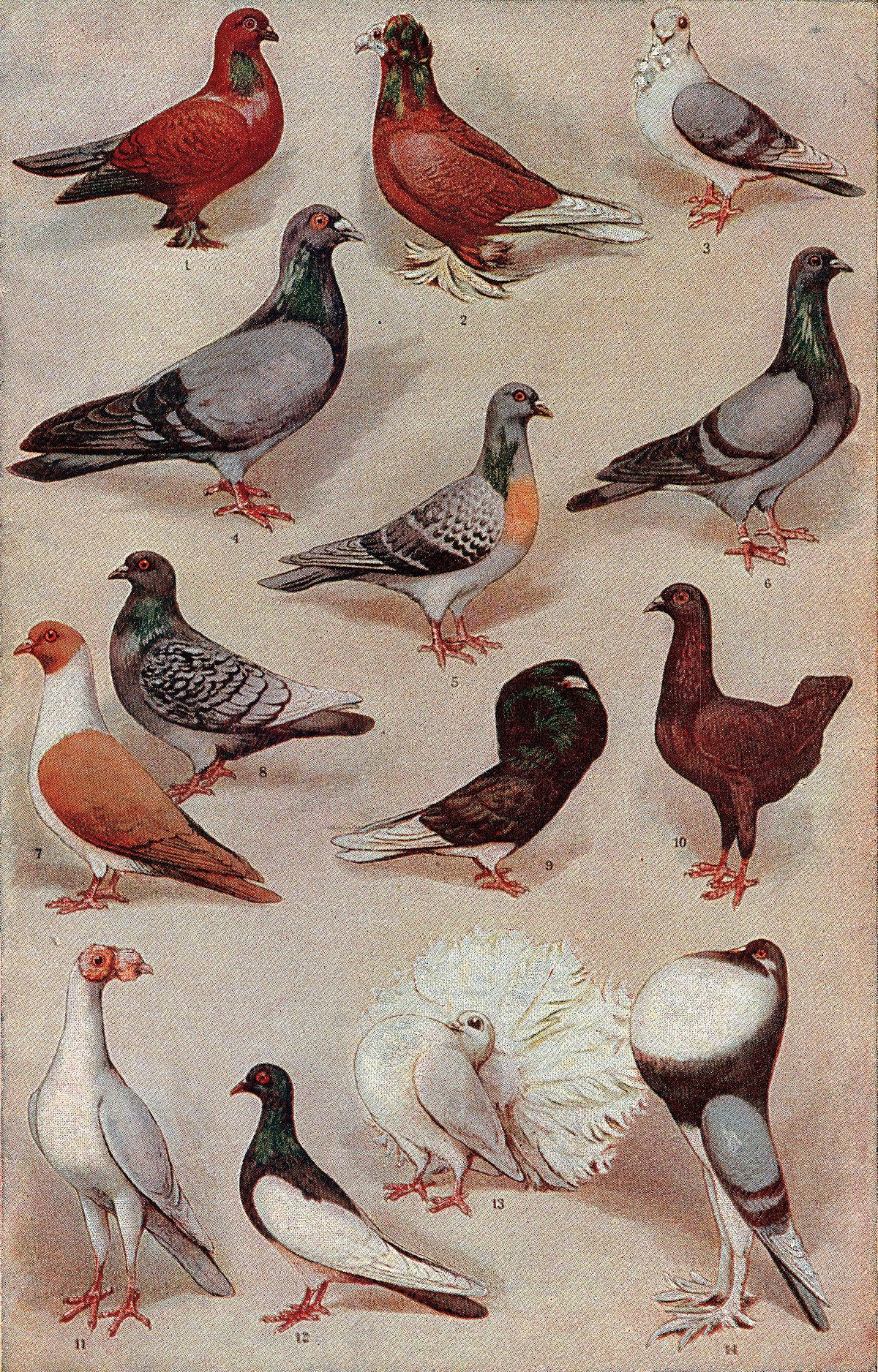
Darwin compared natural selection to artificial selection, where human breeders intentionally pick traits in animals like pigeons. Karl Wagner, Public domain, via Wikimedia Commons
Trait differences exist within every population. When specific traits provide a survival or reproductive advantage in a given setting, those characteristics are passed down more frequently. If environmental conditions remain stable, these advantageous traits multiply within the population over successive generations.
When traits shift because of local changes in a specific niche, microevolution takes place. When shifts happen across broader environments, macroevolution occurs. In some cases, traits change so radically compared to those of ancestors that an entirely new species emerges.
What forces influence trait selection?
Survival is not the only filter determining which traits carry forward. Sexual selection happens when specific characteristics are actively preferred by mating partners. In addition, fecundity selection occurs when female bodies favor traits that impose the lowest cost to their reproductive health.
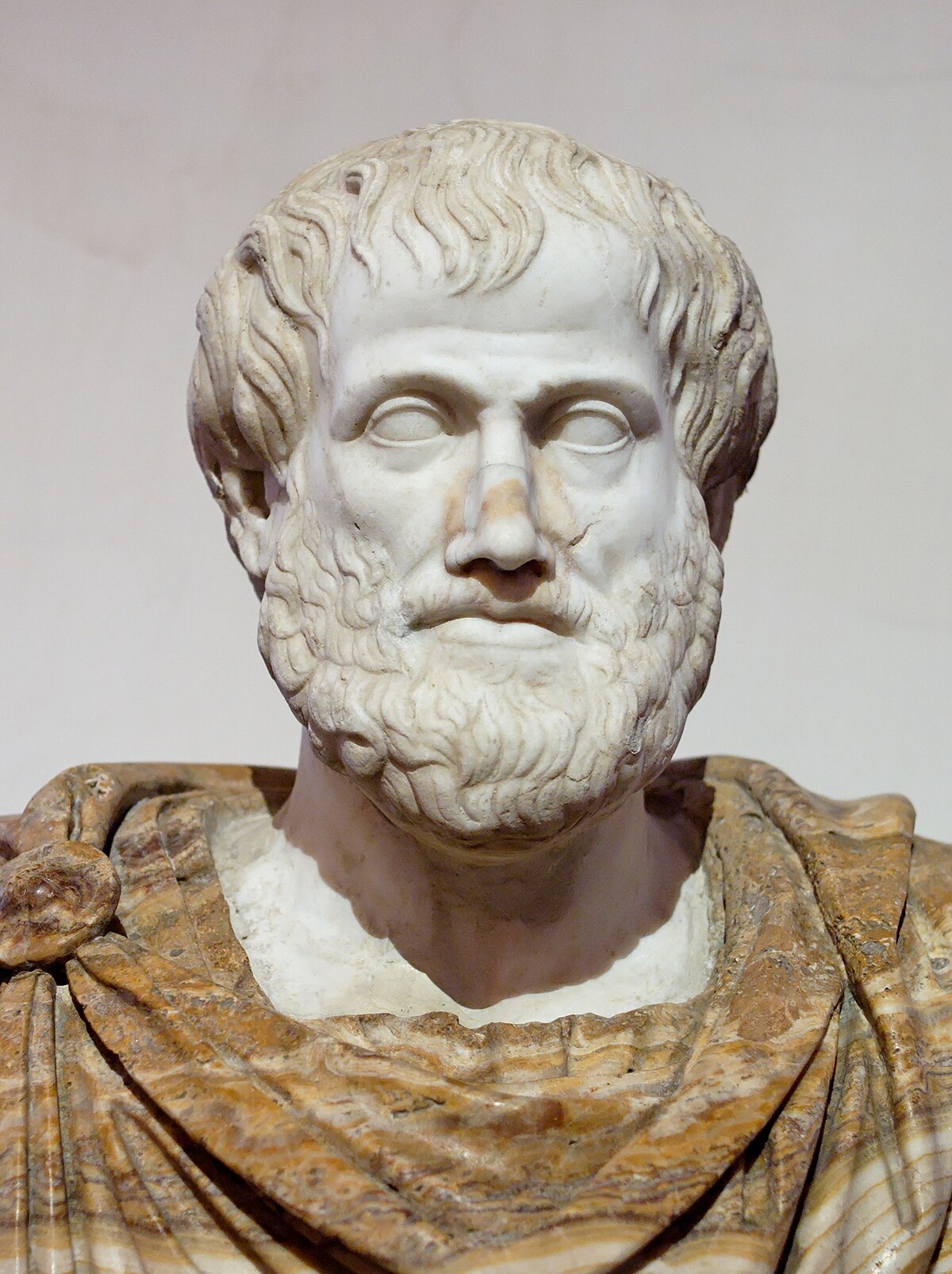
Centuries before Darwin, Aristotle debated whether bodily parts like teeth arose by accidental survival of useful forms before rejecting that view. After Lysippos, Public domain, via Wikimedia Commons
Darwin and Alfred Russel Wallace first published the concept together in 1858, followed by Darwin's 1859 book On the Origin of Species. Because genetics was not yet understood in the 19th century, natural selection was later combined with classical genetics in the mid-20th century to form the modern synthesis.
Although random genetic drift can slowly alter genotypes over time, natural selection remains the primary explanation for adaptive evolution.
Test yourself
What drives the mechanism of natural selection over generations?
Differential survival and reproduction. Natural selection works entirely through differential survival and reproduction, not through conscious choice or striving by individual organisms.
How does natural selection shape a population in a changing environment?
It filters out traits that reduce fitness. Natural selection operates as a blind filter that eliminates poorly suited traits rather than intentionally designing solutions.
What does natural selection actually do to a species over time?
Removes the unfit. Natural selection has no creative vision; it is purely a subtractive filter that removes those who fail to survive.
Play the lesson in edgi and the card is yours. It lands on your Map next to the ideas it connects to, and turns from matte to foil to gold as you learn more around it.
How is natural selection different from artificial selection?
Artificial selection is intentional breeding driven by humans who choose specific desirable traits in plants and animals. Natural selection is entirely unintentional, driven purely by differences in survival and reproduction within an environment.
Did Charles Darwin discover natural selection alone?
Darwin developed the theory alongside Alfred Russel Wallace. The two naturalists first presented their papers on the concept jointly in 1858 before Darwin published his detailed book the following year.
What is the difference between microevolution and macroevolution?
Microevolution occurs when traits change within a population due to selective pressures in a specific local niche. Macroevolution describes trait shifts that take place across a broader environment, which can eventually lead to the formation of new species.