The block universe is the view in physics and philosophy that past, present, and future all exist simultaneously as an unchanging four-dimensional structure. Instead of time flowing forward, every moment is permanently laid out like locations on a map. This means the future is already real and set, while the feeling of time passing is an illusion of human perception.
By the edgi team We find the most surprising true thing about an idea and build a 60-second lesson around it.
We feel like we are moving through time, like a movie projector clicking from frame to frame. But in a Block Universe, that feeling is just a trick of perception.
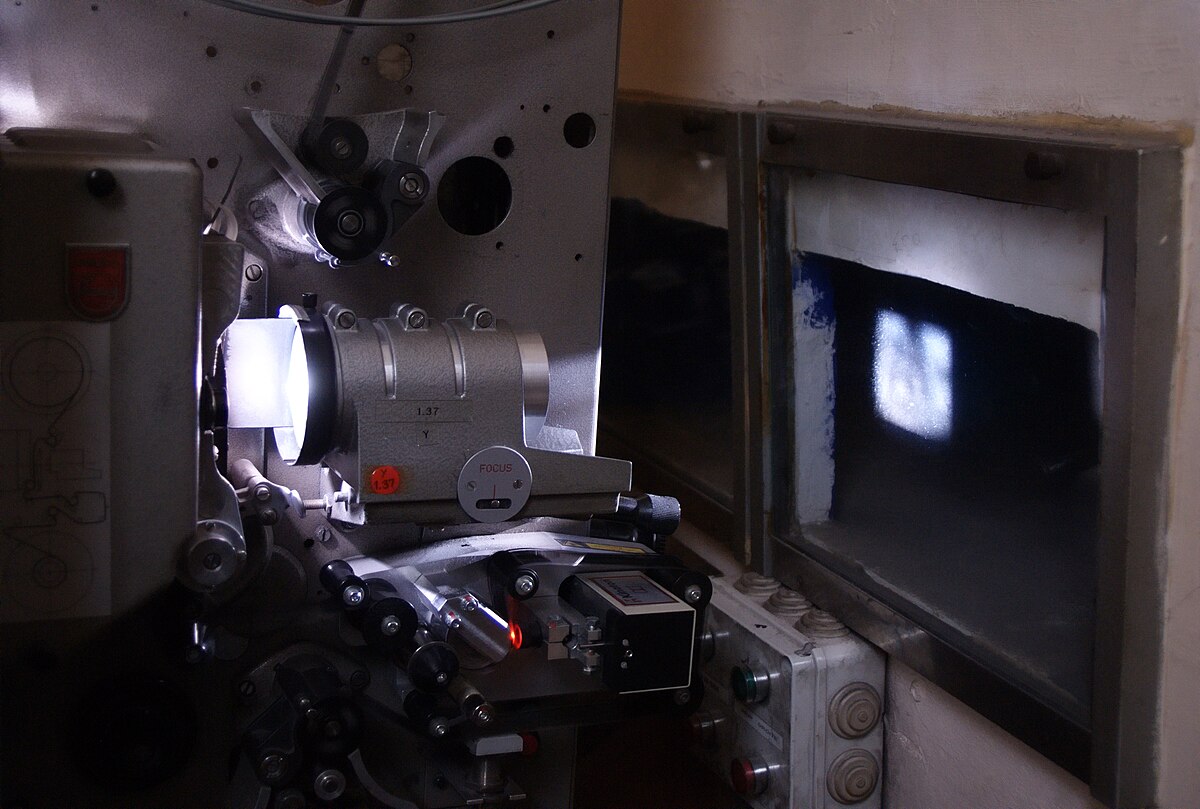
A 35mm movie projector in operation, with a bright light beam emanating from the lens and projecting an image onto a small screen or window. This photo was taken by Roman Bonnefoy ( Romanceor [parlons-en]). Feel free to use my pictures, but please credit me as , CC BY-SA 3.0, via Wikimedia Commons
Think of your life as a finished book. You are currently reading page 50, but page 200 is already written and sitting on the shelf.
A solid map
In 1908, mathematician Hermann Minkowski realized that space and time aren't separate things. He combined them into a single, four-dimensional fabric called spacetime.
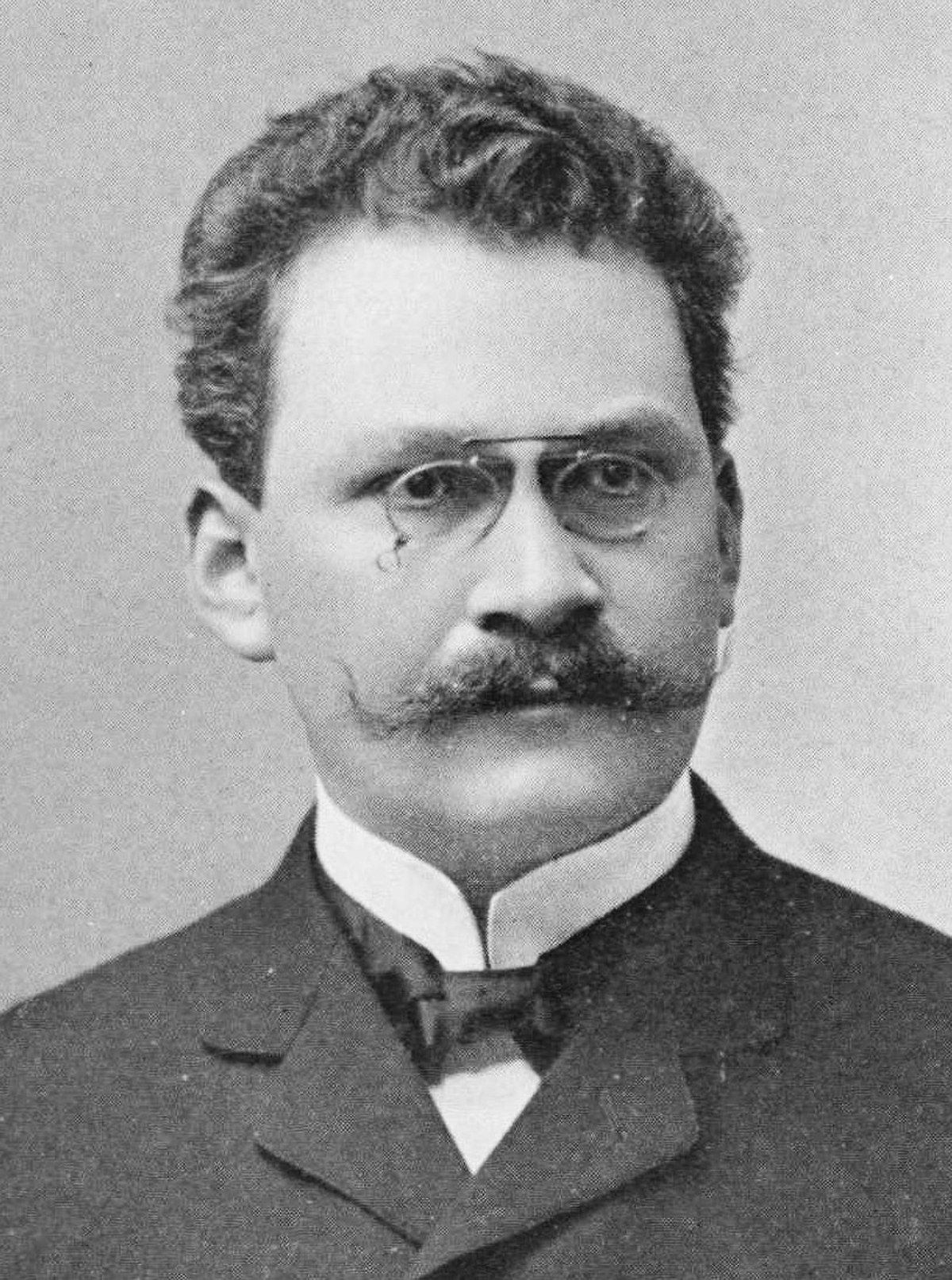
Black and white portrait of Hermann Minkowski, a German mathematician and physicist. Hermann Minkowski, Public domain, via Wikimedia Commons
If you could step outside the universe, you wouldn't see time passing. You would see a solid block of events, from the Big Bang to the end of time.
Einstein's reluctance
Even Albert Einstein initially hated the idea. He called Minkowski's math "superfluous learnedness." But he eventually realized it was the only way his theory of relativity could actually work.
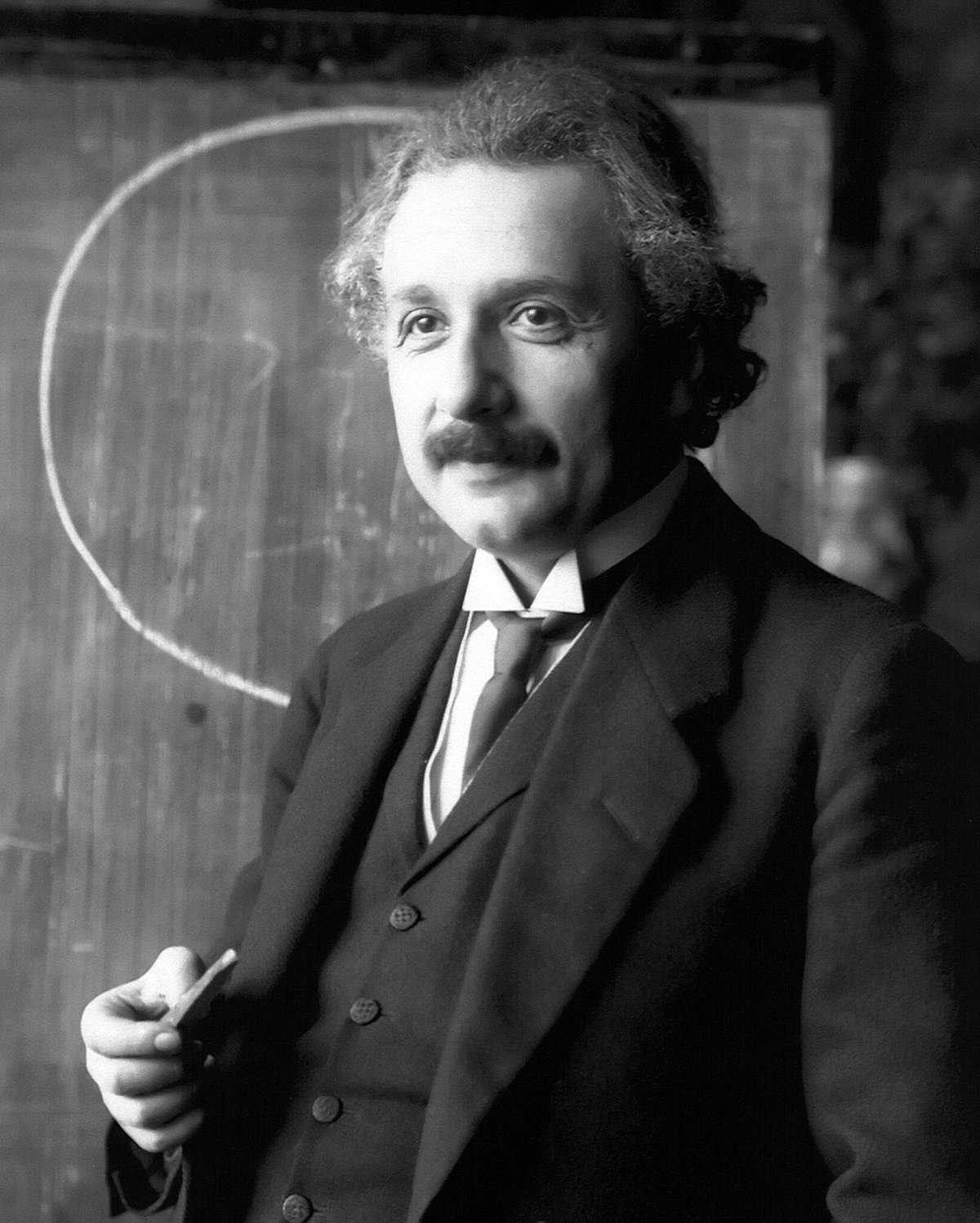
Black and white portrait of Albert Einstein in 1921, holding a piece of chalk in front of a blackboard with a circle drawn on it. Ferdinand Schmutzer, Public domain, via Wikimedia Commons
If time is a solid block, the future is as fixed as the past. This implies a strict determinism where tomorrow is already "there," waiting for you to walk into it.
How special relativity shapes the block universe
In 1908, mathematician Hermann Minkowski merged space and time into a single four-dimensional fabric called spacetime. Albert Einstein initially dismissed this mathematics as superfluous learnedness, but he soon recognized it was necessary for his theory of relativity to work.
The bar and ring paradox shows that observers in different frames of reference cannot agree on whether events happen simultaneously. PAR, Public domain, via Wikimedia Commons
Special relativity removes the idea of a universal present moment through the relativity of simultaneity. Observers moving at different speeds or in different reference frames measure events differently, meaning two events that appear simultaneous to one observer happen at separate times to another. Because physics provides no reason to favor one observer's reference frame over another, science cannot identify an absolute present across the universe.
In 1967, philosopher Hilary Putnam concluded that special relativity directly implies that any future event is already real. Many philosophers of science, including Dean Rickles, view relativity as incompatible with presentism, the competing theory that only the current moment exists.
Block universe vs presentism
Classical philosophy relies on presentism, which argues that the past is gone, the future is partly undefined, and only the changing present is real. The block universe, also known as eternalism or four-dimensionalism, takes the opposite position: different points in time are just as real as different places in space.
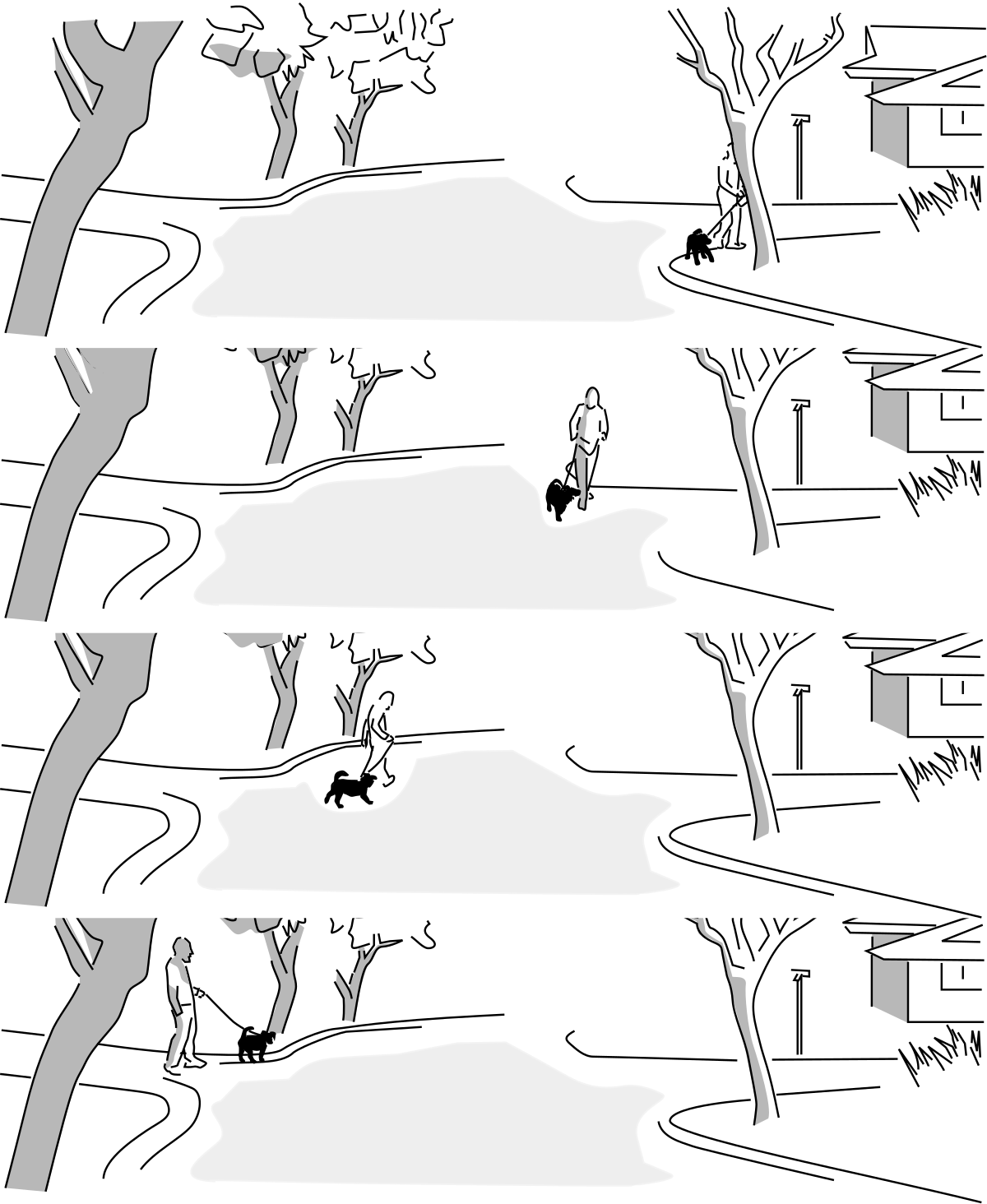
An eternalist view treats each point in time as an unchanging slice of a larger four-dimensional structure. Benjamin Crowell, CC BY-SA 4.0, via Wikimedia Commons
In a block universe, events inside an observer's causal past or causal future remain ordered across all frames of reference because they sit within a light cone. Events outside that cone fall into an elsewhere region that lacks any universal past, present, or future.
Historical roots of timeless reality
Debates over an unchanging timeline date back to the pre-Socratic Greek philosopher Parmenides of Elea, who argued that existence is timeless and change is impossible. Classical fatalism similarly held that all statements about the future are already true or false, making future events unavoidable.
Medieval thinkers also explored these concepts when describing divine perception. Augustine of Hippo and Thomas Aquinas argued that God exists outside of time, which exists only inside the created universe. On this view, God views the universe as a complete whole, akin to a block universe, while mortals experience it as sequential moments.
Test yourself
An author finishes writing a novel. In what sense does the final chapter exist before it is read?
It is fully written and static on the page. Just as a printed book contains every chapter at once, a block universe treats every moment of time as already fully written and fixed.
If space and time form a single solid block, what does 'moving forward' actually mean?
A shift in subjective awareness. You aren't constructing reality as you walk through it; your consciousness is simply traversing a landscape that is already entirely there.
Why did Albert Einstein initially resist the idea of a four-dimensional spacetime block?
It clashed with intuitive free will. Einstein hated the philosophical implications of a fully fixed future, even though his own equations ultimately required it to work.
Play the lesson in edgi and the card is yours. It lands on your Map next to the ideas it connects to, and turns from matte to foil to gold as you learn more around it.
The growing block universe is an alternative view of time where the past and present are real, but the future is not. In this model, the four-dimensional block grows as new present moments come into existence.
How did J. M. E. McTaggart argue against time?
In The Unreality of Time, J. M. E. McTaggart argued that time is an illusion because descriptions of events in absolute time are self-contradictory. He claimed that an event cannot logically possess incompatible properties such as being both in the past and in the future.
Can presentism survive under the rules of relativity?
Philosopher Christian Wüthrich argues that defending presentism requires rejecting either empiricism or the theory of relativity. However, philosophers like Dean Zimmerman argue for a single privileged reference frame whose measurements are uniquely true, even if physics cannot detect it.