Determinism is the philosophical view that every event is the inevitable result of preceding events and the laws of nature. It means the universe can only unfold in one exact way, leaving no room for alternative outcomes. Because your thoughts and choices are part of this causal chain, it challenges the idea that you could ever act differently than you do.
By the edgi team We find the most surprising true thing about an idea and build a 60-second lesson around it.
Imagine an intellect so powerful it knows the precise position and speed of every atom in the universe. Pierre-Simon Laplace proposed this hypothetical intelligence in 1814.
Portrait of French scholar Pierre-Simon de Laplace (1749–1827), depicted in formal attire with a blue sash and a medal on his chest. James Posselwhite, Public domain, via Wikimedia Commons
If this entity knew the laws of nature, it could calculate the entire future with perfect, 100% certainty.
The domino universe
Determinism suggests the universe is a relentless chain reaction. Your choice to read this sentence isn't a spontaneous act, it is the inevitable result of a causal chain stretching back to the Big Bang.
Numerous dominoes, some white with colored dots and others solid white, are arranged in a curved pattern on a table, with some already toppled. Enoch Lai at English Wikipedia, CC BY-SA 3.0, via Wikimedia Commons
In this view, the future is already locked in, just waiting for time to catch up to the script.
The problem of agency
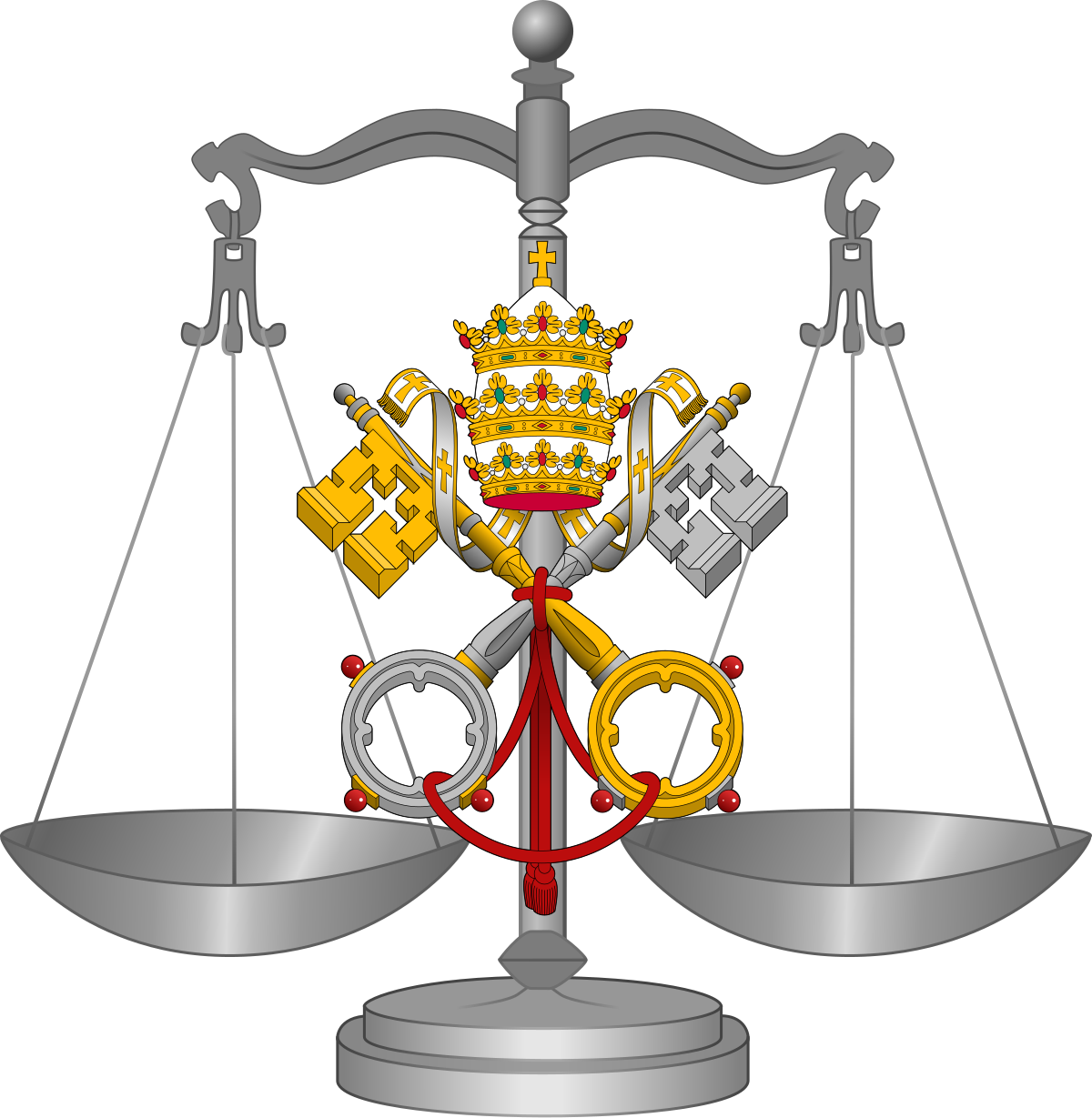
This view puts Free Will in a tight spot. If you could not have chosen otherwise, does it make sense to talk about moral responsibility?
Illustration of a scale of justice with the Papal Tiara and Keys of Saint Peter at its center. Ktr101, CC BY-SA 3.0, via Wikimedia Commons
Philosophers call this the incompatibilist trap, where our deep sense of agency clashes with the rigid, predictable gears of physics.
How causal determinism works
Causal determinism holds that there is an unbroken chain of prior occurrences stretching back to the origin of the universe. In this framework, nothing is uncaused or self-caused. Every state of the physical world arises entirely from the conditions that came immediately before it.
Philosophical theories of determinism describe reality as following a single, predetermined path through time. Simon Wa, CC BY 2.0, via Wikimedia Commons
Your own choices still matter within this chain, but they are links rather than independent starting points. Even though human deliberations, motives, and actions produce subsequent events, those internal deliberations are themselves caused by antecedent conditions.
Nomological determinism, also called physical determinism, applies this logic strictly through rigid natural laws. As Pierre-Simon Laplace proposed, if an entity knew the exact positions and speeds of all particles in the universe at one moment, it could calculate every past and future state with absolute accuracy.
Key varieties of determinism
Philosophers categorize determinism based on what causes the chain and how far it extends. Necessitarianism takes the strictest stance, claiming that only one possible world can exist and rejecting all mere possibility. Ancient thinkers like Leucippus argued that nothing occurs at random, meaning everything happens by necessity.
Predeterminism suggests that all events are fixed in advance, creating an established sequence that human actions cannot alter. When applied to human traits, this takes the form of biological or genetic determinism, where genes fix behaviors, beliefs, and desires.
Other traditions look to different ultimate causes. Theological determinism attributes all outcomes to divine omniscience, fatalism points to fate, and Eastern philosophical traditions frame causation through karma and Buddhist dependent origination.
Test yourself
In determinism, what makes an event happen?
Prior conditions and laws fix the outcome. Determinism says each event follows from prior conditions and laws, leaving only one possible way events can unfold.
Under determinism, why does someone choose to take an umbrella?
Prior causes lead them to take it. The choice may feel open, but determinism treats it as the outcome of prior causes, such as the forecast and the person's beliefs.
Does philosophical determinism imply that human choices are independent of physical laws?
No. Determinism treats human decisions as links in an unbroken causal chain of physical events, meaning they follow natural laws rather than escaping them.
Play the lesson in edgi and the card is yours. It lands on your Map next to the ideas it connects to, and turns from matte to foil to gold as you learn more around it.
What is the difference between compatibilism and incompatibilism?
Compatibilism is the view that determinism and free will can coexist logically. Incompatibilism argues that the two cannot coexist, meaning that if the universe is fully determined, free will cannot be real.
Does determinism mean humans can predict the future perfectly?
No, determinism rarely requires that perfect human prediction be practically possible. It only asserts that the future is theoretically fixed by preceding causes, not that observers possess the data or processing power to calculate it.
What is the opposite of determinism?
The antonym of determinism is indeterminism. Indeterminists argue that some events occur without deterministic causes, allowing for truly open or probabilistic outcomes.