Caffeine is a central nervous system stimulant, a chemical that speeds up messaging between your brain and body. Plants evolved it as a defense to poison insects, but humans consume it to stay awake and sharp. It works not by giving you real energy, but by blocking the chemical receptors that tell your brain you are tired.
By the edgi team We find the most surprising true thing about an idea and build a 60-second lesson around it.
Caffeine is not a gift from nature to humans; it is a defensive chemical evolved by plants like the Coffea shrub. It acts as a natural pesticide, paralyzing or killing insects that try to eat the plant's leaves.
Coffea arabica shrubs bearing clusters of dark red coffee cherries among dense green foliage. Forest & Kim Starr, CC BY 3.0, via Wikimedia Commons
Humans simply hijacked this toxin for its side effect: stimulation.
How it tricks you
Your brain naturally produces a molecule called adenosine throughout the day, which binds to receptors to tell you it's time to sleep. Caffeine is an adenosine receptor antagonist. It plugs those receptors, preventing the "sleep" signal from docking.
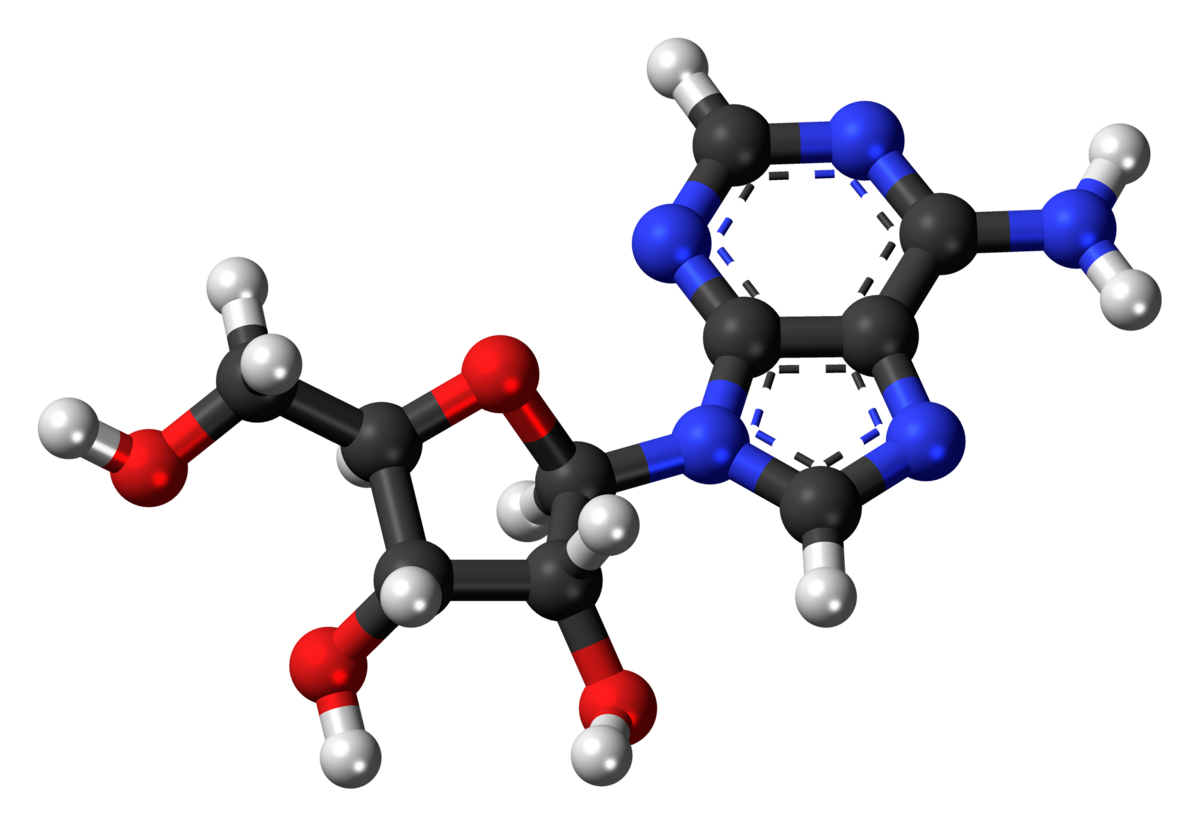
3D ball-and-stick model of an adenosine molecule, showing carbon atoms in black, oxygen in red, nitrogen in blue, and hydrogen in white. Jynto (talk), CC0, via Wikimedia Commons
You aren't actually less tired; you are just blind to the signal that says you are.
The enlightenment fuel
Before coffee, the standard European breakfast was beer. It was safer than water and dulled the senses. When coffee arrived in the 17th century, the "coffee house" became the internet of the Enlightenment.
A ceramic tankard with a yellow body and a pewter lid is shown from an angled perspective. Kriplozoik, CC BY-SA 3.0, via Wikimedia Commons
Suddenly, people were drinking a stimulant that sharpened the mind, fueling a revolution in science and philosophy.
How caffeine blocks drowsiness
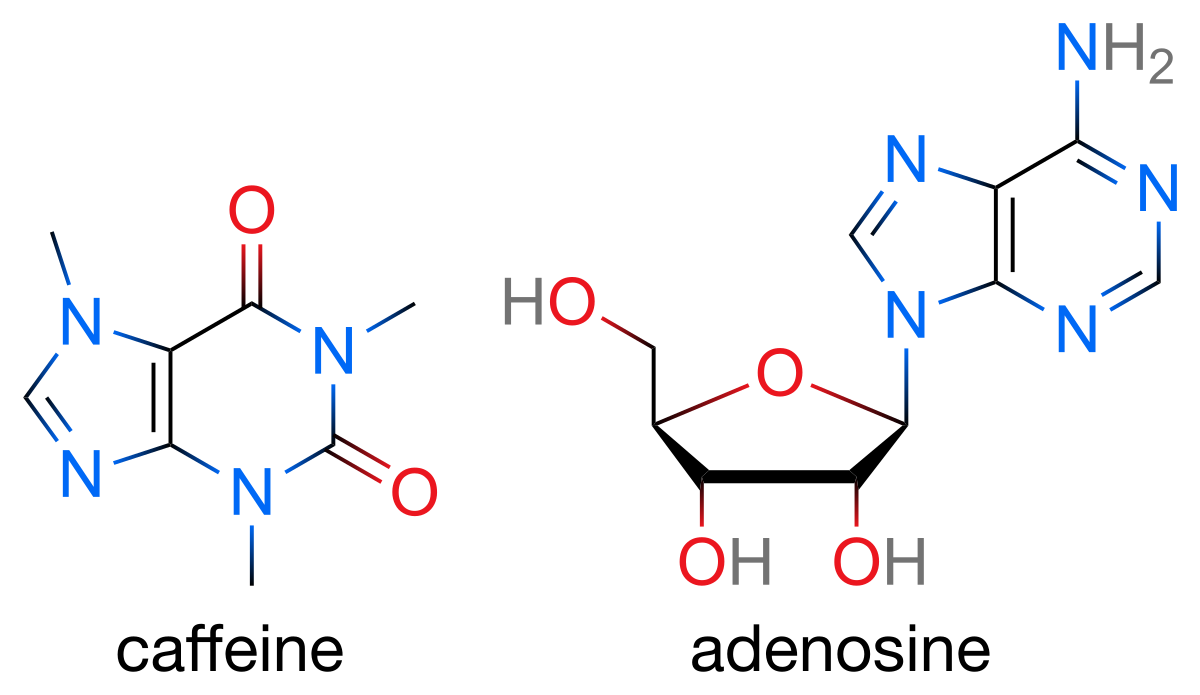
Caffeine does not create new energy in the brain. Its chemical shape mimics adenosine, the compound that builds up throughout the day to trigger sleepiness. Because the two molecules look so alike, caffeine slips into adenosine receptors and blocks them, inhibiting their normal depressant effects and boosting acetylcholine release.
Caffeine docks into adenosine receptors across brain cells, blocking real adenosine molecules from triggering sleep signals. No machine-readable author provided. Icey assumed (based on copyright claims)., Public domain, via Wikimedia Commons
Daily consumption changes how your brain operates. To compensate for blocked signals, the brain upregulates and creates more adenosine receptors. This builds tolerance and lowers your baseline arousal, meaning habitual users require caffeine just to reach normal levels of attention.
Medical and cognitive uses
Beyond coffee cups, caffeine acts as a legitimate medicine. Caffeine citrate is on the World Health Organization Model List of Essential Medicines to treat apnea of prematurity and prevent bronchopulmonary dysplasia in premature infants. Adding caffeine to common painkillers like ibuprofen also improves their ability to relieve pain.
Purified caffeine forms bitter, white fibrous crystals that act as the active compound in both beverages and prescription medicines. Zephyris, CC BY-SA 3.0, via Wikimedia Commons
At typical doses, caffeine improves reaction time, motor coordination, and concentration within about an hour. These effects generally subside after three or four hours, depending on individual body size and tolerance.
Test yourself
Caffeine makes you feel alert after poor sleep. What has changed?
Sleepiness is masked; fatigue remains. Caffeine blocks adenosine receptors, hiding the sleepiness signal without removing the fatigue that built up.
Caffeine blocks adenosine receptors. What might happen as it wears off?
Sleepiness may become more noticeable. When caffeine's blocking effect fades, adenosine can again signal sleepiness; the underlying fatigue was never erased.
How does caffeine keep the brain alert?
It blocks adenosine from signaling sleepiness. Caffeine blocks adenosine receptors, masking the sleepiness signal rather than removing fatigue or supplying energy.
Play the lesson in edgi and the card is yours. It lands on your Map next to the ideas it connects to, and turns from matte to foil to gold as you learn more around it.
Stopping caffeine after regular daily intake causes mild drug dependence withdrawal. Common symptoms include headaches, sleepiness, and irritability as the brain adjusts to unblocked adenosine receptors.
How much caffeine is dangerous?
Lethal doses for an adult exceed 10 grams per day, which would take roughly 50 to 100 cups of ordinary coffee to reach. Concentrated powdered caffeine is far more dangerous and can be fatal in tablespoon-sized amounts.