DecaffeinationRemoving stimulants while keeping flavor
Decaffeination is the process of removing caffeine from coffee beans, tea leaves, cocoa, and other raw plant materials before they are roasted or processed. It relies on chemical solvents, water, or pressurized carbon dioxide to draw out the caffeine molecules while leaving the oils and flavor compounds behind. In the United States, decaffeinated coffee must have at least 97% of its original caffeine removed.
By the edgi team We find the most surprising true thing about an idea and build a 60-second lesson around it.
In 1903, German coffee merchant Ludwig Roselius received a shipment of beans that had been soaked in seawater during transit. Expecting them to be ruined, he roasted them anyway and discovered they had lost their caffeine but kept their flavor.
He realized the salt had acted as a solvent, leaching the stimulant out of the beans. It was the birth of the decaf industry.
The flavor heist
Removing caffeine is a delicate heist. You have to extract the caffeine molecule without stripping away the hundreds of oils that give coffee its aroma. If you just wash the beans, you lose the flavor along with the buzz.
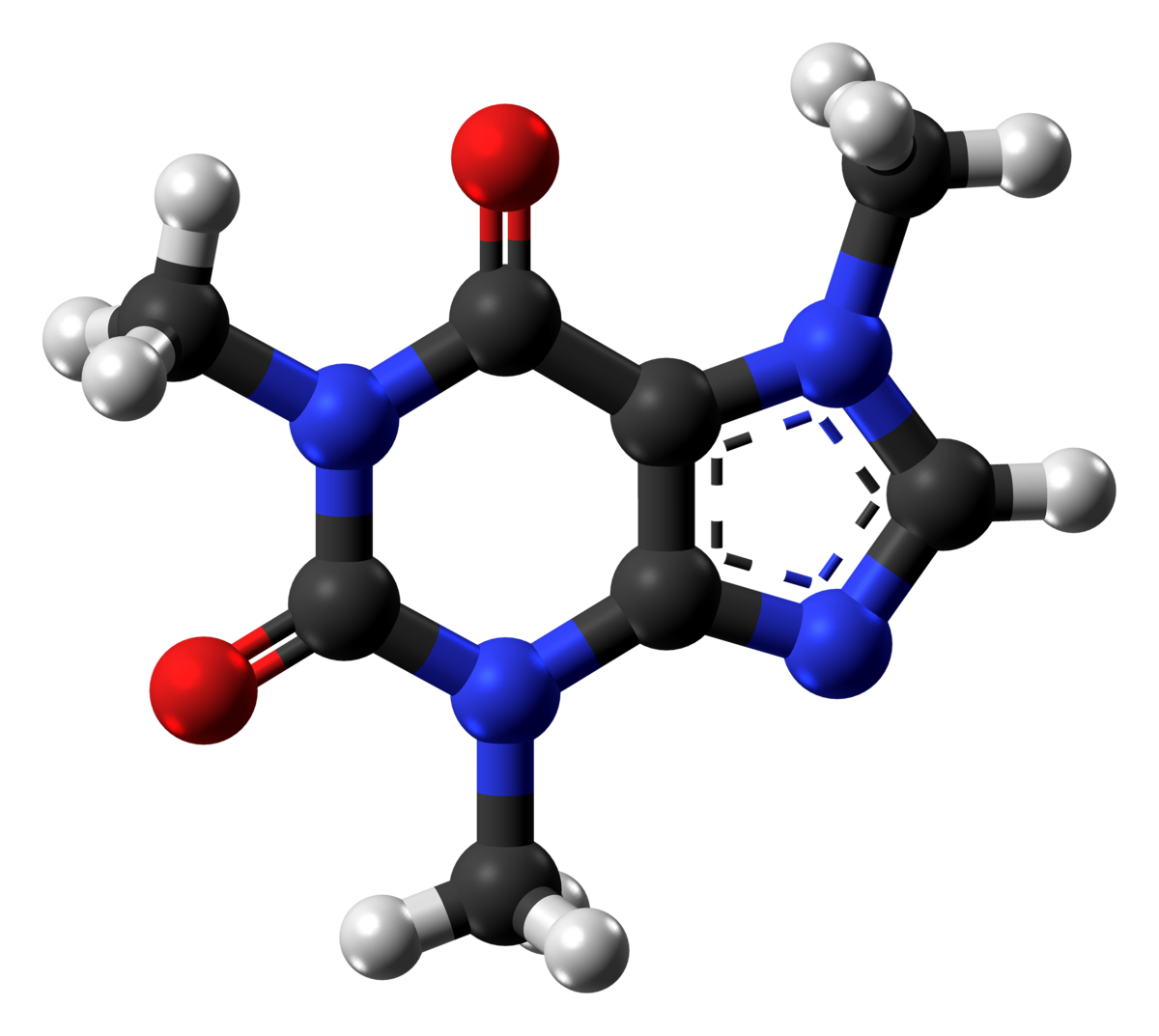
A ball-and-stick model of the caffeine molecule, showing carbon atoms in black, oxygen in red, nitrogen in blue, and hydrogen in white. Jynto (more from this user), CC0, via Wikimedia Commons
By FDA standards, the final product must lose at least 97% of its caffeine to be legally labeled as decaf.
Liquid gas
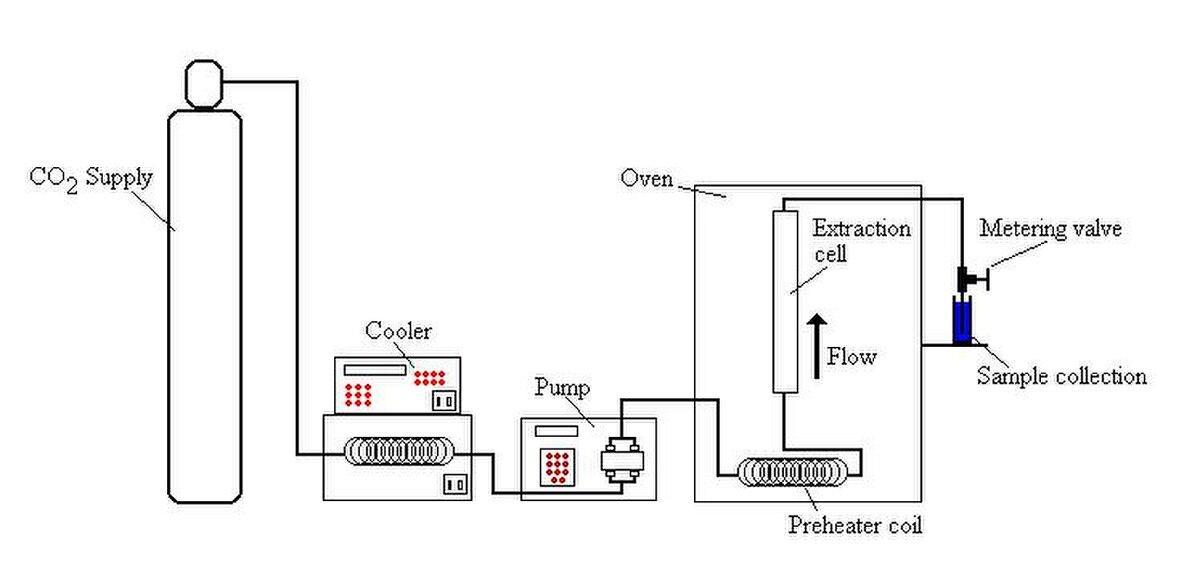
Today, the most precise method uses supercritical fluid extraction. Scientists squeeze carbon dioxide until it becomes a supercritical fluid, a state where it acts like both a gas and a liquid.
Schematic diagram of a Supercritical Fluid Extraction (SFE) apparatus, labeled as "Figure 1". Stainless316 at English Wikipedia, Public domain, via Wikimedia Commons
This "liquid gas" penetrates the bean and acts like a magnet for caffeine, leaving the delicate, flavorful oils untouched.
Direct and indirect solvent methods
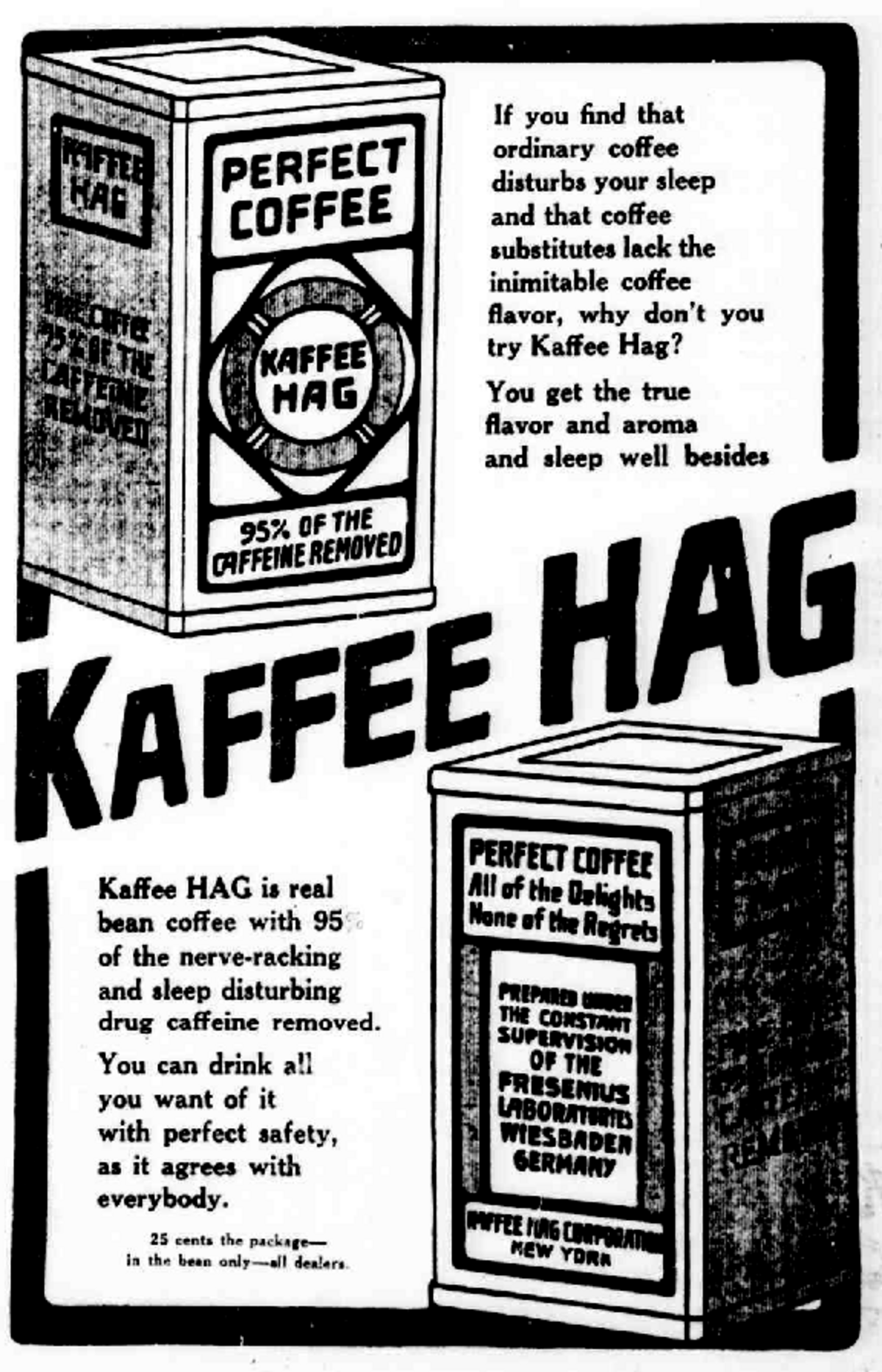
In the direct solvent method, unroasted green coffee beans are steamed and then rinsed repeatedly with chemical solvents like dichloromethane or ethyl acetate. The solvent bonds with the caffeine and strips it away across 8 to 12 cycles. Ludwig Roselius originally patented this concept in 1906 using benzene, marketing the resulting product as Kaffee HAG and Sanka. Benzene was later phased out due to its health risks as a carcinogen.
This 1914 newspaper advertisement shows Kaffee HAG, the commercial decaf brand created after Ludwig Roselius patented the first solvent decaffeination process. Kaffee HAG, Public domain, via Wikimedia Commons
The indirect solvent method avoids washing the raw beans with chemicals directly. Instead, beans soak in hot water for several hours until the caffeine and flavor compounds dissolve into the liquid. Processors separate the beans from the water, treat the water with dichloromethane or ethyl acetate to bind and evaporate the caffeine, and reuse that flavor-saturated water for new batches.
Water and oil extraction methods
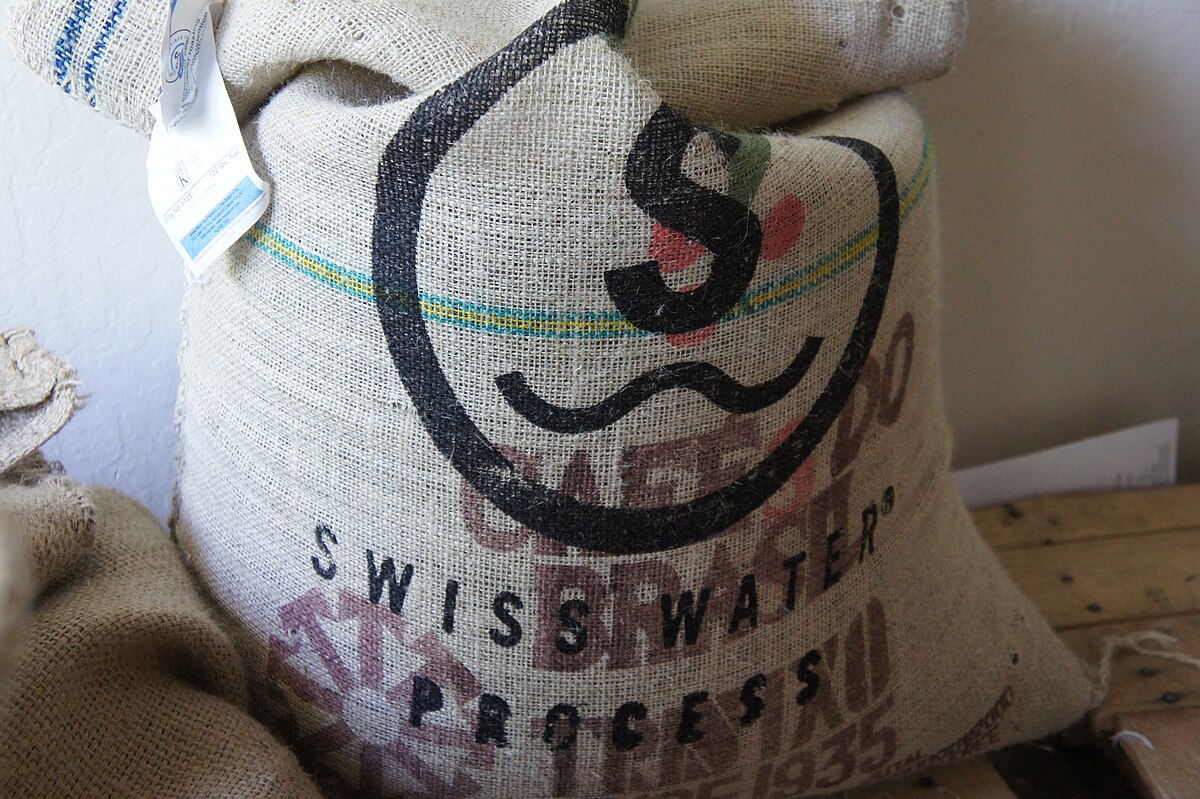
The Swiss Water process removes caffeine without any synthetic organic solvents. Developed in Switzerland in 1933 and commercialized in 1980, it relies on green coffee extract, a solution saturated with all water-soluble coffee elements except caffeine. When green beans enter this liquid, the concentration gradient forces caffeine molecules out of the beans while all other flavor compounds stay locked inside. Activated charcoal filters then strip the caffeine out of the extract so it can be reused in a continuous 8 to 10 hour cycle.
Green coffee beans like these are decaffeinated prior to roasting using the chemical-free Swiss Water process. Jkafader, CC BY-SA 3.0, via Wikimedia Commons
Another solvent-free technique uses triglycerides extracted from spent coffee grounds. Green coffee beans are soaked in hot water to bring caffeine to their surface, then submerged in high-temperature coffee oils. The triglycerides in the oil absorb caffeine without stripping out the beans' aromatic elements.
Supercritical carbon dioxide extraction
Developed by Kurt Zosel at the Max Planck Institute, supercritical fluid extraction uses carbon dioxide heated and pressurized beyond its critical point. In this state, carbon dioxide acts like both a gas and a liquid, allowing it to penetrate deep inside the green coffee beans. It pulls out caffeine with high precision without washing away the bean's delicate oils.
Test yourself
For decaffeination, why can supercritical CO₂ preserve coffee flavor?
It extracts caffeine while leaving flavor oils. Supercritical CO₂ penetrates the beans and selectively extracts caffeine, leaving delicate flavor oils largely untouched.
In decaffeination, what must a successful process do?
Remove caffeine while preserving flavor oils. Decaffeination aims to extract caffeine without stripping the oils that give coffee its aroma and flavor.
For decaffeination, why can supercritical CO₂ preserve coffee flavor?
It extracts caffeine while leaving flavor oils. Supercritical CO₂ penetrates the beans and selectively extracts caffeine, leaving delicate flavor oils largely untouched.
Play the lesson in edgi and the card is yours. It lands on your Map next to the ideas it connects to, and turns from matte to foil to gold as you learn more around it.
German chemist Friedlieb Ferdinand Runge isolated caffeine in 1820 at the request of the poet Goethe. Runge did not study caffeine's chemistry extensively or attempt to produce commercial decaffeinated coffee.
Is decaf coffee 100% caffeine-free?
No, decaf coffee still contains residual caffeine. While United States regulations require a 97% reduction and European Union rules require coffee to be 99.9% caffeine-free by mass, a 2006 study found commercial decaf drinks typically contain 1% to 2% of the original caffeine content, and sometimes up to 20%.
At what stage of production are coffee beans decaffeinated?
Decaffeination always takes place before roasting while the beans are still raw and green. Performing the extraction on unroasted beans keeps the flavor precursors intact before heat develops the final coffee aroma.