Cold brew coffeeWhy cold water pulls more caffeine
Cold brew coffee is a beverage made by steeping coarse coffee grounds in cool or room-temperature water for 12 to 24 hours. Because it relies on time rather than heat to extract flavor, it skips the chemical reactions that release bitter, acidic compounds. Brewing for an entire day also extracts more caffeine by volume than a standard hot brew.
By the edgi team We find the most surprising true thing about an idea and build a 60-second lesson around it.
In the 17th century, Dutch traders needed a way to make coffee on long sea voyages without the fire risk of an open flame. They found they could steep grounds in cold water for hours, creating a stable, concentrated syrup.
It was safe, easy to store in humid cargo holds, and did not spoil as quickly as hot, burnt coffee.
The chemistry of time
Hot water is a blunt instrument. It violently extracts oils and tannins from beans, which creates that familiar, sharp bitterness. Cold brew is a gentle, slow extraction. Because it never sees heat, it skips the chemical reactions that release those harsh, acidic compounds.
The result is a concentrate that is naturally sweeter and less acidic.
Not just iced coffee
Do not confuse the two. Iced coffee is simply hot-brewed coffee poured over ice, which dilutes the flavor and keeps the sharp acidity. Cold brew is a process, not a temperature. It is a slow, patient soak that prioritizes time over energy.
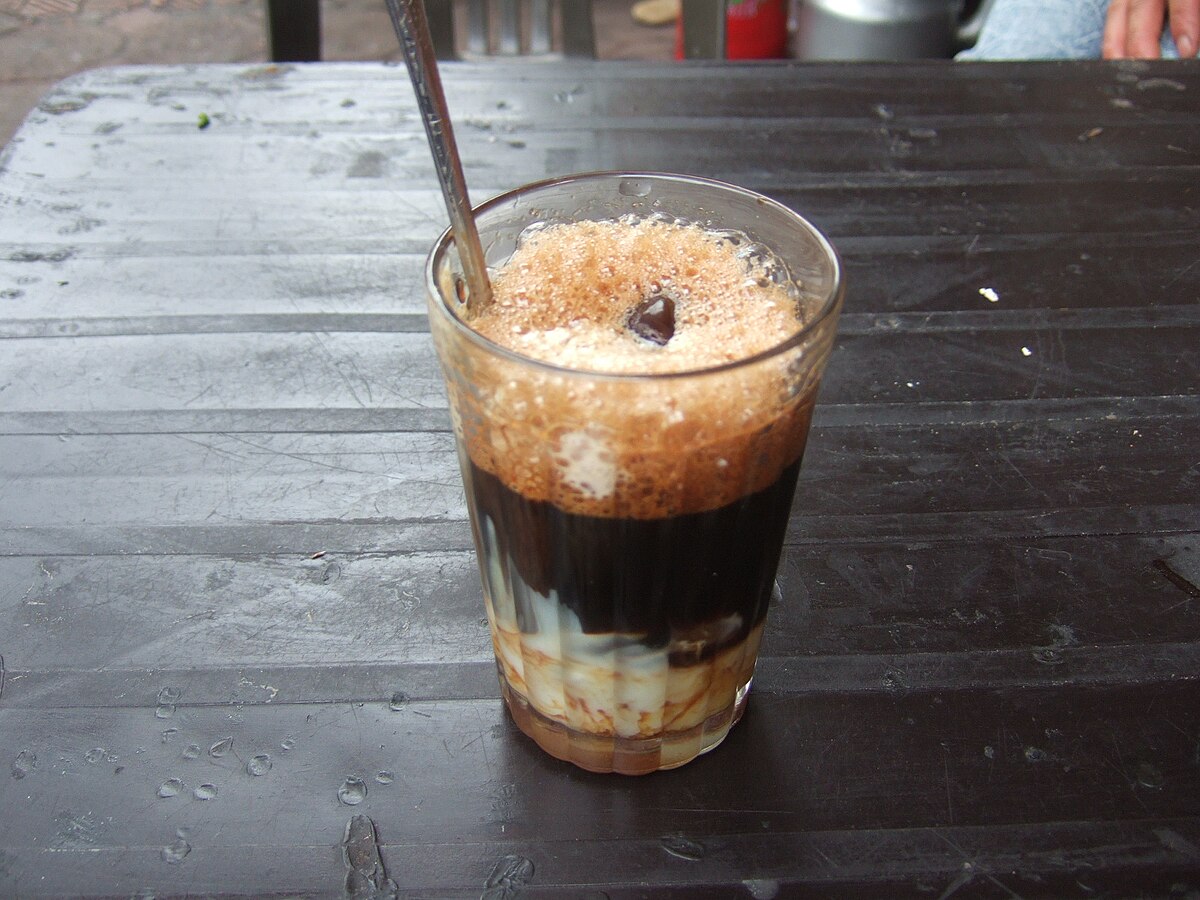
A glass of Vietnamese coffee (Cà Phê Sữa Đá) served with condensed milk, showing distinct layers of dark coffee, ice, and white condensed milk at the bottom. Clarin, CC BY 2.5, via Wikimedia Commons
How cold water extraction works
Cold brew relies on cold water extraction rather than heat. Coarse-ground beans sit in room-temperature or chilled water for 12 to 24 hours before being strained through paper filters, felt, or fine metal sieves. The resulting liquid is a concentrate that people drink over ice, mix with milk or water, or occasionally serve hot.
Temperature changes what dissolves out of the bean. Heat rapidly pulls out oils and fatty acids, which give hot coffee its sharp bite. Cold water leaves many of those compounds behind, giving cold brew a lower titratable acid concentration. A 24-hour cold steep extracts more caffeine per equal volume than hot water brewing for six minutes at 98 °C (208 °F).
From Kyoto drip to nitro taps
In East Asia, cold brewing developed into slow-drip coffee, also known as Kyoto-style or Dutch coffee. This method slowly drips room-temperature water through coffee grounds over many hours rather than submerging them in a container.
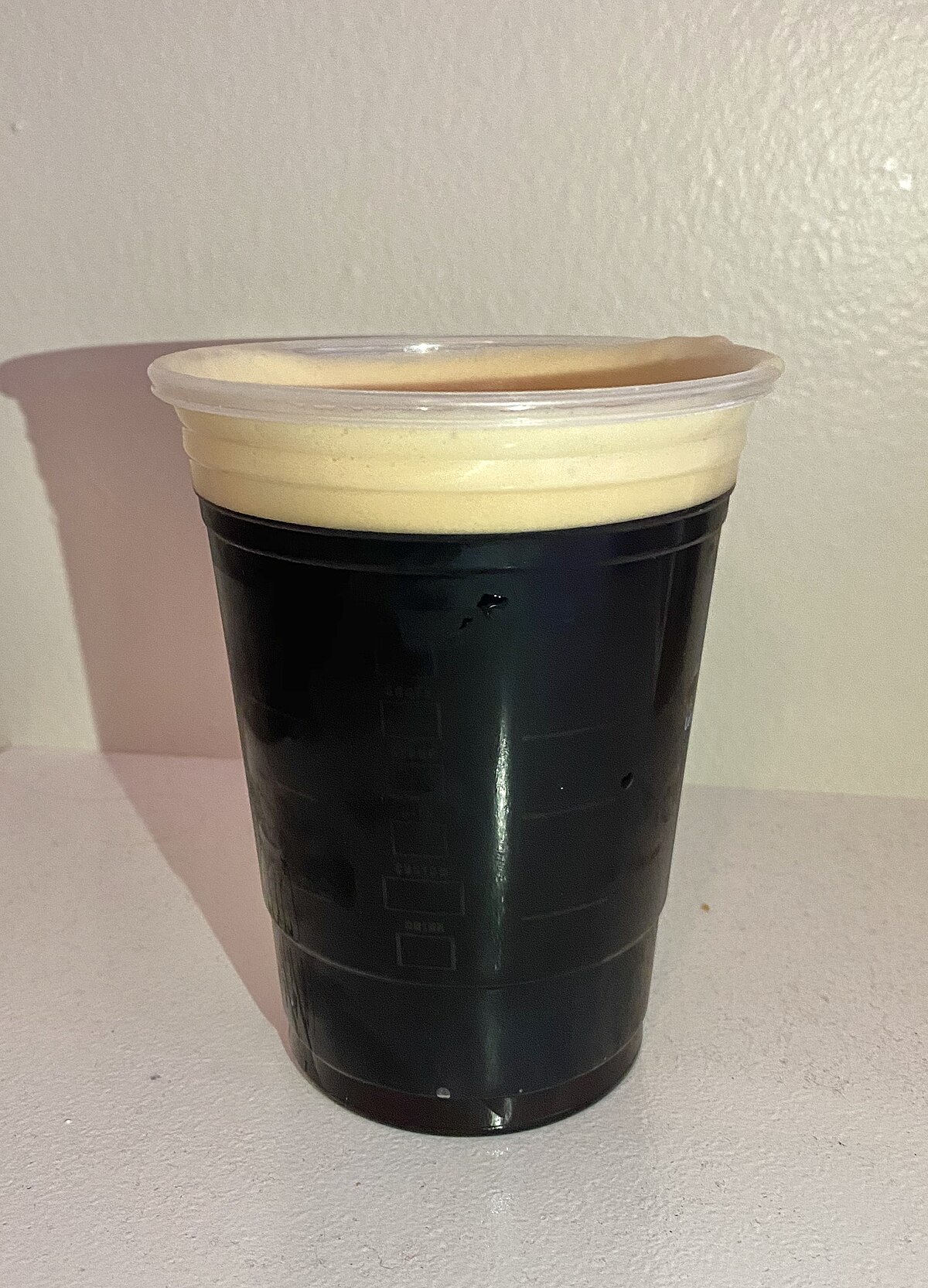
Nitro cold brew poured from a tap forms a dense foam head without dairy or ice. Ems1960, CC BY-SA 4.0, via Wikimedia Commons
In the early 2010s, coffee shops created nitro cold brew by infusing the cold liquid with nitrogen gas using beer tap systems. Nitrogen bubbles produce a rich, creamy head of foam similar to a draft stout. Servers pour nitro cold brew chilled without ice to protect the foam layer. By 2015, companies packaged it in pressurized cans using nitrogen capsules, and major chains later added it across thousands of locations.
Test yourself
Why does cold brew coffee taste naturally sweeter and less acidic than hot-brewed coffee?
Skipping heat avoids harsh oils and tannins.. Hot water violently extracts tannins and oils that cause sharpness, whereas cold water gently bypasses those chemical reactions.
How does cold brew coffee differ fundamentally from traditional hot-brewed coffee?
It relies on time instead of heat.. Cold brew substitutes thermal energy with extended steeping time to extract coffee compounds without bitterness.
What was the original practical advantage of cold brew coffee for Dutch traders?
It eliminated fire hazards on wooden ships.. Dutch traders steeped grounds in cold water to make coffee on long sea voyages without risking open flames on ships.
Play the lesson in edgi and the card is yours. It lands on your Map next to the ideas it connects to, and turns from matte to foil to gold as you learn more around it.
What is the difference between cold brew and iced coffee?
Iced coffee is hot-brewed coffee that is cooled down and poured over ice, which retains hot extraction's high acidity and bitterness. Cold brew never touches hot water during preparation, extracting flavor over 12 to 24 hours instead.
Can you serve cold brew coffee hot?
Yes. Cold brew refers to the extraction method, not the serving temperature. The steeped concentrate can be diluted with hot water and served as a hot drink.