Instant CoffeeWhy it is already brewed before you buy it
Instant coffee is real, fully brewed liquid coffee that has had all of its water removed, leaving behind dry powdered or granulated solids. Instead of brewing ground beans, you simply stir these concentrated extracts into hot water or milk to dissolve them back into a drink. Because the coffee grounds were already filtered out at the factory, preparation takes seconds and leaves behind no leftover grounds to clean up.
By the edgi team We find the most surprising true thing about an idea and build a 60-second lesson around it.
Instant coffee is actually brewed coffee that has had every drop of water stripped away. It is a two-stage process: first, you brew a massive batch, then you dehydrate it into concentrated solids.
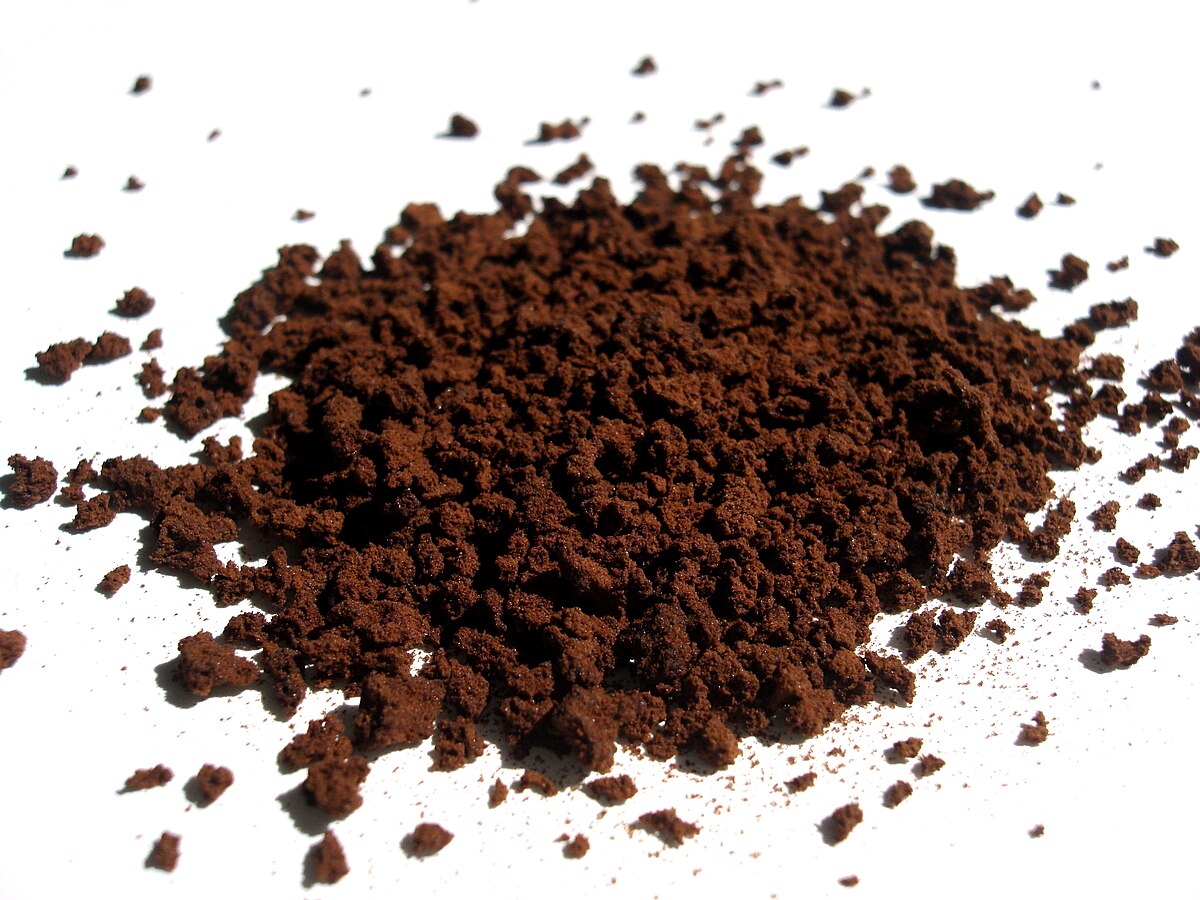
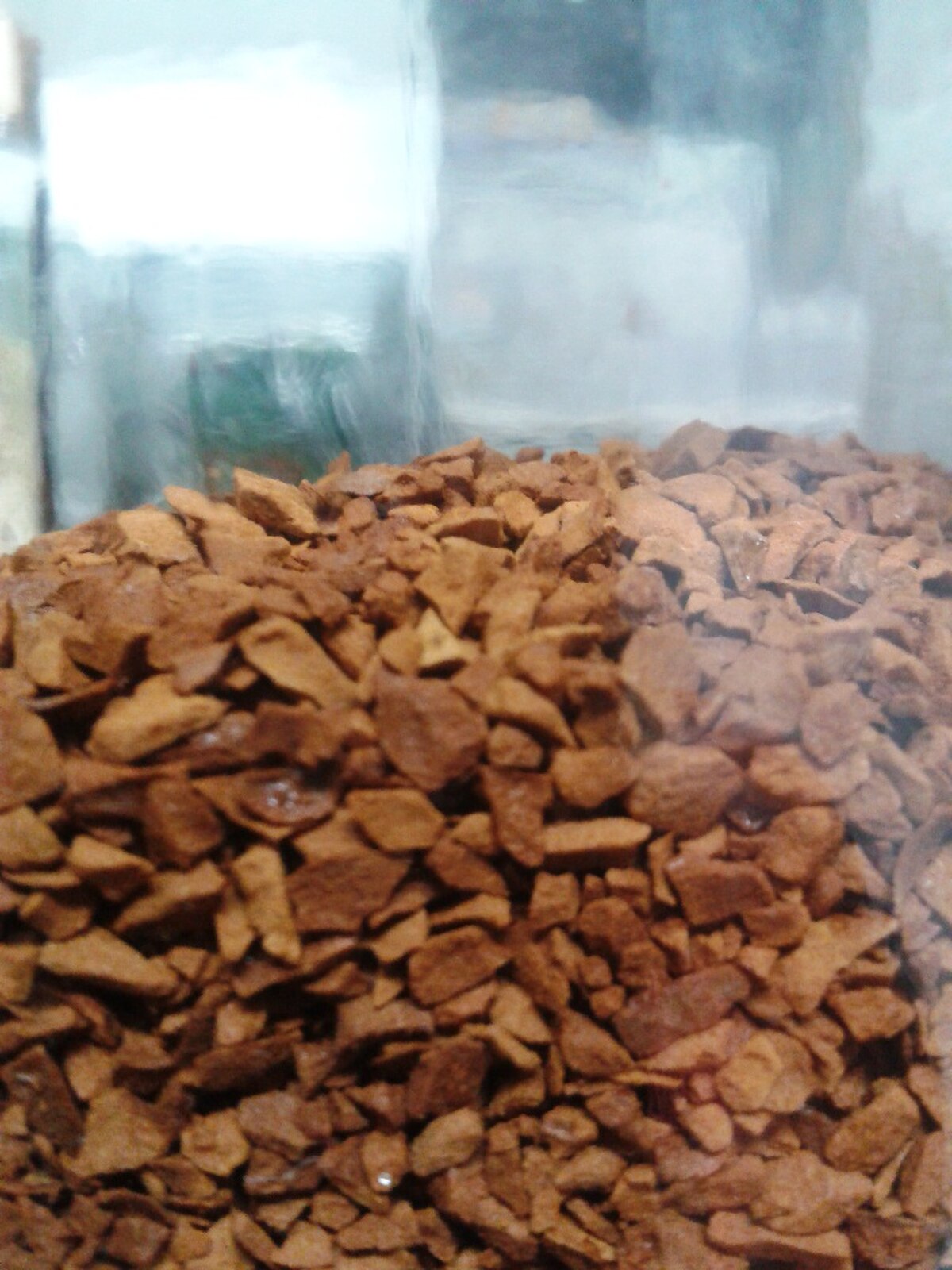
A pile of dark brown instant coffee powder is scattered on a white surface, showing individual granules and finer particles. Editor at Large, CC BY-SA 2.5, via Wikimedia Commons
You aren't brewing anything in your mug; you are just rehydrating a ghost of a cup.
The wartime ration
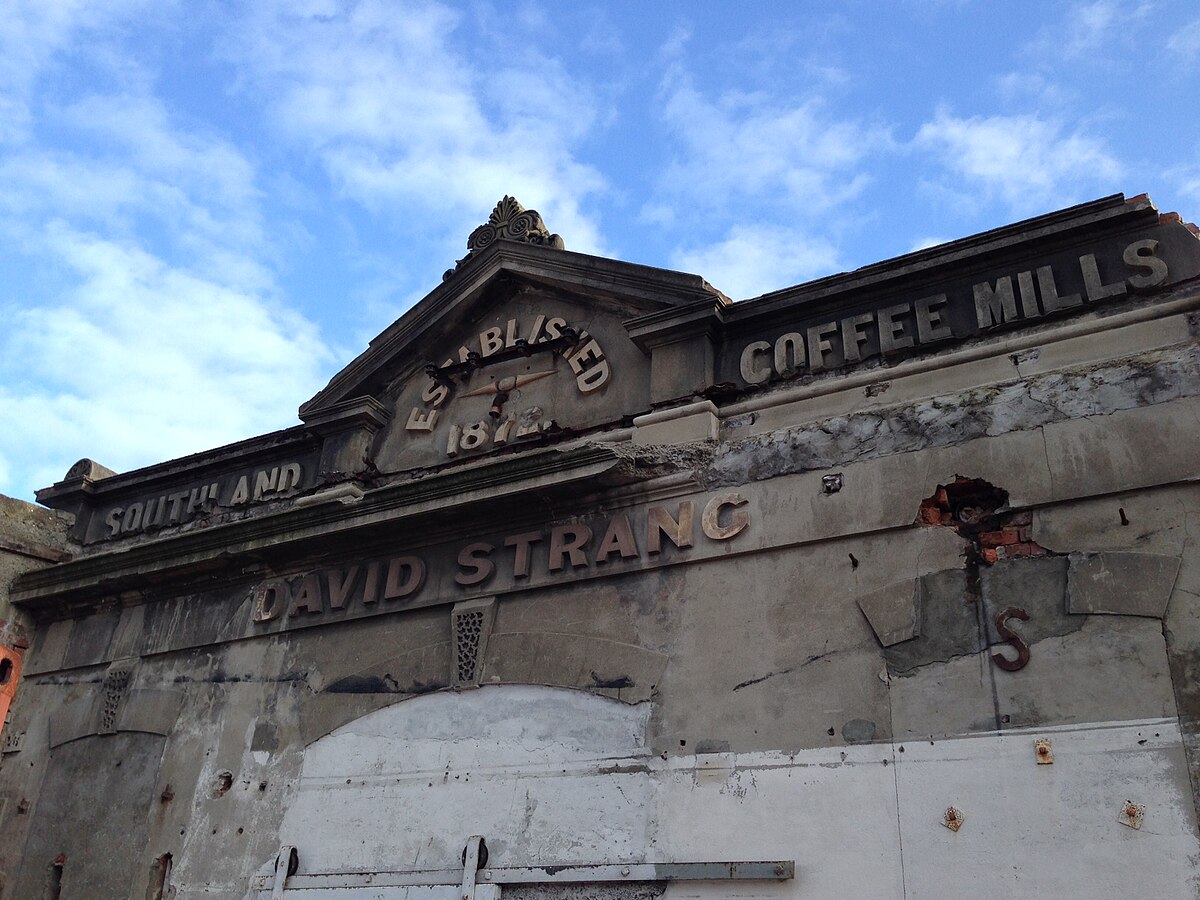
In 1890, David Strang of New Zealand patented the first soluble coffee powder. But it didn't conquer the world until WWII, when the US military bought the entire production capacity of Nescafé to keep soldiers alert.
The facade of the David Strang Coffee Mills building, established in 1874, features weathered stone and brick with the embossed text "ESTABLISHED 1874" and "DAVID STRANG COFFEE MILLS." The building… SouthlandInfo, CC BY-SA 4.0, via Wikimedia Commons
Soldiers brought the habit home, turning a wartime ration into a global staple.
The science of flavor
Modern high-end instant coffee uses freeze-drying to lock in flavor. The coffee is frozen to -40°C and placed in a vacuum, turning the ice directly into vapor.
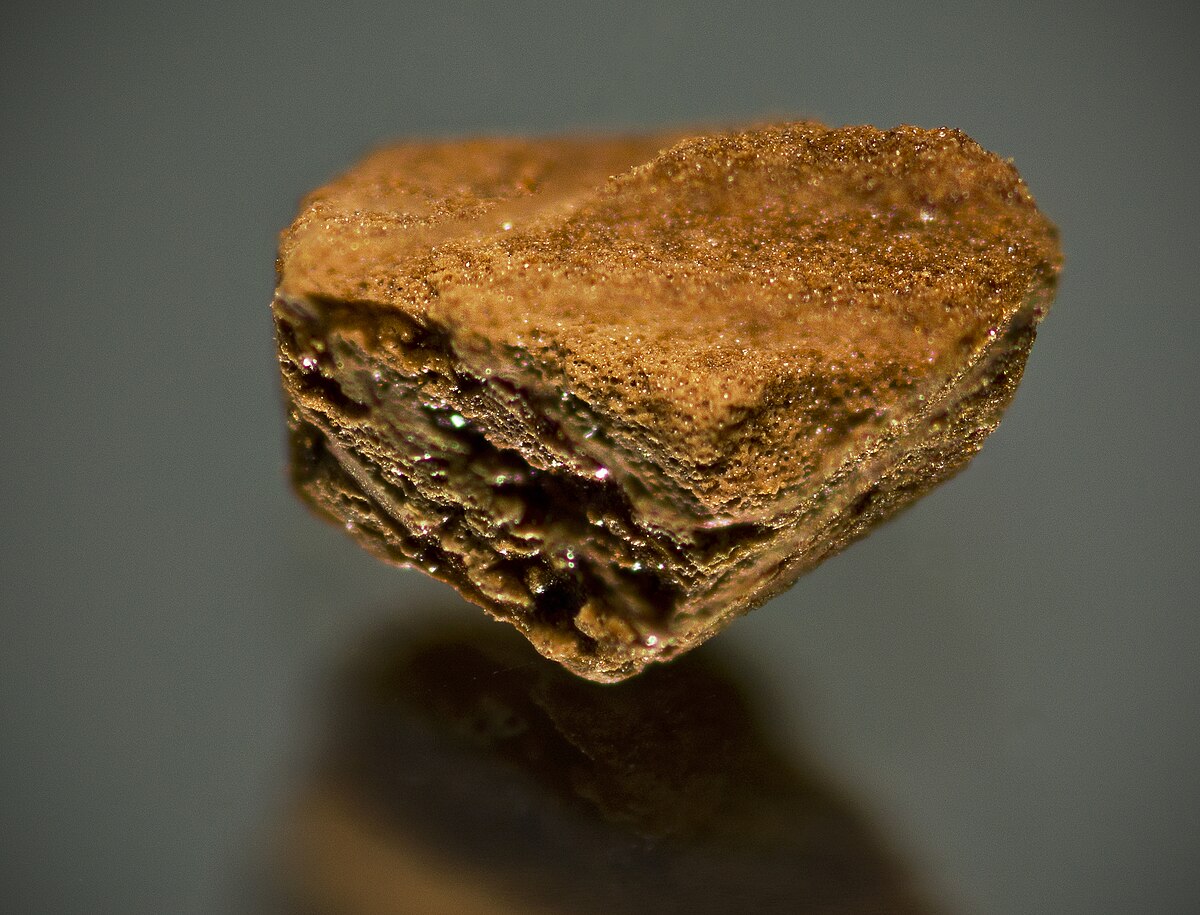
A close-up view of a single granule of Nescafé instant coffee, showing its irregular shape and porous, crystalline texture. AJC1 from UK, CC BY-SA 2.0, via Wikimedia Commons
This preserves the delicate compounds that heat-drying often destroys.
How is instant coffee made?
Instant coffee begins as a massive batch of standard brewed coffee before undergoing commercial dehydration through spray drying or freeze-drying. Early spray-drying methods struggled because natural coffee sugars and acids clumped into a sticky paste during drying. In 1938, Nestlé chemist Max Morgenthaler solved this by mixing coffee extract with equal parts maltodextrins. By the 1950s, General Foods discovered that extracting coffee under pressure at temperatures up to 175°C released larger natural polysaccharides from the beans, allowing pure coffee to spray dry into a stable powder without added carbohydrates.
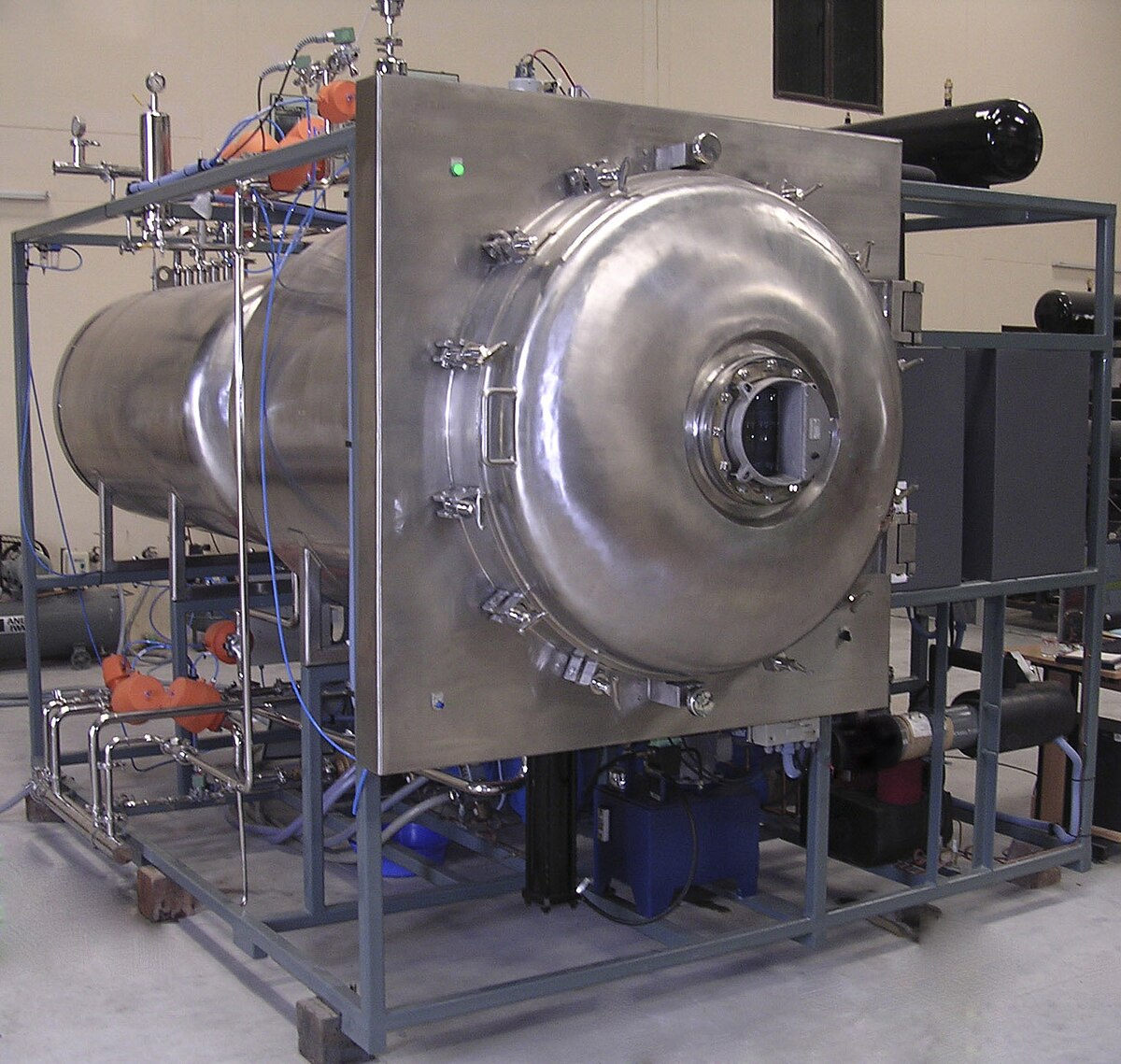
A freeze dryer removes water from frozen coffee liquid under vacuum, turning ice straight to vapor to protect delicate flavor compounds. en:user:Millrock, Public domain, via Wikimedia Commons
Freeze-drying, introduced commercially by General Foods under the Maxwell House brand in 1963, provides an alternative method for premium coffee. The brewed liquid is frozen to -40°C and placed in a vacuum, where ice sublimates directly into vapor without melting into water. This low-temperature method protects delicate flavor compounds that heat-drying often destroys. Since the mid-1960s, manufacturers have also captured aroma compounds during the initial roasting and extraction stages, adding them back into the finished granules before packaging.
Why does instant coffee dominate global markets?
Close to 50% of the world's green coffee bean production is used to manufacture instant coffee. Dehydrated coffee solids offer substantial logistics advantages over whole beans, including lower shipping weight, smaller packaging volume, and a long shelf life when sealed against moisture. On a prepared-beverage basis, instant coffee also carries a lower environmental footprint than drip filter or capsule espresso coffee.
Adoption varies dramatically by region. In 2014, instant coffee represented just 1% of coffee sold in Italy and 7% in the United States, compared to 77% in the United Kingdom, where American soldiers introduced the drink during World War II. By 2025, the Asia-Pacific region accounted for 39% of the global instant coffee market, leading Europe at 28% and North America at 24%.
Play the lesson in edgi and the card is yours. It lands on your Map next to the ideas it connects to, and turns from matte to foil to gold as you learn more around it.
Does instant coffee have less caffeine than brewed coffee?
Yes. A study comparing home-prepared drinks found that regular instant coffee generally has a lower median caffeine content than coffee brewed directly from grounds.
What non-beverage uses exist for instant coffee?
Instant coffee serves as a flavoring agent in baked goods, ice creams, confections, and stews. It is also used in crafts to stain paper for an aged look and acts as an ingredient in Caffenol, a non-toxic photographic developer for black-and-white film.