The availability heuristic is a mental shortcut where you judge how common or likely an event is based on how easily examples come to mind. Instead of running statistical calculations, the brain treats quick recall as proof of high frequency. This leads people to overrate rare, vivid occurrences and overlook common, quiet events.
By the edgi team We find the most surprising true thing about an idea and build a 60-second lesson around it.
In 1973, psychologists Amos Tversky and Daniel Kahneman asked people a simple question: are there more words that start with the letter 'K', or more words with 'K' as the third letter? Most people confidently guessed the first. It is incredibly easy to brainstorm words like kite or king.
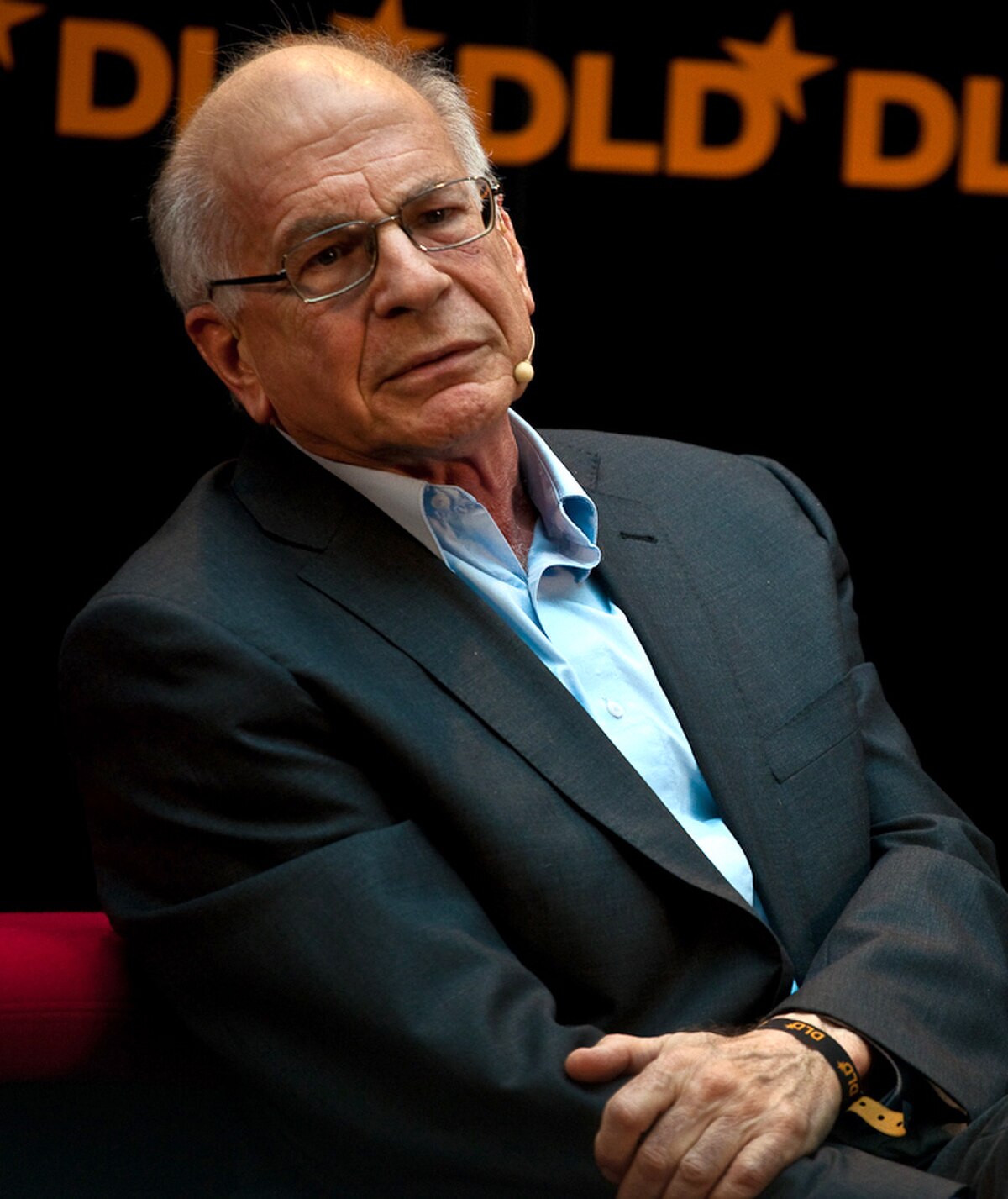
A portrait of Daniel Kahneman shows him wearing glasses and a dark suit with a light blue shirt, seated against a dark background with the DLD logo visible. nrkbeta, CC BY-SA 2.0, via Wikimedia Commons
Searching for 'K' as the third letter, like in ask or ink, feels like much more work. But in reality, there are twice as many words with 'K' in the third position. People were not bad at spelling; they were bad at statistics.
The mental shortcut
This is the availability heuristic. Your brain treats the ease of recall as a proxy for frequency. If you can think of it instantly, your brain assumes it must be common.
This evolutionary shortcut helped our ancestors: remembering the one time you saw a tiger in the bushes was a life-saving skill.
The modern trap
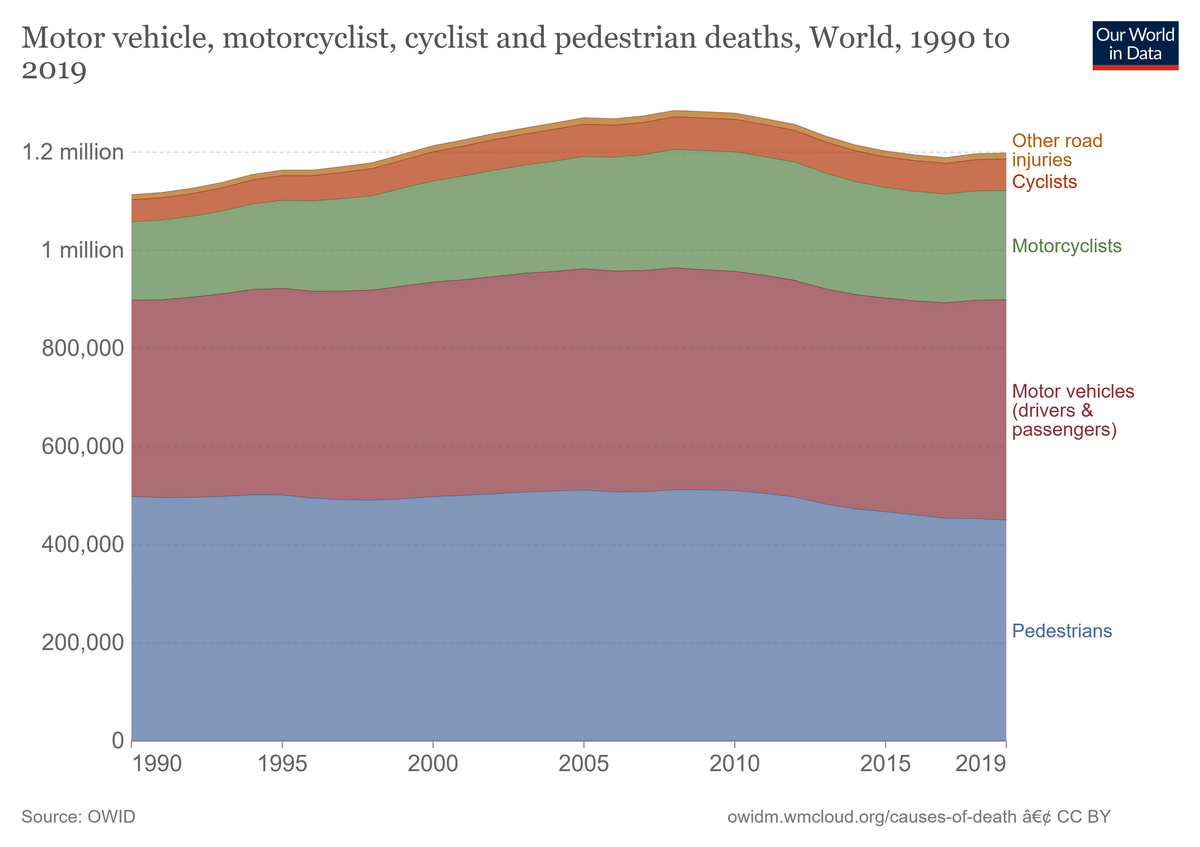
Today, this bias distorts our view of the world. We fear plane crashes because they are vivid and widely reported, even though driving a car is statistically far more dangerous.
Stacked area chart titled "Motor vehicle, motorcyclist, cyclist and pedestrian deaths, World, 1990 to 2019," showing global road deaths by type over time. MDWiki(from Our World In Data), CC BY 4.0, via Wikimedia Commons
We overreact to rare, loud events and ignore the quiet, mundane risks that actually harm us.
How the availability heuristic works
In the late 1960s and early 1970s, psychologists Amos Tversky and Daniel Kahneman challenged the standard belief that humans act as rational calculators. They showed that people rely on simplifying mental shortcuts under uncertainty. The availability heuristic operates on the assumption that if something is recalled quickly, it must be common, important, or severe.
The bias is particularly strong toward recently acquired information. When the perceived consequences of an action come to mind with minimal effort, people automatically view those consequences as larger in scale. Ease of recall substitutes for actual data.
Illusory correlations and false patterns
The availability heuristic also explains why people link unrelated events together. In a 1967 study by Chapman, participants examined drawings paired with clinical diagnoses of hypothetical patients. Participants consistently overestimated how often specific drawing features, such as peculiar eyes, co-occurred with diagnoses like suspiciousness.
Tversky and Kahneman noted that strong mental associations make pairings feel frequent. When two concepts easily trigger each other in memory, the brain wrongly assumes they must appear together all the time in reality.
Test yourself
How does the availability heuristic determine the frequency of an event?
By how easily examples come to mind. The availability heuristic substitutes the mental effort of recall for real statistical frequency, assuming easily remembered events are common.
When using the availability heuristic, how does the brain judge probability?
By the ease of recalling examples. The availability heuristic operates on the mental effort required to retrieve information. It leads us to equate ease of recall with statistical frequency, rather than relying on an objective count of known data.
Play the lesson in edgi and the card is yours. It lands on your Map next to the ideas it connects to, and turns from matte to foil to gold as you learn more around it.
Why do people fear rare events more than common risks?
Dramatic, vivid events like plane crashes are heavily remembered and easy to recall. Because they come to mind quickly, the brain treats them as frequent dangers while ignoring dull, statistical hazards like driving.
Which fields use research on the availability heuristic?
After starting in psychology, the study of heuristics spread into law, medicine, and political science. It helps explain real-world human error without needing to assume people act out of intentional irrationality.