Fundamental attribution errorWhy we misread motives
The fundamental attribution error is the habit of blaming someone's personality for their actions while ignoring the situation they were in. People assume an action reveals who someone is inside, even when external pressures gave them no choice. It leads to quick misjudgments, hostility, and toxic workplace friction.
By the edgi team We find the most surprising true thing about an idea and build a 60-second lesson around it.
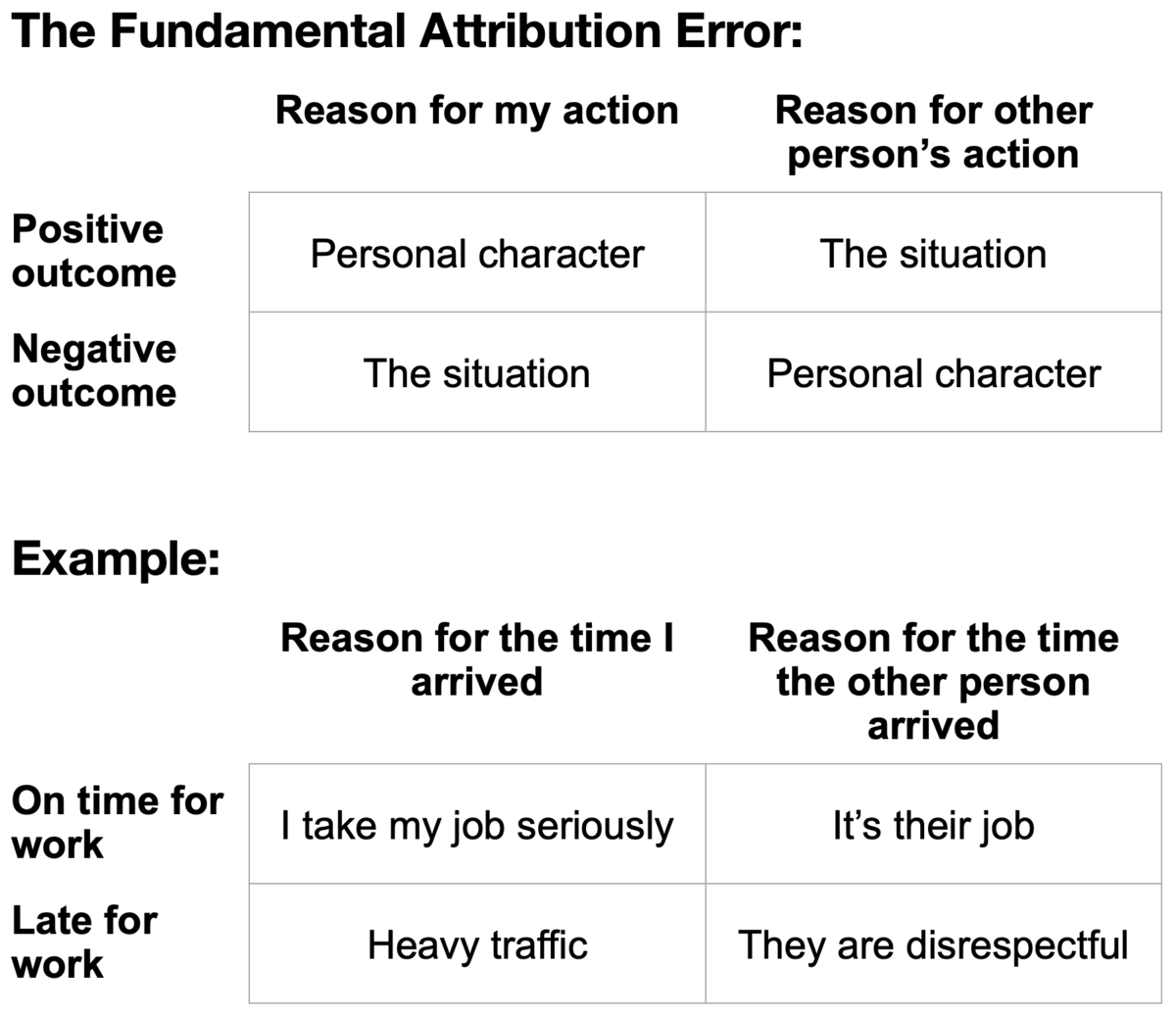
If a coworker is late to a meeting, we instantly assume they are lazy and disorganized. If we arrive just as late, we blame horrendous traffic and a broken alarm clock.
Five individuals are seated around a conference table in an office setting, engaged in a staff meeting. Bill Branson (Photographer), Public domain, via Wikimedia Commons
We judge other people by their perceived personality, but we judge ourselves by our circumstances.
The castro experiment
In a classic 1967 study, researchers had college students read essays praising Fidel Castro. Participants were explicitly told the writers had been assigned their stance by a coin toss.
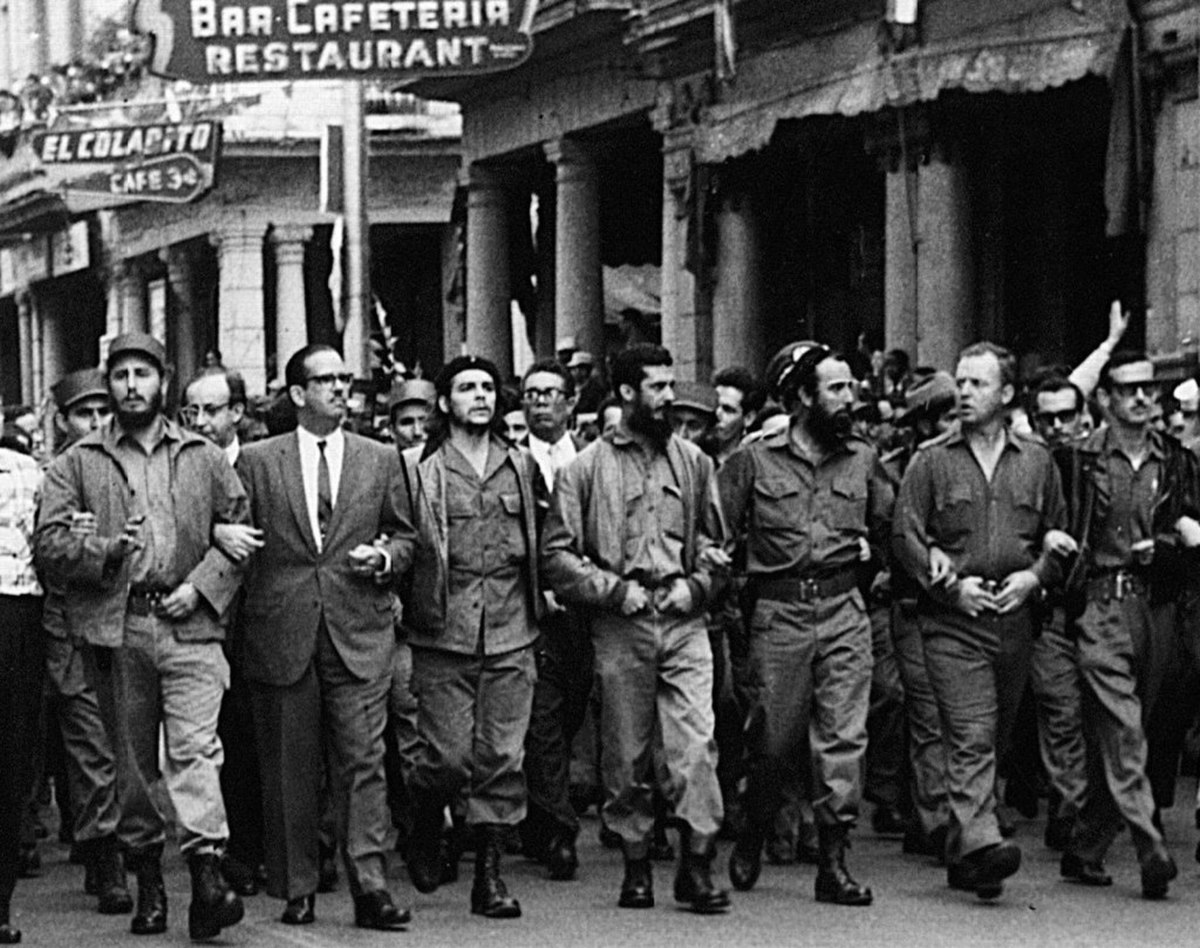
A group of men, including Fidel Castro and Che Guevara, march in a memorial service for victims of the La Coubre explosion on March 5, 1960, in Havana. Unknown authorUnknown author, Public domain, via Wikimedia Commons
Despite knowing it was forced, the participants still insisted the writers genuinely believed what they wrote. They could not stop themselves from seeing a personal choice where there was only a command.
The cognitive bias
This tendency to ignore situational factors for other people's behavior is called the fundamental attribution error. It is a core glitch in human social perception, fueling road rage, toxic workplaces, and instant hostility.
A handy antidote is Hanlon's Razor: never attribute to malice what is adequately explained by plain old circumstance.
How the bias works
In 1967, psychologists Edward E. Jones and Victor Harris asked college students to read essays supporting Fidel Castro. Even when researchers explicitly told the readers that the writers were assigned their pro-Castro position by a coin toss, readers still concluded that the writers personally liked Castro.
This chart illustrates how observers assign blame to internal personality traits instead of external context. Onceinawhile, CC BY-SA 4.0, via Wikimedia Commons
The readers could not separate the writer's actual beliefs from forced circumstances. Ten years later, psychologist Lee Ross named this blind spot the fundamental attribution error, arguing it formed the conceptual bedrock of social psychology.
Some psychologists, such as Daniel Gilbert, refer to this tendency as correspondence bias, though others treat the two as related but separate concepts.
Attribution errors across groups
The bias extends beyond how we judge single people. When people apply this double standard across entire factions, psychologists call it the group attribution error.
A related variation is the ultimate attribution error. This occurs when an observer uses an individual's behavior to judge their entire group, adding a layer of self-justification to decide whether that single act represents the whole collective.
Scientific debates and criticisms
Not all psychologists agree that humans are completely blind to situations. A 1986 study showed that people can accurately track correlations between real-life behaviors and rely on reasonable decision strategies.
A 2006 meta-analysis raised doubts about the actor-observer asymmetry, the idea that we always favor ourselves over others when assigning blame. Later researchers in 2015 also argued that standard laboratory studies tested people against unrealistic benchmarks of rationality, failing to account for how situations vary in strength.
Test yourself
When someone else cuts you off in traffic, the fundamental attribution error leads you to assume their action stems from:
their personal character. The fundamental attribution error makes us attribute others' actions to permanent traits while excusing our own behavior through circumstance.
How does the fundamental attribution error alter how we judge our own mistakes compared to others'?
We blame circumstance for ours and character for theirs. We naturally give ourselves grace through external excuses while holding others accountable to a fixed internal personality.
How does the fundamental attribution error affect social perception?
It blames personality over circumstance. The fundamental attribution error makes us attribute others' actions to their character while ignoring external pressures.
Play the lesson in edgi and the card is yours. It lands on your Map next to the ideas it connects to, and turns from matte to foil to gold as you learn more around it.
The just-world fallacy is the belief that people get what they deserve. Attributing a person's failures to their personal flaws rather than uncontrollable situations satisfies the observer's need to see the world as fair.
Who coined the term fundamental attribution error?
Lee Ross coined the phrase in a paper published ten years after the 1967 Jones and Harris study. Edward E. Jones thought the name was overly provocative, but admitted he was angry he had not thought of the name first.