CreatineThe compound that recharges cellular energy
Creatine is an organic compound that your body uses to rapidly recycle ATP, the molecule cells consume for energy. Most of it sits in skeletal muscle, where it acts as a short-term energy reserve during sudden, intense physical efforts. Your liver and kidneys make about half of your daily requirement from amino acids, while meat and fish provide the rest.
By the edgi team We find the most surprising true thing about an idea and build a 60-second lesson around it.
Every contraction spends ATP, the molecule your cells use as small change. Your muscles hold two or three seconds of it at full effort. You do not stop after three seconds, because a second store sits beside it. Phosphocreatine is creatine holding a spare phosphate, and it hands the phosphate to spent ATP to make it usable again.
That reload covers the next five to eight seconds. Between them the two carry an all-out effort for ten to fifteen seconds, which is roughly a 100 meter sprint, or one hard set.
What supplementing buys
Your creatine stores normally run below full. Five days of loading raises the creatine in a muscle by twenty to forty percent, and that is the entire mechanism: a deeper reserve to reload from. What it buys is small and real. Across trials, creatine plus lifting adds about 1.4 kilos more lean mass than the same lifting alone, and a rep or two on a hard set.
The first weight on the scale is not muscle. Creatine pulls water in with it, so the early gain is fluid inside the muscle cells. About three in ten people barely respond. The ones who do tend to start with less creatine and more fast fibers, so somebody already eating a lot of meat is close to the ceiling.
Where yours comes from
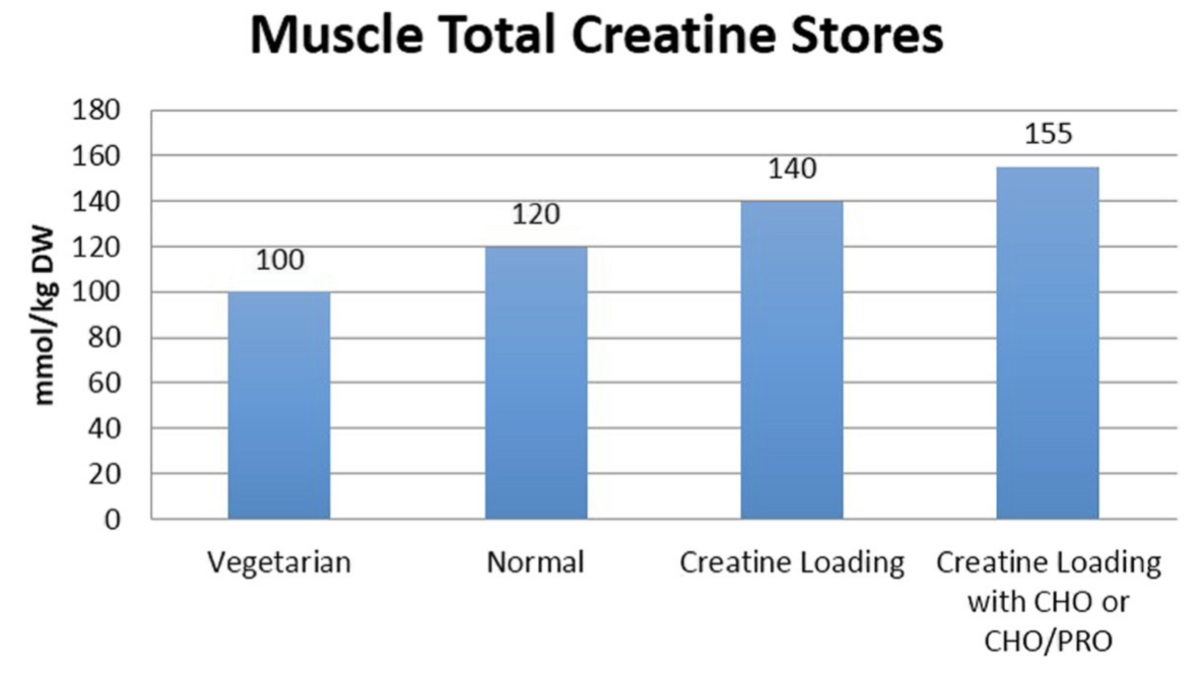
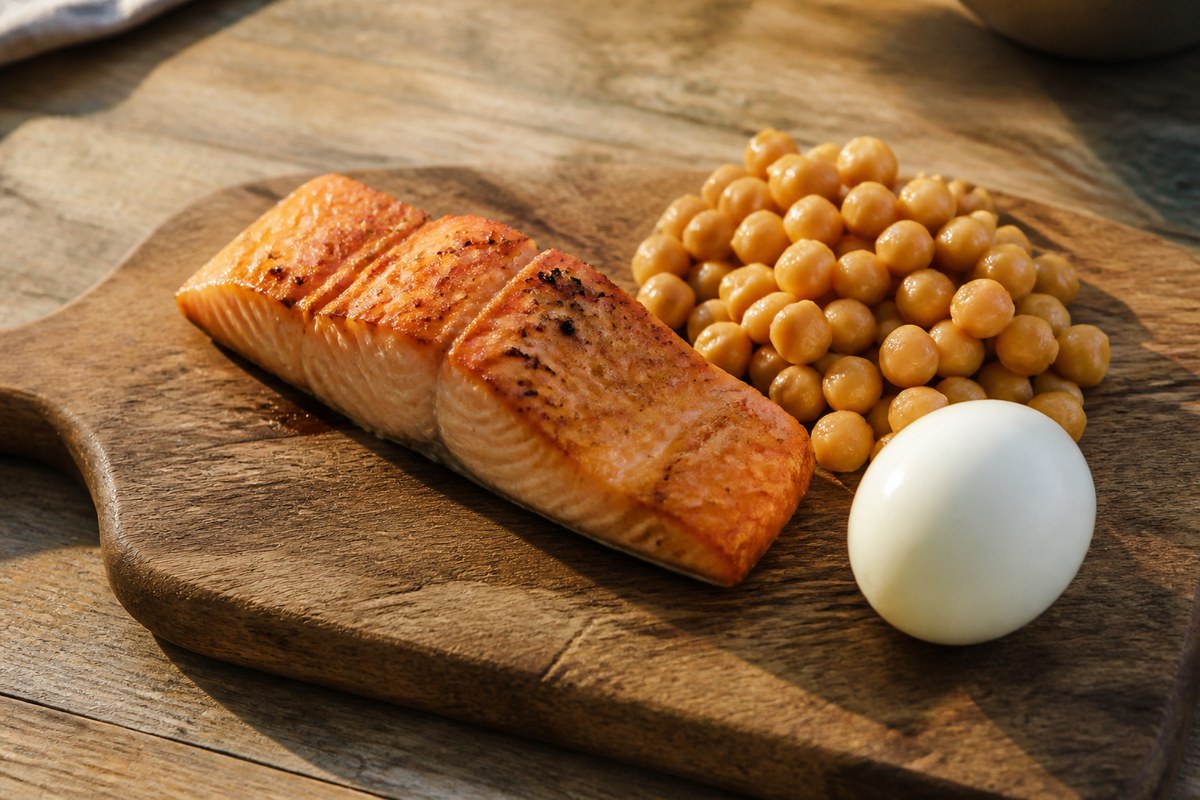
Creatine is not a foreign substance. Your liver and kidneys make about half of what you get through in a day, and the rest arrives in food. It concentrates in muscle, so the food carrying it is other animals' muscle: red meat and fish. Someone who eats none starts with noticeably less on board.
The supplement is that same molecule in a bigger dose. Michel Chevreul pulled it out of meat broth in 1832, and the loading protocol that showed eating it raises muscle stores came in 1992.
How does the phosphocreatine system work?
Skeletal muscle maintains an ATP concentration of only 2 to 5 mM, which is spent after just a few seconds of contraction. To sustain effort, the enzyme creatine kinase takes a phosphate group from phosphocreatine and transfers it directly to spent adenosine diphosphate (ADP), instantly turning it back into usable ATP.
Phosphocreatine stores in muscle reach 20 to 35 mM or higher, providing a buffer that buys five to eight seconds of high-intensity output. Because creatine kinase regenerates ATP so quickly, cellular ATP levels stay steady during initial exertion while phosphocreatine supplies are drawn down.
How the body makes and stores creatine
Around 95 percent of the body's creatine resides in skeletal muscle, with the remainder distributed across the brain, blood, and other tissues. Typical baseline muscle stores sit near 120 mmol per kilogram of dry muscle mass, but supplementation can raise this reserve up to 160 mmol/kg.
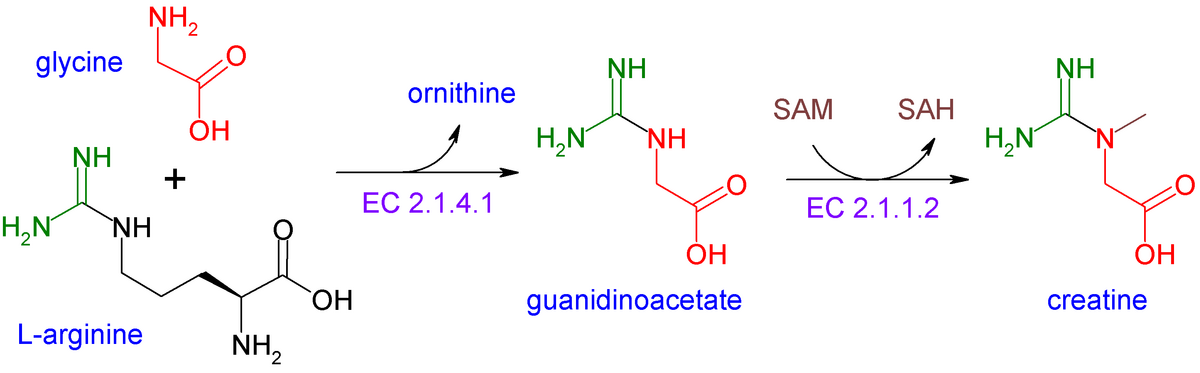
Enzymes in the body synthesize creatine from the amino acids glycine, arginine, and methionine. Akane700, CC BY-SA 3.0, via Wikimedia Commons
Your body degrades about 1 to 2 percent of its intramuscular creatine every day into creatinine, requiring 1 to 3 grams of daily replacement. Synthesis begins when the amino acids glycine and arginine form guanidinoacetate, which is then methylated using S-adenosyl methionine to produce creatine.
Test yourself
How does creatine supplementation primarily expand energy capacity in muscle tissue?
By topping up existing phosphocreatine reserves. Creatine does not alter metabolic rate; it simply increases the size of the phosphocreatine pool available to rapidly reload spent ATP.
Why does initial weight gain from creatine supplementation primarily reflect fluid shifts?
Creatine osmotically pulls water inside cells. Creatine acts osmotically, drawing water along with it into the muscle cells, which accounts for the initial scale weight increase before new tissue forms.
Why can a sprinter go flat out for ten seconds but not for thirty?
The instant fuel store empties and cannot refill that fast. Muscle keeps a small store of ready energy and a second store that reloads it, and between them they cover roughly ten to fifteen seconds of all-out work. Past that the muscle has to make energy by slower routes, and power drops.
Play the lesson in edgi and the card is yours. It lands on your Map next to the ideas it connects to, and turns from matte to foil to gold as you learn more around it.
Why do vegetarians have lower muscle creatine levels?
Creatine is naturally found in the muscle tissue of animals, such as red meat and fish. People who eat plant-only diets rely entirely on internal synthesis from amino acids, leaving their baseline muscle stores lower.
What happens if someone has a genetic creatine deficiency?
Mutations in synthesis enzymes like AGAT or GAMT, or in the SLC6A8 transporter gene, disrupt creatine production or brain uptake. These rare genetic defects cause severe neurological problems.