Protein is an essential nutrient made of chains of amino acids linked together, which your digestive system dismantles so your body can rebuild them into its own tissues and enzymes. After water, it makes up more mass in a human body than any other molecule. It also works as an energy source, providing four calories per gram, the same energy density as carbohydrates.
By the edgi team We find the most surprising true thing about an idea and build a 60-second lesson around it.
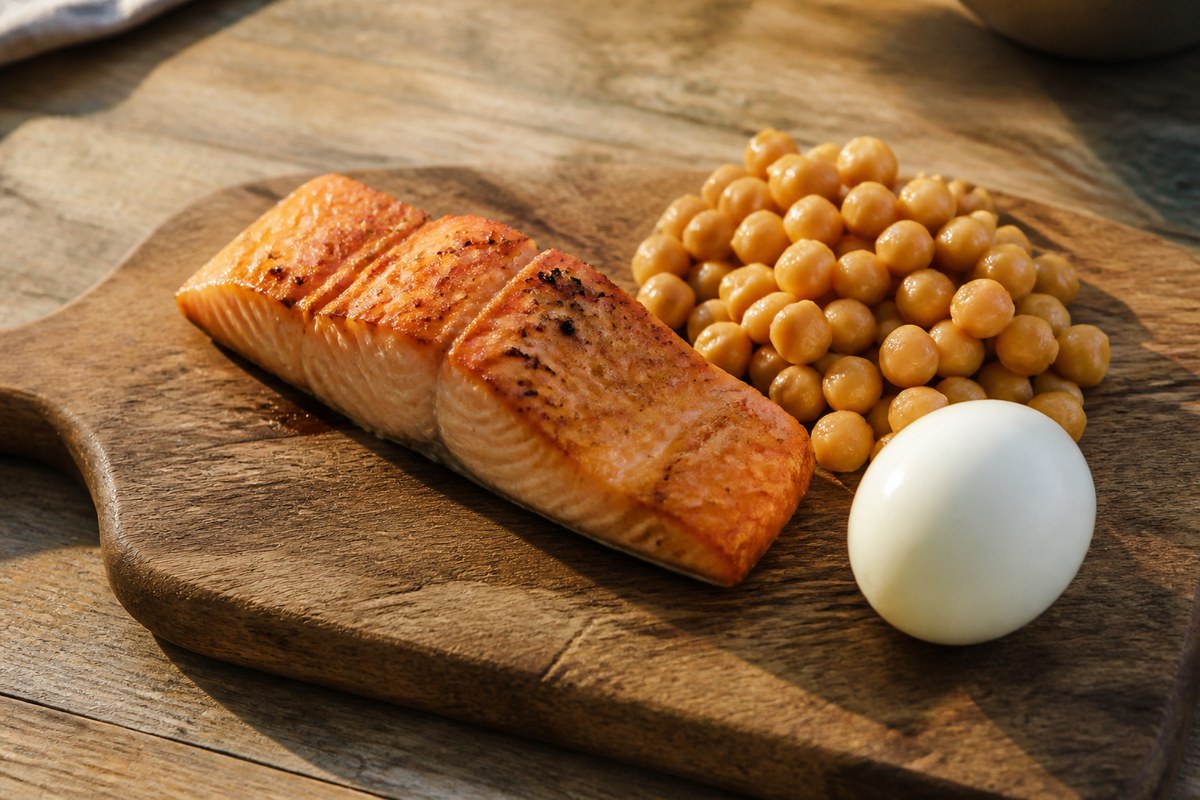
The protein in a steak never reaches your muscles. Your gut takes every chain of it apart first, and what crosses into you is the pieces. Those pieces are amino acids, and there are twenty. Nine of them your body cannot make for itself, which is the entire reason protein is something you have to eat.
Every protein in your body is a chain of those same twenty in a different order: muscle, hair, the enzymes in your gut, the antibodies in your blood.
Taken apart, then rebuilt
You are rebuilding constantly. Around 1 percent of your muscle protein is torn down and replaced every day, whether you trained or not. The pieces for that come from food, and digestion is mostly not the stomach's job. Acid and pepsin manage perhaps a fifth of it; the rest happens in the small intestine.
What crosses into you is single amino acids and short chains of two or three, each carried across by its own transporter. By then nothing about it still says steak or bean.
Signal and material
Building needs two things at once. Amino acids in the blood raise the rate you build muscle protein a little; loading the muscle raises it far more, and for a day or two afterwards. Neither one works alone. Eat protein without loading the muscle and it is used elsewhere or burned for energy; load the muscle without protein and there is nothing to build from.
Pooled across forty-nine trials, extra protein stopped adding any muscle above about 1.6 grams per kilo a day. For someone weighing 80 kilos that is roughly 130 grams. Above that it is just food. Protein carries four calories per gram, exactly what carbohydrate carries, and the surplus gets used for energy like anything else.
What are essential amino acids?
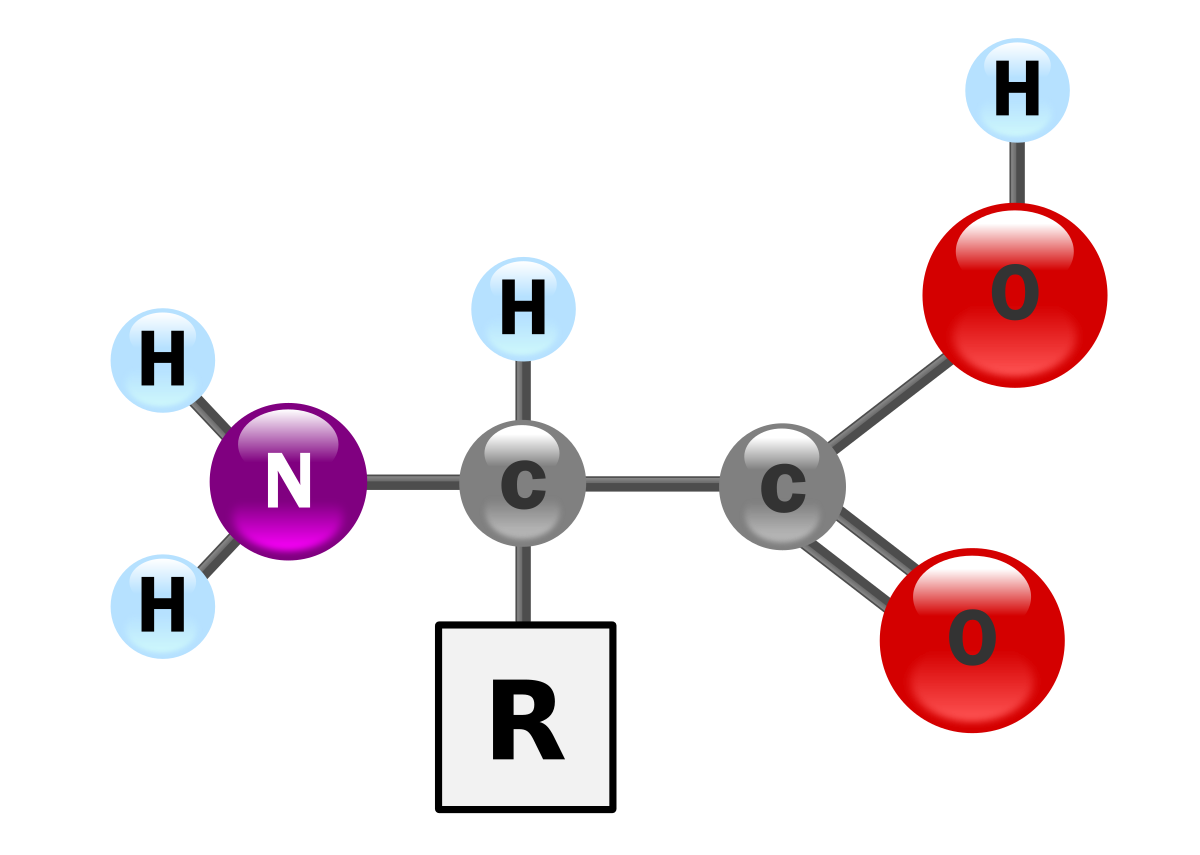
Your body builds all of its proteins from twenty distinct amino acids, but it cannot manufacture nine of them from scratch. These nine, including leucine, lysine, methionine, and tryptophan, are called essential amino acids because you must obtain them directly from food to survive. Five other amino acids can be manufactured internally, while six are conditionally essential, meaning the body fails to make enough of them during severe physical distress or prematurity.
This chemical diagram shows the basic structure of amino acids, which link together to form all bodily proteins. GYassineMrabetTalk✉ This W3C-unspecified vector image was created with Inkscape ., Public domain, via Wikimedia Commons
When you eat protein, hydrochloric acid and digestive enzymes break the long polymer chains down into single amino acids or short chains of two or three. Once absorbed, these molecules serve as the raw materials for muscles, skin, bones, antibodies, and cellular machinery like ion channels and hormones. They are also used to assemble vital non-protein molecules, including heme and certain neurotransmitters.
Where do people get dietary protein?
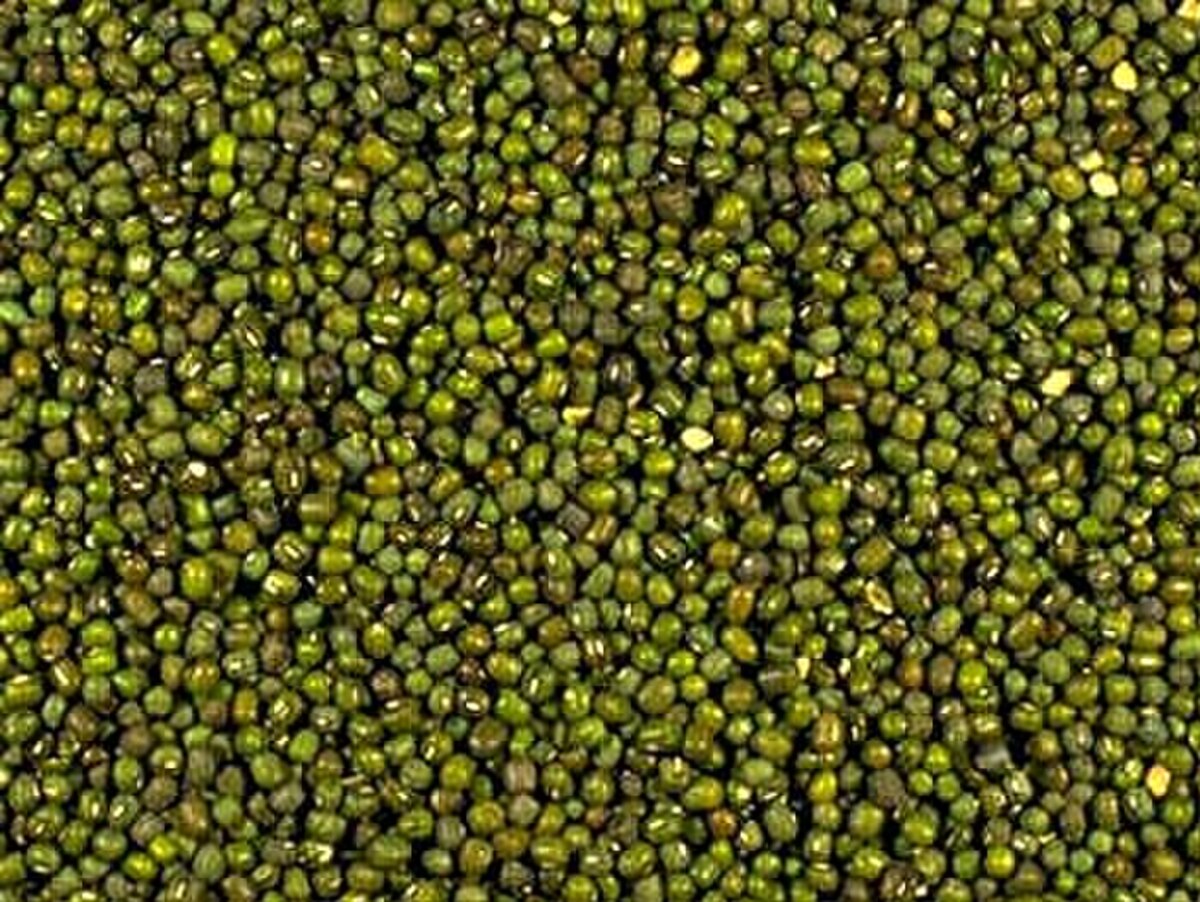
Globally, plant foods provide more than 60 percent of the per capita protein supply, whereas animal products account for about 70 percent of protein intake in North America. High-protein plant staples include legumes like lentils, chickpeas, and mung beans, as well as seeds, nuts, and grains such as oats and quinoa. Edible insects also supply protein for over 2 billion people daily, making up to half of dietary protein in parts of Africa.
Dried mung beans are an example of a legume that naturally provides a high concentration of plant protein. Public domain, via Wikimedia Commons
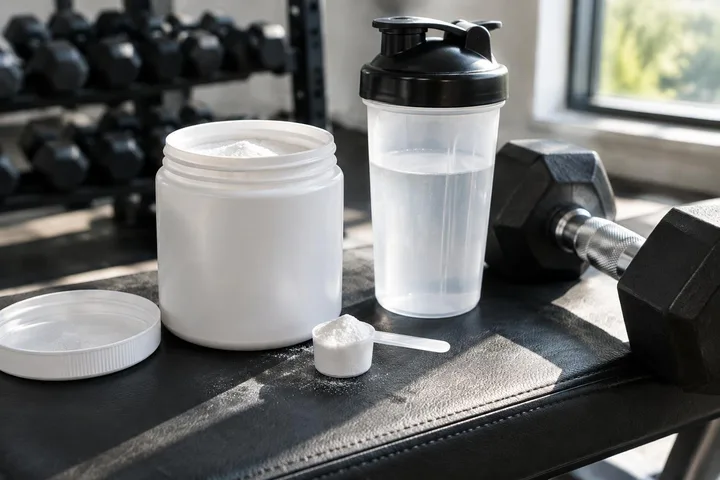
Processed supplements like whey, casein, soy, and cricket powders exist, but people consuming a balanced diet do not need them. Beyond traditional farming, photovoltaic-driven systems grow microbes in bioreactor vats using electricity and carbon dioxide to produce dry protein powders with minimal land and water.
How is protein measured on food labels?
Food testing labs rarely count proteins directly; instead, they measure total nitrogen using chemical tests like the Kjeldahl or Dumas methods. Because pure proteins contain about 16 percent nitrogen while fats and carbohydrates contain none, standard food labels calculate protein content by multiplying measured nitrogen by 6.25.
This nitrogen-based calculation measures crude protein, meaning it cannot distinguish actual amino acid chains from non-protein nitrogen compounds like urea. This loophole has historically enabled food adulteration, such as the 2008 scandal where melamine was added to milk to artificially boost its measured protein content.
Test yourself
What determines whether dietary protein is used to build new muscle tissue?
Physical loading combined with protein. Building muscle requires both the material (amino acids) and the signal (physical loading). Without loading, extra protein is burned for energy or used elsewhere.
Does dietary protein enter human muscles intact or disassembled?
Assembled from disassembled pieces. Your gut breaks dietary protein down into individual amino acids before they cross into your bloodstream. Your body then rebuilds its own proteins from those raw pieces.
Past a certain point, extra protein stops adding muscle. What is the limit?
The rate of building is set by demand, not supply. Absorption is not the bottleneck; almost all of a large dose gets in. What limits building is how much the body has been told to build, and past that point extra material has nothing to do.
Play the lesson in edgi and the card is yours. It lands on your Map next to the ideas it connects to, and turns from matte to foil to gold as you learn more around it.
How much protein can the body actually use for muscle growth?
Data pooled across forty-nine trials shows that extra protein stops contributing to additional muscle building beyond roughly 1.6 grams per kilogram of body weight per day. For an 80-kilogram person, that equals about 130 grams of protein daily.
What happens to surplus protein that you eat?
Any protein consumed beyond what the body needs for repair and tissue maintenance is used elsewhere or burned as fuel. It provides four calories per gram, just like carbohydrates.
What are conditionally essential amino acids?
These are six amino acids, including arginine, glycine, and glutamine, that healthy adults normally synthesize on their own. Under special conditions such as severe illness or infant prematurity, the body cannot produce them fast enough, making dietary intake necessary.