Sarcopenia is the progressive loss of skeletal muscle mass, strength, and function that happens with aging or prolonged immobility. It is driven by the death of motor nerves and declining muscle protein synthesis rather than muscle turning into fat. Because uninnervated fibers cannot contract, physical strength often vanishes much faster than the visible size of the muscle.
By the edgi team We find the most surprising true thing about an idea and build a 60-second lesson around it.
Muscle mass peaks somewhere in your thirties and falls from there, at roughly 3 to 8 percent per decade, and the rate climbs as you get older. The loss is called sarcopenia, named in 1989 by Irwin Rosenberg from the Greek words for flesh and poverty. Until then it had no name at all.
Muscle does not turn into fat, whatever the phrase suggests. Fat does move into aging muscle, but that is a separate condition, and plenty of people have one without the other.
What is actually being lost
The fibers do not simply shrink. They lose their nerve supply, which is called denervation. A fiber only contracts when a motor nerve tells it to, and one nerve controls a group of fibers at once. Those nerves die off through adult life, faster after 60, leaving their fibers with no orders.
Neighboring nerves reach out and adopt some of the orphans. Healthy older people do this well, and the ones who do it badly are the ones who lose the most muscle. A fiber nobody adopts gets no signal and cannot contract at all. It wastes away, which is part of why strength falls faster with age than muscle mass does.
The same signal, running backwards
The same thing happens at any age when the demand stops. Two weeks in a cast costs a healthy young adult 5 to 8 percent of the thigh muscle's cross-section and close to a quarter of its strength. Older muscle also answers more weakly to what it does get. The same meal and the same session raise the building rate less than they would have at 25.
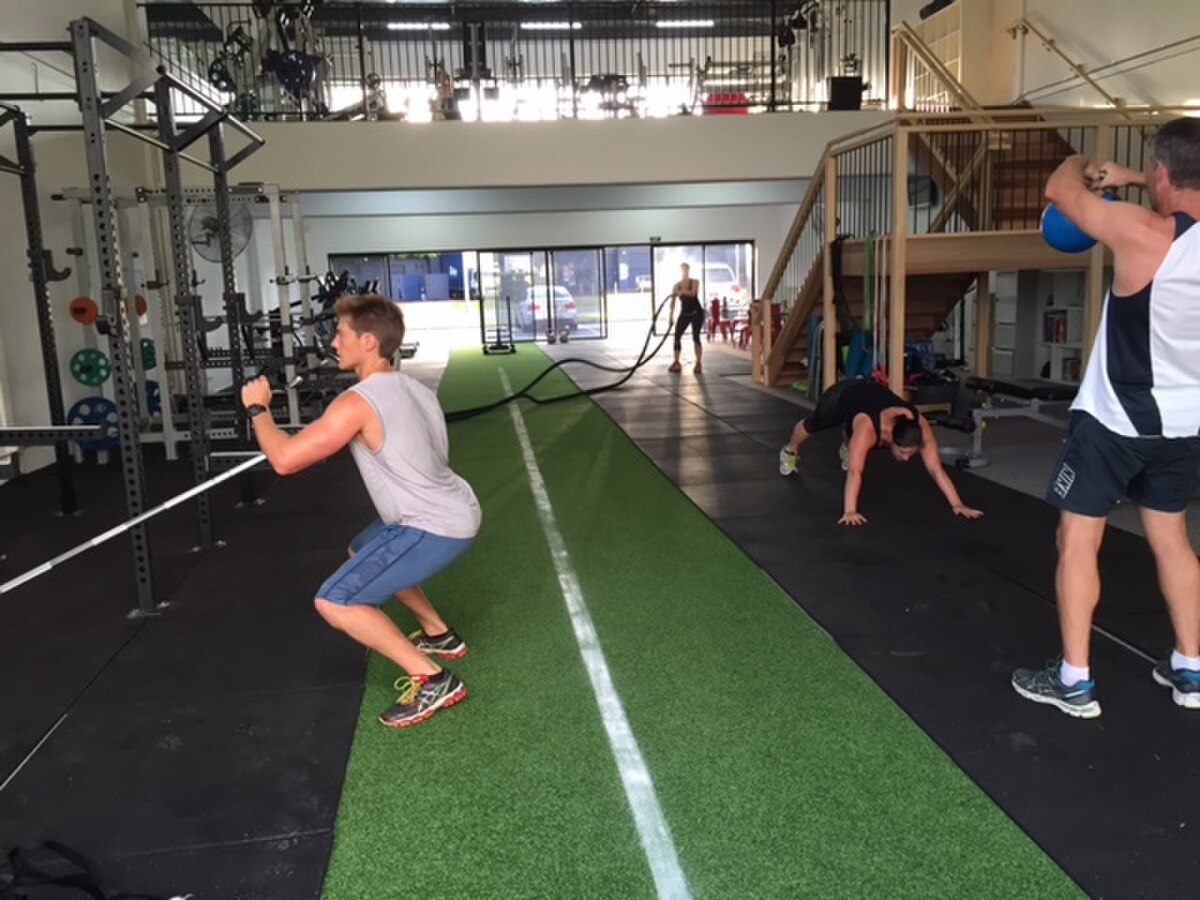
The response is still there. Nine frail nursing home residents, average age 90, came out 174 percent stronger after eight weeks of heavy resistance training. It has to be heavy. Walking and light movement are worth doing, but they do not ask anything of a muscle that has been walking for ninety years.
How sarcopenia destroys muscle fibers
Sarcopenia selectively targets fast-twitch muscle fibers while leaving slow-twitch fibers largely intact. Fast-twitch type II fibers, which provide rapid bursts of power, lose their motor nerve connections over time. Surviving slow-twitch motor nerves can adopt some of these orphaned fibers, converting them into slow-twitch type I fibers, but fibers that receive no new nerve connections waste away completely.
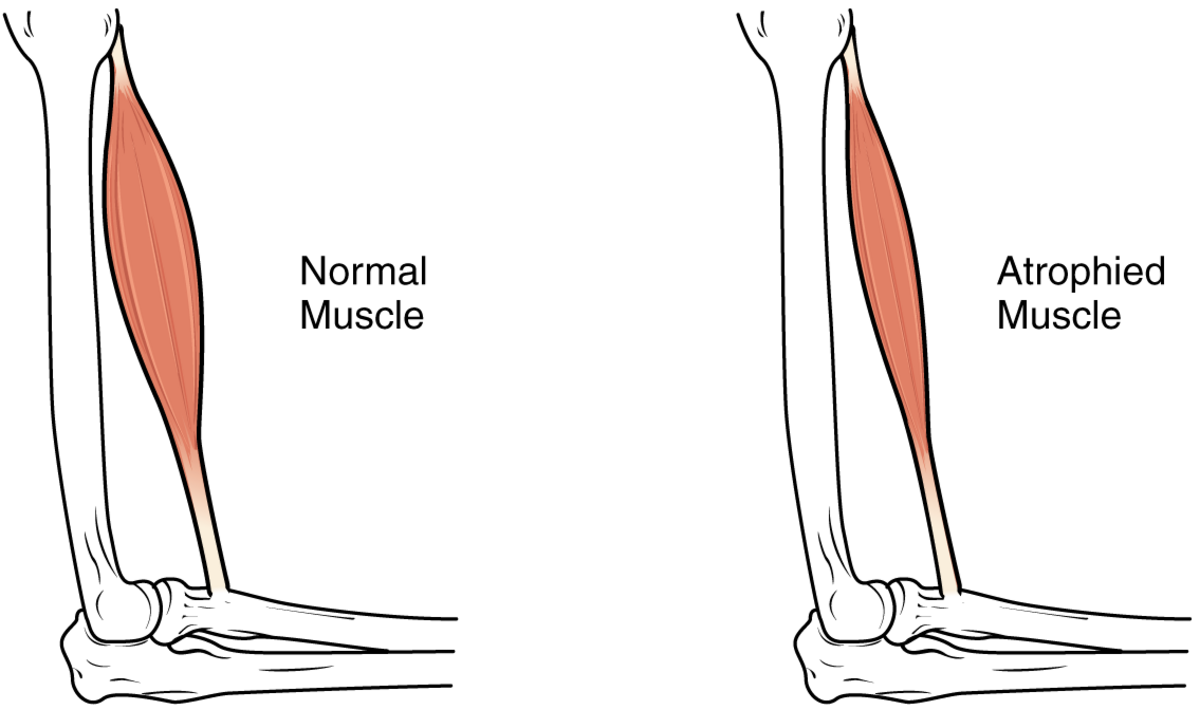
The comparison shows an atrophied muscle with reduced volume and fiber mass compared to a full, healthy normal muscle. OpenStax, CC BY 4.0, via Wikimedia Commons
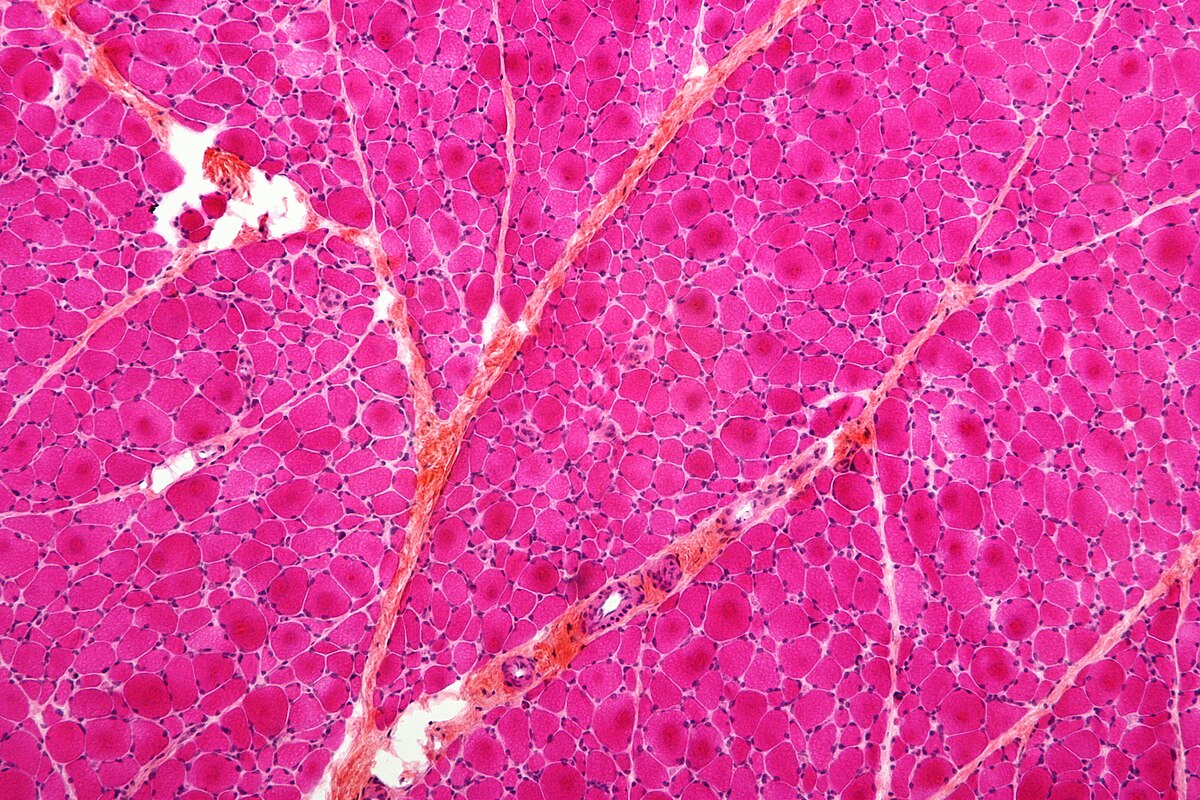
At the cellular level, aging muscle suffers from degraded neuromuscular junctions, oxidative stress, and the accumulation of non-contractile waste such as lipofuscin. Muscle tissue quality drops as fibrosis increases and fat infiltrates the tissue. Inactive satellite cells fail to repair damaged tissue after exertion, and mitochondrial DNA mutations accumulate in dense regional clusters, accelerating tissue atrophy.
The decline does not strike all muscles equally. Upper leg muscles, specifically the anterior thigh, and abdominal muscles shrink much earlier and faster than lower leg muscles. A person's total muscle mass typically peaks in their thirties and drops by 3 to 8 percent per decade thereafter, with the rate of loss climbing sharply after age 60.
Causes and diagnosis of sarcopenia
The severity of sarcopenia depends on peak early-life muscle mass and the speed of subsequent loss. Early environmental markers, such as low birth weight, correlate with lower muscle mass and reduced strength in adulthood. In adults, chronic disease, hormonal shifts, poor nutrition, and especially immobility accelerate muscle decline. Two weeks in a leg cast can strip up to 8 percent of a healthy young adult's thigh muscle area.
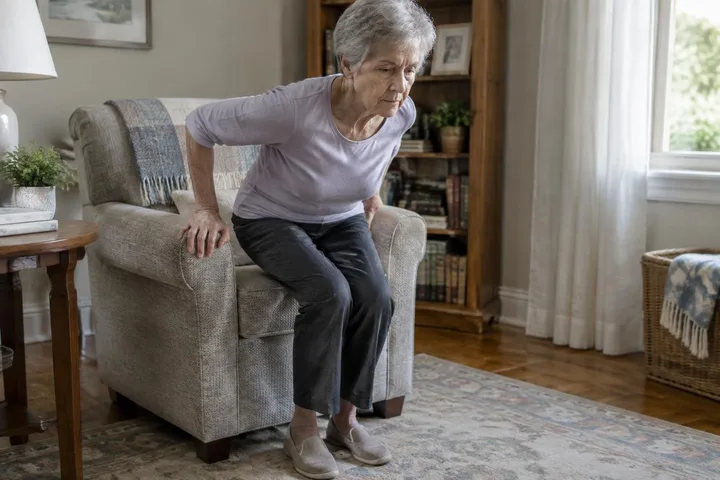
Clinicians diagnose sarcopenia using physical performance metrics alongside muscle measurements. The condition received an official medical disease code (ICD-10-CM code M62.84) in 2016. Standard diagnostic criteria require muscle mass at least two standard deviations below the population average, paired with slow walking speed, low handgrip strength, or difficulty climbing stairs and standing from a chair.
Test yourself
Does sarcopenia primarily involve muscle fibers shrinking due to disuse or losing their nerve supply first?
Losing their nerve supply first. Sarcopenia is largely driven by motor nerves dying off and leaving muscle fibers orphaned, rather than the fibers simply shrinking from lack of activity.
When designing an exercise routine to combat sarcopenia, why must the physical effort be heavy?
Light movement does not challenge aging muscle. Light daily movement fails to stimulate muscle that has adapted to decades of routine use, requiring heavy resistance to trigger a response.
An old person's arm looks soft and marbled where it was firm. What happened?
Muscle was lost and fat moved into the space. A muscle cell cannot become a fat cell; they are different cell lines and there is no route between them. What happens is two things at once: muscle is lost, and fat is deposited in and around what remains.
Play the lesson in edgi and the card is yours. It lands on your Map next to the ideas it connects to, and turns from matte to foil to gold as you learn more around it.
Cachexia is severe muscle wasting caused directly by cytokine-mediated degradation from underlying illnesses like cancer. Sarcopenia is driven by aging, neuromuscular decline, and disuse, though a person can have both conditions simultaneously.
Can older adults rebuild muscle lost to sarcopenia?
Yes, older muscle retains the capacity to grow when subjected to heavy resistance training. In one clinical trial, 90-year-old nursing home residents increased their strength by 174 percent after eight weeks of high-intensity lifting.
Why is body weight an unreliable indicator of sarcopenia?
Total body weight and waist circumference often remain steady even as muscle vanishes because body fat proportion rises and fluid accumulates. A person can experience severe muscle atrophy while their body mass index stays completely unchanged.