Skeletal muscleThe giant cells with thousands of nuclei
Skeletal muscle is the striped tissue attached to your bones that contracts to move your skeleton and keep your body upright. Unlike typical microscopic cells, its individual muscle fibers can span centimeters or tens of centimeters and contain hundreds to thousands of nuclei. Beyond producing mechanical force, skeletal muscle stabilizes joints, regulates body temperature, and secretes signaling molecules.
By the edgi team We find the most surprising true thing about an idea and build a 60-second lesson around it.
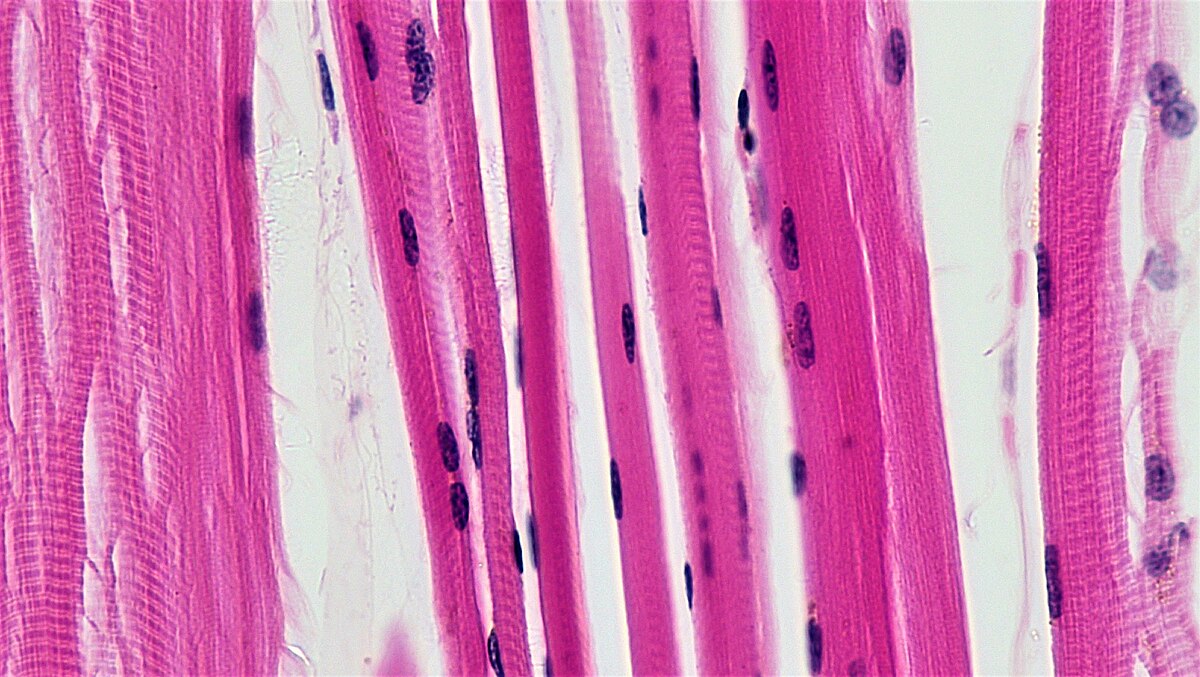
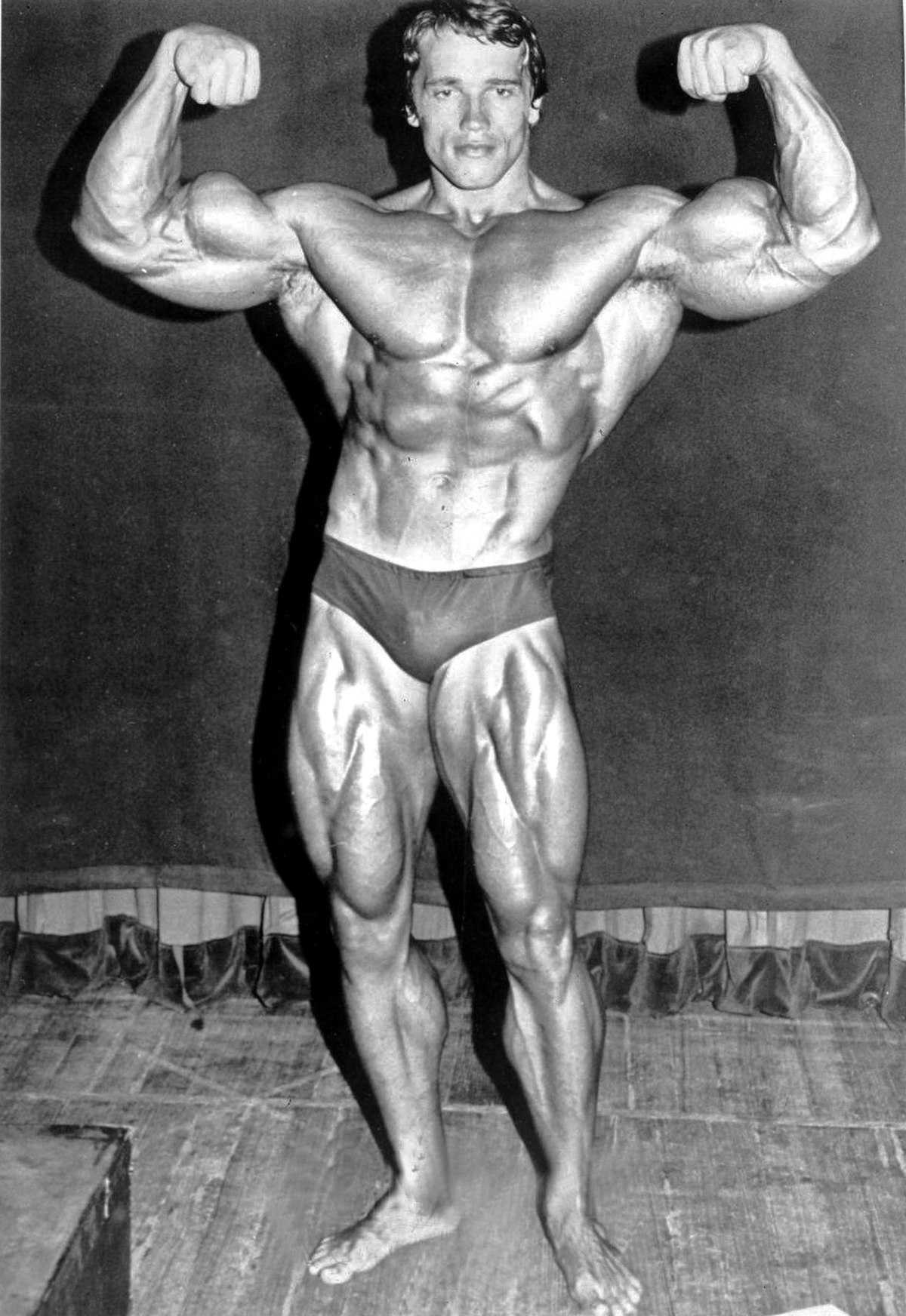
Bend your arm and the bulge on top is your biceps. Inside it are long thin strands, and each strand is a single muscle cell, called a muscle fiber. These cells are enormous. One fiber in the sartorius, the strap running diagonally across the front of your thigh, can be 30 centimeters long.
BruceBlaus. When using this image in external sources it can be cited as: Blausen.com staff (2014). "Medical gallery of , CC BY 3.0, via Wikimedia Commons
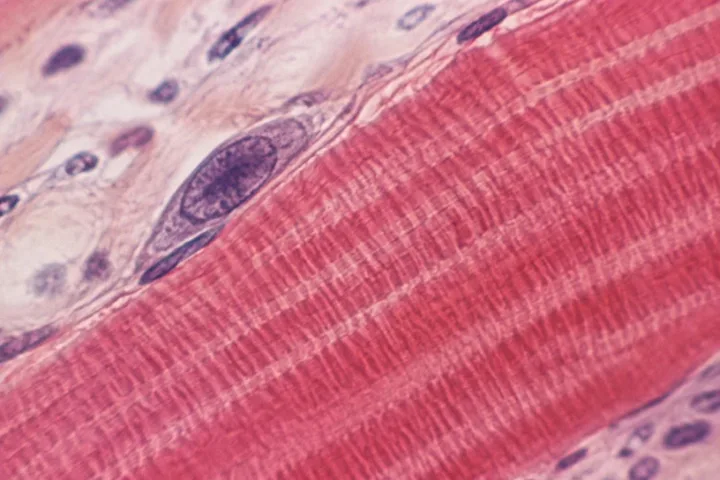
A cell that size cannot be run from one nucleus, so each fiber carries hundreds of them, spaced out along its length. Skeletal muscle is the only tissue in you built this way.
No volume knob
A fiber shortens by dragging two sets of protein filaments past each other, the way interlaced fingers slide deeper together. The repeating unit that does it is a sarcomere. What a fiber cannot do is contract halfway. A signal arrives and it twitches all the way, every time.
So force is not decided inside the fiber. It is decided by how many fibers are switched on and how fast the signals keep arriving. Picking up a pen and picking up a suitcase run the same fibers the same way. The difference is how many of them your nervous system called in.
The mix you were born with
The fibers are not all alike. Some are slow and hard to tire, some are fast and powerful and give out quickly, and every muscle holds a mix. Roughly half and half is typical, and the spread between people is enormous: from 13 percent slow fibers to 96 percent.
The mix is mostly inherited and training barely shifts it. What training changes is how big those fibers get and how well you recruit them, not which kind you have.
How skeletal muscle is built
A single skeletal muscle cell is formed when embryonic cells called myoblasts fuse together during development, combining their contents into one massive fiber. In the human biceps, a single fiber measuring 10 centimeters long can contain as many as 3,000 nuclei positioned just beneath the outer membrane. Around 253,000 of these fibers bundle together to form that single biceps muscle.
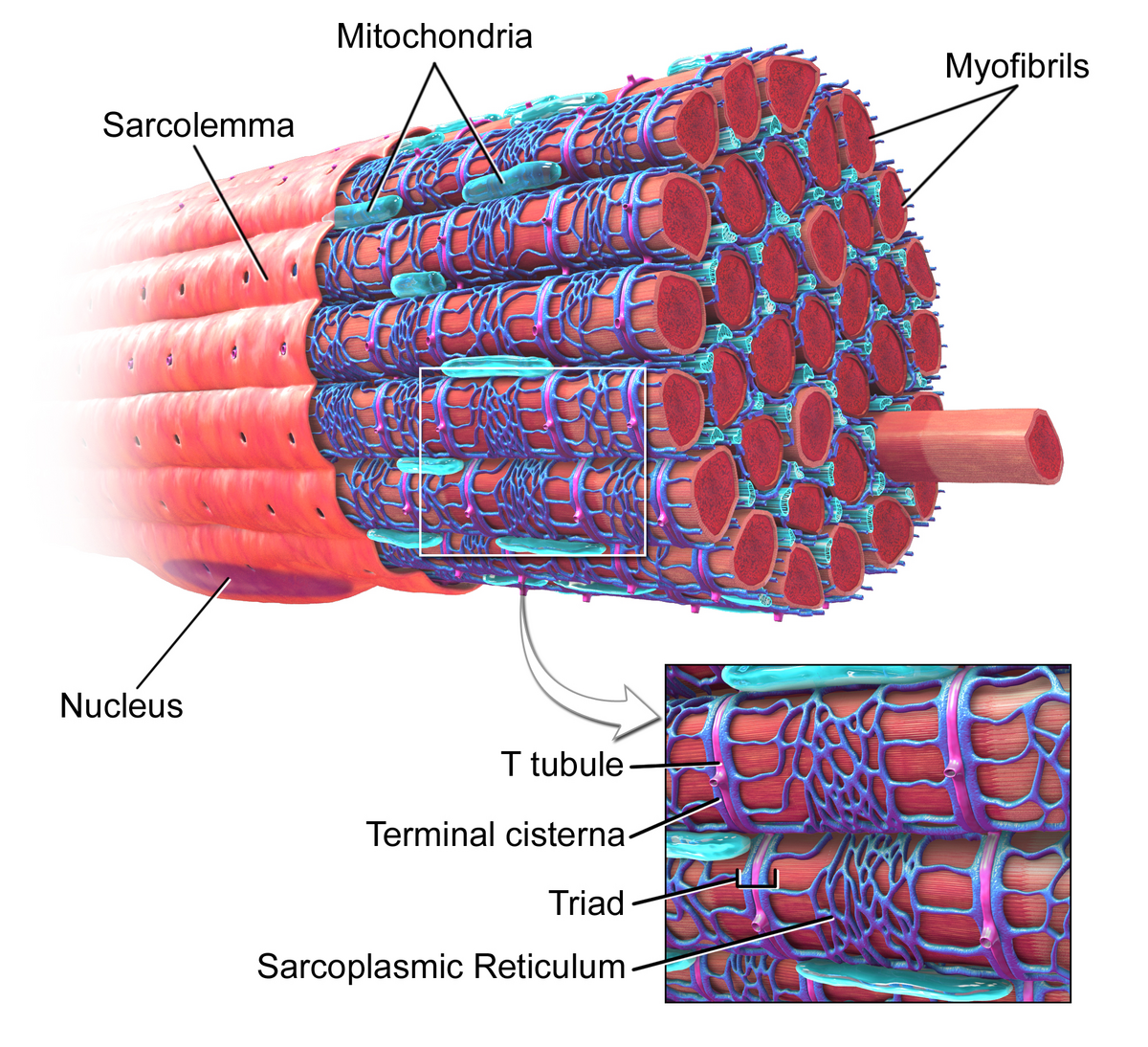
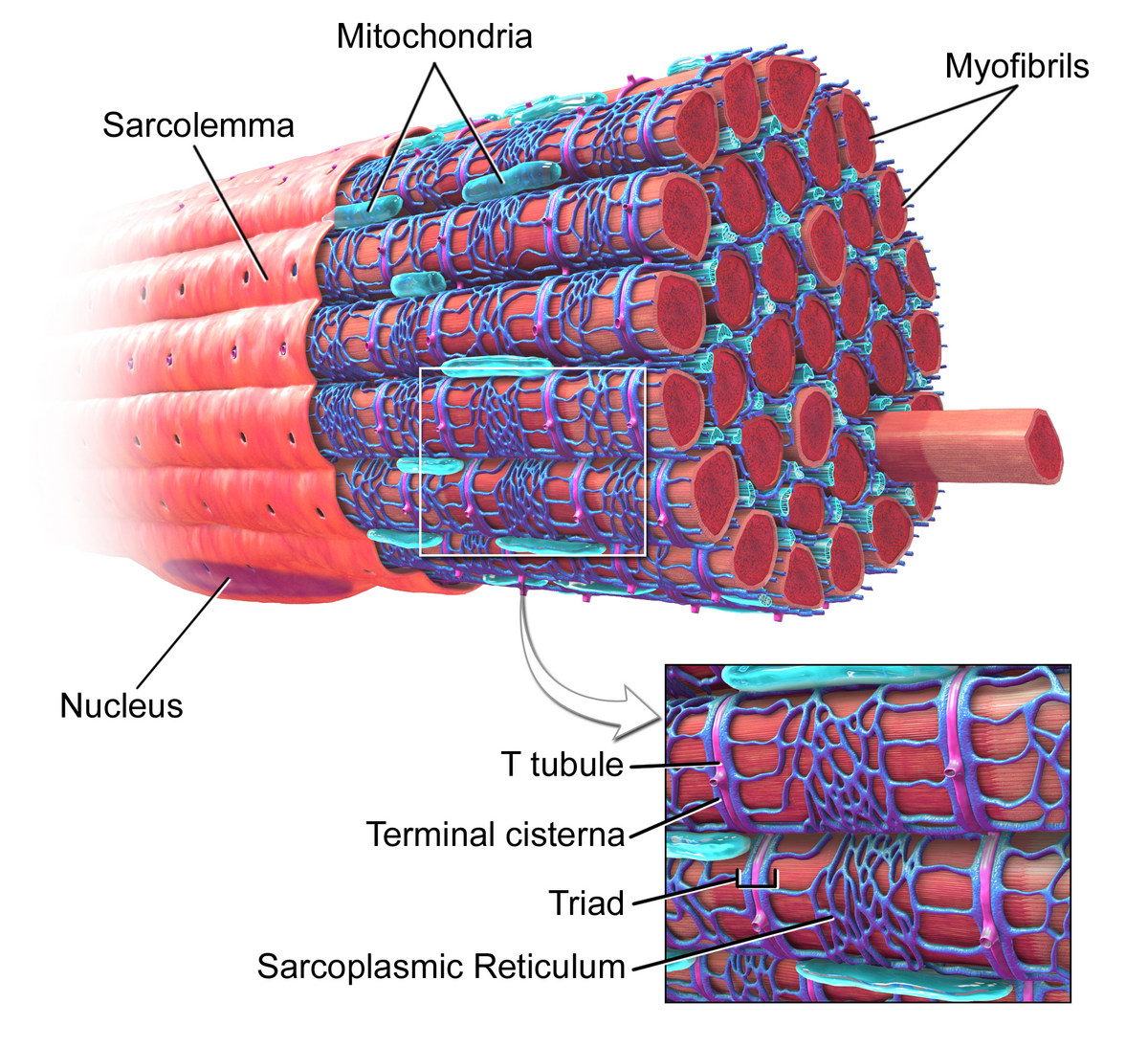
This cross-section shows how a single muscle fiber contains myofibrils, multiple peripheral nuclei, and layers of membrane. BruceBlaus. When using this image in external sources it can be cited as: Blausen.com staff (2014). "Medical gallery of , CC BY 3.0, via Wikimedia Commons
Individual muscle fibers contain thousands of smaller rod-like structures called myofibrils. These myofibrils consist of repeating sections called sarcomeres, which are packed with overlapping actin and myosin filaments. Connective tissue binds this entire structure together in layers: endomysium surrounds each fiber, perimysium wraps bundles of fibers called fascicles, and epimysium encases the entire muscle before blending into tendons that anchor onto bone.
How muscles generate force and energy
Contraction happens at the molecular level when myosin heads pull against actin filaments inside each sarcomere, drawing the filaments past each other. This motion consumes adenosine triphosphate (ATP), which the fiber generates either through the oxidation of fats and carbohydrates or through anaerobic reactions. Fast-twitch fibers rely heavily on anaerobic pathways to deliver rapid bursts of power.
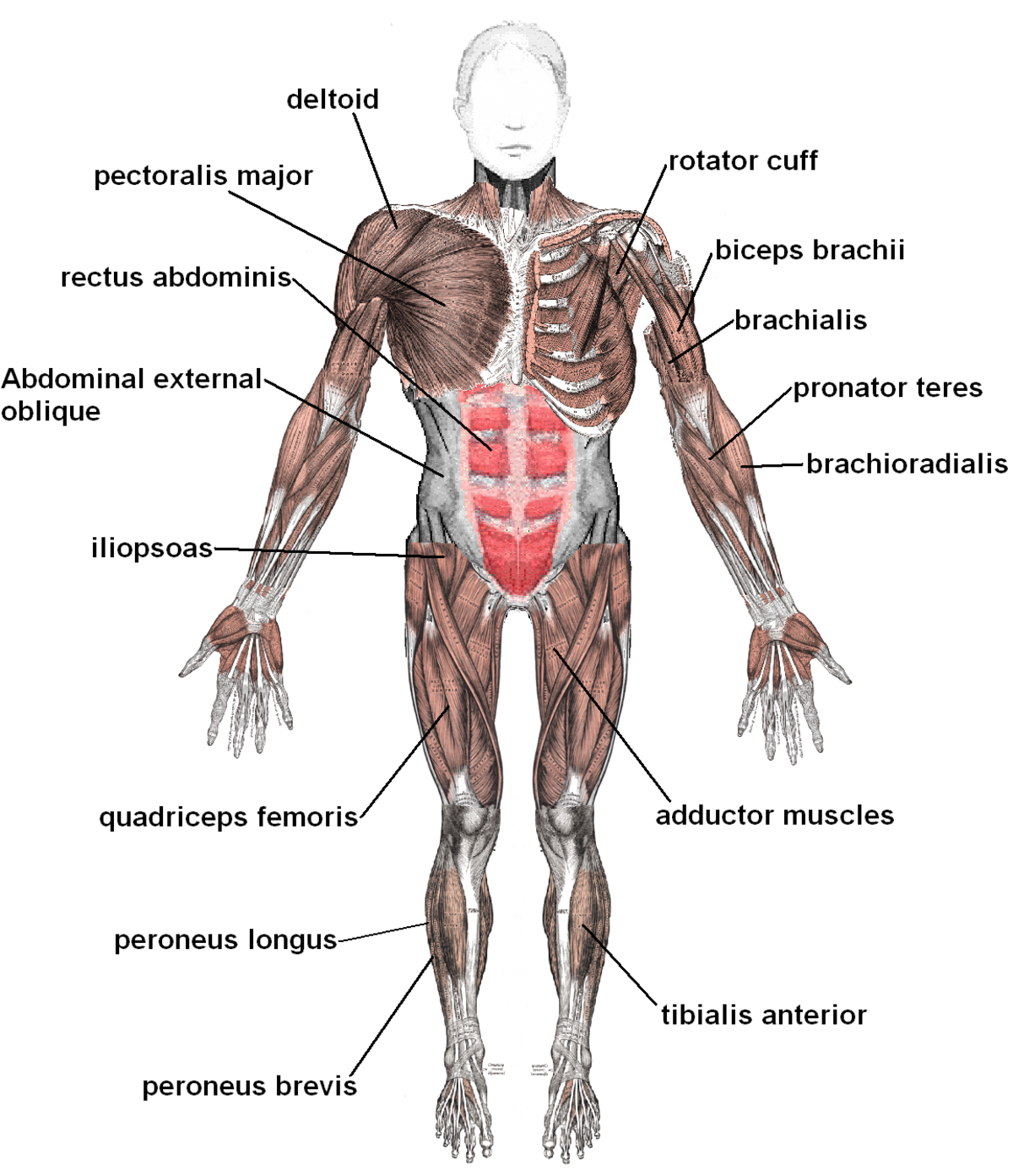
Major skeletal muscle groups across the front of the body attach to the skeleton to create movement and maintain posture. Mikael Häggström. When using this image in external works, it may be cited as: Häggström, Mikael (2014). "Medical galler, Public domain, via Wikimedia Commons
Skeletal muscle accounts for roughly 35 to 40 percent of body weight in healthy young adults. Two specialized sensory receptors constantly monitor its physical state: muscle spindles located in the belly of the muscle track stretch, while Golgi tendon organs sitting at the muscle-tendon junction measure tension.
Test yourself
How does skeletal muscle adjust its contraction force to lift different weights?
By recruiting more or fewer fibers. Skeletal muscle fibers operate on an all-or-none twitch rule. Total force changes through recruitment count rather than variable fiber effort.
What is a direct consequence of how skeletal muscle fibers are structured?
Each fiber requires multiple nuclei. Because skeletal muscle fibers can grow up to 30 centimeters long, a single nucleus cannot efficiently manage the entire cell, requiring hundreds spaced along its length.
Which muscle fibers grow significantly thicker after intense power training?
Fast-twitch fibers. Fast-twitch fibers respond to explosive, high-load work by adding protein strands, which increases overall muscle size.
Play the lesson in edgi and the card is yours. It lands on your Map next to the ideas it connects to, and turns from matte to foil to gold as you learn more around it.
What is the endocrine function of skeletal muscle?
Skeletal muscle functions as an endocrine organ by releasing chemical signals into the body. Under different physiological conditions, its secretome includes subsets of 654 proteins, as well as lipids, amino acids, metabolites, and small RNAs.
How do skeletal muscles repair and grow?
Quiescent stem cells called satellite cells rest between the basement membrane and the outer membrane of muscle fibers. When activated by exercise or injury, these satellite cells provide additional nuclei to help repair damaged tissue and support muscle growth.
How many skeletal muscles are in the human body?
There are more than 600 skeletal muscles in the human body. Most of these muscles occur in bilaterally placed pairs to serve both the left and right sides of the body.