Debt collectionHow ancient slavery became credit scores
Debt collection is the process of pursuing payments of money or other agreed value owed by a person or business to a creditor. Unpaid loans were once punished with physical enslavement or imprisonment. Today, the process relies on regulated agencies, legal asset seizures, and negative reports on your credit history.
By the edgi team We find the most surprising true thing about an idea and build a 60-second lesson around it.
For most of human history, unpaid debt was treated as a crime against the social order rather than a simple financial setback. In Ancient Rome, the law of the Twelve Tables was terrifyingly literal. If a debtor defaulted across multiple creditors, the law permitted them to physically cut the debtor's body into pieces to divide.
Whether this gruesome penalty was ever literally carried out is debated, but it established a clear baseline: debt was a matter of life and limb.
The debtor's prison
By the 18th century, England largely replaced physical dismemberment with debtor's prison. People were locked away until they paid off what they owed, a mathematically impossible task since they couldn't earn any money while incarcerated.
It wasn't until the 19th century that society realized it was far more practical to let a person work to pay off what they owed.
The digital cage
This pivot gave rise to modern collection agencies and legal garnishment, shifting from iron bars to bureaucratic pressure. Today, laws like consumer protection regulations prevent collectors from using extreme public shaming tactics.
Instead, your credit history acts as a digital wall, using a numerical score to control your access to the modern economy.
How debt recovery changed over history
Debt collection is older than minted money, appearing in Sumer around 3000 BC under barter systems. Early civilizations forced defaulting debtors, along with their spouses, children, or servants, into debt slavery to work off what was owed. Babylonian Law later created strict repayment guidelines and basic protections for debtors.
Foreclosure signs like this one mark the legal process where lenders seize property to recover unpaid mortgage debts. User:Brendel at en.wikipedia.org, CC BY-SA 3.0, via Wikimedia Commons
By the Middle Ages, creditors could take delinquent borrowers to court. A bailiff would seize household goods, or a catchpole would use coercive methods to remit the debtor to prison until family members settled the balance. When debtor prisons were abolished in the early 1800s, creditors lost their primary coercive tool. For unsecured debts without collateral, creditors were left with few options beyond checking a customer's creditworthiness before issuing a loan.
How collection agencies work
Businesses issue invoices with cash terms (due immediately) or credit terms, such as 30 days. When an invoice remains unpaid past its term, it becomes overdue. If a company cannot recover the funds internally, it creates a collection account and routes the debt through specialized agencies.
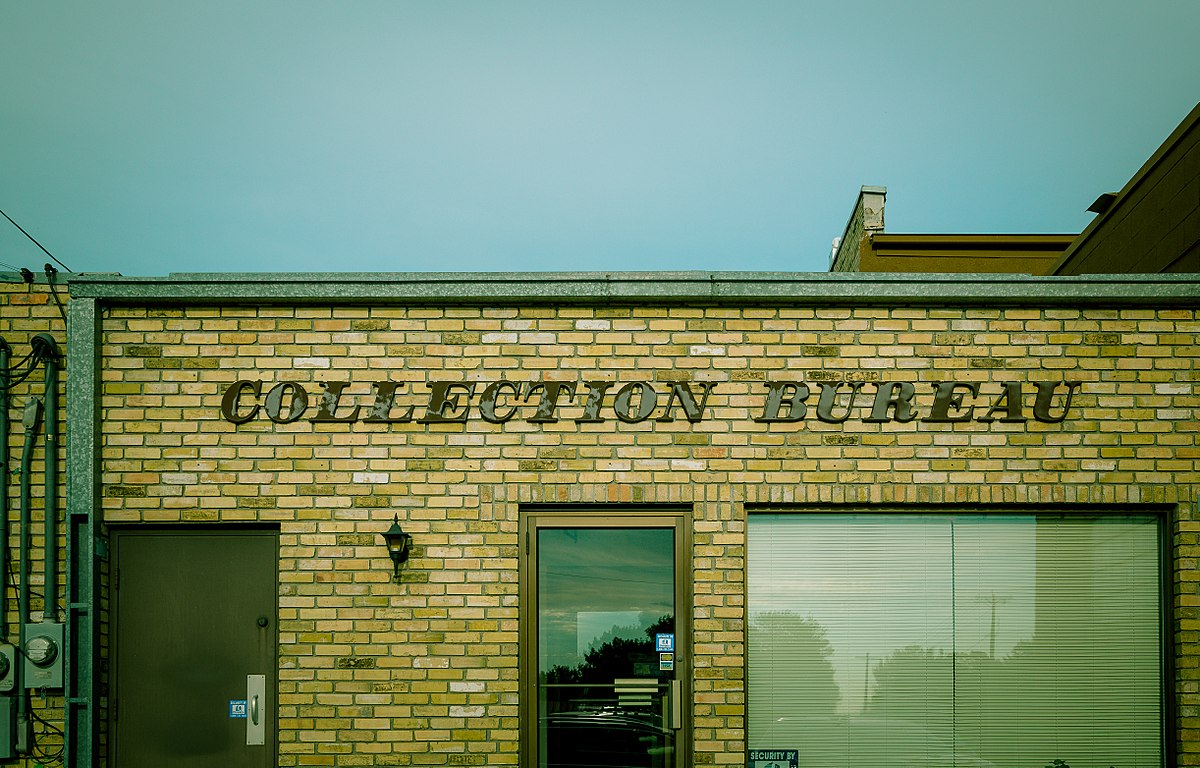
Third-party collection agencies operate specialized offices to contact debtors and recover outstanding balances for fees. Tony Webster from Minneapolis, Minnesota, United States, CC BY-SA 2.0, via Wikimedia Commons
First-party agencies are internal departments or subsidiaries of the original creditor. They intervene early to preserve the customer relationship and often operate outside the regulations that target outside collectors. If a first-party team cannot collect within several months, the creditor hands the debt to a third-party agency for a percentage fee, or sells the debt outright to a debt buyer at a discount.
Play the lesson in edgi and the card is yours. It lands on your Map next to the ideas it connects to, and turns from matte to foil to gold as you learn more around it.
What is the difference between secured and unsecured debt collection?
Secured debt involves collateral, such as a mortgage, allowing the creditor to seize the physical property if the borrower defaults. Unsecured debt has no physical backing, leaving creditors unable to collect if the debtor has no money, even after obtaining a court judgment.
How does debt collection affect a credit record?
Creditors and agencies report late payments, collection accounts, and defaults to credit reporting agencies. These negative marks remain on a person's credit record for several years and affect their access to future financial services.
Are consumer and business debts collected the same way?
No. The collection of consumer debt is subject to strict legislation in many countries that limits harassment and unfair practices. Business-to-business debt collection faces less regulatory oversight.