UsuryWhy charging any interest was once treated as murder
Usury is the practice of lending money at interest rates that are unfairly high or exceed legal limits. In modern finance, it refers specifically to illegal or predatory lending, often practiced by loan sharks. In ancient and medieval times, the term meant charging any interest at all on a loan, which religious doctrines and philosophers condemned as immoral exploitation.
By the edgi team We find the most surprising true thing about an idea and build a 60-second lesson around it.
For centuries in Europe, charging any interest on a loan was considered a grave moral sin. Theologians argued that time belonged solely to God, so selling it for profit was essentially stealing from Him.
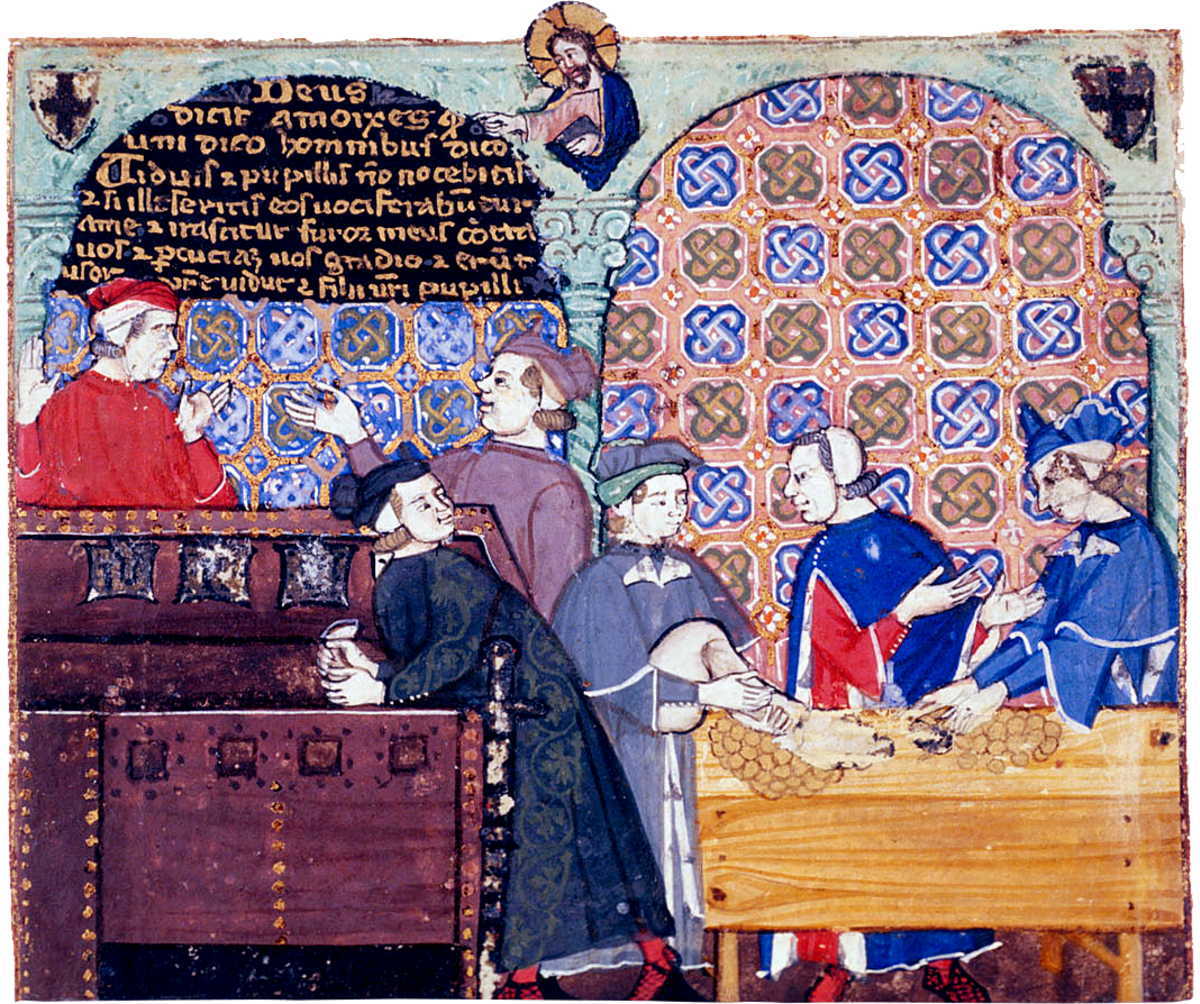
A 14th-century illuminated manuscript depicting bankers and merchants in an Italian counting house. Cocharelli, Public domain, via Wikimedia Commons
Lenders were viewed not just as greedy, but as spiritual criminals profiting from the passage of days.
Loopholes
Because the entire banking industry was technically illegal, medieval financiers had to get creative. Thirteenth-century Italian merchants invented complex currency exchanges and late fees to disguise their profit.
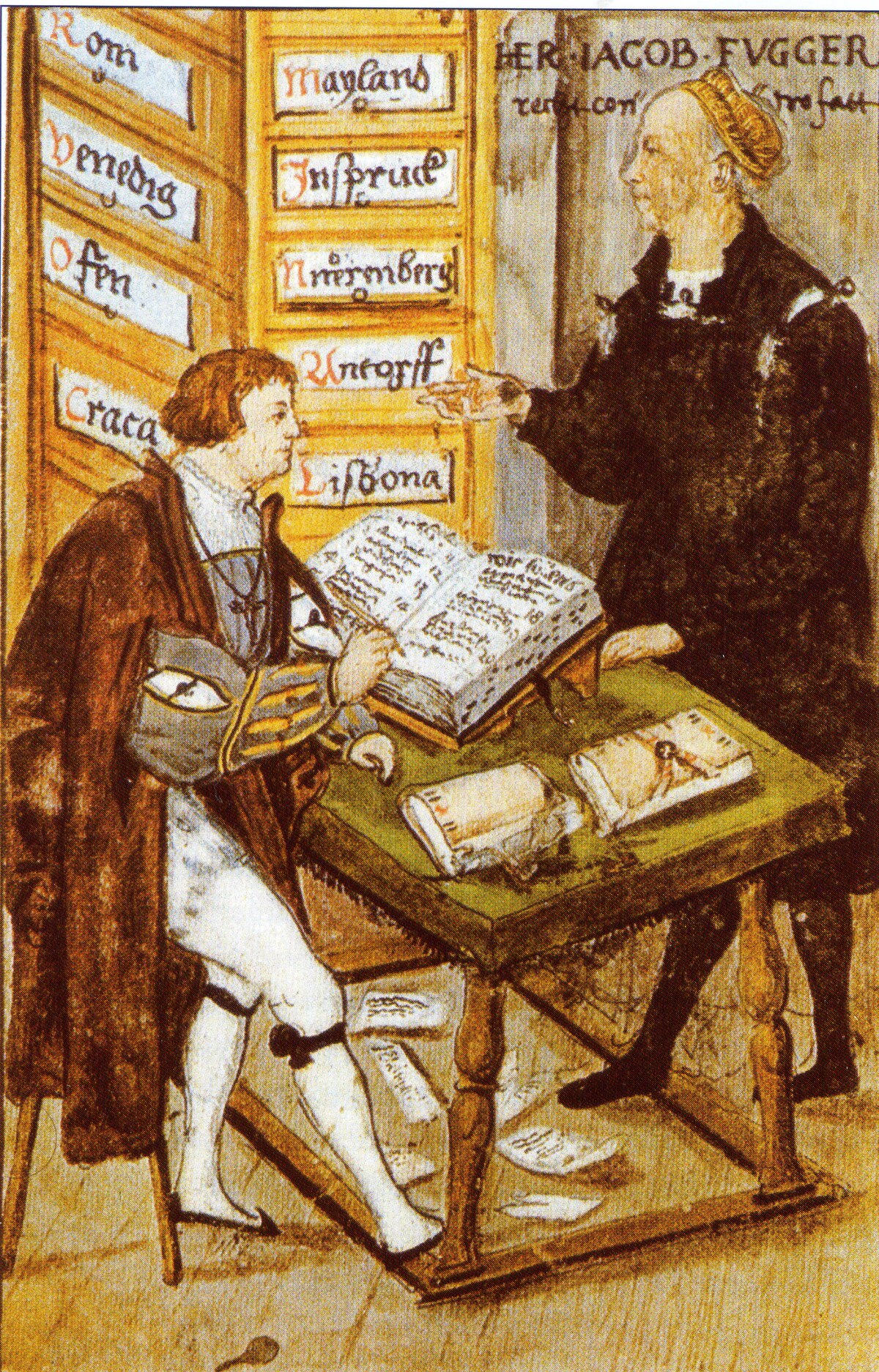
A 16th-century painting depicting the German banker Jakob Fugger and his principal accountant, M. Narziss Renner, Public domain, via Wikimedia Commons
Many lived in constant fear of dying with unrepentant debts, leaving massive fortunes to the church on their deathbeds to buy salvation.
Modern ghosts
Today, the moral ban on interest has faded, replaced by laws targeting exploitative rates. Modern caps on payday loans fight the same ancient ghost: the inescapable debt trap.
The struggle remains balancing the necessity of credit against the predatory practices of the loan shark.
Ancient origins and early rates
Earliest Near Eastern societies did not ban lending at interest. People lent seeds, olives, dates, and livestock as early as 5000 BC, treating physical goods as living matter capable of reproducing. Mesopotamian, Hittite, Phoenician, and Egyptian states permitted and regulated interest.
Philosophers in Greece and Rome took a harsher view. When asked for his opinion on lending at usury, the Roman statesman Cato responded by asking: 'What do you think of murder?' In the Roman Empire, private lenders quoted interest on a monthly basis, often charging annual rates of 24 percent or 48 percent. When currency crises hit in the third century, these debt burdens crippled peasant tenant farmers and reduced them to serfs.
Thinkers including Plato, Aristotle, Cicero, Seneca, Gautama Buddha, and Muhammad condemned the practice. In India during the Sutra period, laws barred the highest castes from lending money for interest.
Medieval bans and royal persecution
In medieval Europe, the Catholic Church and Reformed Churches declared that charging interest of any kind was a mortal sin. As Thomas Aquinas explained in the thirteenth century, money was invented purely as a medium of exchange for goods, making it unjust to charge an extra fee for its use.
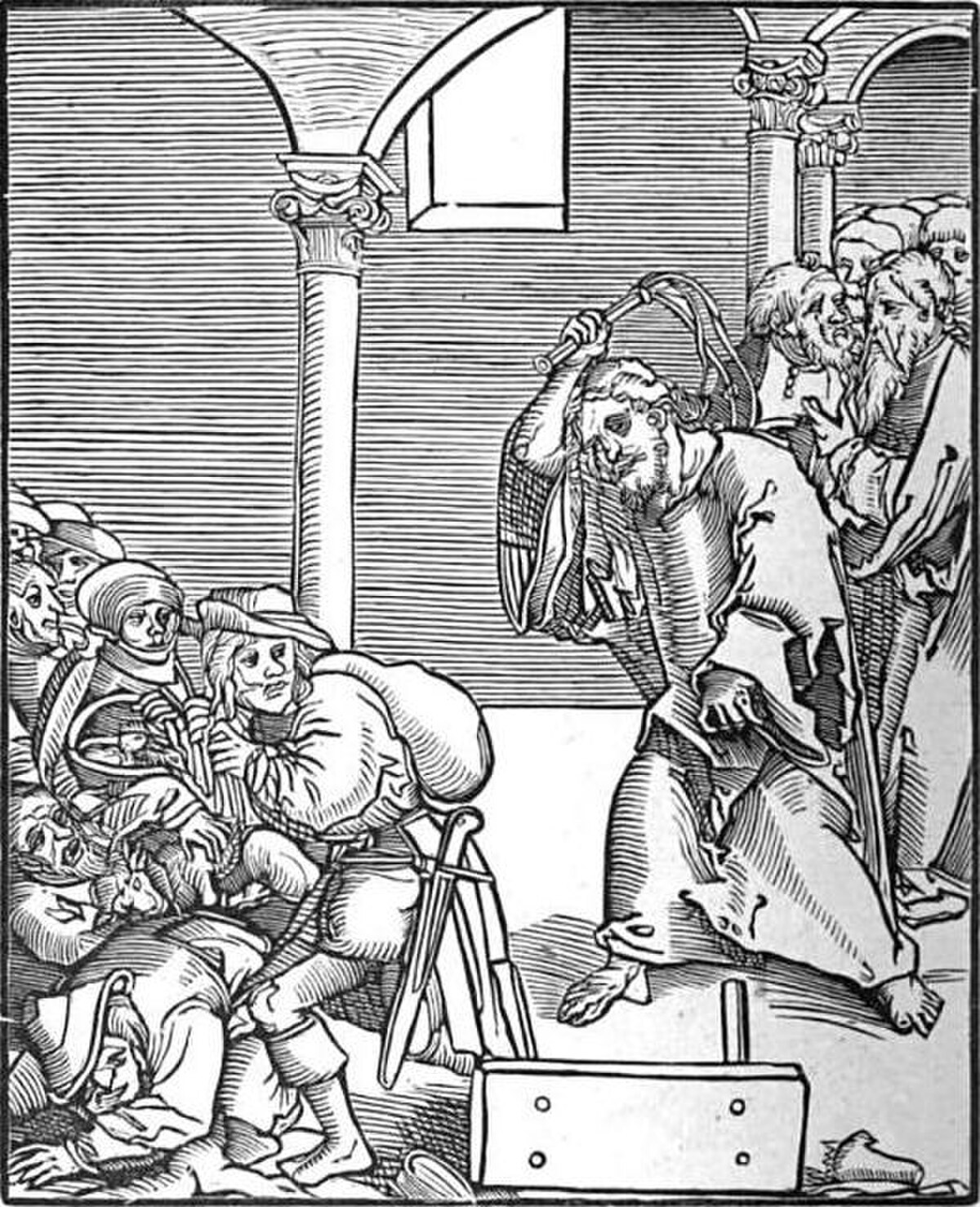
A sixteenth-century woodcut by Lucas Cranach the Elder depicting Christ driving moneylenders out of the Temple, illustrating the Christian condemnation of usury. Lucas Cranach the Elder, Public domain, via Wikimedia Commons
Monarchs weaponized usury laws against Jewish populations, who were excluded from other trades and often operated as moneylenders. In 1189 and 1190, English crusaders joined indebted mobs in massacres of Jews at London and York. King Edward I passed the Statute of Jewry in 1275, outlawing usury and seizing Jewish assets, before hanging 300 Jews and expelling the entire population in 1290 under the official pretext of halting usury.
By the sixteenth century, short term interest rates dropped from 20 to 30 percent down to 9 or 10 percent. Increased capital availability and the Reformation softened religious bans, transforming usury from a total prohibition on interest into legal caps against abusive rates.
Test yourself
Usury laws target exploitative lending. What is a payday-loan rate cap meant to limit?
Debt traps driven by excessive interest. Modern usury rules focus on abusive rates that can trap borrowers in debt, not on banning every loan that charges interest.
Medieval theologians condemned interest as a sin because they believed selling the passage of time was stealing from God.
True. Because time was viewed as God's domain, profiting from its duration was considered a moral transgression, leading merchants to disguise interest through complex financial loopholes.
Play the lesson in edgi and the card is yours. It lands on your Map next to the ideas it connects to, and turns from matte to foil to gold as you learn more around it.
What is the difference between interest and usury today?
Today, interest is standard compensation for lending money within limits set by law. Usury applies only to interest that exceeds legal caps or exploits a borrower through abusive terms.
How do different world religions view usury?
Judaism refers to usury as ribbit, and Islam calls it riba, both containing strict textual prohibitions against charging interest. Buddhism and early Christianity similarly treated taking interest as morally wrong.