GarnishmentCollecting debt directly from third parties
Garnishment is a legal order that allows a creditor to collect money owed by taking it directly from a third party, such as your employer or your bank, before you receive it. It lets creditors satisfy debts without needing your permission for each payment. While standard debt collection requires dealing directly with the debtor, garnishment legally intercepts funds at their source.
By the edgi team We find the most surprising true thing about an idea and build a 60-second lesson around it.
Garnishment is a legal process where a creditor collects a debt directly from someone else who is holding your money. That third party, known as the garnishee, is usually your employer or your bank.
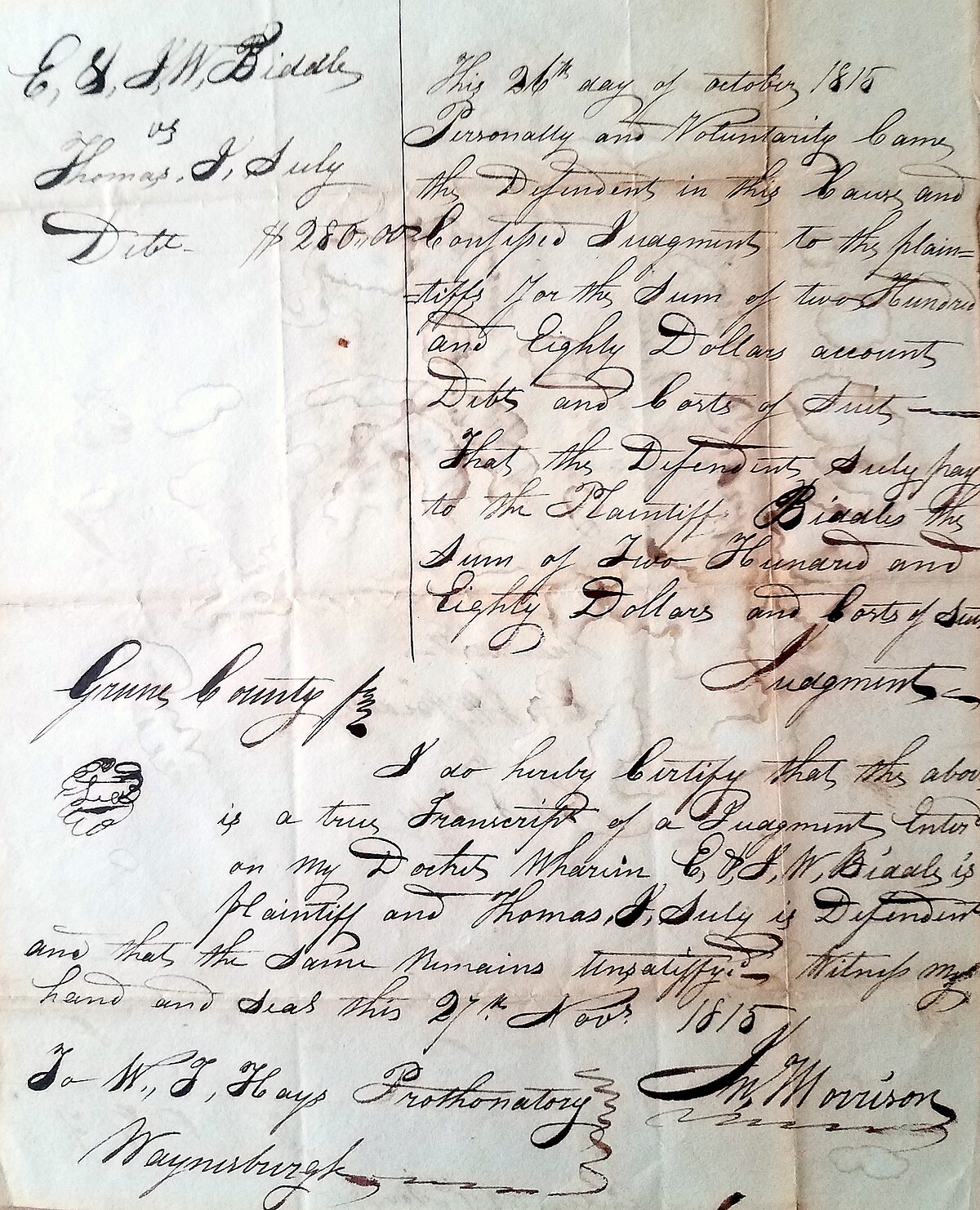
Handwritten legal document titled "Judgment of Debt, Greene County, Pennsylvania, 1815." The document details a judgment of debt between E. personnel of the court , Greene County, Pennsylvania, Public domain, via Wikimedia Commons
Before your paycheck ever hits your account, a portion of it is siphoned off to satisfy a judgment.
The legal ambush
For a debtor, this is one of the most aggressive forms of debt collection because it completely bypasses your consent. Historically, creditors could abuse this power brutally.
In 1969, the U.S. Supreme Court stepped in after creditors were freezing entire paychecks before a trial even happened, leaving workers with zero income. The court ruled this violated due process, leading to modern civil procedure rules that strictly limit how much can be taken from wages.
How wage garnishment works
Wage garnishment is the most common form of garnishment and takes money straight from an employee's paycheck. When an employer receives a garnishment order, they are legally required to calculate the proper withholding and deduct the funds during payroll processing until the debt is resolved. An employer who fires an employee to avoid dealing with a garnishment faces federal penalties of up to a $1,000 fine and one year in prison.
When an employee owes multiple debts, garnishments follow a strict priority order. Federal tax debts are satisfied first, followed by local tax garnishments, and lastly consumer debts like credit card judgments. These deductions can negatively impact a debtor's credit, reputation, and ability to obtain loans or open bank accounts.
Legal limits and exemptions
Federal law strictly limits how much money a creditor can take from weekly earnings. The standard weekly cap is the lower of 25% of disposable earnings (income remaining after mandatory taxes) or the amount by which weekly earnings exceed 30 times the federal minimum wage. Four states (Pennsylvania, North Carolina, South Carolina, and Texas) prohibit wage garnishment entirely, except for specific obligations like taxes, child support, student loans, and court-ordered fines.
Specific categories of income receive full protection from creditors in many jurisdictions. In Minnesota, creditors cannot garnish retirement benefits, social security, welfare payments, workers' compensation, or disability and unemployment insurance. In Florida, head-of-household earnings for individuals who provide more than half the financial support for a dependent are entirely exempt unless waived.
Attachments and IRS administrative levies
Beyond wages, creditors use a one-time garnishment mechanism called attachment, which is frequently served on banks. Rather than continuing over multiple pay periods, an attachment requires the bank to immediately turn over the debtor's existing funds or property held at the time the order is served.
Unlike standard creditors who must win a court judgment first, the Internal Revenue Service can initiate wage garnishment through an administrative levy without a court order. The IRS must assess the tax, issue a written demand for payment, and send a Final Notice of Intent to Levy at least 30 days before taking action. Because the IRS only has to mail this notice to the last known address, the levy is legally valid even if the taxpayer never actually receives it.
Play the lesson in edgi and the card is yours. It lands on your Map next to the ideas it connects to, and turns from matte to foil to gold as you learn more around it.
What is the difference between garnishment and execution?
Garnishment seizes money or property belonging to a debtor that is currently held by a third party, such as a bank or employer. Execution allows the seizure of money or property held directly by the debtor.
What is a Writ of Sequestration?
A Writ of Sequestration is the specific legal term used in many states for a garnishment issued against an employee or appointee of a governmental unit. Courts process these writs in the same manner as standard garnishments, applying the same wage exemptions.