Credit card debt is money owed to a card issuer after buying goods or services and not paying the balance immediately. Unlike standard loans with a fixed payoff date, it functions as a revolving balance that compounds interest daily. Paying only the minimum required balance allows the debt to expand over years while barely reducing the original principal.
By the edgi team We find the most surprising true thing about an idea and build a 60-second lesson around it.
The modern credit card was born in 1950 when Frank McNamara forgot his wallet at a New York restaurant. To avoid future embarrassment, he created the Diners Club card so elite diners could settle their tabs at month's end.
The interior of Ruby's Diner in Colorado Springs, 2008, features a classic 1950s-style decor with red booths, a long counter, and checkered flooring. David Shankbone, CC BY-SA 3.0, via Wikimedia Commons
By the 1970s, a Supreme Court ruling let banks export their home state's Interest Rate nationwide, bypassing local caps.
The revolving trap
Unlike an ordinary loan with a fixed end date, credit card debt is a revolving balance designed for endless accumulation. Because interest compounds daily, paying only the minimum balance barely touches the principal.
Diagram illustrating the front of a typical debit card, with eight labeled components. AlexJ, Andreasl01, and VulcanSphere, Public domain, via Wikimedia Commons
A $500 grocery bill can quietly balloon into thousands of dollars over years of small, seemingly safe payments.
The fallout
Missing just a few payments triggers default penalties and damages your Credit Score, raising costs for future loans. When balances spiral out of control, people often turn to Debt consolidation or even Bankruptcy to escape the cycle.
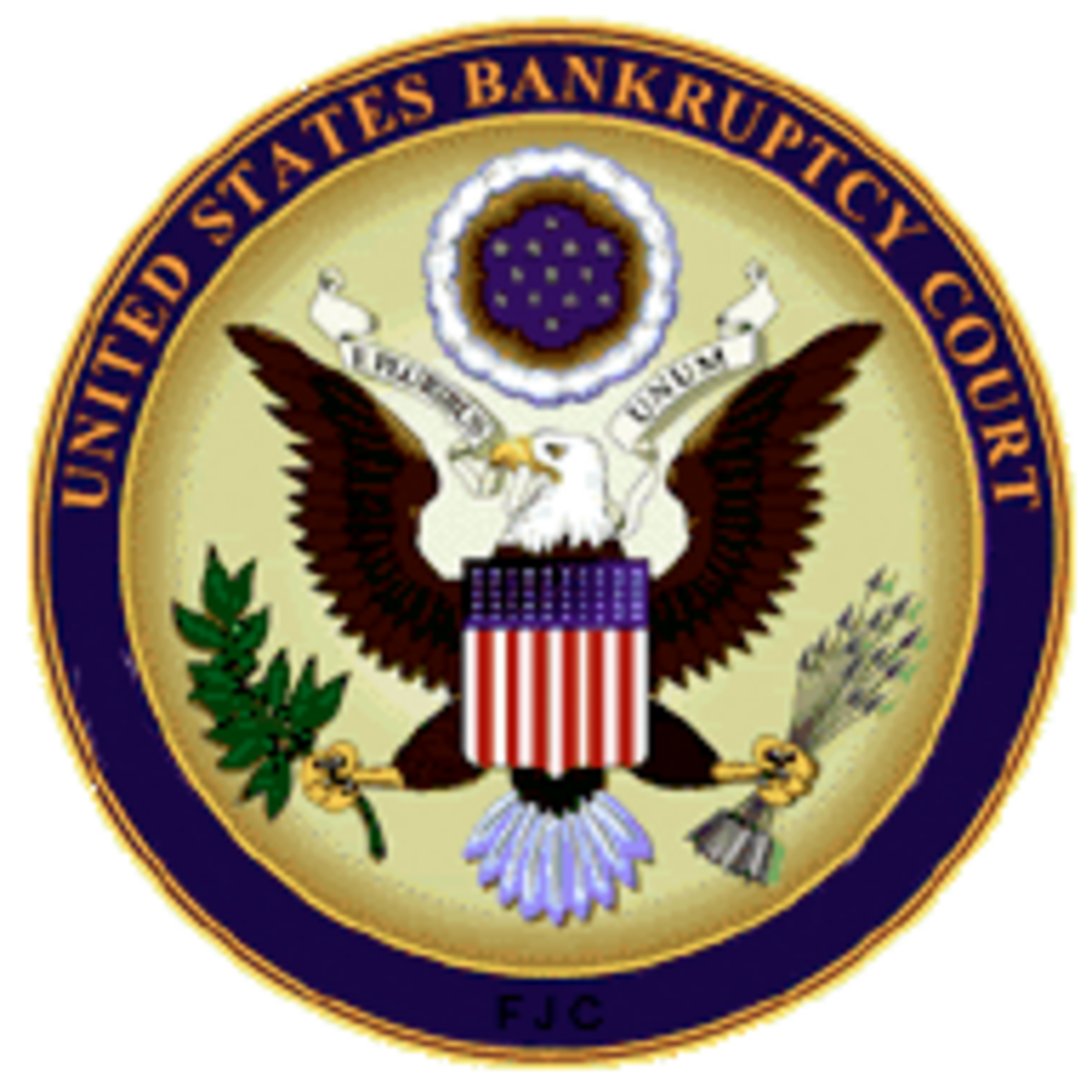
The official seal of the United States Bankruptcy Court features a bald eagle holding an olive branch and arrows, with a shield displaying red and white stripes and a blue field of stars. Public domain, via Wikimedia Commons
The entire system relies on a simple glitch: we enjoy the purchase today, but the compounding math makes us pay for decades.
How balances compound and penalize borrowers
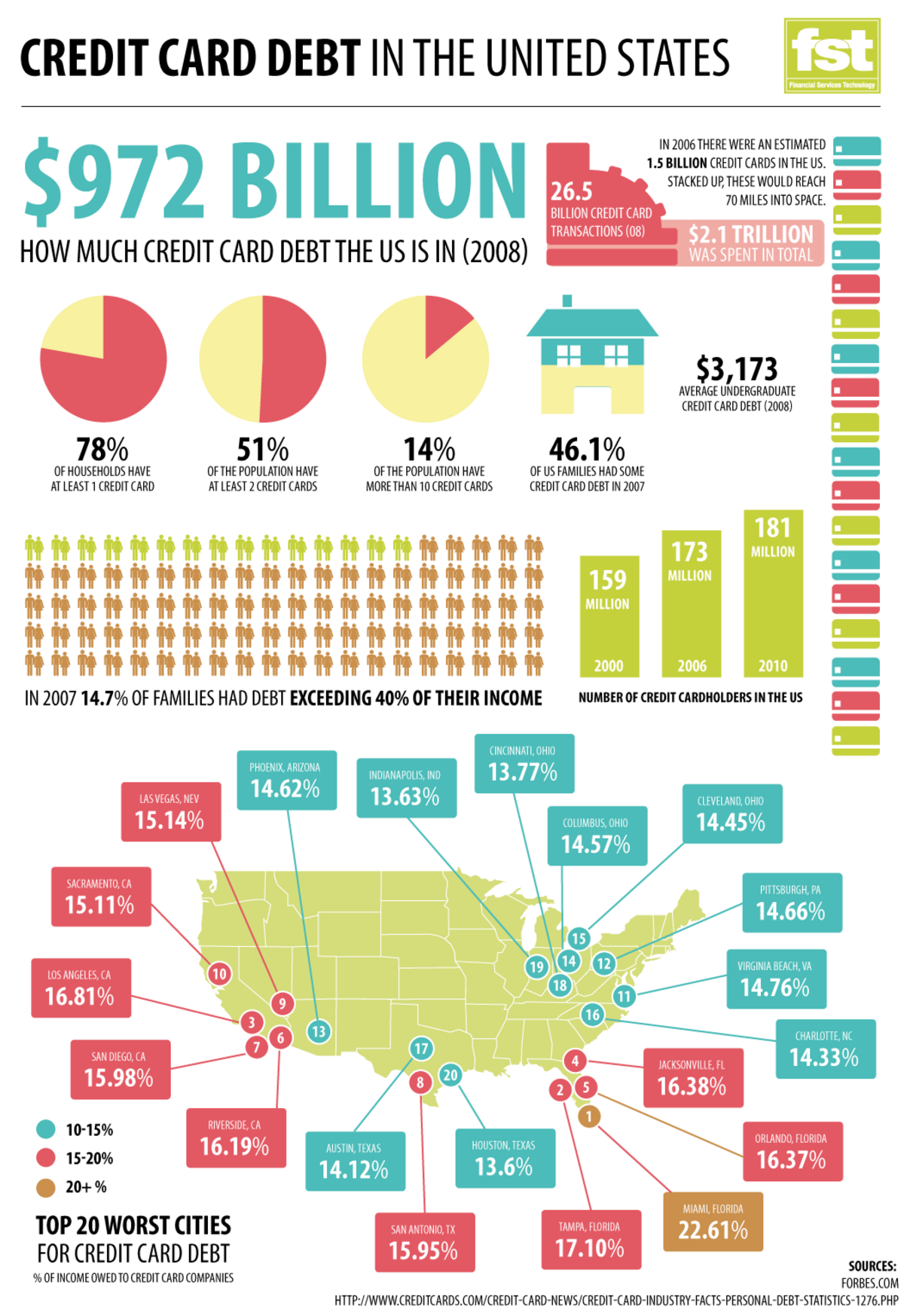
A credit card debt grows whenever a user fails to repay their balance, triggering interest charges and late penalties. Missing multiple payments allows issuers to raise interest to a high penalty Annual Percentage Rate (APR). By the fourth quarter of 2023, total U.S. credit card balances reached $1.13 trillion, with 8.5 percent transitioning into delinquency.
This infographic details how individual debt balances and interest obligations accumulated across the United States in 2010. Tiffany Farrant, CC BY 2.0, via Wikimedia Commons
Credit bureaus track these behaviors closely. Credit scores drop when borrowers make late payments or max out cards, while consumers who keep utilization under 30% and pay on time maintain higher scores. As of 2024, card issuers are legally required to disclose on monthly statements exactly how much time and money it will take to settle a balance using only minimum payments.
Options for relief, collections, and bankruptcy
Carrying debt carries real physical costs: research shows that people with credit card balances are more likely to forgo medical care. Borrowers seeking relief often look to debt settlement, debt consolidation, credit counseling, or balance transfers to lower rates. Unpaid debts sent to collection agencies can lead to court actions, resulting in the garnishment of wages and the seizure of bank accounts.
Under Chapter 7 and Chapter 13 bankruptcy, debtors can legally dismiss certain balances, though card issuers have lobbied the federal government to tighten these laws. Bankruptcy courts also examine account history: large purchases or cash advances made within 60 days of filing can be classified as fraud.
Play the lesson in edgi and the card is yours. It lands on your Map next to the ideas it connects to, and turns from matte to foil to gold as you learn more around it.
What happens if a credit card company forgives a debt?
When a lender or collection agency forgives an outstanding balance, the debtor is relieved of repayment. In the United States, the forgiven amount is reported on a 1099-C tax form, which the debtor must file.
Why do credit card debt statistics drop in the first quarter of the year?
Consumers often pay off large portions of their debt in the first fiscal quarter because they receive tax refunds and holiday bonuses. In addition, national drops in reported debt can reflect companies writing off uncollectible debt through charge-offs.