A payday loan is a small, short-term unsecured loan designed to be repaid in full when the borrower receives their next paycheck. Unlike traditional bank loans, it requires no collateral like a car or house, relying instead on a postdated check or electronic bank access. Because the fees and interest rates are exceptionally high, borrowers frequently cannot afford to clear the balance on payday and end up trapped in repeated cycles of debt.
By the edgi team We find the most surprising true thing about an idea and build a 60-second lesson around it.
A payday loan is a short-term advance meant to bridge the gap until your next paycheck. You write a postdated check for the full amount, and the lender hands you cash minus a steep upfront fee.
It is technically an unsecured loan because you do not put up a car or a house as collateral. Instead, your future salary acts as the guarantee.
The debt trap
Because the fees are so high, borrowers often cannot afford to repay the full balance on payday. Instead of walking away, they pay another fee to roll the loan over into the next week.
This spiral of borrowing turns a small cash crunch into a massive financial burden, often cited as a clear case of predatory lending. A single $300 loan can easily balloon into hundreds of dollars in extra fees, ultimately dragging down the borrower's credit score.
The retail footprint
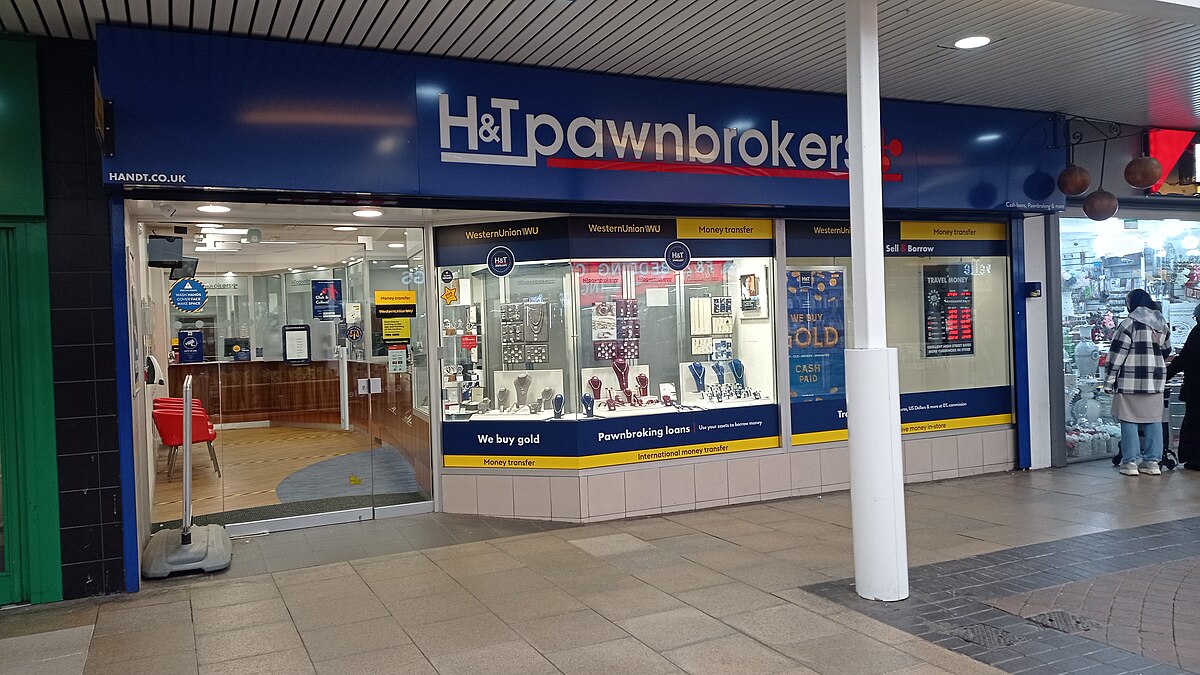
The modern industry exploded in the 1990s by positioning storefronts directly in working-class neighborhoods. They frequently target unbanked individuals who lack access to traditional credit cards or bank accounts.
The exterior of a "Check Into Cash" store, a payday loan company, with its red and green logo visible above the entrance. Wikilester1999, CC BY-SA 4.0, via Wikimedia Commons
While consumer protection agencies push for stricter caps on interest rates, many lenders simply migrate online to evade the rules.
How the loan process works
In a standard retail setup, a borrower visits a storefront and provides proof of income, such as pay stubs and bank statements. The borrower receives immediate cash after writing a postdated check for the full loan amount plus upfront fees.
On the borrower's next payday, they must return to pay off the balance in person or allow the lender to cash the check. If the borrower's bank account lacks the funds, the check bounces, triggering bank penalties alongside higher interest rates and penalty fees from the lender. Online lenders use electronic direct deposits and automate withdrawals directly from the borrower's checking account on payday.
Some lenders do not run credit checks or verify income at all, relying entirely on their ability to debit the borrower's account or cash the postdated check when payday arrives.
Why borrowers get trapped in repeat debt
The average payday loan borrower remains in debt for five months out of the year rather than resolving a short two-week emergency. While lenders market these products as temporary relief for unexpected expenses, studies show that most customers borrow to pay for ordinary, recurring living obligations like food and utility bills.
When the full balance comes due on payday, paying it off in one lump sum leaves the borrower without enough money to survive until the next pay period. In Texas, data showed that loan refinances accounted for $2.01 billion in volume compared to $1.08 billion in initial loans, demonstrating that rollover fees quickly outstrip the original cash borrowed.
A 2019 study found that payday loans double personal bankruptcy rates in the United States by degrading household cash flow. In the United Kingdom, researchers found that these loans cause persistent spikes in defaults and push consumers past their bank overdraft limits.
Who uses payday loans and how laws regulate them
Payday lending was rare before the 1990s but expanded rapidly into physical storefronts and online platforms. Demographically, the highest rates of use occur among people without a four-year college degree, renters, African American and Hispanic families, recent immigrants, single parents, and divorced individuals.
Governments regulate the practice with widely varying rules. Some jurisdictions outlaw payday lending completely, while others cap the annual percentage rate to curb usury, which is the practice of charging unreasonable and excessive interest. When local regulations tighten, many lenders move their operations online to keep serving unbanked and underbanked customers who cannot access traditional bank credit.
Play the lesson in edgi and the card is yours. It lands on your Map next to the ideas it connects to, and turns from matte to foil to gold as you learn more around it.
What happens if a borrower cannot repay a payday loan on time?
If a borrower cannot pay, the lender deposits the postdated check or debits their bank account electronically. If the account lacks sufficient funds, the borrower faces bounced check fees from the bank alongside steep extra fees and higher interest rates from the lender.
What is usury in payday lending?
Usury refers to charging excessive or unreasonable interest rates on a loan. Many jurisdictions pass usury laws that set legal caps on the annual percentage rate lenders can charge to protect borrowers from predatory debt.
Are payday loans secured by physical property?
No, payday loans are unsecured loans that do not require physical collateral such as a vehicle title or real estate. The lender instead secures the debt using the borrower's postdated check, electronic access to their bank account, or future paycheck.