Deficit spending is the amount by which spending exceeds revenue over a specific period, usually a single fiscal year. When a government runs a deficit, it finances the gap by borrowing, such as selling bonds to investors. Economists actively debate whether this practice is an essential tool to fight recessions or a harmful driver of national debt and inflation.
By the edgi team We find the most surprising true thing about an idea and build a 60-second lesson around it.
Deficit spending happens when a government spends more during a period than it receives in taxes and other income. The difference is a budget shortfall that has to be financed. A deficit measures one period, usually a fiscal year. It is like the water added to a bathtub this year, not all the water already in the tub.
A budget surplus is the opposite. It means receipts exceeded spending during that period.
A smaller gap can still add up
A smaller deficit can still add to debt. Imagine a government borrows $100 in one year, then $60 in the next. Its deficit fell by $40, but it still needed another $60 of financing. That is why a smaller deficit can still increase the national debt. The debt is everything the government already owes; the deficit is the gap between spending and receipts in one year.
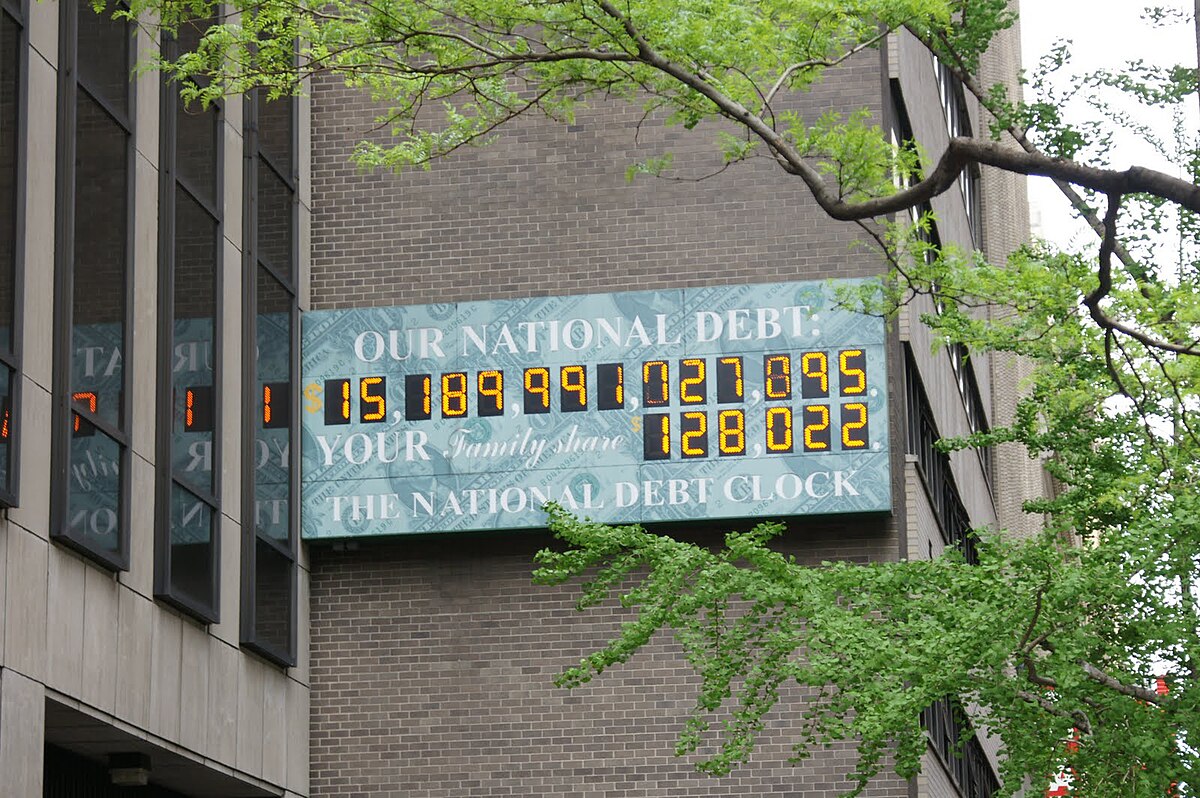
The National Debt Clock is displayed outside the IRS office in New York City on April 20, 2012. Valugi, CC BY-SA 3.0, via Wikimedia Commons
Debt falls only when a government repays more borrowing than it adds. Running a surplus gives it money to make that happen.
How the united states covers the gap
In the United States, the Treasury generally covers federal financing needs by selling Treasury securities. Buyers provide cash now in exchange for promised payments later. That sale is borrowing from investors. The size of the annual deficit helps determine how much new financing Treasury needs, alongside replacing securities that are coming due.
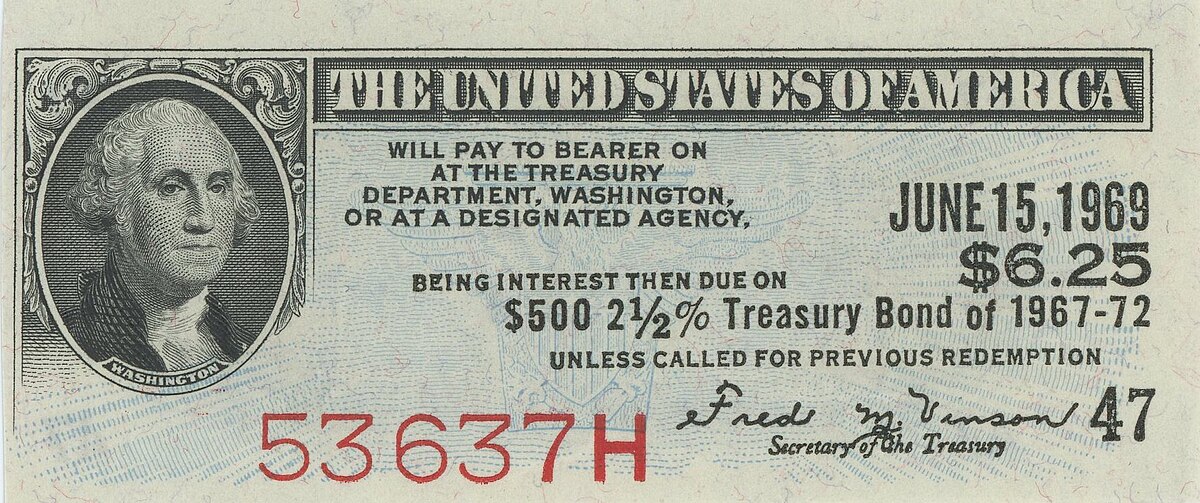
A 1945 2.5% $500 Treasury Bond coupon, featuring a portrait of George Washington on the left and details of the bond on the right. JHerbstman, Public domain, via Wikimedia Commons
The Keynesian view and countercyclical policy
John Maynard Keynes first identified deficit spending as a necessary tool during the Great Depression. Mainstream Keynesian economics argues that governments should run deficits during economic downturns to make up for shortfalls in aggregate demand. When private businesses and consumers stop spending, government purchases inject purchasing power back into the economy.
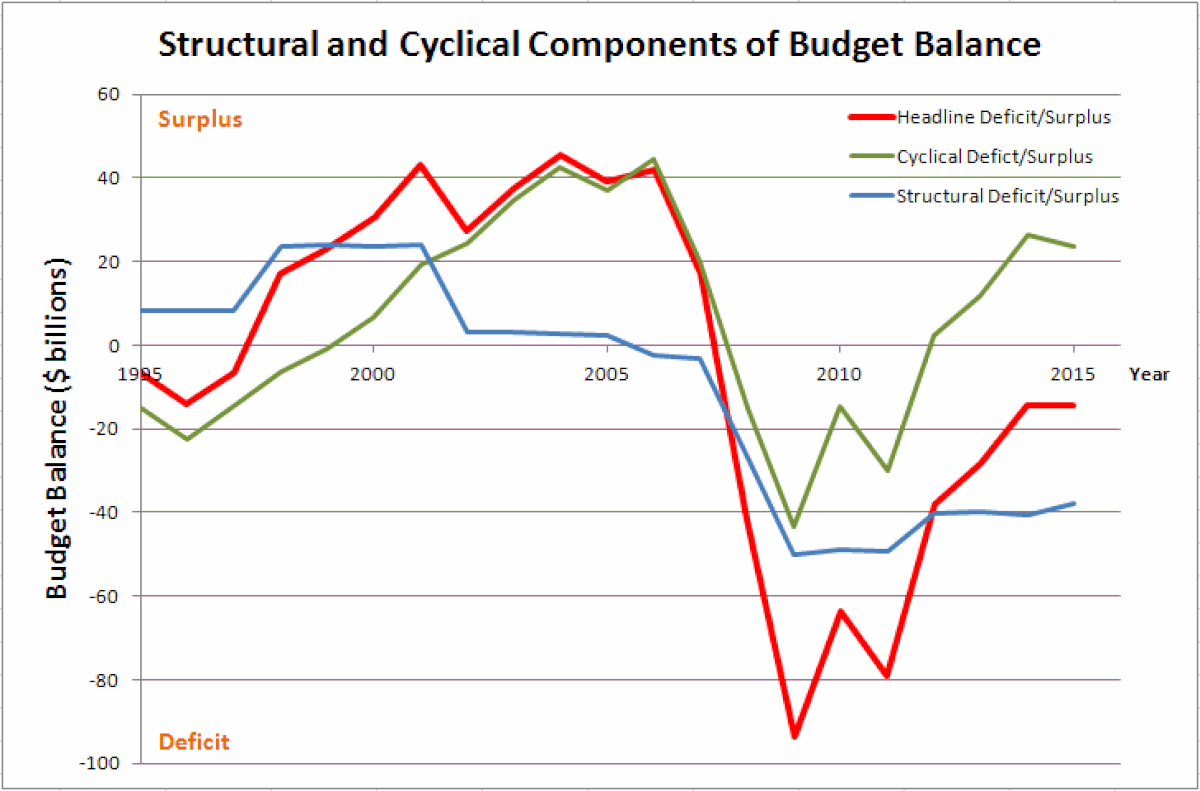
This chart shows how short-term cyclical deficits combine with permanent structural deficits to produce the total budget balance. John O'Neill (jjron) You can contact me about this image, its re-use, or to make a gratuity (donation) by leaving a mess, Public domain, via Wikimedia Commons
Under this mainstream view, deficits are supposed to be cyclical rather than structural. A government runs budget deficits during recessions to stimulate activity, then runs budget surpluses during boom periods to repay debt. This ensures there is no net deficit across a full economic cycle.
Arguments against deficit spending
Fiscal conservatism opposes deficit spending, arguing that governments should maintain a balanced budget and run surpluses to pay off debt. This position draws on the household analogy, which claims governments should follow the same prudence as families by never spending money they do not have. Many United States state constitutions require balanced budgets, and the European Monetary Union's Stability and Growth Pact penalizes member deficits exceeding 3% of GDP.
Critics also worry about long-term burdens. Opponents argue that deficits force higher taxes on future generations to cover borrowing costs. Economists from the Austrian school add that deficits can lead to inflation if governments print money to repay what they owe.
The post-Keynesian perspective
Nobel laureate William Vickrey called the idea that deficits represent reckless spending a fallacy based on a false comparison to household budgets. Because a government deficit injects more cash into the private economy than it removes through taxes, it directly increases the net disposable income and savings of individuals and businesses.
Post-Keynesian economists, including Modern Monetary Theory proponents, argue that deficit spending is a fundamental necessity for creating new money. Without government deficits, private savings would be depleted whenever private investment fails to absorb the total savings produced by a growing economy.
Test yourself
Can the debt rise while the annual deficit falls?
Yes, if the smaller deficit is still positive. A deficit is the gap between spending and receipts during one period. A smaller positive deficit still requires financing, so total debt can continue to rise.
Which annual result can begin reducing outstanding government debt?
A budget surplus. A smaller deficit still adds to borrowing if spending remains above receipts. A surplus means receipts exceed spending and can be used to pay down existing debt.
Play the lesson in edgi and the card is yours. It lands on your Map next to the ideas it connects to, and turns from matte to foil to gold as you learn more around it.
What is the difference between a deficit and the national debt?
A deficit is the financial shortfall accumulated over a single period, such as one year. The national debt is the total sum of money a government owes from all past borrowing combined.
How does the United States government finance its deficit spending?
The United States Treasury covers shortfalls by selling Treasury securities to investors. Buyers hand over cash immediately in exchange for promised repayments with interest in the future.
Can deficit spending apply to entities other than national governments?
Yes. While the term most frequently describes government fiscal policy, private companies and individual households also engage in deficit spending whenever their expenses exceed their income over a set timeframe.