The mental filter
You see the word RED written in blue ink. Your brain wants to read the text, but your goal is to name the ink color. That friction is the Stroop effect, a famous test of your executive function at work.

Executive function is the set of mental processes your brain uses to choose goals, hold information in mind, and stop automatic reactions. It works like an air traffic controller that overrides environmental distractions so you can focus on what you decided to do. Rather than being simple willpower, it relies on biological neural circuits that develop across your entire life.

By the edgi team We find the most surprising true thing about an idea and build a 60-second lesson around it.

You see the word RED written in blue ink. Your brain wants to read the text, but your goal is to name the ink color. That friction is the Stroop effect, a famous test of your executive function at work.
This process happens in the prefrontal cortex. It acts like a CEO, managing your attention and suppressing distractions like checking your phone. It is the command center that allows you to ignore impulses in favor of your long-term objectives.
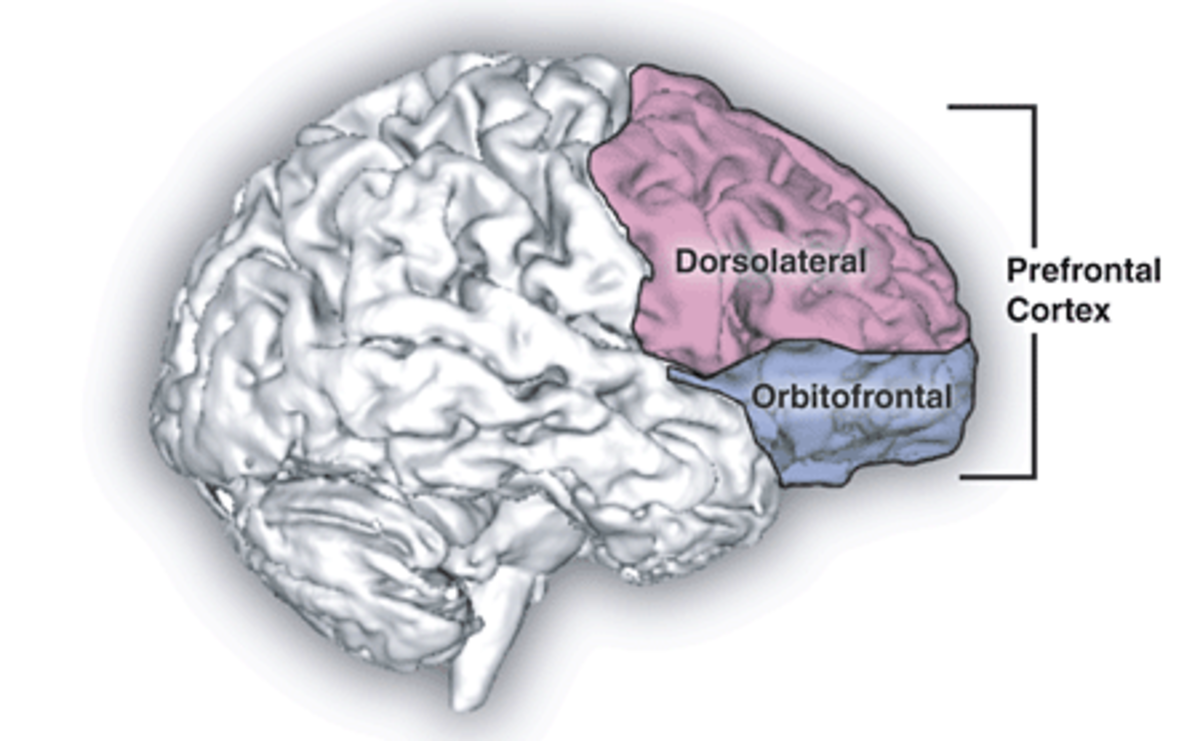
When this system is overwhelmed, your ability to plan or focus collapses. This is central to ADHD, where the brain struggles to filter out competing signals and maintain mental control.
Executive function is not just willpower. It is the biological efficiency of neural circuits juggling information and holding back immediate reactions. Developing strong control is about training the hardware that manages your mental to-do list.
Executive function consists of basic processes that work together: working memory, attentional control, cognitive flexibility, and inhibitory control. Inhibitory control allows you to suppress automatic impulses triggered by your environment, which cognitive scientists call stimulus control.
When these basic tools operate at the same time, they power higher-order abilities such as planning, reasoning, and fluid intelligence. If you need to troubleshoot an error, face an unfamiliar task, or handle a dangerous situation, routine behavioral habits fail. The executive system steps in to assemble novel sequences of actions and keep you oriented toward your objective.
The prefrontal cortex is necessary for executive control, but it does not work in isolation. Modern neuroscience shows that cognitive control is a property of coordinated networks linking frontal regions with subcortical structures like the caudate nucleus, subthalamic nucleus, substantia nigra, and cerebellum.
Specific frontal areas handle distinct demands. The dorsolateral prefrontal cortex manages working memory, planning, and abstract reasoning. The anterior cingulate cortex evaluates motivated behaviors and decision-making, while the orbitofrontal cortex monitors reward values and prevents socially inappropriate or impulsive outbursts.
How does executive function operate when you face competing distractions like a phone notification?
It actively suppresses the distraction to protect goals. Executive function acts like a CEO in the prefrontal cortex, actively overriding impulses and suppressing distractions to maintain focus on long-term objectives.
Why does a collapse in executive function lead to difficulties with ADHD and mental focus?
The brain struggles to filter competing signals. When the system is overwhelmed, the brain struggles to filter out competing signals and maintain the mental control needed for planning.
What does the biological truth about executive function reveal regarding mental control and willpower?
It is driven by neural circuit efficiency. Executive function is not just willpower; it is the biological efficiency of neural circuits juggling information and managing mental control.
Collectible card
Play the lesson in edgi and the card is yours. It lands on your Map next to the ideas it connects to, and turns from matte to foil to gold as you learn more around it.
Clinicians use specialized neuropsychological tests such as the Stroop test to observe how well a person suppresses automatic reactions. They also use standardized rating scales, including the Behavior Rating Inventory of Executive Function, to assess daily cognitive management.
Cognitive control is impaired in attention deficit hyperactivity disorder, addiction, autism, dyscalculia, and other central nervous system disorders. In addiction, for instance, stimulus-driven responses tied to rewarding cues overpower internal goal-directed regulation.
Part of the Set · 7 cards
Attention is the scarcest resource you own. This is its physics.
Lesson complete
You finished the lesson. In edgi, the card goes on your Map next to everything else you learn.