Flow is a mental state where you become completely absorbed in an activity, losing track of time and outside distractions. It happens when a challenging task perfectly matches your personal skill level. Because your attention becomes entirely consumed by the work, self-doubt fades and the action begins to feel effortless.
By the edgi team We find the most surprising true thing about an idea and build a 60-second lesson around it.
Mihaly Csikszentmihalyi spent decades interviewing rock climbers, chess players, and surgeons to find a common thread. He discovered that flow isn't just deep focus; it is a narrow corridor between boredom and anxiety.
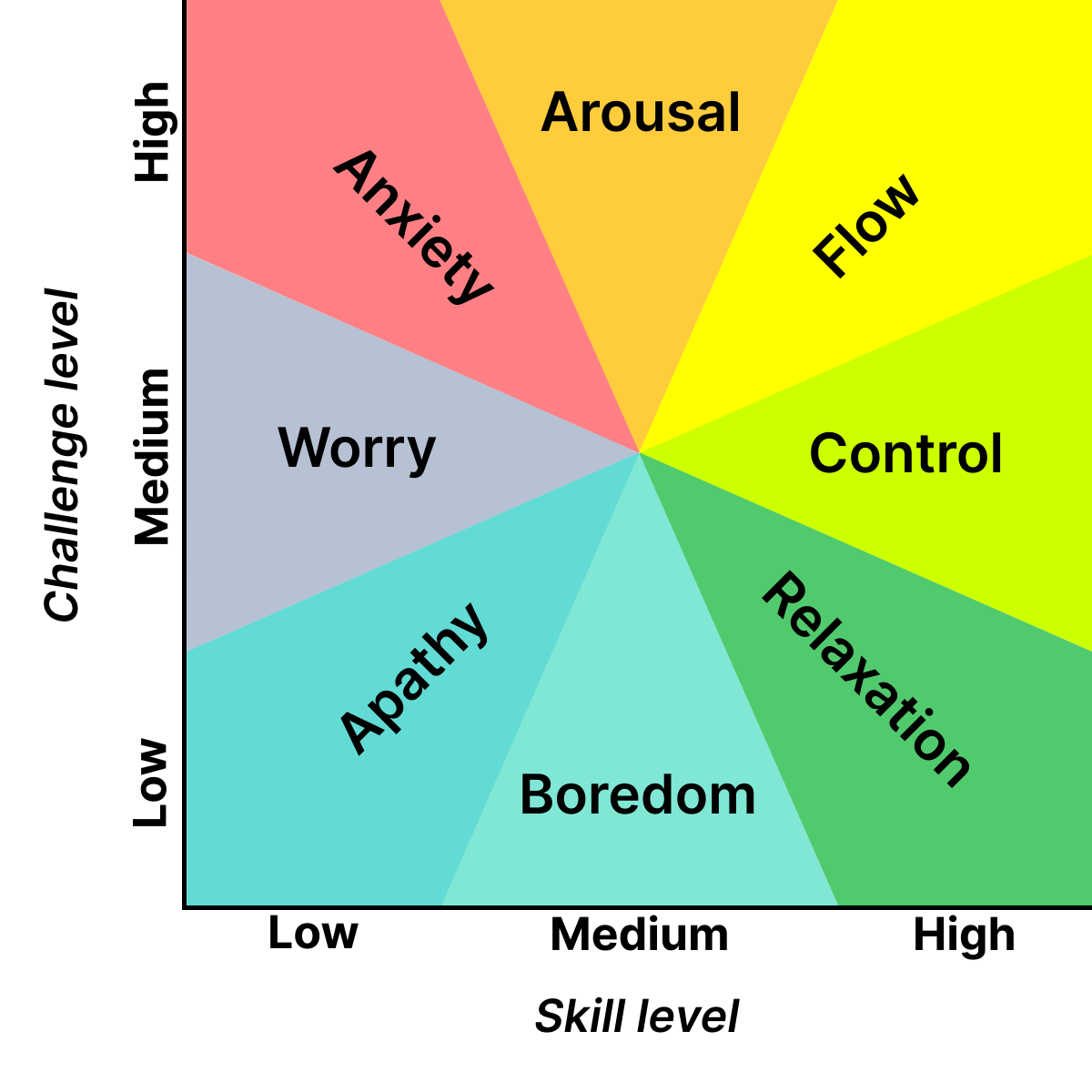
Diagram illustrating Csikszentmihalyi's flow model, plotting Challenge level (Low, Medium, High) on the Y-axis against Skill level (Low, Medium, High) on the X-axis, showing mental states such as… Oliverbeatson, Public domain, via Wikimedia Commons
If a task is too easy, you get bored. If it is too hard, you get anxious. Flow only happens when the challenge perfectly matches your skill level.
The brain's off-switch
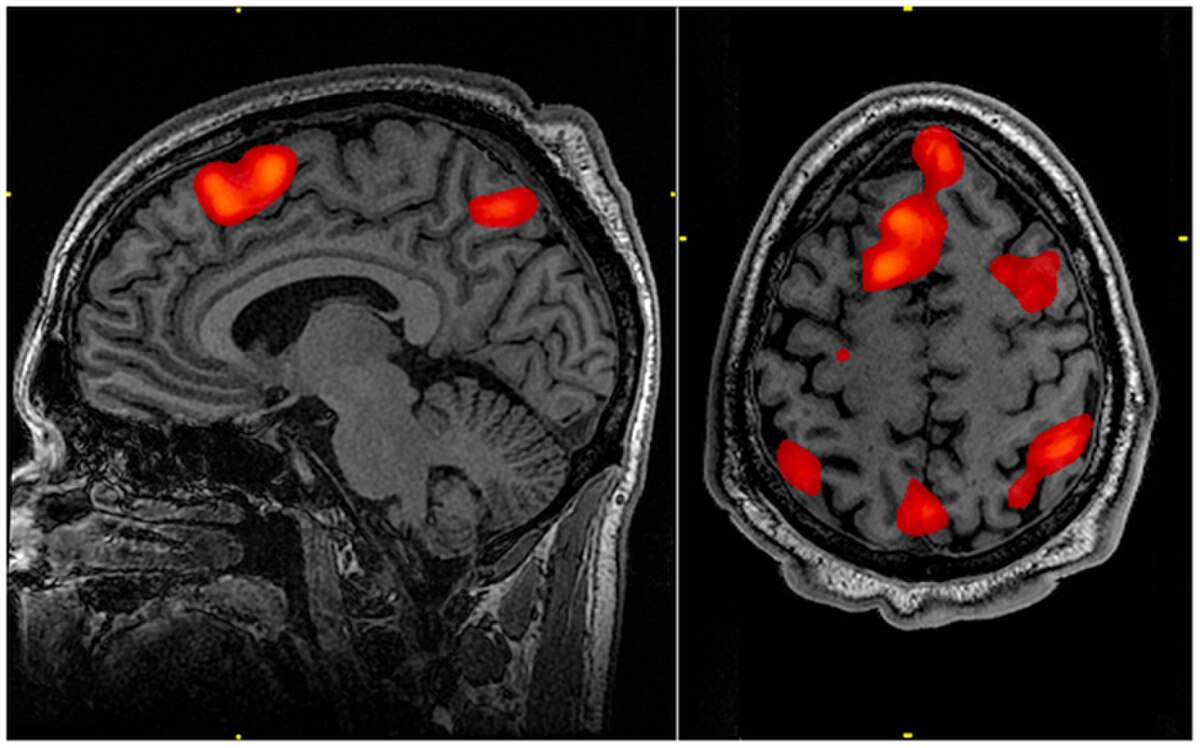
When you are truly in the zone, your prefrontal cortex, the part of the brain that manages self-consciousness and planning, actually throttles down. That inner critic that usually checks your work or worries about the future goes offline.
An fMRI scan displays two views of a human brain, with areas of high activity highlighted in red and orange. John Graner, Neuroimaging Department, National Intrepid Center of Excellence, Walter Reed National Military Medical Cent, Public domain, via Wikimedia Commons
This is why time seems to warp. Without the brain constantly checking the clock or judging your performance, hours can feel like minutes.
Effortless action
This is the state where action and consciousness merge. You are not thinking about what to do; you are simply doing it. It is the ultimate antidote to writer's block, turning complex work into something that feels more like effortless play.
Mihaly Csikszentmihalyi first described flow in his 1975 book Beyond Boredom and Anxiety after studying artists who became so absorbed in painting that they ignored basic needs like food, water, and sleep. The name came directly from interviewees who described their optimal performance as being carried along by a water current.
Flow relies on a balance between challenge and ability. When a task is too difficult, you experience anxiety; when it is too simple, you feel bored. Moderate psychological arousal is required to avoid becoming overwhelmed or understimulated. Each person has an individual zone of optimal functioning where their perceived capability meets the demands of the situation.
Researchers identify several core components of the experience. These include intense concentration on the present moment, immediate feedback, a sense of personal control, and the perception that the activity is intrinsically rewarding (an autotelic experience).
How does the brain process flow?
The human nervous system can process only a limited amount of data at once: about 110 bits of information per second. Everyday tasks consume large portions of this bandwidth; decoding ordinary human speech alone requires roughly 40 to 60 bits per second.
When an activity demands total concentration, it consumes the brain's entire processing capacity. As a result, you temporarily lose conscious awareness of other inputs, such as hunger, physical discomfort, passing time, and self-critical thoughts. Cognitive scientists study this phenomenon under the concept of effortless attention.
Test yourself
A pianist is absorbed in a demanding piece that matches her ability. What may characterize her flow?
She acts with less self-monitoring. In flow, action can feel more immediate as self-conscious monitoring quiets. Close attention to constant self-judgment is less characteristic.
In flow, what balance of challenge and skill helps sustain the state?
The challenge fits the person's skill. Flow tends to emerge when a task stretches someone without overwhelming them; too little challenge invites boredom, while too much can cause anxiety.
A pianist is absorbed in a demanding piece that matches her ability. What may characterize her flow?
She acts with less self-monitoring. In flow, action can feel more immediate as self-conscious monitoring quiets. Close attention to constant self-judgment is less characteristic.
Play the lesson in edgi and the card is yours. It lands on your Map next to the ideas it connects to, and turns from matte to foil to gold as you learn more around it.
Hyperfocus is often linked to conditions like ADHD, autism, or schizophrenia, and can lead to negative outcomes like spending too much time on video games or leaving assignments unfinished. Flow is generally an intrinsically rewarding, positive state of optimal functioning and balance.
Can flow help manage everyday stress?
Yes. Flow is used as a coping skill for stress and anxiety when you productively pursue leisure activities that match your abilities. It replaces worry by fully occupying your attention with a manageable, engaging task.