Attention SpanPeak focus arrives in your early 40s
Attention span is the amount of time someone concentrates on a task before becoming distracted. It is not an unchangeable trait, but a temporary mental state that depends on motivation, task difficulty, and repeated decisions to refocus. Sustained focus gradually improves throughout childhood and does not reach its maximum until middle age.
By the edgi team We find the most surprising true thing about an idea and build a 60-second lesson around it.
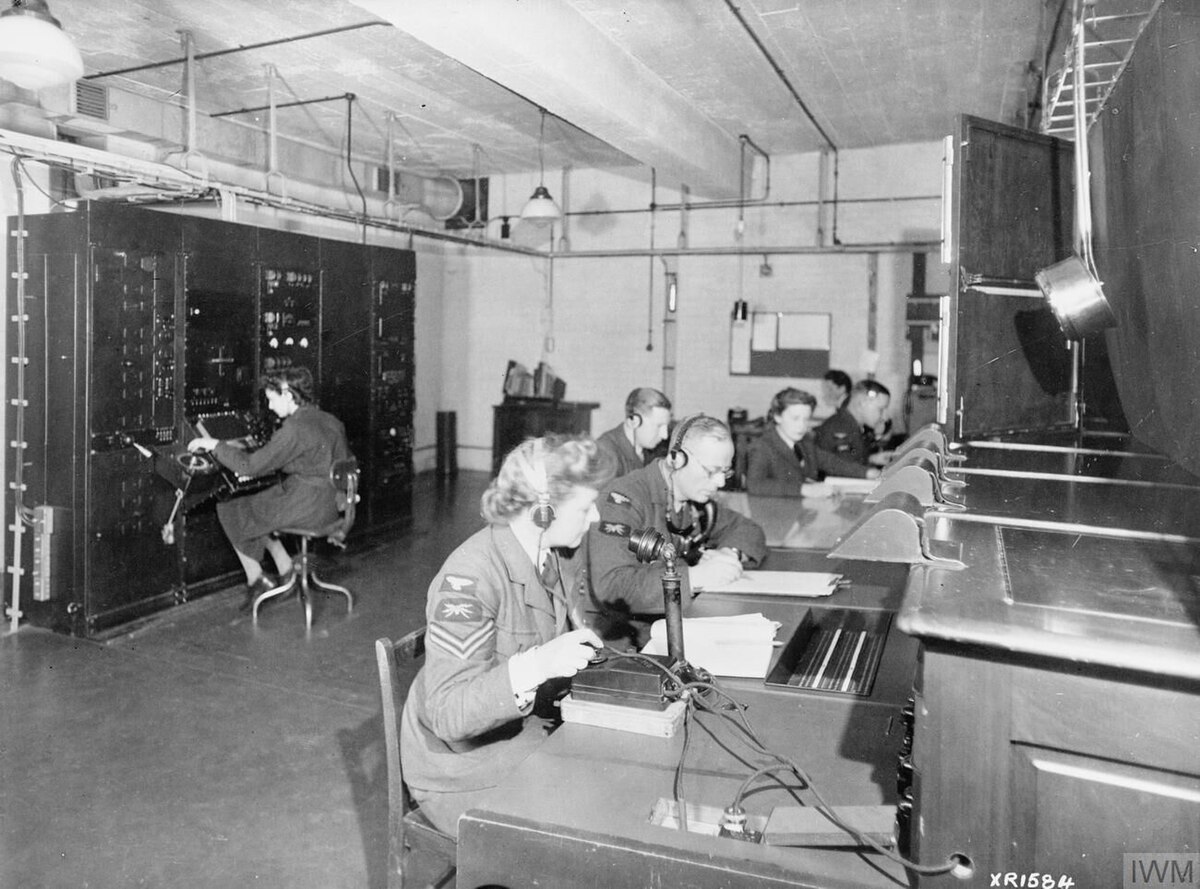
During WWII, British radar operators were frequently missing enemy planes during their shifts. Psychologist Norman Mackworth investigated the failures and found a consistent, biological wall.
East Coast Chain Home radar operators, primarily women, are shown working at their stations in England. Royal Air Force official photographer, Public domain, via Wikimedia Commons
After thirty minutes of constant vigilance, the operators' ability to spot targets plummeted.
The mackworth clock
Mackworth created the Clock Test, a hand that ticked regularly but occasionally skipped a beat. It proved that attention span is not a constant state, but a resource that depletes.
Your brain burns energy suppressing every Distraction, and eventually, the fuel simply runs dry.
The modern cost
Today, constant Information Overload and Short-Form Content force us to switch tasks rapidly. We treat losing focus as a moral failing, but it is actually a fundamental limit of human hardware.
Three people at a railway station platform, each engrossed in their smartphones. Rawpixel.com, CC0, via Wikimedia Commons
You can train your brain with Mindfulness, but you cannot delete that thirty-minute wall.
Transient vs sustained attention
Researchers split attention into two distinct types: transient attention and selective sustained attention. Transient attention is a brief, automatic reaction to an unexpected sound, image, or event that either catches your eye or pulls you away from work. Selective sustained attention, or focused attention, is the deliberate concentration needed to produce consistent results over time.
While uninterrupted focus on a single vigilance task begins degrading after thirty minutes, healthy teenagers and adults can track a complex subject for up to five hours. This extended duration is possible because people actively choose to renew their attention on the same topic over and over again, such as when following the plot of a long film.
What changes how long you can focus?
Focus is heavily tied to age and task mastery. A long-term study of more than 10,000 participants found that attention abilities diverge around age 15, peak during a person's early 40s, and gradually decline in older age.
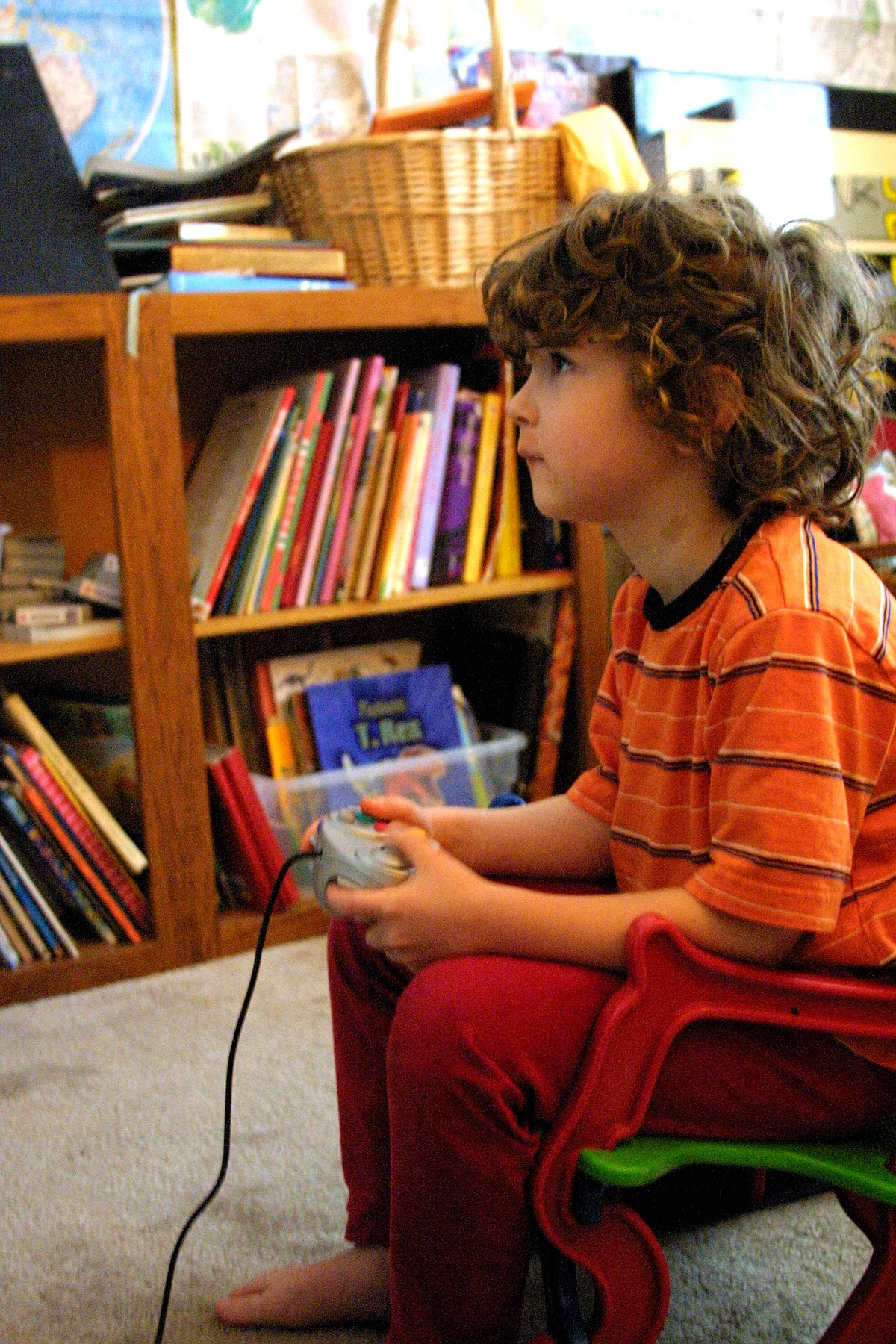
A child concentrating on a screen shows how personal enjoyment and task engagement naturally extend attention span. quinn norton, CC BY 2.0, via Wikimedia Commons
Internal and external conditions also cause wild swings in attention span. People sustain attention longer when they find an activity intrinsically enjoyable, or when they have already learned to perform the task fluently. By contrast, fatigue, hunger, background noise, and emotional stress shorten focus. Even the presence of an observer changes performance: test-takers reliably stick to tasks longer when an examiner remains visibly present in the room.
How early attention predicts long-term success
A child's early attention span shows a direct link to long-term academic outcomes. Research following children from preschool discovered that a child's ability to persist at tasks at age four significantly predicted their math and reading performance at age 21.
Daily routines also shape focus patterns across the week. In a study of 10,000 elementary students, attention levels were consistently higher in the afternoon than in the morning. Focus and productivity increased after a standard two-day weekend, whereas long absences like summer break caused sharp drops in student attention.
Test yourself
For attention span, why can prolonged vigilance become harder?
Sustained focus uses a limited mental resource. The lesson frames attention as a resource that depletes while suppressing distractions, not as a constant state or a simple failure of willpower.
During a long monitoring shift, what best fits the attention span idea?
Plan breaks instead of relying on willpower. Because sustained vigilance can decline as attention is used up, breaks address that limit better than adding stimulation or increasing task switching.
For attention span, what is a sound response to losing focus during prolonged monitoring?
Take a brief break, then resume monitoring. Sustained vigilance can decline as attention is depleted; a break can help, while willpower or frequent task-switching does not erase that limit.
Play the lesson in edgi and the card is yours. It lands on your Map next to the ideas it connects to, and turns from matte to foil to gold as you learn more around it.
How do psychologists measure attention span in children?
Clinicians use standardized tools such as the DeGangi's Test of Attention in Infants (TAI) and the Wechsler Intelligence Scale for Children-IV (WISC-IV) when observation and interviews are not enough. Older assessments like the Porteus Maze Test and Continuous Performance Test have been rejected by many experts for failing to provide clinically useful data.
Does childhood temperament relate to attention span?
Yes. Twin studies show that behavioral traits like frequent tantrums, crying, irritability, and demanding behavior have an inverse relationship with attention span. Children who display lower temperamental reactivity are better equipped to stay focused on an activity without distraction.
Does early screen exposure harm attention?
Studies link television viewing at age two to higher rates of impulsiveness, disorganization, and distractibility by age seven. A 2024 study also found that students who regularly consume short-form digital videos struggle with memory-based academic work.