Mihaly Csikszentmihalyi was a Hungarian-American psychologist who named and defined flow, a mental state of complete absorption in an activity. He demonstrated that deep happiness comes from intense engagement and intrinsic motivation rather than passive relaxation. His research laid foundational principles for positive psychology and the study of human creativity.
By the edgi team We find the most surprising true thing about an idea and build a 60-second lesson around it.
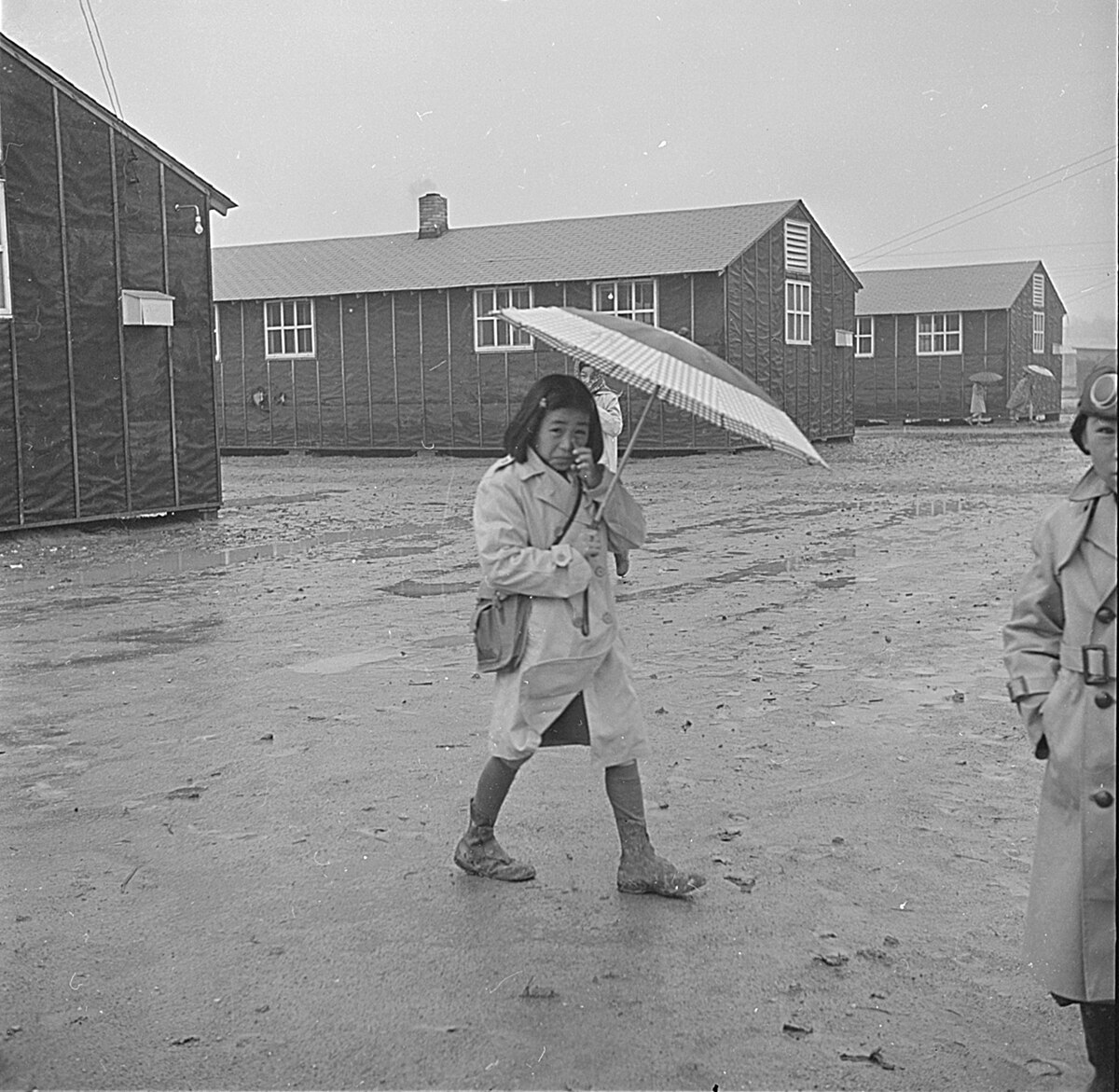
As a child in a WWII internment camp, Mihaly Csikszentmihalyi watched adults around him collapse under the stress. He noticed a few kept their sanity by obsessively focusing on simple tasks like chess, painting, or gardening.
A young Japanese-American girl, wearing a coat and holding an umbrella, walks through a muddy internment camp in Arkansas in 1943. Tom Parker, Public domain, via Wikimedia Commons
The peak state
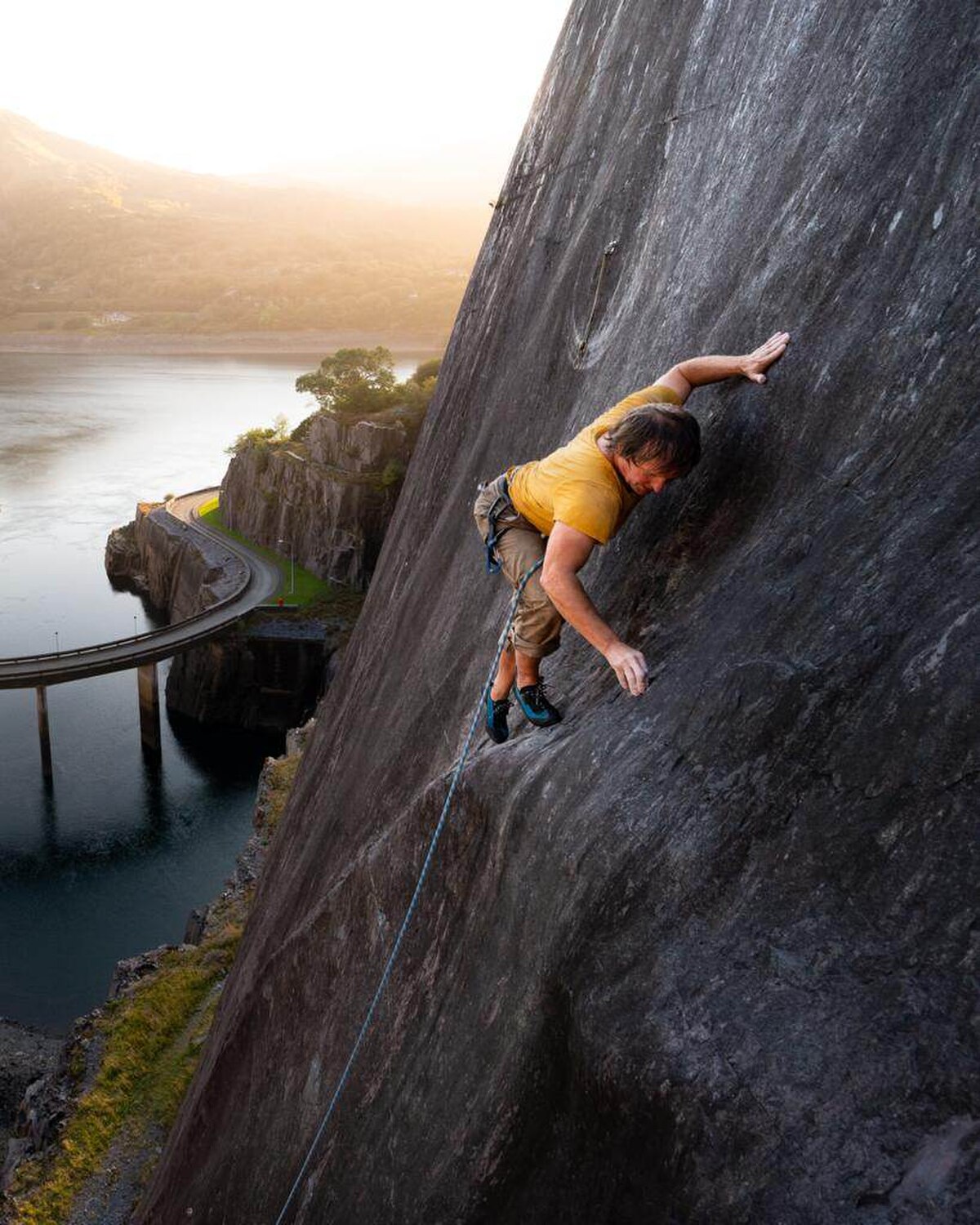
Decades later, he interviewed surgeons and rock climbers to study that mental state. They all described being carried away by their work, like water moving through a pipe. He named it flow.
Johnny Dawes is shown rock climbing on "Poetry Pink," a route on a large, smooth rock face, with a body of water and a bridge visible in the background. Limelightangel, CC BY-SA 4.0, via Wikimedia Commons
The psychological sweet spot
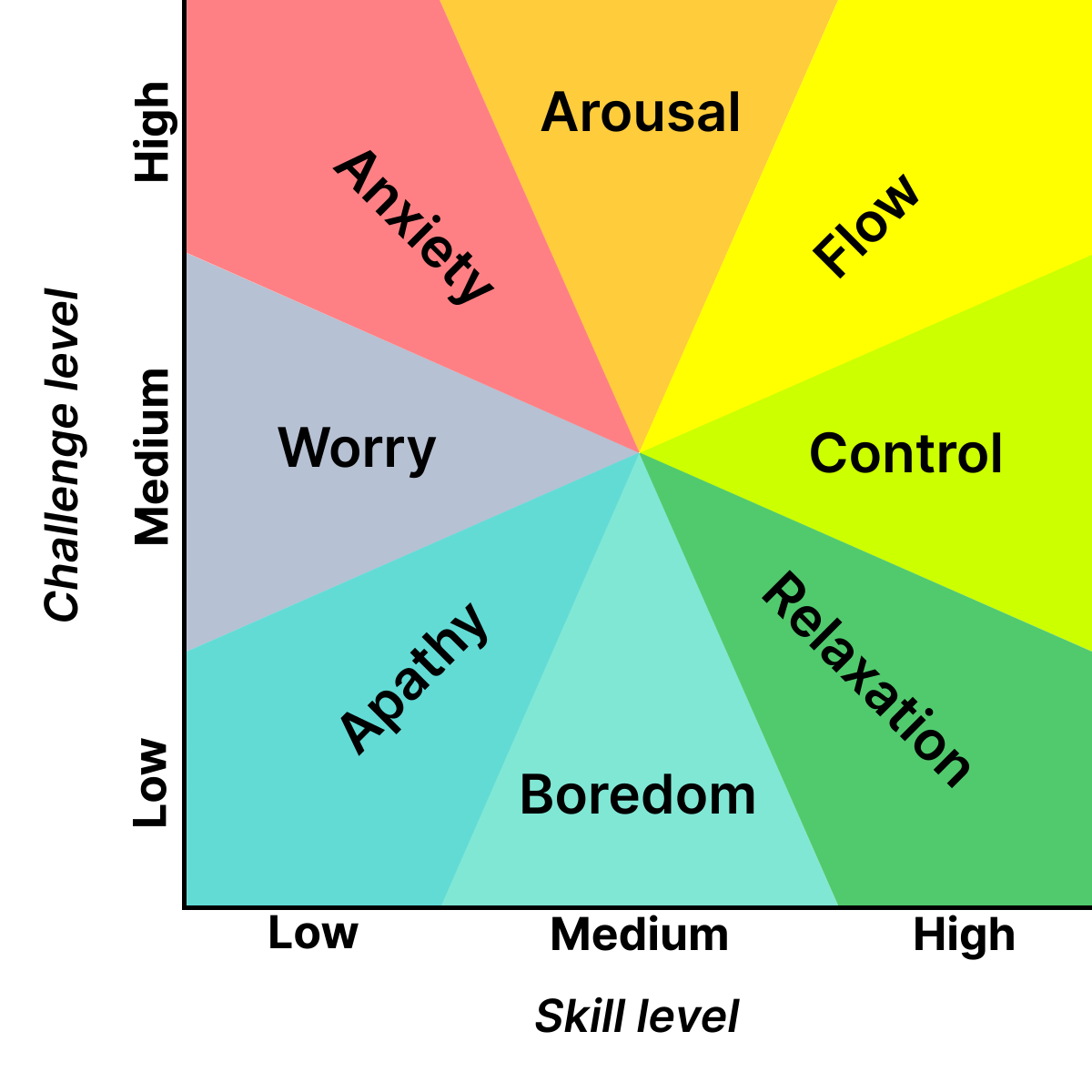
Flow happens when a task's challenge perfectly matches your skill level. Your ego dissolves, time distorts, and you become the action itself.
A diagram illustrating Csikszentmihalyi's flow model, plotting mental states based on "Skill level" (X-axis: Low, Medium, High) and "Challenge level" (Y-axis: Low, Medium, High). Oliverbeatson, Public domain, via Wikimedia Commons
It became a cornerstone of positive psychology, proving that happiness isn't just relaxation, it's engagement.
What is the flow state?
Csikszentmihalyi described flow as an optimal state where a person is fully immersed in an activity for its own sake. Colloquially called being in the zone, it occurs when temporal concerns like time, hunger, and ego-consciousness fall away, replaced by total concentration.
Flow requires a precise match between high challenge and high skill. If an activity is too easy, boredom sets in; if it is too difficult, anxiety follows. When both challenge and skill are matched at a low level, apathy results. Achieving flow relies on clear goals, immediate feedback, and the merging of action and awareness.
The autotelic personality and motivation
Beyond individual flow experiences, Csikszentmihalyi researched what he called the autotelic personality. People with this trait perform actions because they are intrinsically rewarding rather than to pursue external rewards, allowing them to enjoy situations that others might find miserable.
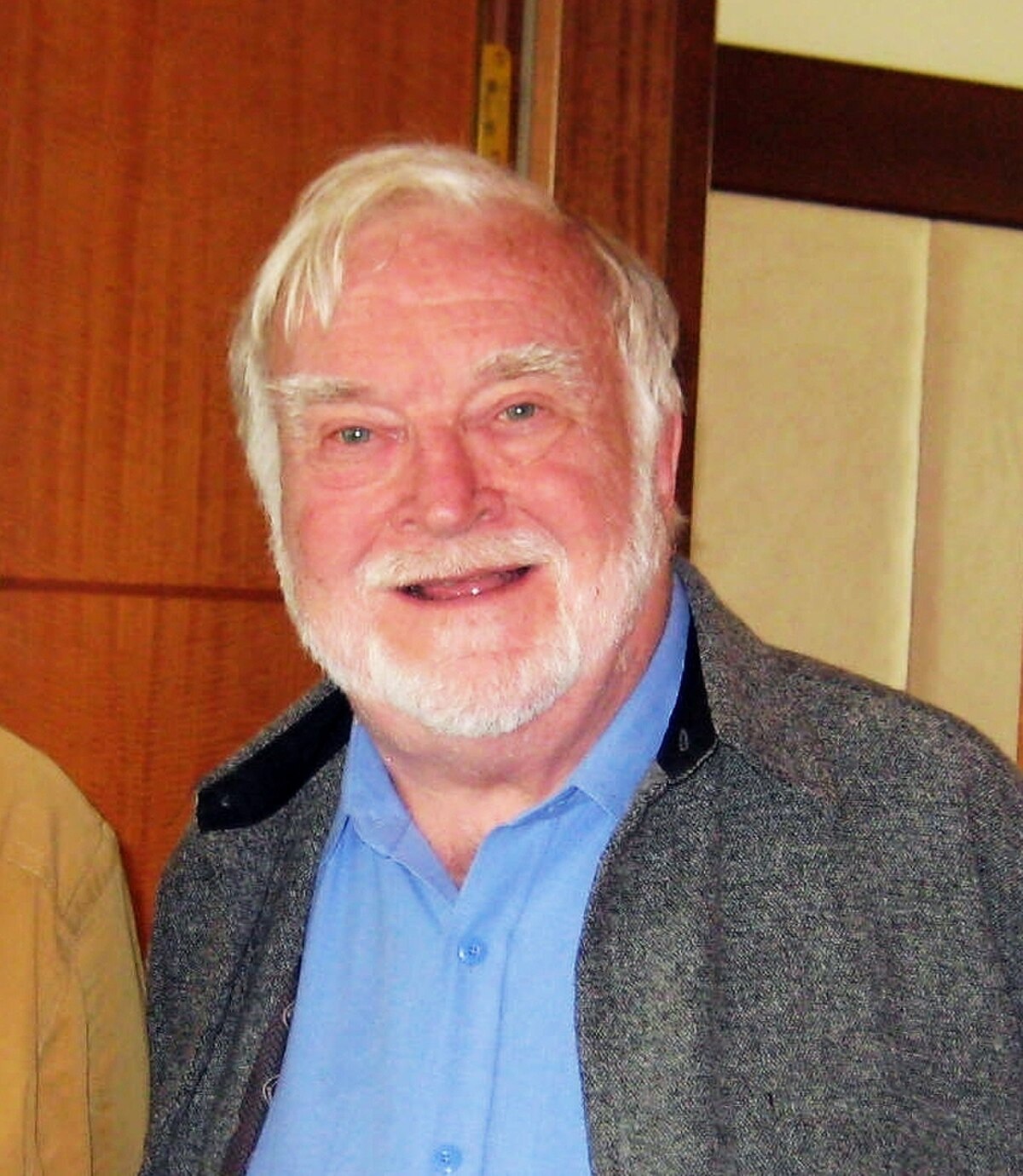
Mihaly Csikszentmihalyi, the psychologist who studied intrinsic motivation and optimal experience. Ehirsh, Public domain, via Wikimedia Commons
His research connected this trait to curiosity, persistence, and humility. Csikszentmihalyi identified a related construct called work orientation, defined by achievement, endurance, cognitive structure, order, play, and low impulsivity. In students, high work orientation predicted grades and long-term goal completion more reliably than household or school environmental influences.
Test yourself
Csikszentmihalyi’s flow is best understood as what?
Deep absorption in an engaging task. Flow means being fully absorbed in the activity. Relaxing or monitoring your performance is not the same as becoming immersed in the task.
Which situation best illustrates Csikszentmihalyi’s flow?
A skilled cook absorbed in a demanding new recipe. A demanding task that engages a person’s skills can draw them into flow. Distraction and anxious self-monitoring pull attention away from the activity.
For Mihaly Csikszentmihalyi, what balance helps produce flow?
Challenge matches the person's skill. Flow arises when a task stretches someone without overwhelming them. Too little challenge can bore; too much can create anxiety.
Play the lesson in edgi and the card is yours. It lands on your Map next to the ideas it connects to, and turns from matte to foil to gold as you learn more around it.
He taught at Lake Forest College, where he chaired the department of sociology and anthropology, and later served as head of the psychology department at the University of Chicago. He ended his academic career as the Distinguished Professor of Psychology and Management at Claremont Graduate University.
What early experiences shaped his psychological research?
After experiencing World War II in Europe and seeing his family stripped of their Hungarian citizenship, he dropped out of school to help support his family's restaurant in Rome. During travels in Switzerland around that time, he heard Carl Jung speak on the psychology of UFO sightings, which spurred his interest in human psychology.